Proton Sees Whopping 6,000% Surge In VPN Sign-Ups In Iran
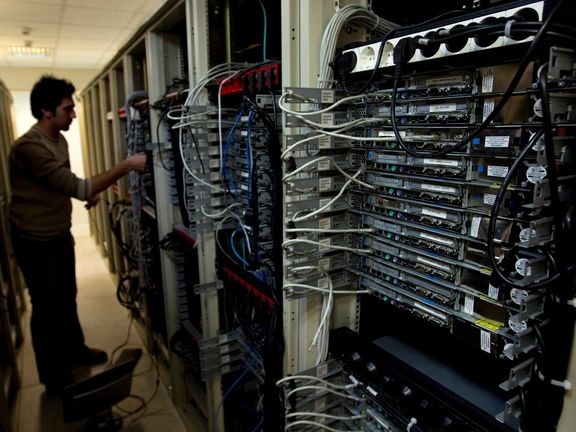
Internet privacy company Proton revealed a jaw-dropping 6,000-percent surge in sign-ups for its virtual private network (VPN) in Iran during October 2022.

Internet privacy company Proton revealed a jaw-dropping 6,000-percent surge in sign-ups for its virtual private network (VPN) in Iran during October 2022.
This remarkable increase coincided with a notable escalation in the Iranian regime’s crackdown on internet access, a move that followed the death of Mahsa Amini whilst she was police custody.
As demonstrations swept through Iran in mid-September, the government swiftly imposed restrictions on Instagram, the sole international social media platform that citizens were previously permitted to access. Other social media platforms such as Facebook, Twitter, and Telegram had already faced bans following the 2009 Presidential election and the aftermath of the November 2019 protests.
The Switzerland-based firm, Proton, stated that in addition to the surge in sign-ups from Iran, they witnessed a remarkable 9,000-percent increase in new VPN users in the aftermath of Russia's blockage of independent news sites following its invasion of Ukraine last year. Furthermore, the company noted a staggering 15,000-percent spike in sign-ups from Turkey earlier this year when access to Twitter was reportedly temporarily restricted in the aftermath of a devastating earthquake.
Andy Yen, Proton’s founder and CEO raised concerns about the escalating trend of internet shutdowns imposed by governments globally. "Internet censorship is increasing at an alarming rate," he warned.
The company's research revealed that in 2022, authorities in 35 countries orchestrated 187 internet shutdowns, setting a new record for the highest number of shutdowns in a single year. Proton attributes such actions to events like public protests, active conflicts, elections, and political instability, employed as desperate means of control to keep citizens uninformed and isolated.
"This is a very dangerous path," Yen cautioned.

A human rights organization has voiced alarm over Iran’s threats to execute European citizens over Quran burning.
Mahmood Amiry-Moghaddam, the director of the Norway-based Iran Human Rights (IHRNGO), said Wednesday that inaction by the international community has emboldened the Islamic Republic authorities to extend their execution spree beyond Iran’s borders.
His remarks came as a reaction to repeated insistence by Supreme Leader Ali Khamenei and several other regime officials for the execution of the Sweden-based Iraqi immigrant Salwan Momika who burned pages from the Quran in front of the central mosque in Stockholm on the first day of Eid al-Adha in June.
After obtaining a permit from a Swedish court and in front of approximately 200 onlookers Momika, tore up a copy of the Quran, wiped his shoes with the pages, put bacon on the book and set it on fire whilst another protester addressed the crowds with a megaphone. Momika repeated the desecration in front of the Iraqi embassy in Stockholm on July 20. The following day, in neighboring Denmark, members of the far-right nationalist group "Danske Patrioter (Danish Patriots)" burned a copy of the Quran in front of Iraq's Embassy in Copenhagen.
Amiry-Moghaddam referred to the hanging of two Iranians in May for insulting religious entities, saying that "Unfortunately, the lack of appropriate response from the international community regarding the execution of one person on the charge of adultery and two people on the charge of sacrilege has emboldened the leaders of the Islamic Republic to issue similar sentences and even threaten to execute European citizens."

Iran's Supreme Leader called for the severest punishment for the perpetrators of the Stockholm Quran burning. Ali Mohammadi-Sirat, the Supreme Leader’s man in IRGC’s Quds (Qods) Force -- a division primarily responsible for extraterritorial military and clandestine operations -- repeated Khamenei’s demands and stressed that these men will not be safe wherever they are. Earlier this month, Iran’s Revolutionary Guard Commander Hossein Salami also threatened attacks against those responsible for the incident, saying that those who burn or desecrate the Quran will not enjoy security.
The regime’s judiciary claimed Yousef Mehrad and Sadrollah Fazeli-Zare' were running dozens of online anti-religion platforms dedicated to the hatred of Islam, the promotion of atheism and insults to sanctities, however, in earlier reports the charges were mainly related to one Telegram channel. Mizan, the judiciary’s news agency, also claimed they had burnt copies of the Quran, and they had confessed to their blasphemy. Their families and rights activists said the confessions were extracted under duress, which has proven to be the case in numerous confessions by the regime.
Amiry-Moghaddam added, “The international community should not tolerate the execution of human beings because of consensual sex or expression of opinion in the 21st century by the governments that have a seat in the United Nations.” In April, a man was executed in the city of Karaj after being charged for having an affair with a married woman. In the Islamic Republic’s law, adulterers can be sentenced to lapidation -- or stoning to death -- if one or both people are married. Nowadays, the regime just hangs them.
According to a report released earlier in July, in the last 10 years, the regime has executed approximately 5,000 people, including dozens of children. The report by Dadgostar, the news agency of US-based Human Rights Activists in Iran (HRANA), highlighted the concerning trend of an average of 10 citizens being executed every week since May of the current year. Since the beginning of 2023, the regime has executed at least 307 people with 142 hangings in May alone, hitting a dark record even for the Islamic Republic.
Amiry-Moghaddam told Iran International in June, “The purpose of the Islamic Republic’s intensification of arbitrary executions is to spread fear in society to intimidate people against holding further protests, thus prolonging its rule,” adding that “if the international community doesn’t show a stronger reaction to the current wave of executions, hundreds more will fall victim to their killing machine in the coming months.”
The Islamic Republic has intensified its killing trend in recent months, with at least seven protesters hanged since nationwide protests broke out in September 2022 following the death in custody of 22-year-old Mahsa Amini. The unrest posed the biggest internal challenge to the Islamic Republic since its establishment in 1979.

Authorities have arrested two rock climbers in Iran without charge in the central province of Isfahan (Esfahan).
Maryam Parandeh Khouzani and Sama Amoushahi were arrested on July 11, in the wake of a recent spate of protests in Iran targeting sectors of society including athletes.
Khouzani, a highly-regarded rock climbing instructor, was apprehended by agents from the Ministry of Intelligence while participating in an official class organized by the Mountaineering Federation in Khomeinishahr of Esfahan. After her arrest, she was transferred to Dowlatabad Women's Prison in Esfahan.
On same day Sama Amoushahi, a talented rock climber who is currently battling cancer, was also arrested and detained. Her detention has raised alarm bells among human rights activists and concerned citizens, as her health condition requires specialized medical attention and care.
The arrest of these two athletes is part of a broader wave of arrests and detentions that have affected several citizens in Esfahan. The cases of those detained, including the two athletes, are currently being processed in Branch 13 of the Esfahan Revolutionary Court. As of now, no formal charges have been brought against the detainees, and detailed information about their well-being and circumstances remains scarce.
Despite the families' efforts to seek updates on the situation and to engage with judicial authorities, they have been unable to obtain substantial information regarding the detainees' status.
Many Iranian athletes and actresses have fearlessly demonstrated their support the movement by posting pictures of themselves at international events, undeterred by threats of punishment. Despite serious warnings from authorities, athletes and other celebrities have continued to publicly show solidarity with the protesters without yielding to the pressure.

A parliament committee in Iran has passed a hijab bill proposing to confiscate up to 10 percent of celebrities' assets and incomes if they violate hijab rules.
Hardliners on social media support the severe punishments, aiming to deter celebrities and influencers from defying hijab rules.
Hossein-Ali Haji-Deligani, a former high-ranking Revolutionary Guards (IRGC) officer and hardline lawmaker in the parliament's judicial committee, described the bill as considering any action that weakens the family, including nudity, immorality, unveiling, and inappropriate clothing, as a crime. The bill defines "nudity" as appearing in public in clothing considered nude by social norms and will be punishable by a cash fine of 1 to 1.5 billion rials and a prison term of six months to ten years.
Haji-Deligani emphasized that the bill, named "Protection of Family Through Promotion of Hijab and Chastity Culture," includes measures against individuals “connected with foreign governments” and “media outside Iran” promoting nudity, immorality, unveiling, and inappropriate dressing with heavy sentences.
This was a clear reference to regime opponent and critical media, such as Iran International, the BBC Persian Service and others.

Since March, hardliners have attempted to end women's increasing defiance of compulsory hijab and reclaim lost ground, but their efforts have been unsuccessful. The draft bill, jointly prepared by the government and judiciary, faced strong criticism from hardliners for its perceived leniency towards unveiling.
Apart from unveiling, the bill also targets individuals who confront citizens in public, use violence, and threaten unveiled women. Radical clerics have incited citizens to take the law into their own hands as a moral duty.
If approved, adherence to hijab laws would become a criterion for employment in public or private organizations in the future. Clothing that reveals the neck, arms above the wrist, and legs above the ankles will be considered "inappropriate clothing" and will be punishable by a cash fine of up to 500 million rials ($1,000) for the first infringement.
Not covering the head will also be punishable by a cash fine of 240 to 500 million rials for the first instance and up to 1.5 billion rials if repeated more than four times.
The hijab bill also bans taking photos or videos of police while enforcing hijab, but details of proposed punishments have not been made public yet.

Female employees and visitors are still sometimes inspected by female inspectors before entering government buildings to ensure compliance with regulations regarding their tunic, pants, and headscarves or Maghna'e (pullover headscarf with stitched front).
In the first two decades of the Islamic Revolution, inspectors also ensured women's hair did not show from under their headscarf or Maghna'e, and they did not wear makeup, nail polish, or "inappropriate accessories." Clothing generally had to be black, brown, navy, gray, or beige and very loose-fitting.
Over the years, the rules were relatively relaxed depending on which political faction was in power, and some makeup and a little color in clothing became more acceptable.
In July 2022, after weeks of harsh measures on the streets, President Ebrahim Raisi ordered all government entities to strictly implement a “chastity and hijab” law approved by the Supreme Cultural Revolution Council under hardliner Mahmoud Ahmadinejad in 2005.
Shortly after, the death of 22-year-old Mahsa Amini in the custody of hijab enforcers fueled protests that spread throughout the country.

The Iranian regime has filed a case against Taqcheh, an online bookstore, after publishing a picture of female employees without hijab.
On Wednesday, Mizan, the Judiciary News Agency, disclosed the initiation of a court case following the circulation of images showing women in the workplace without the mandatory hijab.
Prior to this announcement, Fars News Agency, affiliated with the IRGC, reported the termination of cooperation of some regime-linked publishers with Taqcheh and shared statements from several other publishing houses expressing their intention to disassociate from the platform.
The news comes in the wake of last week’s closure of the office of online retailer Digikala and a lawsuit that was filed against its female employees for publishing photos without hijab.
Despite the government’s repressive measures to force women to wear hijab, defiance remains widespread, with pictures and videos depicting women without mandatory hijab regularly being circulated across the country. Alireza Manzari, former vice president of the Iranian Civil Aviation Organization said that it is also affecting Iran’s international status and lowering transit through airports. “People without hijab do not come to our airports as a transit stop,” he said.
Meanwhile, in Damavand, the Prosecutor Morteza Tahmasbi announced the arrest of a bank manager and employee for providing services to a woman without the obligatory hijab. A judicial order has been issued to identify the woman involved.

Iran’s domestic transport services are facing a significant passenger crisis because of a lack of aircraft and trains.
National shortages of available aircraft and locomotives mean the country's aviation and rail sectors are struggling to meet the escalating demand for travel.
On Wednesday, the Mohammad Mohammadi-Bakhsh, head of the Iranian Civil Aviation Organization's, confirmed the existence of a "black market" for plane tickets in the country, expressing the urgency of augmenting the air fleet to alleviate the critical shortage.
"The current need of the country is 550 planes, but we only have 180 planes. To resolve the flight problem, 370 new planes need to be added to the country's air fleet," he said.
Mohammadi-Bakhsh revealed that out of Iran's 330 registered planes, 139 are currently grounded. Furthermore, he said that some of these vehicles have been deemed unfit to return to service, raising concerns about accurately assessing the country's aviation crisis.
The Association of Rail Transport Companies is undergoing a similar set of challenges. Sobhan Nazari, the Chairman of the Board of Directors, said that 350,000 passenger train tickets have been cancelled due to a lack of 900 locomotives, which is severely impacting the rail sector's ability to meet demand.
“Between May and July, approximately 80 out of the 175 currently operational locomotives were functioning,” he said.
Iran's civilian airliners have faced shortages since the 1990s. To compensate, they resorted to leasing older planes or procuring spare parts through intermediaries. However, the technical state of their fleet has steadily worsened over time, resulting in the current situation which has now reached crisis level.