Security Forces Arrest Two Rock Climbers in Iran’s Esfahan
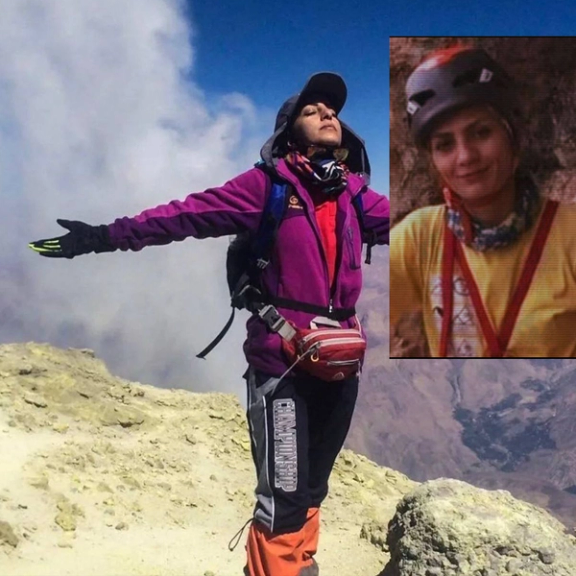
Authorities have arrested two rock climbers in Iran without charge in the central province of Isfahan (Esfahan).

Authorities have arrested two rock climbers in Iran without charge in the central province of Isfahan (Esfahan).
Maryam Parandeh Khouzani and Sama Amoushahi were arrested on July 11, in the wake of a recent spate of protests in Iran targeting sectors of society including athletes.
Khouzani, a highly-regarded rock climbing instructor, was apprehended by agents from the Ministry of Intelligence while participating in an official class organized by the Mountaineering Federation in Khomeinishahr of Esfahan. After her arrest, she was transferred to Dowlatabad Women's Prison in Esfahan.
On same day Sama Amoushahi, a talented rock climber who is currently battling cancer, was also arrested and detained. Her detention has raised alarm bells among human rights activists and concerned citizens, as her health condition requires specialized medical attention and care.
The arrest of these two athletes is part of a broader wave of arrests and detentions that have affected several citizens in Esfahan. The cases of those detained, including the two athletes, are currently being processed in Branch 13 of the Esfahan Revolutionary Court. As of now, no formal charges have been brought against the detainees, and detailed information about their well-being and circumstances remains scarce.
Despite the families' efforts to seek updates on the situation and to engage with judicial authorities, they have been unable to obtain substantial information regarding the detainees' status.
Many Iranian athletes and actresses have fearlessly demonstrated their support the movement by posting pictures of themselves at international events, undeterred by threats of punishment. Despite serious warnings from authorities, athletes and other celebrities have continued to publicly show solidarity with the protesters without yielding to the pressure.

A parliament committee in Iran has passed a hijab bill proposing to confiscate up to 10 percent of celebrities' assets and incomes if they violate hijab rules.
Hardliners on social media support the severe punishments, aiming to deter celebrities and influencers from defying hijab rules.
Hossein-Ali Haji-Deligani, a former high-ranking Revolutionary Guards (IRGC) officer and hardline lawmaker in the parliament's judicial committee, described the bill as considering any action that weakens the family, including nudity, immorality, unveiling, and inappropriate clothing, as a crime. The bill defines "nudity" as appearing in public in clothing considered nude by social norms and will be punishable by a cash fine of 1 to 1.5 billion rials and a prison term of six months to ten years.
Haji-Deligani emphasized that the bill, named "Protection of Family Through Promotion of Hijab and Chastity Culture," includes measures against individuals “connected with foreign governments” and “media outside Iran” promoting nudity, immorality, unveiling, and inappropriate dressing with heavy sentences.
This was a clear reference to regime opponent and critical media, such as Iran International, the BBC Persian Service and others.

Since March, hardliners have attempted to end women's increasing defiance of compulsory hijab and reclaim lost ground, but their efforts have been unsuccessful. The draft bill, jointly prepared by the government and judiciary, faced strong criticism from hardliners for its perceived leniency towards unveiling.
Apart from unveiling, the bill also targets individuals who confront citizens in public, use violence, and threaten unveiled women. Radical clerics have incited citizens to take the law into their own hands as a moral duty.
If approved, adherence to hijab laws would become a criterion for employment in public or private organizations in the future. Clothing that reveals the neck, arms above the wrist, and legs above the ankles will be considered "inappropriate clothing" and will be punishable by a cash fine of up to 500 million rials ($1,000) for the first infringement.
Not covering the head will also be punishable by a cash fine of 240 to 500 million rials for the first instance and up to 1.5 billion rials if repeated more than four times.
The hijab bill also bans taking photos or videos of police while enforcing hijab, but details of proposed punishments have not been made public yet.

Female employees and visitors are still sometimes inspected by female inspectors before entering government buildings to ensure compliance with regulations regarding their tunic, pants, and headscarves or Maghna'e (pullover headscarf with stitched front).
In the first two decades of the Islamic Revolution, inspectors also ensured women's hair did not show from under their headscarf or Maghna'e, and they did not wear makeup, nail polish, or "inappropriate accessories." Clothing generally had to be black, brown, navy, gray, or beige and very loose-fitting.
Over the years, the rules were relatively relaxed depending on which political faction was in power, and some makeup and a little color in clothing became more acceptable.
In July 2022, after weeks of harsh measures on the streets, President Ebrahim Raisi ordered all government entities to strictly implement a “chastity and hijab” law approved by the Supreme Cultural Revolution Council under hardliner Mahmoud Ahmadinejad in 2005.
Shortly after, the death of 22-year-old Mahsa Amini in the custody of hijab enforcers fueled protests that spread throughout the country.

The Iranian regime has filed a case against Taqcheh, an online bookstore, after publishing a picture of female employees without hijab.
On Wednesday, Mizan, the Judiciary News Agency, disclosed the initiation of a court case following the circulation of images showing women in the workplace without the mandatory hijab.
Prior to this announcement, Fars News Agency, affiliated with the IRGC, reported the termination of cooperation of some regime-linked publishers with Taqcheh and shared statements from several other publishing houses expressing their intention to disassociate from the platform.
The news comes in the wake of last week’s closure of the office of online retailer Digikala and a lawsuit that was filed against its female employees for publishing photos without hijab.
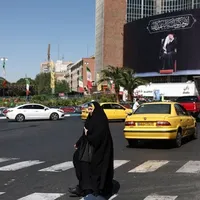
Despite the government’s repressive measures to force women to wear hijab, defiance remains widespread, with pictures and videos depicting women without mandatory hijab regularly being circulated across the country. Alireza Manzari, former vice president of the Iranian Civil Aviation Organization said that it is also affecting Iran’s international status and lowering transit through airports. “People without hijab do not come to our airports as a transit stop,” he said.
Meanwhile, in Damavand, the Prosecutor Morteza Tahmasbi announced the arrest of a bank manager and employee for providing services to a woman without the obligatory hijab. A judicial order has been issued to identify the woman involved.

Iran’s domestic transport services are facing a significant passenger crisis because of a lack of aircraft and trains.
National shortages of available aircraft and locomotives mean the country's aviation and rail sectors are struggling to meet the escalating demand for travel.
On Wednesday, the Mohammad Mohammadi-Bakhsh, head of the Iranian Civil Aviation Organization's, confirmed the existence of a "black market" for plane tickets in the country, expressing the urgency of augmenting the air fleet to alleviate the critical shortage.
"The current need of the country is 550 planes, but we only have 180 planes. To resolve the flight problem, 370 new planes need to be added to the country's air fleet," he said.
Mohammadi-Bakhsh revealed that out of Iran's 330 registered planes, 139 are currently grounded. Furthermore, he said that some of these vehicles have been deemed unfit to return to service, raising concerns about accurately assessing the country's aviation crisis.
The Association of Rail Transport Companies is undergoing a similar set of challenges. Sobhan Nazari, the Chairman of the Board of Directors, said that 350,000 passenger train tickets have been cancelled due to a lack of 900 locomotives, which is severely impacting the rail sector's ability to meet demand.
“Between May and July, approximately 80 out of the 175 currently operational locomotives were functioning,” he said.
Iran's civilian airliners have faced shortages since the 1990s. To compensate, they resorted to leasing older planes or procuring spare parts through intermediaries. However, the technical state of their fleet has steadily worsened over time, resulting in the current situation which has now reached crisis level.

Iranian media reported the arrest of renowned actress Shohreh Ghamar on charges of publishing "offensive content and unsubstantiated claims" on social media.
The news was released by the IRGC-affiliated Tasnim and Fars news agencies, who reported that Ghamar's Instagram page contained posts that included accusations and insults directed towards officials of the Iranian regime. Furthermore, she was reported to have expressed support for Israeli Prime Minister Benjamin Netanyahu, who recently underwent surgery. The actress also allegedly made calls for street protests.
Fars News Agency published some of the controversial stories attributed to Ghamar's Instagram page, one of which included a message to Israeli Prime Minister Benjamin Netanyahu, wishing him a swift recovery, stating, "I prayed a lot for your health. Stay alive."
The news of Ghamar's arrest surfaced shortly after the Judiciary News Agency, Mizan, disclosed the initiation of a legal case against her at the Tehran Prosecutor's Office. Mizan cited the content posted by the actress as a cause for "the spread of psychological insecurity in society."
This incident is part of a broader pattern of authorities summoning and detaining prominent actors and public figures in the Islamic Republic during recent months.
Ghamar attracted attention for her support of Ebrahim Raisi during the 2021 presidential elections in Iran, with a video endorsing his candidacy being widely circulated. She also made a controversial statement expressing her backing for the execution of death sentences during the campaign against the execution of three protesters related to the 2019 protests.

As a power struggle among conservatives in Iran continues, a leading commentator predicts the next parliament speaker will come from the hardliner Paydari group.
Reformist daily Etemad revealed this week that a new round of political struggles over power is underway between Paydari and parliament (Majles) Speaker Mohammad Bagher Ghalibaf. The rivalry extends beyond the Majles election and partly revolves around competition for Iran's presidency in 2025. The feud is discernible in pro-Ghalibaf daily Sobh-e No and Paydari's mouthpiece Raja News websites.
The newspaper wrote that Ghalibaf and Paydari's media fleets have been exchanging accusations and counteraccusations throughout the month of July. The daily added that the two were on the verge of a coalition ahead of the March 2024 parliamentary elections, but in the absence of Iran's reformists on the scene, they started to compete against each other.
Iran’s reformists who were mostly barred from competing in the 2020 parliamentary elections have not decided to register for the upcoming vote, because they are not sure if conservatives controlling the electoral system will allow them to compete.
Etemad also wrote that the rivalry goes beyond the Majles election and is partly about competition over Iran's presidency in 2025. Raja News accused Sobh-e No of belittling what it called Raisi's achievement in making Iran a member of the Shanghai Cooperation Organization. Sobh-e No responded by jokingly calling the Paydari a bunch of super-revolutionaries working against Ghalibaf.

While the media battle continues, a conservative commentator and a former editor of the Kayhan, Mohammad Mohajeri told Etemad Online that if the upcoming elections will become a rivalry among conservatives without reformists playing a part in the elections, Paydari is most likely to win the parliament in March.
"We can congratulate Morteza Agha-Tehrani as the next speaker of the Majles even today," he said. Agha-Tehran was previously the leader of the Paydari Party but stepped down due to allegations about having US citizenship or permanent residency and was replaced by former IRGC officer and Interior Minister Sadegh Mahsouli. Nonetheless, many inside and outside the party believe Agha-Tehran has the final say in the party.
Mohajeri further charged that Paydari operates like a business firm and is currently pretending to have the upper hand in Iranian politics in order to get concessions from other conservative groups.
He added that "Paydari candidates had an average of 250,000 votes in the 2020 parliamentary elections. They can win all the 30 seats for Tehran if others do not compete for any reason." Mohajeri further said, "For the same reason Paydari wants a low-turnout election in March."

While the parliament is sending the final months of its four-year term, some observers say it suffers from an unprecedented lack of influence and popularity. Former lawmaker Iraj Nadimi told Rouydad24 that not only the current members of the parliament cannot solve any of the country's problems, but they also keep creating new problems.
Nadimi said the Majles is incapable of supervising the government, and instead it is currently following the government. He added that despite Khamenei's support for the Majles, it is no longer trusted by the people.
"People in the streets, are generally unhappy about the parliament's performance because it cannot solve their problems, because its legislative agenda was not aimed at addressing challenges." Nadimi was likely referring to the economic crisis that has impoverished tens of millions of people and the regime’s unwillingness to reach a nuclear agreement with the West that could lift crippling economic sanctions.