As Tehran digs in, ordinary Iranians pay the price
As uncertainty clouds the next round of Iran-US talks, the economic pain of the war is mounting inside Iran and beyond, increasing pressure on both sides to find a way out.

As uncertainty clouds the next round of Iran-US talks, the economic pain of the war is mounting inside Iran and beyond, increasing pressure on both sides to find a way out.

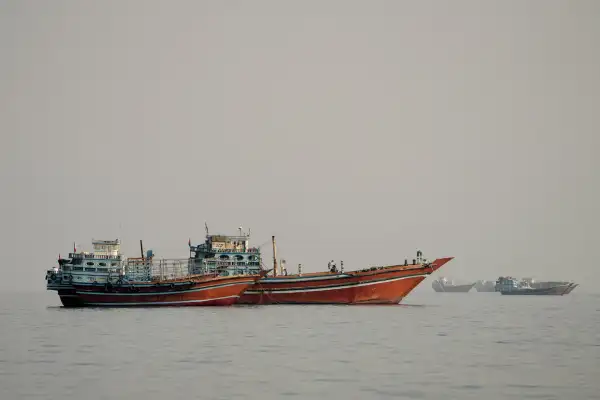
Iran’s Islamic Revolutionary Guard Corps Navy said it had seized two vessels in the Strait of Hormuz and directed them toward Iranian shores, hours after Donald Trump said the United States would extend a ceasefire with Iran.
IRGC-linked Tasnim has pointedly mapped the Persian Gulf’s undersea internet cables and cloud infrastructure in what appears to be a thinly veiled warning that the region’s digital backbone may now be in Iran’s line of fire.
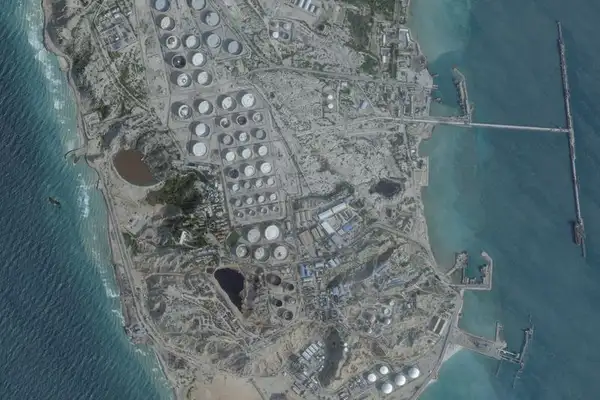
Iran is facing severe shortages of key petrochemical products after recent strikes on its main production hubs, according to two informed sources inside the country.

The fragile truce between Tehran and Washington expires on April 22. With it ends restraint. Conflict will return, though its scale remains uncertain.

Iran said on Monday it had not yet decided whether to join a second round of talks with the United States, even as Pakistan prepared to host a US delegation, with Tehran accusing Washington of violating the ceasefire and showing no real seriousness about diplomacy.

Despite deep political turmoil, economic distress, militant violence, and a fraying security landscape at home, Pakistan has unexpectedly emerged as the publicly acknowledged central mediator between Washington and Tehran.

One hundred days after thousands of protesters were massacred on January 8 and 9, Iran's already fragile economy has sharply deteriorated, with millions feared to be unemployed as a devastating war compounds the crisis and accelerates economic collapse.

For decades the IRGC relied on its ability to threaten closure of the Strait of Hormuz as its premier economic shield and golden get out of jail card.

Freelancers and small business owners say their incomes have collapsed and daily operations have halted during Iran’s prolonged internet shutdown, which NetBlocks said has caused $1.8 billion in losses over 48 days.

Hardline voices in Tehran are escalating rhetoric around the Strait of Hormuz, calling for transit fees on ships even as a US blockade challenges Iran’s control over the strategic waterway.

Fundraising drives across Indian-administered Kashmir have collected nearly $2 million for Iran following the killing of Supreme Leader Ali Khamenei, highlighting the depth of religious and ideological ties between the region’s Shia community and the Islamic Republic.

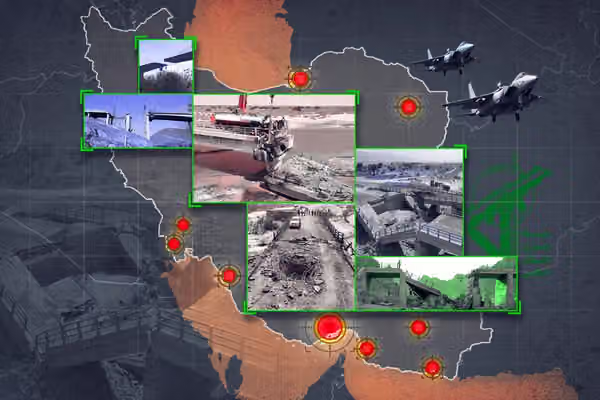
War damage to Iran’s economy has reached $270 billion in 40 days, equivalent to roughly $3,000 per person, according to official figures, with losses expected to grow as trade disruptions deepen under a US blockade of Iranian ports.

The idea that Iran could generate tens of billions of dollars annually by charging ships to pass through the Strait of Hormuz has gained traction in media commentary, but the claim does not withstand scrutiny.

The United States moved to impose a naval blockade on Iran just as the country’s oil exports were surging to their highest levels in years, underscoring Washington’s effort to halt a wartime boom in Tehran’s energy revenues.

Iranians face a severe shortage of essential medicines and a spike in prices, according to reports sent by citizens to Iran International, as the country struggles with a deepening healthcare crisis.

Arab states hit hardest by Iran’s strikes may be emerging from the US-Iran ceasefire feeling sidelined, a shift that could push them closer to Israel as they rethink who can truly guarantee their security, Middle East scholar Dalia Ziada told Eye for Iran.

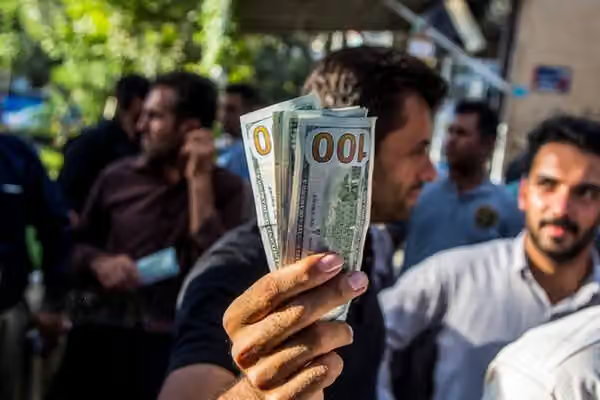
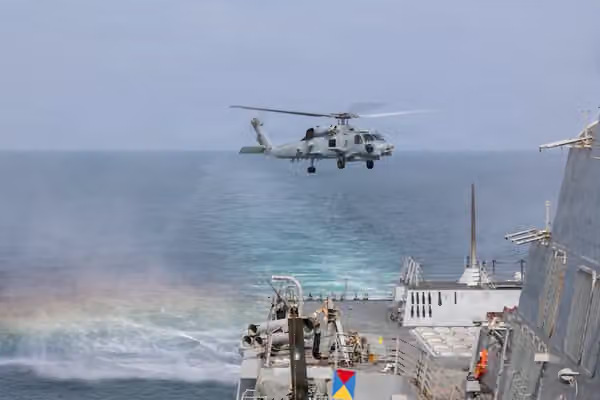
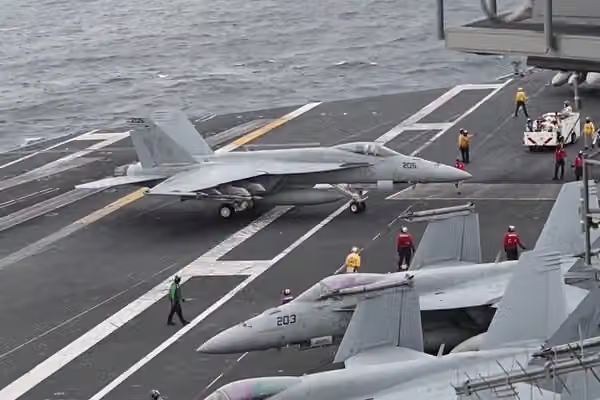
The US naval blockade of Iran, which started on Monday, could rapidly cripple the country’s economy, cutting off most of its trade, halting oil exports and triggering inflation and currency pressure within days.

Reactions in Tehran to the collapse of the Islamabad talks suggest Iran’s leadership is settling on a dual message: defiance toward Washington’s pressure while still leaving the door to diplomacy open.

Iran has sent a negotiating team to the Islamabad talks with the United States spanning an unusually broad political spectrum—suggesting a possibly calculated effort to pre-empt future hardline backlash while pursuing negotiations.

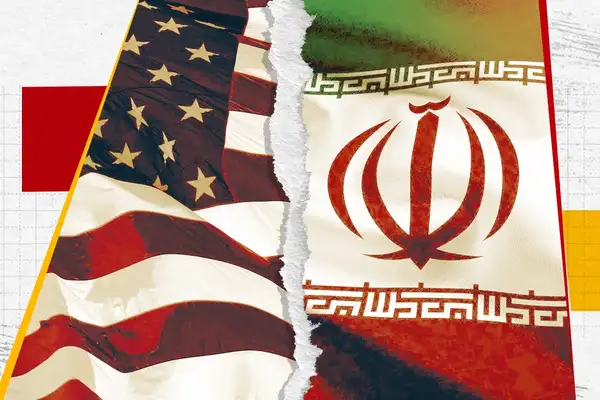
As US and Iranian envoys prepare to meet in Pakistan this weekend, the truce between the two sides appears less a step toward peace than a fragile intermission in a war whose central disputes remain unresolved.

As US and Iranian envoys prepare to meet in Pakistan to explore a path out of the war, China is watching from further east—an influential but cautious actor that helped move diplomacy forward but is unlikely to become the guarantor Tehran would like.