• العربية
  • فارسی
Brand
  • Iran Insight
  • Politics
  • Economy
  • Analysis
  • Special Report
  • Opinion
  • Podcast
  • Iran Insight
  • Politics
  • Economy
  • Analysis
  • Special Report
  • Opinion
  • Podcast
  • Theme
  • Language
    • العربية
    • فارسی
  • Iran Insight
  • Politics
  • Economy
  • Analysis
  • Special Report
  • Opinion
  • Podcast
All rights reserved for Volant Media UK Limited
volant media logo
ANALYSIS

Pakistan continues quiet push to stop another Iran war

Maryam Sinaiee
Maryam Sinaiee

Iran International

May 22, 2026, 20:07 GMT+1
Field Marshal Asim Munir arrives in Tehran on May 22, 2026

Pakistani top general Asim Munir’s trip to Tehran has fueled speculation about a possible temporary Iran-US agreement to end the war and resume broader talks, although Tehran says the high-profile visit does not necessarily mean a deal is close.

Munir’s visit on Friday follows days of lower-level negotiations that have reportedly narrowed some of the major disagreements between Tehran and Washington.

The Pakistani commander visited Tehran last month as well, where he held meetings with senior Iranian civilian and military officials.

Pakistan’s Interior Minister Mohsin Naqvi also traveled twice to Tehran and remained there on Friday as negotiations continued.

Iranian and Pakistani media reports described the visit as part of Islamabad’s broader mediation effort aimed at reducing tensions over Iran’s uranium enrichment program and the closure of the Strait of Hormuz.

Axios reported on Friday that Munir’s visit could represent a “final push” by Pakistan to secure a temporary agreement under which both sides would halt hostilities and continue negotiations for another 30 days over unresolved disputes, including Iran’s nuclear program.

Media speculation

However, expectations of an imminent breakthrough remain cautious.

An Iranian source close to the negotiations told the Arabic outlet Al-Araby Al-Jadeed that Pakistan’s interior minister had not delivered any new American proposal to Tehran and that reports about a finalized draft agreement were “media speculation.”

According to the source, “the visits by Pakistani officials to Tehran are aimed at strengthening Islamabad’s mediation role and preventing further escalation.”

Iran’s Foreign Ministry spokesman downplayed the significance of the Pakistani top general's trip to Tehran, saying, "Despite becoming more frequent, such exchanges are a continuation of the same diplomatic process. We cannot necessarily say we have reached a point where a deal is near."

“The differences between Iran and the United States are so deep and extensive that it cannot be said we must necessarily reach a result after a few rounds of visits or negotiations within a few weeks," Iran's foreign ministry spokesman Esmaeil Baghaei said on Friday.

Iranian outlet Farda News, considered close to parliament speaker Mohammad Bagher Ghalibaf who is leading Iran’s negotiating team, wrote that “Islamabad is not merely a messenger, but is playing a role beyond transmitting messages and below that of a direct negotiator.”

Pakistan, Iran’s eastern neighbor, has emerged over the past two months as the principal intermediary between Tehran and Washington.

Its mediation efforts accelerated after Islamabad helped broker a ceasefire on April 7. But the first round of direct talks between Iran and the United States failed to produce a lasting agreement, and recent weeks have shown signs of growing diplomatic deadlock.

‘Unprecedented progress’

Oman had previously served as the primary mediator. Talks between Tehran and Washington were underway in Muscat before US and Israeli strikes on Iran began on February 28.

At the time, Omani Foreign Minister Badr Albusaidi publicly said that “significant and unprecedented progress” had been achieved before diplomacy collapsed following the outbreak of war.

Unlike Oman, which largely positioned itself as a neutral intermediary, Pakistan enters the process with closer security ties to Saudi Arabia.

Some analysts argue this complicates Islamabad’s role. Pakistan signed a defense agreement with Saudi Arabia in 2025 committing both countries to support one another in the event of an attack. Iran repeatedly targeted Saudi territory during the war, raising questions among some observers about Pakistan’s neutrality.

London-based Amwaj Media wrote that the Islamabad-Riyadh defense pact demonstrates “the limits of Pakistan’s neutrality” in mediating between Iran and the United States.

Iranian state news agency IRNA described Pakistan’s primary concern as preventing the conflict from spreading beyond Iran into the wider region.

The report said Pakistan fears the war could spill into South Asia and destabilize its western border regions at a time when Islamabad is already managing tensions with India along its eastern frontier.

‘The limits of Pakistan’s neutrality’

At the same time, Pakistani officials appear to see strategic opportunities in successful mediation.

IRNA argued that if Islamabad helps secure a diplomatic settlement, it could strengthen Pakistan’s regional standing and deepen economic ties with a post-sanctions Iran.

“Honest mediation by Islamabad could elevate Pakistan’s position in a future Iran free from sanctions and transform it into an important partner,” IRNA wrote.

Pakistan’s mediation effort has also drawn support from China, one of Tehran’s closest strategic partners. Pakistani Prime Minister Shehbaz Sharif has confirmed that Islamabad’s diplomatic efforts are backed by Beijing.

Although Beijing has avoided taking on a direct mediation role, Chinese Foreign Minister Wang Yi recently said China supports Pakistan playing a “greater role” in resolving the conflict.

Most Viewed

The strange afterlife of Iran’s firebrand president
1
INSIGHT

The strange afterlife of Iran’s firebrand president

2

Hardliners attack Pezeshkian over talks and wartime candor

3
INSIGHT

Iran can build missiles but can't afford chicken

4

Rights group warns Iranian ex-MMA champion faces imminent execution

5
ANALYSIS

Why oil giant Iran struggles to supply gasoline

Banner
Banner

Spotlight

  • Pakistan continues quiet push to stop another Iran war
    ANALYSIS

    Pakistan continues quiet push to stop another Iran war

  • Iran scrambles for Omani back channel around the Hormuz blockade
    INSIGHT

    Iran scrambles for Omani back channel around the Hormuz blockade

  • From pulpits to parliament, why Iran’s officials speak in threats
    OPINION

    From pulpits to parliament, why Iran’s officials speak in threats

  • Why oil giant Iran struggles to supply gasoline
    ANALYSIS

    Why oil giant Iran struggles to supply gasoline

  • Iran can build missiles but can't afford chicken
    INSIGHT

    Iran can build missiles but can't afford chicken

  • The strange afterlife of Iran’s firebrand president
    INSIGHT

    The strange afterlife of Iran’s firebrand president

•
•
•

More Stories

Iran scrambles for Omani back channel around the Hormuz blockade

May 22, 2026, 13:28 GMT+1
•
Farnaz Davari

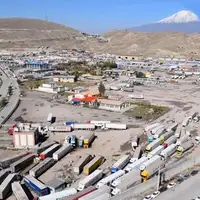
A small port on Oman’s Musandam Peninsula has become part of Iran’s workaround to the maritime blockade in the Strait of Hormuz, traders say, as goods once routed through the UAE are shifted through costlier channels.

Before the war involving the United States, Israel and Iran, Khasab was better known to many Iranians as a stop on informal maritime routes used by fishermen, tourists and fast boats moving between Oman and Iran’s southern coast.

Among those boats were vessels known locally as shooti boats, a term borrowed from Iranian smuggling slang. In Iran, shooti usually refers to high-speed cars that carry untaxed or smuggled goods across long distances, often traveling in groups and avoiding stops.

Around Khasab, traders and locals use the same word for fast boats that make quick crossings to places such as Qeshm and other Iranian coastal points.

For years, the route was associated mostly with informal trade and small-scale smuggling. Iranian cigarettes, alcohol and hashish were moved from Iran to Oman, while consumer goods, home appliances and luxury items were brought back from Oman to Iran.

Iranian fishing boats around Khasab were also a familiar part of the area’s maritime landscape.

A port at the mouth of Hormuz

Khasab is the capital of Oman’s Musandam governorate, an exclave separated from the rest of Oman by the United Arab Emirates.

  • Rapid deterioration of Iran-UAE ties threatens a critical trade lifeline

    Rapid deterioration of Iran-UAE ties threatens a critical trade lifeline

Its geography gives it unusual importance: the port sits near the mouth of the Strait of Hormuz, about 35 kilometers from Iran, surrounded by dry mountains and fjord-like inlets that before the war were mostly associated with leisure boats and maritime tours.

The blockade has changed the function of the route.

With main passages in the Strait of Hormuz closed to Iranian ships and vessels linked to the Islamic Republic, Khasab has shifted from a local secondary route into one of several alternatives for moving goods into Iran.

  • Iran-UAE breakdown leaves Iranian expats in limbo

    Iran-UAE breakdown leaves Iranian expats in limbo

Cargoes that previously traveled through standard commercial channels and UAE ports are now, in parts of the transport network, being redirected through Oman and Khasab.

How the route works

A trader told Iran International that since the ceasefire, Iran-bound cargo is first carried from UAE ports to Khasab on vessels flying non-Iranian flags.

The goods are then unloaded at Khasab’s pier onto Iranian vessels, which take them to Iranian ports outside the main controlled routes.

A significant share of the movement is carried by landing craft, the trader said.

Those vessels are useful for the route because they can move through shallow waters and dock at smaller piers. Some can carry hundreds of tons of cargo, and in some cases close to 1,000 tons, including containers, vehicles and heavier freight.

The goods moving through Khasab are not limited to one category, according to trade sources.

They can include cars, spare parts, home appliances, consumer goods, hygiene products and some items linked to petroleum products.

Iranian vessels carrying goods from Khasab toward Iran (file photo)
100%
Iranian vessels carrying goods from Khasab toward Iran

A costly workaround

The route is significantly more expensive than Iran’s previous channels.

One trader told Iran International that moving goods through Khasab costs about six times more than the earlier route from the UAE to the southwestern port city of Khorramshahr.

Still, the trader said the higher cost has become one of the few remaining options for many businesses trying to continue operating.

Local officials in Iran have also referred to the growing use of Omani ports.

Khorshid Gazderazi, head of the Bushehr Chamber of Commerce, said on Thursday that the UAE had previously served as Iran’s main hub for exports and imports, but that after the war began and loading and container departures were disrupted, using Omani ports was placed on the agenda.

He named Khasab, Suwaiq, Shinas and Muscat among the ports being used to move goods.

Morad Zerehi, governor of Bandar Khamir in Hormozgan province, also announced a plan called “boat transport” for the “legal transfer of basic goods from Omani ports” to the county. 

A route advertised online

The shift is also visible on Iranian social media, where accounts selling goods have begun advertising the Oman route.

Some accounts have posted videos of goods being moved from Oman, presenting the route as proof that imports into Iran are continuing despite the war and maritime restrictions.

They market Khasab as a new way to bring goods into Iran and encourage customers to keep buying.

But the route also shows the limits of Iran’s workaround.

For traders, Khasab offers a way to keep goods moving. For Iran’s trade network, it is also a sign of how the blockade has pushed ordinary commerce into longer, more expensive and less predictable routes.

Why oil giant Iran struggles to supply gasoline

May 22, 2026, 04:14 GMT+1
•
Umud Shokri

Iran’s worsening gasoline shortage is becoming a test of whether Tehran can still sustain basic economic stability under war conditions.

For years, Tehran portrayed fuel self-sufficiency as proof that sanctions had not crippled the energy sector. But recent comments by officials suggest the country was already facing a daily shortfall of roughly 20 million liters before the latest war.

MP Reza Sepahvand recently said production stands at around 105 million liters a day while consumption is closer to 135 million.

War damage, disrupted imports and pressure on petrochemical units have now pushed a long-running structural problem into public view.

Why a producer runs short of gas

Iran may hold vast oil reserves and operate sizable refineries, but that does not automatically guarantee enough gasoline for domestic use.

Much of the country’s refining system depends on aging infrastructure, limited maintenance and technology constrained by years of sanctions, leaving production increasingly out of step with demand.

Fuel consumption is also on the rise. Expanding cities, heavy reliance on private cars and millions of older, fuel-inefficient vehicles place constant pressure on supply.

Cheap subsidized gasoline also encourages overuse, while large price gaps with neighboring countries fuel widespread smuggling that pulls millions of liters out of Iran each day.

The crisis is tied to politics as much as energy. Subsidies help keep fuel affordable and reduce public frustration, but they also deepen waste, smuggling and financial pressure on the state.

Iranian leaders know reforms are necessary, yet past fuel-price increases have triggered unrest, leaving the government trapped between avoiding social anger and managing a system that is becoming harder to sustain.

How war made things worse

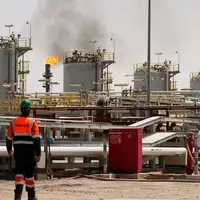
The latest war has turned a chronic imbalance into a more immediate stress test. Strikes on energy infrastructure and disruption around the Strait of Hormuz have affected refining, storage, distribution and imports.

Even when refineries are not completely knocked offline, damage to depots, logistics networks and supporting industrial units can sharply reduce the amount of usable gasoline reaching consumers.

One overlooked issue is Iran’s reliance on petrochemical components for gasoline blending.

When refineries cannot produce enough high-quality gasoline, producers blend in octane-boosting components to improve fuel performance. These can include aromatic-rich streams such as benzene, toluene and xylenes, as well as additives such as MTBE.

Such components are widely used in global fuel production because they raise octane levels. The difference lies in regulation.

Many countries tightly restrict substances such as benzene because of health and environmental risks. Iran’s heavier reliance on petrochemical blending can worsen pollution if quality controls weaken or blending exceeds safer limits.

Higher levels of benzene and aromatics increase harmful emissions, especially in congested cities such as Tehran, where air quality is already poor. MTBE also carries environmental risks, particularly for groundwater contamination.

Damage to petrochemical facilities therefore matters for two reasons: it can reduce the supply of components Iran needs to stretch gasoline production while also increasing pressure to rely on lower-quality blending practices to keep fuel flowing.

Either outcome creates problems: tighter supply or worsening health and environmental costs.

When will it really bite?

Before the war, Iran managed the imbalance through imports, rationing, fuel cards, blending and informal restrictions. Those measures helped prevent a full public breakdown but never solved the underlying problem.

If the reported daily shortfall of 20 to 30 million liters persists, shortages could become more visible within weeks or months, especially during peak summer demand.

Longer queues, tighter quotas, regional outages, rising black-market prices and growing pressure on transport and agriculture are among the most likely consequences.

Recent public comments by lawmakers suggest officials are no longer able to present the issue as a temporary inconvenience.

War damage has made repairs and imports more difficult, while years of overworking refineries, postponing maintenance and relying on imports and petrochemical blending left little room to absorb new shocks.

Partial recovery of refining and distribution capacity may be possible within one or two months if damage is limited and supply routes remain open. Full normalization would likely take far longer because the deeper causes are structural: rising demand, old vehicles, sanctions, smuggling, weak investment and distorted pricing.

Iran’s gasoline shortage is therefore not only an energy problem but also a governance problem.

For ordinary Iranians, the consequences are increasingly visible in longer fuel lines, higher unofficial prices, rising transport costs and worsening air pollution: exposing the widening gap between official claims of resilience and economic reality.

Iran officials seek to show Supreme Leader still in charge - FT

May 21, 2026, 05:33 GMT+1

Iranian officials’ recent comments about Supreme Leader Mojtaba Khamenei are aimed at showing he remains in charge and will ultimately decide whether Tehran accepts a deal with the United States to end the war, the Financial Times reported on Thursday.

The report said officials had begun speaking more openly about Khamenei’s condition amid speculations that the Islamic Revolutionary Guards were effectively running decision-making.

“They are projecting that there’s no change . . . the supreme leader was the apex of the system and is still the apex,” Vali Nasr, a former US official and professor at Johns Hopkins University was quoted as saying. “And that he’s alive, functioning and in control.”

He added that the guards were also seeking to project that “they are not running the show and [Khamenei is] not just a figurehead.”

The report referred to remarks by Iran’s President Masoud Pezeshkian and Mazaher Hosseini, a senior official in the Supreme Leader’s office.

Pezeshkian said on earlier this month that he had met with the Supreme Leader, offering a first public account of him meeting Mojtaba Khamenei since he suffered severe wounds at the start of the Iran war on February 28.

Hosseini said later that Mojtaba Khamenei suffered minor injuries to his kneecap, back and behind his ear in the airstrikes that killed his father and wife, insisting he is now in “full health” and dismissing reports of a serious head injury as “lies.”

Calls for pragmatism grow in Iran but rulers appear unmoved

May 20, 2026, 19:05 GMT+1
•
Behrouz Turani

A growing range of political voices in Tehran are calling for realism abroad and reconciliation at home rather than deeper confrontation as Washington signals both openness to talks and readiness for further military action.

US President Donald Trump talked up negotiations with Iran on Wednesday before quickly adding that hitting harder was still on the table.

In Tehran, a widening group of moderate, centrist and pragmatic conservative figures are warning the leadership that wartime solidarity cannot be taken for granted and that failure to change course could deepen Iran’s political and economic crisis.

Former MP and prominent moderate Mohsen Mirdamadi said in a May 20 interview with Etemad newspaper that “Iran’s most important assets are its people,” warning the government against overlooking that reality.

“Failing to recognize and appreciate this key asset is more dangerous than the destruction of any infrastructure,” he said.

Mirdamadi asserted that the war had strengthened many Iranians’ sense of patriotism. This public empathy, he argued, creates a responsibility for the government to enact meaningful changes in its policies in order to restore hope in the future.

“Give-and-take and balance are essential for reaching the optimal point,” he said, warning that those “beating the drums of war” could eventually force Iran’s leadership to “drink the chalice of poison” — a reference to accepting painful compromises too late rather than pursuing a timely agreement.

Similar warnings have increasingly appeared even in parts of the conservative camp.

On Wednesday, the conservative daily Jomhouri Eslami urged officials “not to provoke non-belligerent countries against Iran” and warned that threatening friendly states or discussing attacks on undersea communication cables in the Persian Gulf would only deepen hostility toward Tehran.

The paper also called on opponents of negotiations with the United States to reconsider their stance, arguing that constructive engagement with non-hostile countries could benefit Iran.

Other outlets focused on the domestic implications of the war atmosphere.

Rouydad24 warned authorities against using the conflict as a pretext to further restrict civil liberties, including internet access.

“Sustainable security is a product of justice, welfare, and trust in government, not restrictions and pressure on the people,” the outlet wrote, adding that “citizenship rights are not a luxury.”

Conservative commentator Mohammad Mohajeri similarly warned that wartime unity could prove fragile if the government fails to recognize growing public dissatisfaction.

“The government must understand that no war lasts forever,” Mohajeri told Etemad. “Eventually, there will have to be a ceasefire, an agreement or a mechanism to manage the crisis.”

Ali Rabiei, an adviser to President Masoud Pezeshkian, echoed the same concern in comments published by Etemad.

“We have no asset other than the people,” Rabiei wrote. “Please do not allow them to become polarized or fragmented as this is exactly what our enemies want.”

Yet the growing chorus of calls for pragmatism is unfolding alongside signs that Iran’s hardline camp is becoming more radicalized and more tightly aligned around confrontation.

While moderate and pragmatic voices may be broadening across parts of the political spectrum, it is the security establishment and its allies who still appear to hold the upper hand.

Calls for pragmatism are visibly rising. Whether anyone with real hard power is listening is far less clear.

Why Tehran threatens Trump while pursuing diplomacy

May 20, 2026, 04:56 GMT+1

Even as Tehran engages in hardheaded diplomatic maneuvering with Washington, it is advancing a parliamentary proposal offering a €50 million reward for President Trump’s killing.

The ruling establishment, they argue, is trying to project strength after weeks of military and political pressure while using the prospect of talks not as a concession but as another arena of confrontation.

“The Iranian regime is trying to, in their own mind, basically say that we are on par,” Dr. Shahram Kholdi, a Middle East historian, told Iran International. “Even if you're not on par with Trump, we are actually beating him at all levels.”

The proposed bounty, he said, should be read partly as psychological warfare against Trump.

Read the full article here.