Hope and anger in Iran as fragile ceasefire persists
Messages from Iran International viewers inside the country reveal a society grappling with a mix of hope, anger and deep uncertainty as a fragile ceasefire with the United States persists.

Messages from Iran International viewers inside the country reveal a society grappling with a mix of hope, anger and deep uncertainty as a fragile ceasefire with the United States persists.

The United States on Tuesday imposed sanctions on a network of companies, ships and individuals tied to Mohammad Hossein Shamkhani, an Iranian oil trader whose business empire has become a major conduit for Iran’s sanctioned petroleum exports.

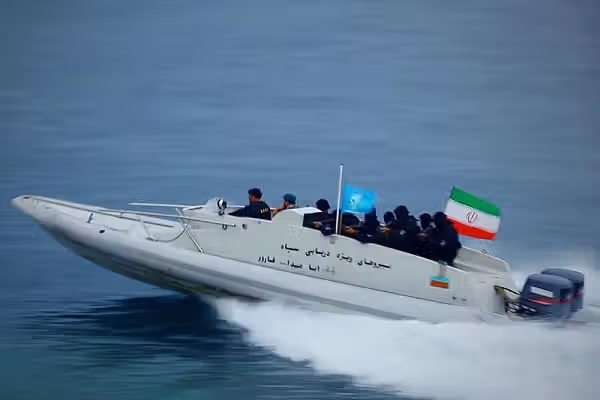
Hardline voices in Tehran are escalating rhetoric around the Strait of Hormuz, calling for transit fees on ships even as a US blockade challenges Iran’s control over the strategic waterway.

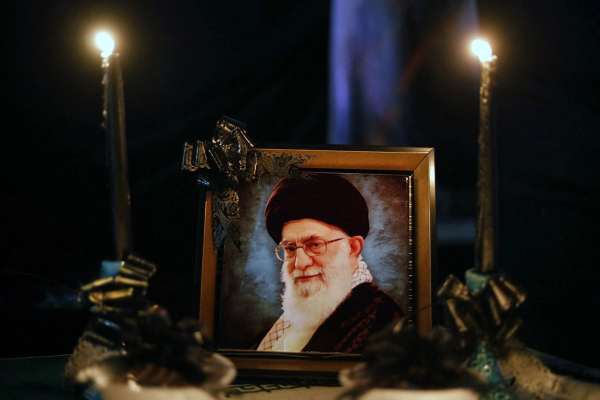
Fundraising drives across Indian-administered Kashmir have collected nearly $2 million for Iran following the killing of Supreme Leader Ali Khamenei, highlighting the depth of religious and ideological ties between the region’s Shia community and the Islamic Republic.

The US naval blockade of Iran is entering an opaque phase, with early signs of impact emerging through both buyer hesitation and deceptive shipping practices, rather than direct naval confrontations.

The US Treasury has warned banks in the Middle East and East Asia to halt Iran-linked transactions or face potential sanctions, signaling a stepped-up enforcement push targeting the financial networks that move Tehran’s oil revenues.

War damage to Iran’s economy has reached $270 billion in 40 days, equivalent to roughly $3,000 per person, according to official figures, with losses expected to grow as trade disruptions deepen under a US blockade of Iranian ports.

Sharp disagreements among members of Iran’s negotiating team led them to abandon US talks in Islamabad and return to Tehran on April 11 following an order from Iran's top security official, sources familiar with the deliberations told Iran International.

The idea that Iran could generate tens of billions of dollars annually by charging ships to pass through the Strait of Hormuz has gained traction in media commentary, but the claim does not withstand scrutiny.

The United States moved to impose a naval blockade on Iran just as the country’s oil exports were surging to their highest levels in years, underscoring Washington’s effort to halt a wartime boom in Tehran’s energy revenues.

Iran faces a wave of layoffs in its petrochemical sector and widespread factory closures as a deepening economic crisis and internet shutdowns paralyze businesses, according to reports sent by residents to Iran International.

Iranians face a severe shortage of essential medicines and a spike in prices, according to reports sent by citizens to Iran International, as the country struggles with a deepening healthcare crisis.

More than 1,000 hours of internet shutdown in Iran is crippling small businesses and startups, with officials estimating losses of at least $35 million per day.

Iran’s central bank has warned President Masoud Pezeshkian that rebuilding the country’s war-damaged economy could take more than a decade, sources familiar with internal deliberations told Iran International.

Arab states hit hardest by Iran’s strikes may be emerging from the US-Iran ceasefire feeling sidelined, a shift that could push them closer to Israel as they rethink who can truly guarantee their security, Middle East scholar Dalia Ziada told Eye for Iran.

The US naval blockade of Iran, which started on Monday, could rapidly cripple the country’s economy, cutting off most of its trade, halting oil exports and triggering inflation and currency pressure within days.

Reactions in Tehran to the collapse of the Islamabad talks suggest Iran’s leadership is settling on a dual message: defiance toward Washington’s pressure while still leaving the door to diplomacy open.

Hooman Forouhari, a Zoroastrian religious figure, was arrested in Kerman on March 14 by the intelligence branch of Iran’s Revolutionary Guards, according to reports.

As a fragile ceasefire holds between the United States and Iran, former CIA analyst and former National Security Council director Ken Pollack is warning that the greatest risk may be a war that ends with the Islamic Republic still intact.

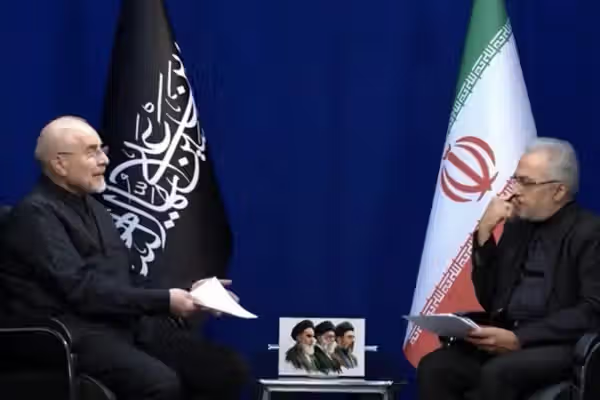
Iran has sent a negotiating team to the Islamabad talks with the United States spanning an unusually broad political spectrum—suggesting a possibly calculated effort to pre-empt future hardline backlash while pursuing negotiations.

Control of the Strait of Hormuz has become Tehran’s most powerful bargaining chip as it seeks maximum leverage in the ongoing peace talks with the United States in Islamabad.