Iran sentences political prisoner and fiancée to death on Israel-linked charges
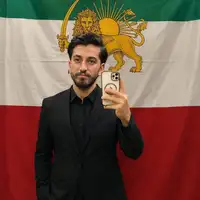
A Tehran Revolutionary Court judge has sentenced political prisoner Mehdi Nazer and his fiancée, Mahnaz Chardouli, to death and also 10 years in prison, according to information received by Iran International.
Judge Abolghasem Salavati, head of Branch 15 of Tehran’s Revolutionary Court, also sentenced Nazer’s sister, Atefeh Nazer, to 10 years in prison.
The three political prisoners were arrested in Tehran on January 11, 2026.
The charges include attacking a mosque with Molotov cocktails, taking part in illegal gatherings, “assembly and collusion,” and alleged offenses under Iran’s espionage law, including cooperation with Israel.
Information shared with Iran International indicates that the charges of attending protests and attacking a mosque were brought despite there being no published reports of any protest or mosque attack on the date of their arrest.
A source familiar with their case said Salavati sentenced each of the three to 10 years in prison on the charge of “assembly and collusion,” even though the legal punishment for that charge is two to five years in prison.
The families of the prisoners have been under heavy pressure from security agencies not to publicize the case, according to the information received.
During the legal proceedings, the three were represented by a court-appointed lawyer, Younes Karimi.
A source familiar with the case said Karimi had received money from the families but effectively followed Salavati’s demands during the proceedings.
A framed portrait of Iran's slain Supreme Leader Ali Khamenei is displayed beside lit candles during a mourning ceremony.
Dozens of messages sent to Iran International say Iranian authorities and state-linked institutions are pressuring workers, businesses and charities to take part in funeral ceremonies for slain Supreme Leader Ali Khamenei.
The accounts describe a broad campaign of workplace directives, business closures and logistical mobilization in the days leading up to Khamenei’s funeral and burial.
The Islamic Republic's second Supreme Leader was killed on the morning of February 28, in the opening hours of the war with Israel and the United States.
More than four months after Khamenei's death, authorities say he will be buried on July 9 following five days of ceremonies across Iran and Iraq. Officials have attributed the unusually long delay to wartime conditions and security concerns, a sign of the political sensitivity and logistical difficulty surrounding the former leader’s burial.
Several messages said that businesses had been warned to close during the ceremonies or face penalties if they remained open.
A portrait of Iran's Supreme Leader Ali Khamenei is displayed on a black-draped ceremonial stand adorned with a mourning banner.
"We received a text message from the real estate union saying we are not allowed to open our office during the funeral days and must attend the ceremonies," one Tehran resident wrote.
Another message from Tehran said members of the Basij visited shops and warned owners that businesses opening during the mourning period would be sealed.
"My parents are shopkeepers. Basij members told our shop and others nearby that if we open during the funeral days, the shop will be sealed," the citizen said.
Others described wider economic disruption linked to the ceremonies.
One Tehran gym owner wrote that officials had instructed fitness centers to close from Saturday through Wednesday.
Another message said Tehran's Grand Bazaar had been ordered shut until Thursday, adding that the prolonged closure would place further pressure on already struggling businesses.
Workers describe mandatory attendance
Several messages added that public-sector employees were ordered to attend official ceremonies.
One Tehran municipality employee said all leave had been canceled and staff across municipal bodies had been ordered to attend the ceremonies.
Another message referred to an audio recording attributed to the human resources director of Tehran Municipality's District 10, which instructed all employees, including parents with young children and workers with serious medical conditions, to attend.
The Hamshahri newspaper group, another citizen said, had instructed management to provide 200 employees for the ceremonies.
Workers at automaker Saipa also described disruptions, with one employee saying overtime had been canceled as company facilities were prepared to accommodate around 2,000 visitors from Iraq attending the funeral.
Charities, restaurants and residents pressured
Messages also pointed to pressure beyond government workplaces.
One message from Nahavand in Hamedan province said local officials summoned charities on Wednesday and demanded they contribute to the funeral, warning that their work could be disrupted if they refused.
Another said that police and Basij members visited restaurants in an industrial town near Tehran and warned owners they must prepare thousands of free meals for mourners or risk closure.
A Tehran resident also reported that text messages encouraged households to host visitors traveling to the capital for the ceremonies.
Extensive state mobilization
Official announcements indicate the authorities are preparing a large logistical operation for the funeral.
The Basij Organization for Guilds said 50 million loaves of bread were being prepared nationwide with the participation of bakers' unions, while 16 mobile bakeries would be deployed across Tehran and surrounding areas to prevent shortages.
Workers arrange decorations during funeral preparations for Iran's former Supreme Leader Ali Khamenei.
Several messages criticized the scale of those preparations, contrasting them with economic hardship and reductions in public support.
"Free trains and hotels are available for their leader's burial, but student food subsidies have been cut," one student wrote.
Another message said bread was being transported from Kerman for the ceremonies, adding that transport resources would face additional pressure.
Iran has announced that funeral processions will begin in Tehran on July 4 before continuing through Qom, Najaf and Karbala ahead of Khamenei's burial in Mashhad on July 9. Authorities have also announced heightened security measures, including temporary airspace restrictions over Tehran and Mashhad during the ceremonies.
Iranian security forces arrested environmental activists Houman Jokar and Sepideh Kashani at their home on Wednesday and seized their electronic devices, their lawyer said.
Lawyer Hojjat Kermani said Kashani's sister, Sima Kashani, was also arrested. He said it was not immediately clear which security agency had detained the three, according to the Emtedad news website.
Kermani said the arrests, ahead of a long public holiday and the closure of judicial offices, had increased concern among their families.
Jokar and Kashani were among a group of environmental activists arrested in 2018 by the Revolutionary Guards' intelligence organization. They were later convicted on espionage charges after a case that drew criticism from human rights groups and UN experts over the arrests, interrogations and trial.
Jokar was sentenced to eight years in prison and Kashani to six years. The other defendants were released from Tehran's Evin prison at different times, with the last of them freed in April 2024.
One of the defendants, Iranian-Canadian conservationist Kavous Seyed-Emami, died in custody about a month after his arrest in 2018. Iranian judicial officials said he had killed himself, a conclusion rejected by his family.
The latest arrests come amid reports by rights groups of a new wave of detentions of civil, political and labor activists across Iran following recent unrest and the war with Israel and the United States.
UN Special Rapporteur on the situation of human rights in Iran Mai Sato attends a session of the Human Rights Council at the United Nations in Geneva, Switzerland, March 16, 2026.
The US-Iran memorandum of understanding failed to address human rights and risked leaving Iranians without accountability, UN Special Rapporteur on the situation of human rights in Iran Mai Sato said, according to a report by Geneva Solutions on Wednesday.
The US-Iran memorandum of understanding failed to address human rights and risked leaving Iranians without accountability, the UN Special Rapporteur on Iran Mai Sato said, according to a report by Geneva Solutions on Wednesday.
“The Iranian people are barely visible in the framework,” Sato said in the interview conducted last Friday. “It serves geopolitical interests while leaving the Iranian people behind.”
She also said the crackdown on Iran’s nationwide protests should not be forgotten as attention turns to the war and US-Iran diplomacy.
“The war started soon after the crackdown on the nationwide protests that began at the end of December 2025, when the Iranian people spoke up and asked for fundamental change – and I think that should not be forgotten,” Sato said.
She warned that an agreement that excludes human rights could return Iran to its pre-war conditions or make repression worse.
“An MoU, and the final agreement, that doesn't address the human rights situation risks simply reverting to how things were before or worse enabling further repression through a continued lack of accountability,” she said.
Sato said the MoU focused almost entirely on military withdrawal, reopening the Strait of Hormuz and nuclear commitments, with only a reconstruction fund pointing indirectly to the public’s needs.
“It’s worth noting, though, that not all of the economic hardship stems from the war or sanctions; domestic policy decisions have also played a part,” she said.
Sato said she wanted any final deal to include a halt to executions, the release of people arbitrarily detained, a guarantee of open internet access and protection of civic space.
She also said she had contacted US authorities about alleged rights violations during the war but had not received a response.
“I have indeed reached out, but haven't received a response,” she said.
File photo: Supporters of Iran's ruling establishment hold portraits of slain Supreme Leader Ali Khamenei and his successor and son Mojtaba during a nighttime gathering in Iran.
Plans by Iranian authorities to hold funeral ceremonies for slain Supreme Leader Ali Khamenei from July 4 to July 9 have drawn satire over the delayed burial and the absence of his reported successor, alongside objections to efforts to boost turnout.
Iranian officials have announced a series of funeral and burial ceremonies scheduled for early July, months after Khamenei's death. The delay has become the subject of widespread discussion and satire on social media, where users have questioned the circumstances surrounding the burial and speculated about the condition of his remains.
One audience told Iran International: "A funeral for an empty coffin shows how frightened the remaining authorities are. They know they no longer have public support."
The Islamic Republic's second supreme leader was killed on the morning of February 28, in the opening hours of the war with Israel and the United States.
Others questioned the absence of Mojtaba Khamenei, who has been identified by Iranian authorities as the country's third supreme leader. Since his appointment, no public appearance, audio message or video statement has been released, with only written messages issued in his name.
Several also referred to earlier remarks by pro-government eulogist Mansour Arzi, who said during a gathering of supporters that "it will later be revealed what remained of our leader's body," adding to public speculation surrounding the burial.
‘Little significance’
Many messages also responded to comments by First Vice President Mohammad Reza Aref, who described Khamenei's funeral on Sunday as "the most important event of the 21st century."
One dismissed the characterization, saying the burial held little significance even inside Iran, let alone internationally.
Another wrote that the delayed burial of "one of the century's biggest dictators" would instead be remembered as "one of the happiest events" for many Iranians.
The empty seat reserved for Iran's Supreme Leader Ali Khamenei at his compound in Tehran is draped in black mourning cloth during a ceremony.
Organized attendance
Many readers said that state institutions were preparing to boost attendance through administrative measures rather than voluntary participation.
A principal at a Tehran high school told Iran International that schools had received instructions two weeks earlier to prepare to accommodate visitors arriving from other cities and neighboring countries for the ceremonies.
"Our school lacks even basic facilities such as prayer hall carpets and air conditioning, yet we have been ordered to prepare for guests," the principal said.
Iran International also received messages saying that employees at state institutions, including municipal offices and the mobile operator Hamrah-e Aval, had been informed that leave and remote work would be suspended during the funeral period.
Several citizens said such measures suggested authorities expected limited spontaneous attendance and were relying on public-sector workers and organized transportation to increase turnout.
Others asaid that buses had been dispatched to rural areas with offers of free transport, meals and local incentives to encourage participation, describing the effort as a familiar method of increasing attendance at official gatherings.
Calls for protest
Some viewed the week-long ceremonies as an opportunity for peaceful protest.
One suggested people mark the funeral by blowing whistles, clapping or shouting from their windows during the evenings.
Others called for broader demonstrations, arguing that concentrating government supporters in one location could create an opportunity for nationwide protests.
The comments followed a call issued on Sunday by exiled Prince Reza Pahlavi's media office for Iranians abroad to take part in demonstrations between July 4 and July 9, describing the period as a "Global Week of Action for a Free Iran."
National football team player Ramin Rezaeian crouches on the pitch after the team's elimination from the FIFA World Cup 2026.
Iran's elimination from the FIFA World Cup prompted a wave of public reactions, with many citizens arguing the team's defeat reflected the political positions of some players rather than simply a sporting failure, according to messages sent to Iran International.
Many of the messages linked the result to the conduct of several national team players during the pro-government night-time gatherings that followed the US-Israeli attack and killing of Ali Khamenei, singling out defender Ramin Rezaeian more frequently than any other player.
Rezaeian was slammed for his pro-regime stance in face of the massacre of over 36000 protesters during January protests.
"You were eliminated a long time ago, the moment you turned your backs on those who lost their lives," one viewer wrote to Rezaeian.
Many said the team's relationship with the public had broken down weeks earlier when some players attended pro-government gatherings and voiced support for the Islamic Republic after the crackdown on protesters. They argued that the loss of public backing ultimately affected the team's fortunes on the pitch.
Others described the defeat as karma or the result of the grief of families seeking justice for relatives killed during the protests. Several wrote that the team no longer enjoyed the goodwill and support that had accompanied previous World Cup campaigns.
Some messages contrasted the current squad with former national team goalkeeper Mohammad Rashid Mazaheri, whom they described as having stood with anti-government protesters. Mazaheri was detained after publicly supporting protesters and has since disappeared from public view, according to people familiar with his case.
Public support
Several citizens said the national team no longer represented the wider public, pointing to the absence of the large public gatherings and celebrations that had accompanied previous tournaments.
"This is not a national team that represents the people. We are happier to see it lose," one person wrote.
Others referred to a disallowed goal by Shoja Khalilzadeh, linking it to his previous remarks about dedicating goals to Iran's Supreme Leader. Some also pointed to Rezaeian's tears after the elimination, arguing the outcome reflected the political choices made by some members of the squad.
A common thread across the messages was the view that sporting success and public trust cannot be separated, and that distancing themselves from large sections of Iranian society ultimately carried consequences beyond football.