Saudi Arabia presses EU to designate Iran-backed Houthis as terrorists
Saudi Arabia is pressing the European Union to designate Yemen's Iran-backed Houthi movement as a terrorist organization, but European concerns over the impact on future peace efforts have hindered the effort, Reuters reported Thursday, citing six European officials.
European governments fear the designation could sever their limited contacts with the Houthis and undermine a potential peace process in Yemen, the officials said.
The move would require unanimous approval from all 27 EU member states, but only a small number currently support it, according to one official.
The Saudi campaign comes amid renewed fighting with the Houthis, including near-daily attacks on the kingdom in recent weeks. The EU already imposes sanctions on the group and has designated its key backer, Iran's IRGC, as a terrorist organization.
File photo shows Jalil Ghanbarzahi, the leader of Ansar al-Furqan, who was killed in clashes with the Revolutionary Guard in 2017.
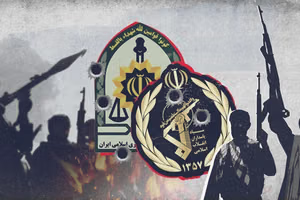
Baluch armed group Ansar al-Furqan has merged into the People’s Fighters Front, the coalition’s spokesman said, expanding an alliance that has claimed a series of attacks on Iranian security forces in the southeast in recent months.
Spokesman Mahmoud Baluch said the merger followed mediation by figures in Baluchestan and efforts by both organizations’ leaders to strengthen their campaign against the Islamic Republic.
“We the people of Iran, despite all our differences of thought and ideological disagreements, inhabit one land, share a common destiny and have been taken hostage by a criminal tyrant,” he said in a statement on Wednesday.
Baluch urged Iranians to overcome political divisions and unite to end the system of supreme clerical rule.
The front, known by its Persian initials JMM, was formed in December 2025, bringing together Jaish al-Adl, the PADA Baluch Movement, Harakat-e Nasr Baluchistan, the Mohammad Rasulullah group and independently organized Baluch fighters.
Its charter combines demands for Baluch rights with nationwide political objectives, advocating diplomatic, cultural and media activity alongside armed action.
The United States designated Jundallah a terrorist organization in 2010 and amended the designation in 2019 to include Jaish al-Adl.
Ansar al-Furqan is not designated as a terrorist organization by the United States or the European Union but is blacklisted by Iran, Pakistan and China.
The Terrorism Research & Analysis Consortium has reported alleged links between the group and al-Qaeda, the al-Nusra Front, Hay’at Tahrir al-Sham and Jaish al-Adl.
Ansar al-Furqan took responsibility for several attacks on Iran’s police and military, including a 2018 Chabahar suicide bombing which killed two policemen. However, the attacks have not remained limited to the restive southeast.
In 2017, Ansar Al-Furqan claimed responsibility for bombing an oil pipeline in Ahvaz, a city located in Iran's southwestern Khuzestan province.
Continued JMM attacks
The People’s Fighters Front claimed responsibility for three attacks in Golshan, Konarak and Saravan on November 2–3, targeting what it described as Revolutionary Guards personnel, Afghan Fatemiyoun fighters and a police special unit commander.
Local rights group Haalvsh reported that at least seven members of the IRGC-affiliated Fatemiyoun brigade were killed in the Konarak attack on a school allegedly being used as a military base.
The IRGC-affiliated Tasnim news agency gave a different account, saying militants attacked army personnel and one assailant was killed. It reported no deaths among the targeted personnel.
On November 7, Iran executed Mohammad Aref Shahbakhsh over an attack on a police post in Khash, the judiciary said. It alleged links to Jaish al-Adl but provided no date for the attack or details of his trial.
US-based rights group HRANA previously documented 63 armed incidents across southeastern Iran between March 31 and October 10, leaving at least 94 dead and 33 wounded. Most incidents remained unattributed or could not reliably be linked to a particular group.
Analysts interviewed by Iran International in October said closer coordination had helped militants intensify attacks, but cautioned that broader national support remained uncertain.
The predominantly Sunni Baluch population has long faced economic deprivation, ethnic and religious discrimination, and repression.
U.S. President Donald Trump (left) and Vice President JD Vance appear to salute during a wreath-laying ceremony at the Tomb of the Unknown Soldier at Arlington National Cemetery in Arlington, Virginia, on Veterans Day, November 11, 2026
US President Donald Trump on Thursday directed Vice President JD Vance to focus on alleged Democratic corruption rather than Iran talks, saying Washington no longer needed a deal with Tehran and that the Iranian regime was collapsing.
“We don't need a deal with Iran. Those days have long since passed,” Trump wrote on Truth Social. “We've got their money, Hundreds of Billions of Dollars, and we've got their Strait!”
He asked Vance to devote his “complete and total attention” to the domestic effort.
Vance had been leading efforts to secure a ceasefire and resume nuclear negotiations. But Trump has privately criticized the June memorandum of understanding the vice president helped negotiate, questioning whether it was a costly mistake, The Wall Street Journal reported, citing two officials.
The officials said Trump believed the arrangement had given Iran time to regroup and collect oil revenues before Washington imposed a naval blockade.
In separate remarks to Salem on Thursday, Trump said Tehran’s public defiance concealed the extent of its economic difficulties.
“The regime is collapsing,” he said. “Their economy is gone. They're not paying the soldiers.”
‘No hesitation’ to use force
Trump also said he was prepared to use military force to stop Iran from threatening US allies and vessels. Asked whether he would hesitate to do so, he replied: “No. No hesitation.”
Iran’s state-run IRNA news agency reported Thursday, citing official sources, that Sirik in Hormozgan province had been struck in an “enemy” attack. It described the strike as military in nature but gave no details about the target, damage or casualties.
Separately, US Central Command called reports that it had told Israel to prepare for renewed war with Iran “mere speculation,” Al Jazeera reported.
Israeli public broadcaster Kan had reported that warnings about a possible resumption of fighting were conveyed to Israeli military representatives in the United States and through military channels to Israel and Persian Gulf countries.
Regional governments continued pressing for negotiations. Turkish President Recep Tayyip Erdogan called for talks to begin as soon as possible during a meeting with Iranian President Masoud Pezeshkian on Thursday, Turkey’s presidency said.
Meeting on the sidelines of the COP31 summit in Antalya, Erdogan urged a swift end to the conflict and pledged continued support for regional peace efforts.
FILE PHOTO: US President Donald Trump arrives to deliver remarks, ahead of the midterm elections at the Lincoln Memorial Reflecting Pool, after being reopened following months of repairs, in Washington, DC, US, November 2, 2026.
President Donald Trump may have paid a heavy political price for his war with Iran, but last week's sweeping election defeat has done little to clarify what he will do next.
Voters across America did not simply hand Democrats control of Congress. The wave reached further down the ballot, flipping hundreds of state legislative seats from Arizona to New Hampshire and giving Democrats control of states and localities few thought possible.
Last Tuesday was a referendum on much of what has happened since Trump took office for the second time in January 2025. The war was a powerful accelerant.
From the beginning, the administration has seemed intent on alienating voters and turning wins into losses. Its approach to immigration, overseen by figures such as Homeland Security Secretary Kristi Noem, helped turn what had been a Republican strength into a political liability.
Trump imposed, paused and reimposed a slew of punishing tariffs at a time when voters were already struggling. Headlines about alleged self-dealing and conflicts of interest, including the decision to accept a $400 million Boeing jet from Qatar's royal family, added to the damage.
In 2024, Republicans successfully portrayed Democrats as out-of-touch insiders; by 2026, they were facing similar accusations themselves.
All of this significantly weakened Trump's domestic political standing and tarnished the Republican brand. The controversies sucked oxygen from the most pressing issue on American voters' minds: the affordability crisis.
On the eve of the war, Trump's approval rating stood at 42 percent. When gas prices shot up, Republicans had little credibility left with working voters in states such as Ohio, Iowa and Texas. By last week's elections, his approval had fallen further, to 37 percent.
Iran was a major factor, not least because of the lack of clear deadlines or a convincing explanation to the American public of why the country was at war. Whatever the administration's strategic arguments, the average American voter had more immediate concerns.
Vice President JD Vance, whose political identity is closely tied to MAGA, has argued that the war was the reason Republicans lost up and down the ballot. “The reason we lost is the war,” Vance wrote the morning after the election.
The immediate verdict is that the war has been a political loser for Trump and the Republican Party. The long-term verdict on the argument Trump has made from the start—that Iran cannot be allowed to acquire a nuclear weapon—is less clear.
The president himself acknowledged the political costs in an interview with 60 Minutes after the election: “Is it a good decision for today and tomorrow? Maybe not, but I have to go with what's right for our country.”
What comes next is anybody's guess. After meeting with Qatar's prime minister this week, Trump declared that Iran “militarily, is effectively over” and called further strikes “quite unlikely.”
Trump has also signaled a pullback from Israel, Iran's principal regional adversary: a shift Vance says voters are demanding. On Election Day itself, the president announced that the US would stop sending Israel its roughly $4 billion in annual aid by the end of this year.
Democrats, meanwhile, will use every tool at their disposal to prevent the US military from extending its operations, starting with the power of the purse. “We are going to end the war,” Senate Democratic Leader Chuck Schumer has promised.
But America's mercurial president is difficult to predict and has a habit of saying one thing and doing another when it comes to Tehran. With the political damage already done, he could ramp up the pressure, keep the blockade in place or pursue a peace deal. Trump likes options, and he likes leverage.
After last week's Everything Election, those options remain on the table, even if the political room to pursue them has narrowed.
File photo: Members of Iran's Assembly of Experts meet Iran's then Supreme Leader Ali Khamenei, in November 2024
Iran's Assembly of Experts, a body of Islamic jurists tasked with choosing the supreme leader, has become the first governing institution to call for a review of the country's defense doctrine, potentially paving the way for a reversal of the religious ban on nuclear weapons.
In a statement released on Thursday, the assembly called for reviewing Iran's membership in the Nuclear Non-Proliferation Treaty (NPT) and its defense doctrine to establish adequate deterrence, describing the move as an “unavoidable necessity” and a “public and national demand.”
The intervention carries particular religious significance because the assembly comprises senior clerics, some of whom are qualified to exercise independent Islamic legal reasoning. Their support for reconsidering the doctrine could help weaken the religious justification for Iran's longstanding prohibition on nuclear weapons, based on a decree by the late Supreme Leader Ali Khamenei.
The assembly is constitutionally responsible for appointing and overseeing Iran's supreme leader. It has no direct authority over nuclear policy, but its statement gives institutional weight to demands previously voiced largely by hardline lawmakers and commentators.
Iran has long maintained that its nuclear program is peaceful, citing Khamenei's religious ruling against weapons of mass destruction.
Iran's security chief Mohsen Rezaei said last month that changing the nuclear doctrine was under discussion but that neither the government nor the broader establishment had made a new decision.
Earlier this week, Foreign Ministry spokesman Esmaeil Baghaei said Tehran remained committed to the NPT.
Hardliners press for nuclear policy shift
Tehran's interim Friday prayer leader, Mohammad-Javad Haj Ali-Akbari, described revising the nuclear doctrine as a national demand on October 30. Lawmaker Ahmad Naderi has openly advocated acquiring an atomic bomb.
Hardliners have also urged Supreme Leader Mojtaba Khamenei to overturn his father Ali Khamenei's religious decree prohibiting the production of nuclear weapons. Others have proposed enriching uranium to weapons-grade levels while stopping short of manufacturing a bomb.
Reformist figures have challenged claims that developing nuclear weapons enjoys broad public support. Separately, Nour News, a website close to the Supreme National Security Council, warned against allowing crowd slogans to substitute for expert assessment of nuclear policy.
Warning of retaliation
The assembly also warned that another attack on Iran would trigger an “immediate and effective response without geographical limits” from the armed forces.
Its language echoed instructions attributed to Mojtaba Khamenei in an account published by the Revolutionary Guards-affiliated Tasnim news agency on October 31. That account did not announce an order to develop nuclear weapons.
Beyond military policy, the assembly called for establishing a “war economy headquarters” involving different branches of government and operating under the supreme leader's oversight.
It also urged action against what it described as the enemy's “cultural assault,” particularly concerning chastity and hijab.
A sculpture depicting a large family riding a motorcycle, installed in Tehran to promote childbirth and encourage larger families.
Iran's population could shrink from 87 million to 31 million over the next 75 years, a senior population official warned Thursday, citing a projection far more pessimistic than United Nations estimates.
Marzieh Vahid Dastjerdi, secretary of the National Population Headquarters, said at an international fertility conference that Iran's fertility rate had fallen to 1.34 children per woman, well below the replacement level of about 2.1, despite years of government efforts to encourage larger families.
Dastjerdi attributed the population forecast to the World Health Organization, but the UN's World Population Prospects 2024 projects Iran's population at around 80 million by 2100 under its medium-variant scenario.
The assumptions behind the substantially lower figure cited by Dastjerdi were not immediately clear.
Fertility below replacement level does not necessarily translate into immediate population decline. The pace of any contraction also depends on a country's age structure, life expectancy and migration.
Dastjerdi warned that continued demographic decline could leave Iran surrounded by neighboring countries with populations in the hundreds of millions.
Iran's fertility rate stood at six to seven children per woman in 1986 but fell to 1.34 in the Iranian calendar year ending March 2026, she said.
A mother holds her newborn baby in a maternity ward in Iran, where birth rates continue to decline despite government campaigns and financial incentives encouraging families to have more children.
Economic pressures undermine birth incentives
The decline has continued despite years of government campaigns, financial incentives and appeals by senior officials and religious leaders encouraging couples to have more children.
Inflation, high housing costs, cultural changes, delayed marriages and difficulties balancing employment with motherhood are among the main obstacles to childbearing, Dastjerdi said.
She attributed more than 75 percent of the decline to rising education levels and social development without corresponding economic progress.
A September Instagram poll conducted by Iran International found that 97 percent of more than 18,000 respondents said conditions in Iran had prompted them to postpone major life decisions, including marriage and having children. The self-selected survey was not representative of the Iranian population.
According to Dastjerdi, Iran has approximately 7.3 million unmarried men aged 20 to 54 and between 6.5 million and seven million unmarried women aged 15 to 49.
The average age of women having their first child has reached 27 years and six months nationwide and 30 years and eight months in Tehran.
Couples now wait an average of four years and six months after marriage before having their first child, contributing to fertility challenges, she said.
Annual marriages have fallen from 900,000 in 2010 to 431,000 in the Iranian year ending March 2026, while the proportion of women remaining permanently unmarried has risen sevenfold, from 1.1 percent in 1996 to 7.7 percent.
A cleric poses with a large family and a newborn baby. The Islamic Republic has promoted childbearing and larger families through government campaigns and financial incentives.
Aging population raises concerns
Beyond the long-term risk of population decline, Iran faces a more immediate challenge from an aging population.
The share of people aged over 60 is projected to rise from 13 percent to 32 percent by 2051, increasing elderly care costs and reducing the number of younger caregivers, Dastjerdi warned.
Successive leaders of the Islamic Republic have made population growth a strategic priority.
Mojtaba Khamenei, Iran's third supreme leader, called for higher birth rates in a May message, linking population growth to the government's long-term strategic objectives and the creation of a new Islamic Iranian civilization.
Khamenei described increasing the population as one of the most important concerns of his predecessor, Ali Khamenei, who was killed earlier this year.
The government has also introduced financial incentives under its Family Protection and Youthful Population Law in an effort to reverse declining birth rates.
Dastjerdi said a new maternal support program, backed by 500 trillion rials (approximately $188 million), provides eligible mothers with monthly purchasing credits of 20 million rials (about $7.50) for 24 months after childbirth.
She also called for full insurance coverage of infertility treatment and expanded screening services, noting that 79 secondary-level and 130 tertiary-level fertility treatment centers operate nationwide.
Despite these measures, official figures continue to show declining fertility and marriages, raising concerns about the country's long-term demographic and economic outlook.