• العربية
  • فارسی
BrandBrand
  • Iran Insight
  • Politics
  • Economy
  • Analysis
  • Special Report
  • Opinion
  • Podcast
  • Live TV
  • Iran Insight
  • Politics
  • Economy
  • Analysis
  • Special Report
  • Opinion
  • Podcast
  • Live TV
  • Theme
  • Language
    • العربية
    • فارسی
  • Iran Insight
  • Politics
  • Economy
  • Analysis
  • Special Report
  • Opinion
  • Podcast
  • Live TV
All rights reserved for Volant Media UK Limited
volant media logo

Trump says Iran regime is collapsing amid economic crisis

Nov 12, 2026, 20:45 GMT+0Updated: 23:39 GMT+0

US President Donald Trump on Thursday said Iran’s regime was collapsing under economic pressure, citing what he described as 301% inflation, a devastated economy and an inability to pay its soldiers.

Asked whether he was willing to maintain the blockade for as long as 26 months to bring down the Islamic Republic, Trump told the Salem News Channel:
“No, no, well the regime is collapsing. And their press is much different than the fact. You know, they'll always make these harsh statements about, we are doing well, we will fight back, we will. They are not doing well. They have 301% inflation. Their economy is gone. They're not paying their soldiers.”

Asked whether he would hesitate to use force to stop Iran from threatening US allies and vessels, Trump said: “No. No hesitation."

Most Viewed

Workers in Iran sell organs to pay debts and cover living costs
1

Workers in Iran sell organs to pay debts and cover living costs

2
VOICES FROM IRAN

Missile city unveiling sparks anger over poverty, lack of shelters

3

Trump vows ‘total victory’ as Iran rejects concessions and threatens wider war

4
INSIGHT

Trump wants to keep Iran blockade. Can the Persian Gulf sustain the standoff?

5
VOICES FROM IRAN

Students shiver in classrooms as Iran government warns of gas cuts

Banner
Banner
Banner
Banner
Banner
Banner
Banner

Spotlight

  • Trump's Iran dilemma after America's 'everything' election
    OPINION

    Trump's Iran dilemma after America's 'everything' election

  • The faceless judge who sentenced 11 Iranian protesters to death in 2026
    SPECIAL REPORT

    The faceless judge who sentenced 11 Iranian protesters to death in 2026

  • Iran state TV panelists urge tougher action against US blockade

    Iran state TV panelists urge tougher action against US blockade

  • Iran’s largest ‘private’ bank is run by Supreme Leader’s business empire
    SPECIAL REPORT

    Iran’s largest ‘private’ bank is run by Supreme Leader’s business empire

  • France's cyberattack allegations against Iran should wake up Europe
    OPINION

    France's cyberattack allegations against Iran should wake up Europe

  • US targets Iran's land trade routes, but Tehran may hold firm
    ANALYSIS

    US targets Iran's land trade routes, but Tehran may hold firm

•
•
•

More Stories

Iran's top clerical governing body calls for nuclear doctrine review

Nov 12, 2026, 16:22 GMT+0
100%
File photo: Members of Iran's Assembly of Experts meet Iran's then Supreme Leader Ali Khamenei, in November 2024

Iran's Assembly of Experts, a body of Islamic jurists tasked with choosing the supreme leader, has become the first governing institution to call for a review of the country's defense doctrine, potentially paving the way for a reversal of the religious ban on nuclear weapons.

In a statement released on Thursday, the assembly called for reviewing Iran's membership in the Nuclear Non-Proliferation Treaty (NPT) and its defense doctrine to establish adequate deterrence, describing the move as an “unavoidable necessity” and a “public and national demand.”

The intervention carries particular religious significance because the assembly comprises senior clerics, some of whom are qualified to exercise independent Islamic legal reasoning. Their support for reconsidering the doctrine could help weaken the religious justification for Iran's longstanding prohibition on nuclear weapons, based on a decree by the late Supreme Leader Ali Khamenei.

The assembly is constitutionally responsible for appointing and overseeing Iran's supreme leader. It has no direct authority over nuclear policy, but its statement gives institutional weight to demands previously voiced largely by hardline lawmakers and commentators.

Iran has long maintained that its nuclear program is peaceful, citing Khamenei's religious ruling against weapons of mass destruction.

Iran's security chief Mohsen Rezaei said last month that changing the nuclear doctrine was under discussion but that neither the government nor the broader establishment had made a new decision.

Earlier this week, Foreign Ministry spokesman Esmaeil Baghaei said Tehran remained committed to the NPT.

Hardliners press for nuclear policy shift

Tehran's interim Friday prayer leader, Mohammad-Javad Haj Ali-Akbari, described revising the nuclear doctrine as a national demand on October 30. Lawmaker Ahmad Naderi has openly advocated acquiring an atomic bomb.

Hardliners have also urged Supreme Leader Mojtaba Khamenei to overturn his father Ali Khamenei's religious decree prohibiting the production of nuclear weapons. Others have proposed enriching uranium to weapons-grade levels while stopping short of manufacturing a bomb.

Reformist figures have challenged claims that developing nuclear weapons enjoys broad public support. Separately, Nour News, a website close to the Supreme National Security Council, warned against allowing crowd slogans to substitute for expert assessment of nuclear policy.

Warning of retaliation

The assembly also warned that another attack on Iran would trigger an “immediate and effective response without geographical limits” from the armed forces.

Its language echoed instructions attributed to Mojtaba Khamenei in an account published by the Revolutionary Guards-affiliated Tasnim news agency on October 31. That account did not announce an order to develop nuclear weapons.

Beyond military policy, the assembly called for establishing a “war economy headquarters” involving different branches of government and operating under the supreme leader's oversight.

It also urged action against what it described as the enemy's “cultural assault,” particularly concerning chastity and hijab.

Iran population decline could be far steeper than UN predicts

Nov 12, 2026, 14:18 GMT+0
100%
A sculpture depicting a large family riding a motorcycle, installed in Tehran to promote childbirth and encourage larger families.

Iran's population could shrink from 87 million to 31 million over the next 75 years, a senior population official warned Thursday, citing a projection far more pessimistic than United Nations estimates.

Marzieh Vahid Dastjerdi, secretary of the National Population Headquarters, said at an international fertility conference that Iran's fertility rate had fallen to 1.34 children per woman, well below the replacement level of about 2.1, despite years of government efforts to encourage larger families.

Dastjerdi attributed the population forecast to the World Health Organization, but the UN's World Population Prospects 2024 projects Iran's population at around 80 million by 2100 under its medium-variant scenario.

The assumptions behind the substantially lower figure cited by Dastjerdi were not immediately clear.

Fertility below replacement level does not necessarily translate into immediate population decline. The pace of any contraction also depends on a country's age structure, life expectancy and migration.

Dastjerdi warned that continued demographic decline could leave Iran surrounded by neighboring countries with populations in the hundreds of millions.

Iran's fertility rate stood at six to seven children per woman in 1986 but fell to 1.34 in the Iranian calendar year ending March 2026, she said.

100%
A mother holds her newborn baby in a maternity ward in Iran, where birth rates continue to decline despite government campaigns and financial incentives encouraging families to have more children.

Economic pressures undermine birth incentives

The decline has continued despite years of government campaigns, financial incentives and appeals by senior officials and religious leaders encouraging couples to have more children.

Inflation, high housing costs, cultural changes, delayed marriages and difficulties balancing employment with motherhood are among the main obstacles to childbearing, Dastjerdi said.

She attributed more than 75 percent of the decline to rising education levels and social development without corresponding economic progress.

A September Instagram poll conducted by Iran International found that 97 percent of more than 18,000 respondents said conditions in Iran had prompted them to postpone major life decisions, including marriage and having children. The self-selected survey was not representative of the Iranian population.

  • Nine out of ten shun marriage, parenthood in Iran International poll

    Nine out of ten shun marriage, parenthood in Iran International poll

According to Dastjerdi, Iran has approximately 7.3 million unmarried men aged 20 to 54 and between 6.5 million and seven million unmarried women aged 15 to 49.

The average age of women having their first child has reached 27 years and six months nationwide and 30 years and eight months in Tehran.

Couples now wait an average of four years and six months after marriage before having their first child, contributing to fertility challenges, she said.

Annual marriages have fallen from 900,000 in 2010 to 431,000 in the Iranian year ending March 2026, while the proportion of women remaining permanently unmarried has risen sevenfold, from 1.1 percent in 1996 to 7.7 percent.

100%
A cleric poses with a large family and a newborn baby. The Islamic Republic has promoted childbearing and larger families through government campaigns and financial incentives.

Aging population raises concerns

Beyond the long-term risk of population decline, Iran faces a more immediate challenge from an aging population.

The share of people aged over 60 is projected to rise from 13 percent to 32 percent by 2051, increasing elderly care costs and reducing the number of younger caregivers, Dastjerdi warned.

Successive leaders of the Islamic Republic have made population growth a strategic priority.

Mojtaba Khamenei, Iran's third supreme leader, called for higher birth rates in a May message, linking population growth to the government's long-term strategic objectives and the creation of a new Islamic Iranian civilization.

Khamenei described increasing the population as one of the most important concerns of his predecessor, Ali Khamenei, who was killed earlier this year.

The government has also introduced financial incentives under its Family Protection and Youthful Population Law in an effort to reverse declining birth rates.

  • Iran official warns of population growth hitting zero

    Iran official warns of population growth hitting zero

Dastjerdi said a new maternal support program, backed by 500 trillion rials (approximately $188 million), provides eligible mothers with monthly purchasing credits of 20 million rials (about $7.50) for 24 months after childbirth.

She also called for full insurance coverage of infertility treatment and expanded screening services, noting that 79 secondary-level and 130 tertiary-level fertility treatment centers operate nationwide.

Despite these measures, official figures continue to show declining fertility and marriages, raising concerns about the country's long-term demographic and economic outlook.

Iran says the US must ‘surrender’ to seven conditions. What are they?

Nov 12, 2026, 14:03 GMT+0
•
Arash Sohrabi
100%
People walk past an anti-US billboard in Tehran, August 3, 2026. Officials have presented Iran’s seven conditions at home as the terms of an American defeat.

Iran’s leaders say no talks can begin until Washington accepts seven conditions. But Tehran has never published them, its own officials list them differently, and several are demands no US president could meet, while the one issue Washington cares most about is ruled out.

The conditions are back at the center of the war’s diplomacy this week. On Thursday Hossein Taeb, a cleric who ran the Revolutionary Guards’ intelligence organization until 2022 and now heads the Basij paramilitary force, gave the most detailed account yet of how messages are moving between the two sides.

  • Iran threatens US bases in Europe if attacks resume

    Iran threatens US bases in Europe if attacks resume

  • Trump vows ‘total victory’ as Iran rejects concessions and threatens wider war

    Trump vows ‘total victory’ as Iran rejects concessions and threatens wider war

  • Iran state TV panelists urge tougher action against US blockade

    Iran state TV panelists urge tougher action against US blockade

  • US targets Iran's land trade routes, but Tehran may hold firm

    US targets Iran's land trade routes, but Tehran may hold firm

Days before the US midterm elections, he said, a Trump representative went to Vladimir Putin, and a Russian envoy then flew to Tehran with a written message for Supreme Leader Mojtaba Khamenei. The envoy waited for a reply. Khamenei, Taeb said, calmly ordered that it be sent “at a suitable time.”

Then came a phone call between Putin and Mohsen Rezaei, secretary of the Supreme National Security Council, and Rezaei’s trip to Moscow, where he handed Putin a letter from Khamenei on November 5.

“Our position is that Iran’s seven conditions must first be met and accepted by the other side,” Taeb said. Only then would Iran decide how, and about what, to negotiate.

His account sits awkwardly beside his colleagues’. Rezaei told Al Mayadeen this week that there are no negotiations of any kind and that reports of talks are “lies.” On X he told Washington to stop “manufacturing FAKE NEWS about imaginary talks” and wrote that it was “time to SURRENDER to the seven conditions.”

Parliament Speaker Mohammad Bagher Ghalibaf, who formally leads Iran’s negotiating team, told Al Jazeera on Wednesday that Tehran had given Washington “a clear and transparent response” and was waiting for an official reply.

The US envoys Steve Witkoff and Jared Kushner met Putin in the Kremlin on Thursday, mainly to discuss Ukraine after talks in Abu Dhabi. Neither side has said whether Iran came up.

A list that was never published

Rezaei announced the seven conditions on September 23, after a meeting with President Masoud Pezeshkian and Foreign Minister Abbas Araghchi, and said they had been put in writing and handed to Pakistan and Qatar. Iran later offered to reopen the Strait of Hormuz within seven days if they were met, then within two.

Iran has never officially released the text. Officials say the conditions grew out of the Islamabad understanding of June, which Hassan Ghashghavi, spokesman of parliament’s National Security and Foreign Policy Committee, says the presidents of both countries signed. Trump has disowned it.

No official list exists. Pieced together from what officials have said, it usually runs: an end to the war on all fronts, especially in Lebanon, the lifting of sanctions, the release of frozen assets, an end to the US naval blockade, compensation for war damage, guarantees against future attacks, and Iranian control of the Strait of Hormuz.

But the list moves. Vahid Ahmadi, a member of the same committee, includes “the management of the Strait of Hormuz” by Iran under a new route agreed with Oman. Ghalibaf, listing them on Wednesday, added guaranteed waivers for Iranian oil sales. The armed forces chief, Ali Abdollahi, has set out five conditions of his own, including recognition of Iranian authority over Hormuz and a new regional security framework. Some reports include a reduction of US forces in the region. “Sometimes we may mention some conditions,” Rezaei said in September, “but Iran has seven.”

On October 11 Rezaei said Washington had “agreed to some” of them. This week he said there was no response at all.

Why they don’t hold up

An end to war “on all fronts.” This asks Washington to stop wars that Iran’s allies are fighting. Ahmadi says the condition now covers not only Lebanon but “the other resistance fronts,” meaning Hezbollah, the Houthis and militias in Iraq. Lebanon already has its own track. A US-brokered framework between the United States, Israel and Lebanon in June led to direct talks between Israel and Lebanon. Tehran is tying its own deal to a war fought by a group it arms and funds.

Lifting sanctions. No US president can do this alone. Many US sanctions on Iran are written into law by Congress. United Nations sanctions returned in late September 2025 under the nuclear deal’s snapback mechanism. The European Union and Britain impose their own. Lifting sanctions under the 2015 nuclear deal took two years of negotiation. Iran is asking for it as a condition for starting to talk.

Frozen assets. Iran’s own figures do not agree with anyone else’s. Tasnim and the central bank put the total at about $24 billion; other estimates run past $100 billion. Some of the money is tied up in US court judgments won by victims of attacks blamed on Iran, and the $6 billion moved to Qatar in 2023 was frozen again after the Hamas attack on Israel that October.

Ending the blockade. The US blockade of Iranian ports began on April 13, after Iran choked traffic through Hormuz. The condition asks Washington to lift its response while Iran keeps the closure that caused it. Iran’s only offer in return is to reopen a waterway it closed.

Reparations. The government spokeswoman has put Iran’s losses at $270 billion without a breakdown. Trump has rejected paying anything. Tehran is demanding compensation while its own missiles and drones struck its neighbors. The UAE alone absorbed close to 3,000 attacks in the first months of the war, the Financial Times has reported.

Guarantees against attack. No US president can bind his successor, which is the lesson Iranian officials themselves draw from Trump’s exit from the 2015 deal. The same officials who say Washington cannot be trusted are demanding a promise from it.

Iranian control of Hormuz. The strait is an international waterway. A condition that Iran “manage” it, approve routes or collect tolls is not a term for ending a war. It is a claim to a power Iran did not have before the war began.

What is not on the list

The issue Washington says the war was about is missing. Rezaei said this week that the nuclear file “is not under discussion,” and that “not even a particle” of Iran’s enriched uranium would leave the country.

The result is a list that asks Washington to give up every lever it holds, sanctions, the blockade, its forces and the money, before talks begin, while Iran keeps the two things the other side wants most: the closure of Hormuz until the end, and its nuclear material for good.

Who the list is for

Officials have sold the conditions at home as the terms of a victory. Rezaei told Washington it was “time to SURRENDER to the seven conditions Iran has repeatedly set out.” Taeb told his audience that the 40-day war decided the elections in Israel and the United States, and that Trump would have to withdraw his forces or face “a wider social movement” at home.

Ghalibaf said on Wednesday that Tehran wants to end the state of “neither war nor peace,” but that this might come through “sustainable deterrence” rather than talks.

The cost of the stalemate falls on Iranians. Ghalibaf himself complained that the blockade has cut access to food and medicine. Taeb said gasoline output fell to about 102 million liters a day during the war against consumption of about 135 million, and that Iran still imports some seven million liters a day. Inflation reached about 77 percent in October.


Two men convicted in London of helping Iran target Iran International journalists

Nov 12, 2026, 11:33 GMT+0
100%

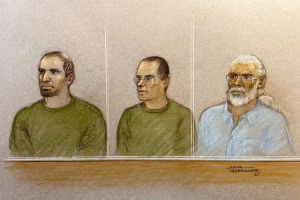
Two Iranian men were found guilty on Thursday of assisting Iranian intelligence operations targeting Iran International journalists in Britain, following a six-week trial at London’s Woolwich Crown Court.

Mostafa Sepahvand, 41, and Farhad Javadi Manesh, 46, were unanimously convicted of engaging in conduct likely to assist a foreign intelligence service under Britain’s National Security Act.

A third defendant, Shapoor Qalehali Khani Noori, 57, was acquitted of all charges and discharged by the court.

Sepahvand was also unanimously convicted of conducting surveillance and reconnaissance with the intention of committing serious violence against a person in Britain.

Javadi Manesh was acquitted of a separate charge alleging that he conducted surveillance intending to facilitate serious violence by others. Noori was also acquitted of that charge.

The judge had told jurors that the court would accept majority verdicts of 10 or 11 out of 12, although they should continue striving for unanimity. The guilty verdicts were unanimous.

Sepahvand and Javadi Manesh are scheduled to be sentenced at London’s Old Bailey on December 17.

Iran International journalists among targets

Prosecutors said the men conducted surveillance on behalf of Iranian intelligence between August 2024 and early 2025, gathering information about individuals in Britain whom Tehran regarded as opponents.

The targets included Iran International journalists Kambiz Hosseini and Mojtaba Pourmohsen, as well as British barrister Jonathan Turner.

  • Three men helped IRGC prepare attacks on journalists, UK prosecutor says

    Three men helped IRGC prepare attacks on journalists, UK prosecutor says

  • Prosecutor says defendants filmed journalists' addresses to plan attacks

    Prosecutor says defendants filmed journalists' addresses to plan attacks

  • Iran plot suspect says he discussed journalists at London embassy

    Iran plot suspect says he discussed journalists at London embassy

During the trial, prosecutor Bill Emlyn Jones told jurors that the defendants visited addresses, photographed buildings and vehicles, and recorded videos to help Iran’s Revolutionary Guards identify potential targets.

The prosecution said Sepahvand was expected to carry out an attack and recruited the other two men to assist in locating and monitoring the individuals.

The court heard evidence of communications with contacts in Iran, including discussions about surveillance, payments and Sepahvand’s efforts to resolve a criminal case against him in Iran.

Defendants disputed knowledge and intent

Sepahvand acknowledged conducting surveillance but said he acted under threats against himself and his family and deliberately tried to frustrate the operation.

Prosecutors challenged that account, arguing that his repeated demands for more accurate information about the targets showed he was actively trying to help locate them.

Javadi Manesh denied knowing that his activities were assisting Iranian intelligence. He did not give evidence during the trial.

Noori also denied knowing that his actions were connected to Iranian intelligence operations.

The convictions come as concern grows in Britain over suspected Iranian intelligence activity targeting dissidents and journalists.

British authorities have repeatedly warned of threats against Iran International staff, while Tehran has previously denied involvement in plots targeting critics overseas.

Slain protesters' families in Iran threatened with 'terrorist' label

Nov 12, 2026, 11:31 GMT+0
•
Farnoosh Faraji
100%
Women dressed in black hold portraits of slain protesters during a gathering at a cemetery in Iran.

Iranian security agencies have threatened to label families of slain protesters "terrorists" unless they accept the government's account of their relatives' deaths, sources told Iran International ahead of the first anniversary of the January killings.

Security agents have summoned relatives and demanded they describe those killed as "martyrs," a designation that would place their deaths within the Islamic Republic's official narrative of the protests.

Families refusing the designation and instead using the Persian term "Javidnam," meaning "forever remembered," have been warned they could be placed on lists of "terrorists," according to sources close to them.

The term is used by bereaved families to commemorate those killed during protests without accepting the authorities' account of their deaths.

Authorities have also offered certain benefits to families willing to accept the official designation and instructed relatives not to hold anniversary commemorations.

Bereaved family faces repeated security summons

Security agencies have continued summoning and threatening a bereaved family despite serious health problems affecting several of its members, one of them told Iran International.

The family member, whose identity is being withheld for security reasons, said their mother developed heart problems after suffering severe psychological distress while searching for the body of a loved one at Kahrizak.

Their father suffered a stroke in October, while the family member has an autoimmune disease.

  • Iran crackdown reaches cemeteries as graves of slain protesters defaced

    Iran crackdown reaches cemeteries as graves of slain protesters defaced

Despite these circumstances, the individual has been detained several times in recent months and was summoned to a security agency in November.

During the latest summons, agents demanded that the family describe their slain loved one as a "martyr" and abandon plans for any anniversary ceremony.

Other families have faced similar restrictions.

Iran International previously reported that authorities opened a case against Sanaz Banisaeed, the wife of Mohsen Rashidi-Khaniabadi, who was killed during the January protests, and blocked her Instagram account.

The family of Iman Asadi, another person killed during the protests, has also been summoned repeatedly and warned against posting on social media, according to information received by Iran International.

Pressure continues after protest victim's mother dies

Security pressure on the family of Behboud Hassanzadeh has continued even after the death of his mother, Afrouz Eslampanah, a source close to the family told Iran International.

Authorities have blocked the SIM cards belonging to Hassanzadeh's brother and summoned him several times in recent weeks.

Security agents also warned him against holding memorial gatherings or anniversary ceremonies and demanded that the family recognize Hassanzadeh as a "martyr," according to the source. Eslampanah died on October 30.

Hassanzadeh, 37, a father of two daughters, was shot while helping an injured person during protests on January 8 in Kuhchenar, Fars province. He died two days later.

Pressure to accept official account

Efforts to secure families' acceptance of the government's account of the protest deaths began months before the approaching anniversary.

Authorities had, in some cases, made the return of protesters' bodies conditional on families signing undertakings accepting the official account of how their relatives were killed.

In one case, representatives of the Revolutionary Guards, the governor's office and the education department visited the family of Bahar Shahmehri, a 17-year-old student killed during protests in Neyshabur, northeast of Iran.

The representatives told the family that accepting the official "martyr" designation would be in their interests, a source close to the family told Iran International. Shahmehri's family refused.

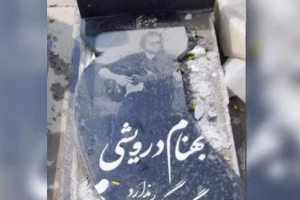
Earlier reports also documented damage to and destruction of gravestones belonging to several people killed during the protests.

  • Families across Iran defy pressure to honour January protest victims

    Families across Iran defy pressure to honour January protest victims

Bereaved families regard such actions as attempts to prevent them from preserving the memory of their loved ones.

Despite repeated summons and security warnings, families continue to demand accountability and answers about the deaths of their relatives, according to sources close to them.