• العربية
  • فارسی
BrandBrand
  • Iran Insight
  • Politics
  • Economy
  • Analysis
  • Special Report
  • Opinion
  • Podcast
  • Live TV
  • Iran Insight
  • Politics
  • Economy
  • Analysis
  • Special Report
  • Opinion
  • Podcast
  • Live TV
  • Theme
  • Language
    • العربية
    • فارسی
  • Iran Insight
  • Politics
  • Economy
  • Analysis
  • Special Report
  • Opinion
  • Podcast
  • Live TV
All rights reserved for Volant Media UK Limited
volant media logo

Qatar condemns Iranian attacks and urges unconditional reopening of Hormuz

Oct 16, 2026, 12:40 GMT+1

Qatar condemned Iranian attacks on its territory and other countries and called for the Strait of Hormuz to be reopened without conditions, its ambassador to the United Nations, Sheikha Alya Ahmed bin Saif Al Thani, said on Friday.

She said Qatar was continuing to mediate between the United States and Iran and supported Pakistan’s mediation efforts.

Most Viewed

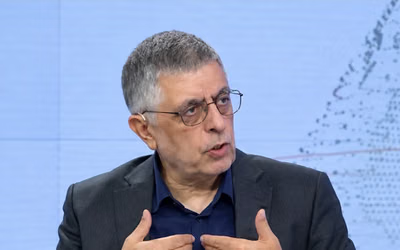
‘We cannot bring America to its knees,’ former Tehran mayor says
1

‘We cannot bring America to its knees,’ former Tehran mayor says

2

Tehran signals escalation in conflict IRGC likens to a ‘world war’

3

Iran’s strikes on Persian Gulf water and power were deliberate - Reuters

4

Tehran hospital locks its main building and treats patients in the courtyard

5

Ignore prices and economy is fine, Iran ex-minister says

Spotlight

  • Ignore prices and economy is fine, Iran ex-minister says

    Ignore prices and economy is fine, Iran ex-minister says

  • Iran police killed brothers celebrating Khamenei’s death, source says

    Iran police killed brothers celebrating Khamenei’s death, source says

  • Nowhere else to go? The puzzle behind Iran’s stock rally
    INSIGHT

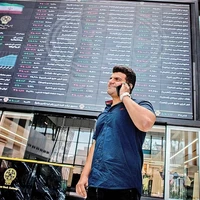
    Nowhere else to go? The puzzle behind Iran’s stock rally

  • Iran escalates Hormuz tanker attacks in gamble ahead of US midterms
    ANALYSIS

    Iran escalates Hormuz tanker attacks in gamble ahead of US midterms

  • Can US sanctions derail Iran’s China trade route?
    ANALYSIS

    Can US sanctions derail Iran’s China trade route?

Banner
Banner
Banner
Banner
Banner
•
•
•

More Stories

Iran shipped jet fuel to Myanmar despite US blockade - Reuters

Oct 16, 2026, 11:51 GMT+1
100%
An Indian liquefied petroleum gas (LPG) carrier, Shivalik, arrives at Mundra Port via the Strait of Hormuz, amid the US-Israel conflict with Iran, in Gujarat, India, March 16, 2026.

Iran managed to export jet fuel to Myanmar and send several shipments of liquefied petroleum gas out of the region despite a US naval blockade that has largely halted its crude exports, Reuters reported on Friday.

Satellite imagery and analysis by maritime intelligence group SynMax showed a tanker carrying Iranian jet fuel reached Myanmar in September, Reuters said.

Myanmar’s military government did not respond to Reuters’ request for comment on whether it had received the cargo.

The United States imposed targeted sanctions on Myanmar’s jet-fuel sector in 2023, citing military airstrikes on civilians. Myanmar’s military has denied deliberately targeting civilians.

LPG cargoes also passed through

At least eight gas tankers carrying Iranian LPG left the Gulf of Oman since mid-July, according to analysis by United Against Nuclear Iran, which tracks tanker movements using ship and satellite data.

The cargoes totaled an estimated 4.1 million barrels, UANI senior research analyst Jemima Shelley told Reuters.

Four people involved in maritime security and tracking Persian Gulf oil movements told Reuters that Iran had been concealing some cargoes among a growing number of ship-to-ship transfers by other regional producers off Oman.

Some Iranian LPG tankers transferred cargoes near the Omani coastal towns of Shinas and Sohar, while others waited in the Gulf of Oman before continuing their voyages, Shelley said.

Most then sailed toward Malaysia’s Eastern Outer Port Limits for additional ship-to-ship transfers, with China considered the likely ultimate destination, according to UANI’s analysis.

Most Iranian crude exports remain blocked

The shipments remain a fraction of Iran’s previous energy exports and do not appear to represent a broad breakthrough in the blockade.

Shelley said the LPG movements appeared to reflect “more opportunism” than a new Iranian strategy for moving large volumes of oil and petroleum products on smaller ships.

Iranian crude exports fell to zero in September, according to Kpler, marking the first month without a shipment since the analytics firm began tracking Iranian exports in 2013.

Six of the eight LPG tankers identified by UANI, as well as the vessel carrying jet fuel, were under US sanctions for transporting Iranian petroleum or petrochemical products, Reuters said.

US military says blockade remains in force

US Central Command said the blockade remains “ironclad.”

A US military official told Reuters that a ship passing through the area does not necessarily mean it evaded the blockade. US forces assess vessels individually, including by reviewing their documents, and some can be allowed through for humanitarian reasons, the official said.

The official added that being on a US sanctions list does not automatically make a vessel subject to interdiction and that US forces sometimes monitor ships without taking action for operational reasons.

CENTCOM said this week that four commercial vessels had been disabled and 135 ships turned around during the three months since the latest blockade was imposed.

The blockade was first introduced in April, lifted in June following a draft US-Iran understanding and reimposed on July 14 after that arrangement collapsed.

Washington questions shipping data

A US Treasury spokesperson questioned whether tracking data alone could show that vessels had successfully evaded the blockade, noting that ships can spoof locations or operate under false identities.

The spokesperson said such data should be treated cautiously and said Washington’s sanctions campaign and naval blockade were sharply restricting Iran’s access to export revenue.

The Iranian government did not respond to Reuters’ request for comment.

Torbjorn Soltvedt of Verisk Maplecroft told Reuters that worsening economic conditions could push Iran to take greater risks in trying to move petroleum products abroad, particularly jet fuel if domestic aviation restrictions leave Iranian refineries with excess supply.

Iran speaker says government overstepped on anti-terror finance rules

Oct 16, 2026, 11:43 GMT+1
•
Niloufar Goudarzi
100%
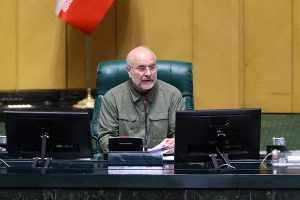
Iranian parliament speaker Mohammad Bagher Ghalibaf (left) and President Masoud Pezeshkian

Iranian Parliament Speaker Mohammad Bagher Ghalibaf has ruled that part of the government’s anti-terror financing regulations violates Iranian law, saying decisions on who is designated as terrorist must remain with the Supreme National Security Council.

In a letter to President Masoud Pezeshkian, Ghalibaf objected to amended government rules that kept national working groups involved in deciding which individuals, groups and organizations should face terrorism-related financial restrictions.

The rules cover measures including freezing or blocking assets.

Ghalibaf said Iranian law gives the Supreme National Security Council responsibility for identifying terrorist individuals, groups and organizations, and that the government could not give that authority to its own working groups.

What did the government change?

The cabinet adopted regulations setting out how terrorism-related financial restrictions should be applied.

They created a national working group to review cases involving people and organizations that could be placed on terrorism-related lists. The group also had a role in decisions that could lead to assets being frozen.

The government later amended the rules so that the working group would be established with the Supreme National Security Council’s approval and operate under its direction.

But the amended rules still allowed the group to make some listing decisions. Ghalibaf said that remained inconsistent with the law because the council itself, rather than a government working group, has the legal authority to determine who Iran considers terrorist.

  • Iran parliament speaker sends anti-terror finance law for implementation

    Iran parliament speaker sends anti-terror finance law for implementation

  • Iran’s president signs law joining UN anti-terror finance convention with conditions

    Iran’s president signs law joining UN anti-terror finance convention with conditions

  • Q&A: All you need to know about Iran's FATF problem

    Q&A: All you need to know about Iran's FATF problem

What does Ghalibaf’s ruling change?

The letter concerns the government regulation used to implement the law, not Iran’s underlying law against terrorist financing.

It also does not address Iran’s membership in international treaties. The issue is narrower: whether the cabinet gave its working groups powers that Iranian law reserves for the Supreme National Security Council.

Ghalibaf issued the finding through Iran’s established system for reviewing cabinet regulations. His letter says the government must correct the disputed provision within the legal deadline and that the part found unlawful will lose effect if it is not corrected.

Why this matters internationally

The dispute comes as Iran tries to address shortcomings identified by the Financial Action Task Force, or FATF, the international body that sets standards against money laundering and terrorist financing.

Iran has remained on FATF’s high-risk list since 2020. FATF says Tehran has still not completed most of the action plan it accepted in 2016 and continues to call on other countries to apply financial countermeasures.

Those measures are separate from US sanctions, but both make it harder for Iranian banks and businesses to maintain normal relationships with financial institutions abroad.

One of FATF’s outstanding demands is for Iran to have an effective system for identifying and freezing terrorist assets in line with relevant UN Security Council resolutions.

  • FATF opponents are profiteers of Iran's isolation, economist says

    FATF opponents are profiteers of Iran's isolation, economist says

  • US policy on Iran: can money achieve what sanctions couldn't?

    US policy on Iran: can money achieve what sanctions couldn't?

  • Long-delayed law may ease Iran's way out of financial isolation

    Long-delayed law may ease Iran's way out of financial isolation

Iran has already changed laws and joined two treaties

Iran has spent years changing its financial laws in response to FATF concerns.

It amended its domestic counter-terror financing law in 2018 and its anti-money-laundering law in 2019.

Last year, Iran also completed accession to two UN treaties that had been politically disputed for years: the Palermo Convention against transnational organized crime and the International Convention for the Suppression of the Financing of Terrorism.

Joining those treaties did not mean Iran joined FATF. FATF is a separate organization that judges whether a country’s laws and enforcement meet its standards.

Joining the treaties was not enough for FATF

Iran joined both treaties with reservations, including conditions allowing it to apply them within the framework of its own constitution and domestic laws.

In the case of the Terrorist Financing Convention, Iran also formally said the Supreme National Security Council would determine which individuals, groups and organizations it considers terrorist.

FATF said in June that Iran’s reservations to both treaties were “overly broad” and that its domestic implementation was still not in line with FATF standards. It also said Iran had failed to address the majority of its original action plan.

So Iran can legally be a party to the UN treaties while still falling short of FATF requirements.

The problem at the center of Ghalibaf’s ruling

The latest dispute goes directly to one of those unresolved questions.

Iran needs a system capable of identifying terrorist-linked individuals and organizations and freezing their assets. But under Iran’s own legal framework, Ghalibaf says the decision about who is considered terrorist must be made by the Supreme National Security Council, not delegated to government working groups.

The government must therefore adjust its implementation rules without weakening the financial controls Iran is trying to demonstrate to FATF.

Iran touts economic resilience while households struggle to afford basics

Oct 16, 2026, 04:22 GMT+1
•
Behrouz Turani
100%
Shoppers browse household and personal-care products at a store in Iran.

Iran’s central bank governor has dismissed claims of economic collapse, while domestic media reports describe wages failing to cover basic living costs and families struggling to afford medicines, housing and car repairs.

The contrasting accounts highlight the pressure on household finances even as officials say Iran’s economy is withstanding war and sanctions.

Central Bank Governor Abdolnaser Hemmati told an International Monetary Fund meeting in Bangkok this week that claims of economic collapse were an “illusion,” arguing that Iran had shown resilience despite US sanctions and military conflict.

The IMF forecast on Tuesday that Iran’s economy would shrink by 7.6% in 2026.

Hemmati said the central bank’s priorities were to contain inflation, maintain financial stability and keep banking and payment services operating. He said it had helped sustain essential imports by providing foreign currency for food and medicines.

He also urged the IMF to give greater weight to war, sanctions and restrictions on international payments when assessing member countries’ economic performance.

Alongside coverage of his remarks, Iranian outlets including Khabar Online carried reports detailing the erosion of purchasing power and the rising cost of everyday necessities.

Wages cover barely a week

Faramarz Tofighi, a former member of Iran’s Supreme Labor Council, told Khabar Online that the minimum wage now covered only eight days of a family’s living expenses, down from 15 days when it was approved in March.

He estimated the monthly cost of a working household’s basket of goods and services at 91.3 million tomans, far above workers’ earnings.

An increase of several million tomans in wages would do little to ease the pressure unless inflation was brought under control, he said.

Separate reports on medicine costs pointed to difficult choices over how to allocate limited resources.

Akbar Abdollahi-Asl, a senior official at Iran’s Food and Drug Administration, said supply disruptions and financial constraints were forcing authorities to weigh spending on expensive imported medicines against wider access to essential treatments.

A few doses of some specialized imported drugs cost between 200 million and 300 million tomans, he said, straining patients’ finances and the insurance system.

War and mounting economic pressure had made those decisions more difficult, he added.

Repairs postponed, homes out of reach

In Tehran’s Mellat Street and Cheragh Bargh auto-parts district, traders and repair businesses told Khabar Online that prices for some components had risen by 50% to 100% since the Iranian year began in March.

Business owners reported weaker demand as customers’ purchasing power declined. Motorists were spending longer comparing prices or postponing non-essential repairs.

Housing remained beyond the reach of many workers and salaried employees, according to another Khabar Online report quoting Kianoush Goudarzi, head of Tehran’s real estate consultants’ union.

He said prospective buyers struggled to raise enough money or obtain mortgages, leaving demand subdued despite broader inflationary pressures.

Suspect in journalist attack plot says UK-based IRGC officer threatened to kill him

Oct 15, 2026, 23:46 GMT+1
100%
Court sketch from Woolwich Crown Court. Credit: SWNS/Julia Quenzler

A man accused of plotting an attack on Iran International journalists told a London court on Thursday that a man he identified as a Revolutionary Guards officer living in Britain threatened to kill him and his mother unless he obeyed.

Giving evidence at Woolwich Crown Court, Mostafa Sepahvand said the man, whom he named as “Ebi” and described as living in Wolverhampton, contacted him by video call in 2024.

Sepahvand said the caller showed him an Iranian flag and threatened to kill him if he did not listen. He told the court he had switched off his own camera during the call.

“He said we’re gonna kill your mother,” Sepahvand testified.

Sepahvand, 41, is on trial alongside Farhad Javadi Manesh, 46, and Shapoor Qalehali Khani Noori, 57. All three deny charges under Britain’s National Security Act.

Prosecutors allege the men gathered information for Iranian intelligence to prepare for serious violence against at least one target, with Sepahvand expected to carry out an attack. The alleged targets included Iran International journalists Mojtaba Pourmohsen and Kambiz Hosseini.

Sepahvand’s testimony expanded on his account that he acted out of fear, which prosecutors have rejected.

He said the contact came after a video showing him discussing dental treatment was posted on a clinic’s Instagram page in 2024. He described Ebi as active on TikTok.

Sepahvand said he initially did not respond to the threats but reacted when the caller mentioned his mother.Asked what happened afterward, Sepahvand said his car window was broken and people entered his home in Westminster and moved items inside.

He acknowledged that he had not seen who broke the window or entered the property, but said he believed the incidents were linked to his exchange with Ebi, whom he said had his address. He also told the court that his mother’s home was raided.

Earlier in his testimony, Sepahvand described years of police pursuit and alleged abuse of his relatives in Iran.

He said he fled to Tehran around 2014 and adopted his brother Masoud’s name because of charges brought against him by a judge. Police subsequently visited his family home in Khorramabad every week looking for him, he said.

Describing an incident in 2018, Sepahvand said police pushed his mother to the floor and his brother became involved in an altercation with officers before being taken to a police station.

Other family members then confronted police at the station, he said, and further arrests followed.

Sepahvand testified that his brother was released after 10 days but developed mental health problems and became intensely fearful. He also alleged that a relative named Ardavan was tortured and that Ardavan and another relative, Hassan, were later hanged on charges he described as opposing the Guards and being an “enemy of God.”

Prosecutors have previously argued that Sepahvand undertook the surveillance for payment and help resolving a criminal conviction in Iran. Earlier sessions examined messages in which he discussed a promised £150,000 payment and assurances that his Iranian case would be resolved.

According to the prosecution’s account of their defenses, Javadi Manesh and Noori accept visiting locations and taking photographs and videos but say they did not know they were assisting Iranian intelligence.

US alert puts Iran’s overseas religious finance networks under scrutiny

Oct 15, 2026, 22:20 GMT+1
100%
Supporters of Iran's Islamic Revolutionary Guard Corps (IRGC) with a banner in central London, UK, June 2022

The US Treasury’s latest warning over Iran’s alleged abuse of religious charities puts renewed attention on religious and charitable organizations outside Iran that have separately faced criminal, regulatory or government scrutiny over financial or institutional links to Tehran.

The Treasury Department’s Financial Crimes Enforcement Network (FinCEN) on Thursday issued an alert asking financial institutions to report potential Iranian government abuse of religious charity networks, including the diversion of khums, a religious levy paid by Shiite Muslims.

Treasury said organizations collecting such payments may act on behalf of prominent Iranian ayatollahs with ties to the government and may use informal financial channels, including hawala networks and cash couriers, to transfer money to Iran or Iran-linked actors.

“Under President Trump’s leadership, Treasury will not allow the Iranian regime to continue its long history of abusing religious institutions to line the pockets of its elites and fund terrorism,” Treasury Secretary Scott Bessent said.

FinCEN identified several red flags, including charities soliciting donations without apparent charitable activity; organizations receiving large donations from unknown sources over a short period before transferring significant sums to other nonprofits; attempts to evade reporting or recordkeeping requirements; and recipients with no clear business relationship to a charity withdrawing its transfers in cash or sending them onward.

The alert also says no single indicator establishes illicit or suspicious activity.

The alert does not identify specific religious centers in the United States or Europe as participants in the conduct described. But US and European authorities have previously investigated organizations with alleged institutional or financial links to the Islamic Republic.

These cases involved different allegations and legal proceedings and should not be treated as equivalent evidence of diverted religious donations.

Khums case in the United States

A US criminal case cited in the alert involved khums payments collected for transfer to Iran without the required US Treasury licenses.

In 2024, Muzzamil Zaidi and Asim Mujtaba Naqvi pleaded guilty to conspiring to violate US sanctions by collecting tens of thousands of dollars for transfer to Iran, including funds collected in the name of then-Supreme Leader Ali Khamenei.

According to the Justice Department, Zaidi received permission in 2018 to collect khums on behalf of several clerics. Zaidi and Naqvi subsequently collected religious payments as well as donations purportedly intended to help victims of the war in Yemen.

Prosecutors said the men arranged for money to reach Iran and Khamenei’s office by using friends, relatives and other associates to carry cash out of the United States. In one instance, 25 travelers on a religious pilgrimage to Iraq carried dollars that were subsequently taken to Iran. The amounts were structured below $10,000 to avoid scrutiny, according to court documents.

FinCEN cited the Zaidi and Naqvi prosecution in Thursday’s alert as an example of illicit transfers involving khums payments.

Alavi Foundation’s long-running US case

The broader question of Tehran-linked financial activity in the United States has also surfaced in the long-running litigation surrounding the Alavi Foundation and the 650 Fifth Avenue office tower in Manhattan.

US prosecutors alleged in the case that entities associated with the property concealed an ownership interest held by Iran’s state-owned Bank Melli. The litigation ultimately ended in a global settlement that the Justice Department announced in March 2026 would provide approximately $318 million to victims of Iran-sponsored terrorism.

Alavi admitted no liability or wrongdoing under the settlement and rejected allegations that it had operated as an agency or instrumentality of the Iranian government. The foundation said all claims against it and its properties were dismissed with prejudice and that it transferred its assets, including its interest in 650 Fifth Avenue, to a newly created, IRS-approved public charity and would cease operations once its affairs were wound down.

Scrutiny in Britain

Britain’s Charity Commission has separately taken regulatory action involving the Islamic Centre of England, a Shiite religious institution in north London.

The Charity Commission opened a statutory inquiry in 2022 over what it described as serious governance concerns. The inquiry followed an official warning related to two events at the center in 2020 that eulogized Qassem Soleimani, the former commander of the IRGC’s Quds Force who was under UK sanctions.

The regulator later appointed an interim manager after finding failures by trustees to comply with their legal duties and protect the charity’s assets.

In May 2025, the Charity Commission said it had found misconduct and/or mismanagement during its ongoing inquiry and ordered governance reforms. During the inquiry, a requirement in the center’s governing document for one trustee to serve as the official UK religious representative of Iran’s supreme leader was removed, and the occupant left the role. The regulator said the change addressed concerns about conflicts of interest and an apparent lack of independence.

The trustees disputed some of the regulator’s findings. The Commission also discharged the interim manager after she implemented specified improvements, leaving further reforms to the trustees.

The Commission said at the time that its statutory inquiry remained ongoing.

Germany shut down Khamenei-linked center

Germany banned the Islamic Centre Hamburg, or IZH, and its affiliated organizations in July 2024, saying the organization pursued Islamist extremist goals.

Germany’s Interior Ministry said IZH acted as a direct representative of Iran’s Supreme Leader and sought to bring about an Islamic revolution in Germany. Authorities searched 53 premises in eight German states, and four Shiite mosques were closed as a result of the ban. then-Interior Minister Nancy Faeser said the measure did not apply to the peaceful practice of Shiite Islam.

German authorities subsequently ordered IZH head Mohammad Hadi Mofatteh to leave the country. Hamburg’s domestic intelligence agency identified him as the official deputy of Iran’s Supreme Leader Ali Khamenei in Germany.

Iran protested the German action and summoned Berlin’s ambassador in Tehran.

A focus on financial pathways

Thursday’s US alert does not allege that all Shiite charities or religious centers are conduits for Tehran. FinCEN explicitly said legitimate charities should have access to financial services and instructed banks to use a risk-based approach rather than treating the sector as inherently suspicious.

Instead, the alert focuses on how religious donations can potentially intersect with sanctions evasion and informal financial networks.

The US khums prosecution documented religious payments collected in the United States and cash carried toward Iran for receipt by the Office of Iran’s Supreme Leader. The cases in Britain and Germany are distinct: British regulators raised governance and independence concerns involving a center whose governing document had required a trustee to serve as the supreme leader’s official UK religious representative, while German authorities said IZH acted as the supreme leader’s direct representative.

FinCEN’s new alert asks financial institutions to look for indicators of potential Iranian government abuse of religious charities, including patterns that could indicate funds are being transferred to Iran or Iran-linked actors through informal financial channels.