FATF opponents are profiteers of Iran's isolation, economist says
Economist Ali Ghanbari has criticized opponents of Iran joining the money laundering watchdog, the Financial Action Task Force (FATF), accusing them of benefiting from the country's isolation.
"Those who oppose Iran's joining the Financial Action Task Force are profiteers of sanctions and Iran's isolation and want to benefit from this isolation for themselves," he told ISNA in an interview published on Thursday.
He argued that claims that joining FATF would hinder oil sales are unfounded. "The claim that some individuals make, that joining FATF will make it impossible for us to sell oil, is an incorrect justification; because the whole world knows who our oil buyers are."
"Not joining FATF and selling oil through unofficial channels causes about 30% of the proceeds from exports to go into the pockets of intermediaries,” he added.
Ghanbari pointed out that out of 200 countries, only three—Iran, North Korea, and Myanmar—remain outside of FATF. "Even Russia, which has political and commercial relations with us, says join FATF, and if you do not do this, we cannot have economic and commercial exchanges with you," he added.
He expressed hope the Expediency Discernment Council would support FATF membership, which he said has traditionally had negative views about the organization.
The Expediency Discernment Council, which mediates disputes between parliament and the Guardian Council (a constitutional watchdog), became involved after parliament approved the legislation but the Guardian Council rejected the two bills concerning the Palermo and CFT conventions regulating money laundering and financing of terror groups.
The Financial Action Task Force (FATF), established by the G7 member countries to safeguard the international financial system, influences banking policies in most countries and guides businesses aiming to protect their own integrity and reputations.
Iran's status on the FATF blacklist has had a major impact on its international banking operations. The country remains on the list of high-risk countries with serious strategic deficiencies in countering money laundering, terrorist financing, and proliferation financing.
Iran needs to finalize legislation enabling the enactment of two international conventions: the International Convention for the Suppression of the Financing of Terrorism (CFT) and the UN Convention against Transnational Organized Crime (Palermo Convention).
The dispute between the parliament and the Guardian Council was referred to the Expediency Council in 2019 for arbitration.
The Expediency Discernment Council, which mediates disputes between parliament and the Guardian Council (a constitutional watchdog), became involved after parliament approved the legislation but the Guardian Council rejected the two bills concerning the Palermo and CFT conventions regulating money laundering and financing of terror groups.
The Expediency Council has stalled the matter since then, neither approving nor rejecting the bills. The inaction is apparently due to objections from hardliners, such as the Chairman of the Expediency Council Sadeq Amoli Larijani.
They argue that joining the conventions would harm Iran's national security by exposing its dealings with regional Tehran-backed allies—precisely the activities these international agreements are designed to address.
Iran will remain on the FATF's list of High-Risk Jurisdictions Subject to a Call for Action until it fully implements its action plan, including ratifying the Palermo and CFT. Only then will the FATF consider next steps, such as suspending countermeasures.
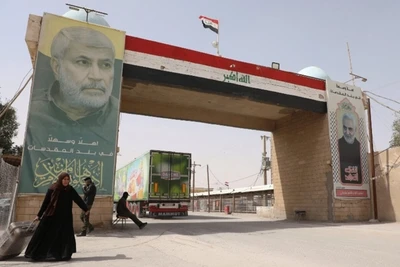
Outside the building of the General Directorate of Prisons of Semnan Province
A Swiss citizen Iran says died by suicide in prison was a 64-year-old tourist, a Swiss foreign ministry spokesman told Iran International, adding that Switzerland is seeking more details on his arrest and death from Tehran.
The foreign ministry added on Friday that the individual had been living in South Africa for the past 20 years and was traveling in Iran as a tourist.
The email response from the ministry said that the Swiss embassy in Iran was earlier denied access to the prisoner and now wants Tehran to provide full information about his arrest and death.
"Since Switzerland was informed of the arrest, the Swiss Embassy in Tehran has been in daily contact with the Iranian authorities to obtain more information about the circumstances of the arrest and to gain access to the detained Swiss citizen," the foreign ministry said.
"However, due to the accusations (espionage – national security), the requested consular access was not granted," it added. "Switzerland is demanding that the Iranian authorities provide detailed information."
The Swiss citizen who allegedly committed suicide in Semnan Prison on Thursday had been arrested while collecting soil samples in Iran’s central desert during an Israeli airstrike, media affiliated with Islamic Revolutionary Guard Corps reported.
Meanwhile, local media quoted unnamed Iranian official as saying that person was conducting espionage when he was arrested. The name of the Swiss citizen and the circumstances of his arrest and death remain unclear.
“This individual used prior intelligence training to take their own life during a specific opportunity,” Mashregh News, a publication affiliated with the Islamic Revolutionary Guard Corps (IRGC), reported late Thursday, citing an unnamed security official.
"Switzerland is demanding that the Iranian authorities provide detailed information on the reasons for his arrest and a full investigation into the circumstances of his death," the Swiss foreign ministry said.
The individual, detained by the IRGC Intelligence Organization, was accused of gathering information in a sensitive area during Israel's October air attack. The media report specifically said that this occurred during the Shahroud attack, which targeted an IRGC missile facility. Satellite imagery from Planet Labs later revealed significant damage to the site, known for building ballistic missiles and launching rockets as part of Iran’s space program.
After their arrest, the person was transferred to Semnan Prison, where they allegedly revealed information about their network and communication links, according to the outlet.
A local judiciary official confirmed the death on Thursday, saying that the Swiss national, facing espionage charges, had committed suicide in their cell.
Switzerland has also confirmed the death. "The FDFA confirms the death of a Swiss citizen in Iran," spokesperson Pierre-Alain Eltschinger told Iran International. "The Swiss Embassy in Tehran is in contact with the local authorities to clarify the circumstances of the death in an Iranian prison," he added.
According to Mizan, Iran's judiciary news website, the detainee asked their cellmate on Thursday morning to purchase food from the prison canteen. While alone in the suite, the detainee reportedly took their own life. "Prison officials immediately intervened to save the individual, but their efforts were unsuccessful," Mohammad Sadegh Akbari, a local judiciary official, was quoted as saying. “Suicide has been definitively confirmed.”
Iran has arrested dozens of dual nationals and foreigners in recent years, often on charges of espionage or security-related offenses. Some of these detainees have been released in exchange for deals involving Iranians held in foreign prisons.