Iran’s strikes on Persian Gulf water and power were deliberate - Reuters
A satellite image taken May 9, 2026, shows strike damage to a collection of pipes sustained in an attack on May 4, 2026. Damage to a critical oil-routing system called a matrix manifold, which was struck in March, is also visible.
Iran and its allies hit water plants, airports, refineries and a nuclear power station across the Persian Gulf with a precision that rules out the official story of falling debris, a Reuters investigation has found, showing the civilian damage was the aim, not a side effect.
Reuters counted at least 135 drone and missile strikes on at least 84 infrastructure sites in Saudi Arabia, the UAE, Iraq, Qatar, Kuwait, Oman and Bahrain since the war began on February 28. Again and again, the munitions struck the one piece of equipment a facility could least afford to lose, some of it hidden under rooftops or only a few meters across.
Iran’s parliament speaker, Mohammad-Bagher Ghalibaf, has said as much. “It’s simple: the oil and gas production chain here is sprawling, accessible, and exposed,” he wrote on X in early September.
“American oil and gas companies across these waters and facilities share that exposure.” Three days later, three pumping stations on Saudi Arabia’s East-West Pipeline were hit.
Reuters based its findings on 36 interviews, imagery and satellite data.
‘Falling debris’
In at least 34 statements, the region’s governments blamed damage on debris from successful interceptions. Fourteen experts who reviewed Reuters’ imagery, 11 from the affected industries, said that was highly improbable, citing signs of explosive detonation and the importance of what was hit.
Five of the states make it illegal to photograph or share certain images of strike damage.
‘Running out of water in days’
Kuwait, a desert country, draws 90 percent of its drinking water from desalination plants, most of them attached to coastal power stations because removing salt from seawater takes enormous amounts of heat and electricity.
Iran hit at least four of Kuwait’s eight combined power and desalination plants between March 2 and July 20, Reuters found, some more than once. In one four-day period in July, it struck what the government called “several” desalination plants, one of them at least twice.
“If you were to attack enough of their capacity, we’re talking about running out of water in days or weeks,” said Michael Christopher Low, director of the Middle East Center at the University of Utah. Donald Trump had threatened Iran’s water supply in March, Low said, but it was Iran that turned the threat into reality for its neighbors.
Kuwait’s government asked citizens to save water and electricity in “the spirit of shared responsibility.”
The strikes also hit Kuwait’s main refineries. In April it exported no crude at all, the first time since 1991, according to TankerTrackers.
A nuclear power plant
On May 17, a drone hit an electrical substation at the UAE’s Barakah nuclear plant, about 130 meters from a reactor, forcing one of its four reactors onto emergency diesel generators, according to the International Atomic Energy Agency.
“This means whoever was or is behind this knew exactly what they were doing,” IAEA chief Rafael Grossi said.
Three officials told Reuters Iran had the plant’s floor plan. The UAE said the drone came from “armed factions in Iraq.” There was no radioactive release.
A satellite image taken March 5, 2026, at the United Arab Emirates port of Fujairah after an attack on March 3, 2026, shows tanks burning.
Fujairah
The UAE’s main oil port outside the Strait of Hormuz, Fujairah was the region’s lifeline once Iran blockaded the strait. It was struck at least 19 times, and for the first three months of the war was either under attack or under repair.
The first strike, on March 3, left tanks burning that were still visible from space two days later. On March 9, a strike destroyed the first of the port’s two matrix manifolds, a junction of 62 pipelines that carries crude and refined products from the terminals to the ships. Emirati officials blamed debris.
“This is a wound to the brain and heart,” said Ramanan Krishnamoorti, a petroleum engineering professor at the University of Houston, who said it stretched credibility that debris had simply fallen onto the manifold.
Strikes on March 14, 16 and 17, beginning hours after a US attack on Iran’s Kharg Island oil terminal, damaged the second manifold, Reuters found, a hit not previously reported. Loadings fell to 440,000 barrels a day in the week of March 16, less than half the 2025 average, according to Kpler.
A satellite image taken September 11, 2025, shows the aftermath of a September 10, 2026, attack on a pumping station on Saudi Arabia's East-West Pipeline.
“We were watching it come in and watching the helicopters blast the drones out of the sky,” said a foreign businessman who watched one wave from a nearby road. “They were sending swarms of drones and one or two got through.” American-made Patriot batteries sat about 3 kilometers away.
The port recovered to a weekly record of 3.2 million barrels a day by the end of March. Iran struck again on April 6 and May 4, the second time hitting the pipes feeding the first manifold. Refined exports essentially stopped: a single ship left between May 4 and June 1, and they did not recover until September. In at least six statements, Emirati authorities blamed debris; none admitted major damage.
The UAE’s reprieve
Strikes on UAE infrastructure stopped after May 17.
In June, four sources told Reuters, the UAE agreed to unlock at least $10 billion in frozen Iranian funds, $3 billion of which was released, and two said Iran agreed in return to stop attacking. The UAE denied any agreement. A senior Iranian official confirmed the transfer but said it reflected “the correction of the UAE’s behavior.”
In September, as Iran attacked ADNOC tankers at sea, Fujairah set a monthly export record of 2.62 million barrels a day.
The other routes
At Qatar’s Ras Laffan, which handles nearly a fifth of the world’s liquefied natural gas, two strikes destroyed the cold boxes that chill gas into liquid. QatarEnergy says repairs will take three to five years.
On September 10, the attack on the East-West Pipeline halted crude flowing across the desert to the Red Sea port of Yanbu, a route for up to 4 percent of global supply. Riyadh blamed Iran-backed militias in Iraq.
Iran-linked strikes have damaged five of Saudi Arabia’s nine biggest refineries and output fell from more than 10 million barrels a day to below 7 million, a loss of over $50 billion.
Airports in at least four countries, Amazon data centers and the UAE’s Al Taweelah aluminum smelter were also hit. The smelter will not return to normal before 2027.
“Every single target was civilian,” said Sultan Al Jaber, head of the Abu Dhabi National Oil Company. “They are targeting our infrastructure. But what they’re really targeting is our way of life.”
A satellite image taken July 30, 2026, shows damage to tanks at Saudi Aramco's Abqaiq oil processing facility, which was attacked on July 27, 2026.
The Houthis and the Red Sea
After the April ceasefire collapsed, Revolutionary Guards commanders flew to Yemen on July 13 with missile and drone equipment for the Houthis, according to Reuters.
From July 16 to 18, US forces hit bridges and a tunnel on the roads to Bandar Abbas, strikes Iran International mapped in its investigation of Iran’s road and rail network.
The Houthis answered by hitting Saudi Arabia, knocking the Jazan refinery’s output to zero. The group has since declared a naval embargo on Saudi Red Sea ports, hit tankers and the airport in Najran, and taken the port of Mokha. On Saturday, a strike blamed on the Houthis killed 12 people at King Khalid International Airport in Riyadh.
Saudi Arabia’s crown prince asked Trump for military help in September and was rebuffed. Riyadh had already signed a mutual defense pact in Mecca with Turkey and Pakistan in August.
In 1983, a CIA assessment warned that “even a few attacks against well-chosen targets could do considerable damage” to the region’s oil facilities. Fujairah, which began full operations the same year, has since been struck at least 19 times.
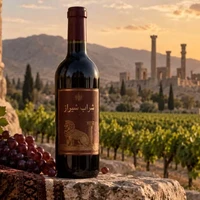
Nearly five decades after the 1979 Revolution brought an end to Iran's legal wine industry, the country retains vast vineyards and a centuries-old winemaking heritage but remains absent from a global wine export market worth $37.8 billion in 2025.
Iran has approximately 128,000 hectares of vineyards, just 31,000 fewer than Australia, whose wine exports were worth around €1.3 billion ($1.45 billion) in 2025.
The disparity reflects the disappearance of an industry from Iran's economy following the revolution, when the newly established Islamic Republic banned the production and sale of alcoholic beverages.
Grapes continue to be cultivated across Iran, including in Fars, Qazvin, Hamedan and Urmia, while Iranian raisins remain present in international markets. But an industry that could have generated exports, employment and tourism has remained absent for nearly five decades.
Freshly harvested grapes are displayed alongside traditional food preparation and drying trays in Ruyan, Semnan province, northern Iran, August 31, 2026.
Historic wines of Shiraz
The name "Shiraz" is now one of the most recognizable in the global wine industry, although the grape variety has no proven genetic connection to the grapes historically cultivated in Shiraz, southern Iran.
The shared name has long fueled a theory that the Syrah grape originated in Shiraz, Persia, before reaching France. In 1832, Scottish viticulturist James Busby brought Syrah vines from France to Australia, where the variety eventually became known as Shiraz.
Genetic research later established the grape's French origins, although the precise evolution of the Australian name remains disputed. The historical association with Persia has nevertheless endured.
Wine is deeply embedded in Persian culture and literature. Words such as mey and badeh, both meaning wine, and saqi, meaning cupbearer, established an enduring presence in Persian poetry.
Wine produced in Shiraz enjoyed commercial recognition during the Safavid period, when English and Dutch merchants transported some of it through the Persian Gulf to India and other parts of Asia, primarily for their own consumption.
In 1665, Shah Abbas II granted the French East India Company permission to produce wine in Shiraz for its employees.
The tradition continued into the Pahlavi era. Before the 1979 revolution, wine production and sales were legal in Iran, with commercial wineries operating in the country.
Freshly harvested grapes in crates at a vineyard in Ruyan, Semnan province, northern Iran, August 31, 2026.
The industry that might have been
Wine is more than the product of a vineyard. The industry extends from agriculture to factories, laboratories, glass bottle manufacturing, packaging, transportation, marketing, exports and tourism.
During the same decades that Iran's wine industry ceased operating, countries including Australia, Chile and New Zealand expanded their presence in the international market through investment in technology, education and branding.
According to the International Organisation of Vine and Wine (OIV), Australia had approximately 159,000 hectares of vineyards in 2025 and exported wine worth about €1.3 billion ($1.45 billion).
The comparison does not mean Iran and Australia have identical winemaking potential. Commercial winemaking requires suitable grape varieties, specialized equipment, established production standards and access to international export networks.
A hypothetical model based on OIV statistics and Australian industry data suggests that if 20 percent of Iran's existing vineyards were dedicated to growing grapes suitable for winemaking, annual wine production could reach approximately 125 million liters.
The estimate assumes an average harvest of seven metric tons of grapes per hectare and a conversion rate of 0.7 liters of wine per kilogram of grapes.
Under a hypothetical scenario in which Iran exported half of that production, divided equally between bottled wine at about $5 per liter and bulk wine at about $0.80, annual exports would be worth around $186 million at 2025 prices.
The figure is illustrative rather than a forecast. The calculation does not account for the cost of converting vineyards and building a wine industry, or the value of grape and raisin production displaced in the process.
Even with those limitations, it illustrates how part of Iran's existing agricultural capacity could have developed into an export-oriented industry.
Such an industry could also have generated employment across grape-growing regions, supporting agricultural workers, food-processing businesses, packaging plants, transportation companies and exporters.
A wine tourism destination?
In many parts of the world, winemaking has become an important contributor to tourism, attracting visitors and generating income beyond the vineyards themselves.
Bordeaux in France, Tuscany in Italy and Napa Valley in the United States are among the best-known examples of regions where vineyards have become tourist attractions alongside their role in wine production.
Shiraz, the capital of Fars province in southern Iran, would have had many of the ingredients for developing a comparable form of tourism, although revenues generated by established international wine regions cannot simply be applied to Iran.
The city and surrounding region already boast internationally recognized attractions, including Persepolis, the ancient ceremonial capital of the Achaemenid Empire, Pasargadae, the tombs of the Persian poets Hafez and Saadi, historic Persian gardens and distinctive local cuisine.
Vineyards, winery tours and opportunities to experience local food and wine could have complemented these attractions.
The name "Shiraz" itself could also have represented a valuable commercial advantage, although its international recognition in wine today is largely the result of Australia's successful industry.
The Gate of All Nations (also known as the Xerxes Gate) at the ancient ceremonial capital of Persepolis in Fars Province, Iran.
Combining the international familiarity of the Shiraz name with the legacies of Hafez and Saadi, Persepolis, Persian gardens and the region's long history of winemaking could have helped establish a distinctive identity for local tourism.
Other grape-growing regions of Iran such as Qazvin province and the city of Takestan, as well as Hamedan and Urmia, could have established wine-producing regions based on their climates and traditions of grape cultivation.
Iran's lost opportunity extends beyond the wine that might have been produced. It encompasses nearly five decades in which investment, jobs, exports and tourism around such an industry were unable to develop.
Perhaps a glimpse of what such an industry might have become can be found in one of the most celebrated verses of Hafez, the 14th-century Persian poet whose name remains inseparable from Shiraz:
Come, let us scatter flowers and pour wine into the cup.
Let us break through the roof of heaven and devise a new design.
A former Iranian labor minister has drawn ridicule after saying the country has no economic problems other than high prices and inflation, remarks that came as official data showed year-on-year inflation approaching 90%.
Hojjat Abdolmaleki, who served under former president Ebrahim Raisi and is an economics professor, made the remarks in a recent interview with state television that has circulated widely online over the past two days.
“In the economy, the issue is only and only high prices and inflation,” Abdolmaleki said. “Set high prices aside and you have no other economic problems… We have no problems, praised be God.”
The former minister has previously made controversial remarks about the causes of inflation. In August, he claimed that rising prices were not even one percent attributable to the war and regional conditions.
Reformist and moderate newspapers, including Sazandegi, criticized the assertion as an oversimplification that ignored the economic costs and currency shocks resulting from political and military developments.
Abdolmaleki has also dismissed the economic consequences of international internet disruptions, saying nobody had lost their job because of internet shutdowns and that online sellers could move their businesses to domestic platforms.
Critics argued that changing platforms could not guarantee businesses would retain their customers, income or jobs.
Ridicule crosses political lines
Abdolmaleki's latest remarks have drawn criticism from conservatives as well as moderate and reformist voices.
The moderate conservative news website Khabar Online published the video under the headline: “Abdolmaleki’s Great Discovery About Iran’s Economy: Erase the Problem from the Equation to Solve It!”
Bamdadeno, an online media outlet active primarily on Instagram and Telegram, compared the argument to saying that “if you disregard poverty, there are no poor people; ignore unemployment, and everyone is employed.”
“The issue is not simply how bizarre a sentence is,” it added. “The issue is that decisions about employment, livelihoods and the welfare of millions of Iranians were once made on the basis of this kind of outlook and oversimplification.”
Rouhollah Jome’i, a conservative political activist, took a sarcastic swipe at Abdolmaleki, who is associated with hardline groups known as “super-revolutionaries.”
“What an interesting way of putting it! For example, if we set aside delusional super-revolutionaries, we would have no political or security problems either…” he wrote on X.
Journalist Mohammad Parsi applied the same logic to other problems facing Iranians.
“Yes, if there is no internet, there is no problem with filtering; if we do not get sick, there is no problem with medicine; and if we do not drive cars, there is no problem with petrol,” he wrote.
“This satire becomes bitter when we remember that this man was once a minister in this country and made decisions on our behalf!”
One Instagram user applied the same logic to several other problems: “Yes! The problem with drought is only a lack of water! The problem with power cuts is a lack of electricity! The problem with cars is a shortage of parts and funding! Otherwise, we have no problems!”
Another user questioned whether the country could hope for improvement with people like Abdolmaleki in positions of influence over major decisions.
Inflation approaches 90%
The remarks come as official figures indicate that inflationary pressures in Iran remain severe.
According to the latest figures from the Statistical Centre of Iran, year-on-year inflation rose by 0.8 percentage points last month to 89.8%. Annual inflation increased from 69.9% in August to 73.6% in September.
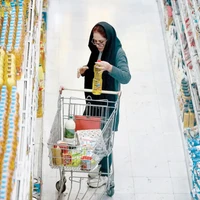
Inflation in food and beverages was considerably higher than the overall rate, with prices of some food items, including cooking oil, rising by more than 250% compared with a year earlier.
Even housing rents, which recorded the lowest rate of increase among the 12 main categories of goods and services in the household consumption basket, rose by more than 30% year on year.
The figures point to mounting pressure on Iranian households and declining purchasing power, providing a stark backdrop to Abdolmaleki's assertion that, high prices aside, the economy has no other problems.
Iranian missile are displayed on the anniversary of the 1979 Revolution in Tehran, Iran, February 12, 2026
A senior Revolutionary Guards official has compared Iran’s conflict with the United States to a world war that could reshape the global order, reflecting a mindset in Tehran that appears increasingly resistant to backing down despite the risk of renewed US attacks.
IRGC political deputy Yadollah Javani said Wednesday that the conflict could have consequences comparable to the two world wars and alter the global balance of power.
His remarks capture a broader calculation among Iranian hardliners: if the confrontation is genuinely existential and its consequences historic, preserving Iran’s leverage may matter more than reducing the immediate risk of escalation.
That calculation is increasingly visible around the Strait of Hormuz, where the IRGC has intensified threats against US and commercial vessels even as officials warn that Washington may be preparing another attack.
President Donald Trump recently told an election campaign gathering in Alaska that he would call on Israel to prepare for a possible attack on Iran, while saying a decision on Iran would be announced “very soon.”
IRGC spokesman Hossein Mohebi said Washington could launch new attacks before the November midterm elections, arguing that Trump might seek a military achievement before voters go to the polls.
Pressure around Hormuz
A Singapore-flagged container ship sank near the strait after being hit by a projectile, Reuters reported Wednesday, citing maritime security sources.
IRGC Navy Rear Admiral Ali Azmaei said Iranian coastal defense and fast-attack units were “waiting for American warships to approach the Strait of Hormuz so they can be sunk.”
He also warned that commercial vessels operating under coalition naval escort should not assume they would be protected from Iranian action.
Iranian media also reported Wednesday that a small fishing boat had been attacked by an unidentified drone near the strait, killing those on board. The circumstances of the reported attack remained unclear.
Javani said Wednesday that Iran had moved beyond the danger of a surprise attack and that its armed forces were prepared to respond to further enemy action.
He said Iran's adversaries had expected the killing of former Supreme Leader Ali Khamenei to produce victory within 48 to 72 hours.
Tehran has meanwhile continued to distance itself from Houthi attacks on Saudi Arabia. Whatever their origin, attacks threatening Saudi energy infrastructure add to pressure on oil markets, increasing the economic cost of the wider confrontation.
The appeal of the grey zone
Despite the growing economic cost to Iran itself, hardline outlets including Kayhan, Javan and state television continue to champion the “neither war nor negotiation” strategy associated with former Supreme Leader Ali Khamenei.
A comprehensive agreement with Washington could require Tehran to surrender some of its nuclear and regional leverage, while another full-scale war could impose far greater costs on the country and threaten the political system itself.
Remaining between the two, hardliners argue, allows Iran to preserve its nuclear capabilities and regional influence without making irreversible concessions.
They also frequently cite the US withdrawal from the 2015 nuclear agreement, known as the Joint Comprehensive Plan of Action, as evidence that American commitments cannot be trusted and that any agreement reached today could be abandoned by a future administration.
But the escalating confrontation around Hormuz illustrates the danger inherent in that strategy. Maintaining such a grey zone requires Tehran to create enough risk to generate leverage without pushing the United States or Israel into another major attack.
Where the factions agree
Moderate, pragmatist and reformist-aligned media outlets close to President Masoud Pezeshkian and his foreign policy team have generally argued that Tehran should take advantage of diplomatic opportunities before conditions change.
Their disagreement with hardliners is substantial but does not necessarily extend to Iran's fundamental objectives.
Both sides seek to preserve the Islamic Republic and as much of its nuclear and regional leverage as possible. They differ over whether diplomacy or continued pressure offers the safer route.
For now, Tehran appears to be testing the hardline proposition that it can raise the cost of confrontation enough to make Washington compromise without pushing Trump toward war instead.
Seen from that perspective, Javani's invocation of a world war is more than bellicose rhetoric. It reflects a view of the confrontation as consequential enough that backing down carries risks of its own.
The increasingly dangerous contest around the Strait of Hormuz may determine how much room remains between compromise and another war.
People wait for service at a post office in Iran, October 8, 2026
Iranians receiving unemployment benefits say payments have been delayed by up to two months, leaving some struggling to pay for food and service debts, according to messages sent to Iran International.
Recipients described repeated delays of several weeks and said banks and Social Security offices had provided little clarity over when the money would arrive, as inflation above 70% and the rial’s steep decline further squeeze household finances.
“Unemployment benefits are our only lifeline. I’m struggling to cover expenses for myself, my spouse and children,” one recipient said. “Every day the money doesn’t arrive, we’re left with an empty table and a sense of shame.”
Payments ‘weeks late’
Several recipients reported recurring delays of 20 to 25 days, while others said they had gone without benefits for as long as two months.
One person whose payment was more than a month overdue said people depended on the modest allowances to put food on the table and service debts.
The person said Bank Melli and Refah Bank had refused to accept responsibility for the delay, while the Social Security Organization said it had issued the payment check and the matter was now in the banks’ hands.
Another recipient reported a 25-day delay in receiving a monthly allowance of 160 million rials, saying Branch 15 of the Social Security Organization routinely made late payments.
A person with 22 years of employment history who had been unemployed for six months said the organization’s Shemiran branch in northern Tehran had failed to pay their benefits.
Others described receiving vague promises from local offices.
“The payment was supposed to arrive by the 15th of the month, but there’s been nothing. Some branches told us to wait until the 30th because it might be paid then,” one person said.
Under Iranian law, workers who involuntarily lose their jobs may qualify for unemployment benefits if they meet employment and insurance requirements.
For many recipients, the payments are their primary source of income while looking for work.
Social Security under strain
The delays come amid wider concerns about the finances of the Social Security Organization (SSO), Iran’s main social insurance institution responsible for unemployment benefits and pensions.
SSO chief Mostafa Salari said on July 27 that the organization faced a monthly pension shortfall of at least 170 trillion rials even if it collected all current insurance contributions. He put its debt to the central bank at 750 trillion rials.
Pensioners have also protested over delayed payments in recent months. On Sept. 20, retirees gathered in Tehran, Ahvaz, Rasht, Shush and Kermanshah to demand outstanding payments, including delayed pension adjustments.
The complaints come alongside broader reports of unpaid wages and insurance contributions across Iran.
Iran International reported last month that workers in several sectors, including factories and healthcare facilities, were facing delayed salaries and insurance contributions.
Workers laid off from Rajaee Port in Bandar Abbas have also reported unpaid wages and difficulties accessing unemployment benefits.
For those waiting for payments, however, the immediate problem is making ends meet.
“They haven’t deposited my unemployment benefits. I have countless loan repayments and debts, and I’m desperate,” one recipient said. “Social Security treats us so badly, as though we’re the ones who owe them money.”
A women’s Basij commander and a police officer were killed in separate attacks on Wednesday in Iran’s southeastern Sistan-Baluchestan province, adding to a series of deadly shootings, bombings and armed clashes in the region.
The IRGC-linked Tasnim news agency said a commander of a women’s Basij unit in Mehrastan County was shot dead outside her home.
Tasnim attributed the killing to what it described as militants linked to the United States and Israel, but did not identify a group or provide evidence supporting that assertion.
The Basij is a paramilitary organization operating under Iran’s Islamic Revolutionary Guard Corps.
Police vehicle attacked in Mehrastan
In a separate incident in the same county, unidentified gunmen attacked a police vehicle, killing First Sergeant Mohammad Ali Shahriari, Tasnim reported.
The outlet did not provide details about the attackers, the circumstances of the shooting or whether anyone else was wounded.
The two killings came a day after major armed confrontations elsewhere in Sistan-Baluchestan that left casualties on both sides, according to Iranian authorities and local reporting.
Six killed in operation near Zahedan
The Revolutionary Guards said on Tuesday that five members of an alleged kidnapping cell and one of its personnel were killed near Zahedan, the provincial capital.
The IRGC Ground Force’s Quds regional headquarters said its forces located the group in the Kurin area after an engineer working on construction projects west of Zahedan was abducted a day earlier.
It said five members of the group were killed, the hostage was freed and one IRGC member was killed.
According to the statement, the kidnappers had links to armed groups and intended to take the engineer into a neighboring country. It did not identify the group or the country.
An earlier Tasnim report had put the number of people killed in that operation at three.
Separately, Haalvsh, which covers developments in Sistan-Baluchestan, said more than 20 members of the Fatemiyoun were killed or wounded Tuesday during more than seven hours of fighting in the mountainous Chah Ahmad and Arzan Tak areas of Taftan County. The figure could not be independently verified.
Citing local sources and eyewitnesses, Haalvsh said armed men who had taken positions in the mountains opened heavy fire on a group that included Fatemiyoun fighters traveling on motorcycles.
Fatemiyoun is an Iran-backed Shiite militia composed largely of Afghan fighters and organized with support from the Revolutionary Guards. Its members have fought alongside Iranian forces in regional conflicts.
Haalvsh said reinforcements later arrived with more than 40 vehicles as well as reconnaissance and combat drones. It also reported mortar and heavy-weapons fire in the surrounding mountains.
The identities and affiliation of the armed men involved in the fighting remained unclear.
Series of attacks on security personnel
Sistan-Baluchestan, which borders Pakistan and Afghanistan, has seen repeated attacks on police and military personnel in recent weeks.
On October 9, Iranian state media reported that Nosrat Eftekhari, a senior provincial police official, was killed in a roadside bombing near Zahedan.
A day earlier, a police commando was killed in an armed attack near Nosratabad, while a separate attack on a vehicle carrying Iranian Army personnel near Nikshahr killed another serviceman.
On September 23, an armed confrontation in Saravan killed Hossein Zarifi, a commander with the IRGC’s Sajjad base, according to the Guards’ Quds regional headquarters. Haalvsh separately reported that another intelligence official was killed and at least 13 other personnel were wounded.
At least five Fatemiyoun members were also reported killed in an armed attack near Zahedan on October 2.
More than 90 killed since March - HRANA
The US-based Human Rights Activists News Agency said this week that at least 94 people were killed and 33 wounded in 63 armed incidents across southeastern Iran between March 31 and October 10.
HRANA said attacks on patrol vehicles and military convoys were the most common incidents it documented, followed by targeted shootings.
It also reported increased use of mines, rocket-propelled grenades and other heavier weapons by armed groups, while forces of the Islamic Republic used drones, artillery and armored vehicles in several operations.
The group said the People’s Fighters Front, an alliance formed in December 2025 that includes Jaish al-Adl and several smaller Baluch armed groups, had taken responsibility for six of the incidents it documented. Most attacks remained unattributed or could not be reliably linked to a particular group, HRANA said.
Sistan-Baluchestan, one of Iran’s poorest provinces and home to much of the country’s Sunni Baluch minority, has long seen armed confrontations between the Islamic Republic’s security forces and Baluch armed groups. The frequency and intensity of such incidents have increased in recent months.