• العربية
  • فارسی
BrandBrand
  • Iran Insight
  • Politics
  • Economy
  • Analysis
  • Special Report
  • Opinion
  • Podcast
  • Live TV
  • Iran Insight
  • Politics
  • Economy
  • Analysis
  • Special Report
  • Opinion
  • Podcast
  • Live TV
  • Theme
  • Language
    • العربية
    • فارسی
  • Iran Insight
  • Politics
  • Economy
  • Analysis
  • Special Report
  • Opinion
  • Podcast
  • Live TV
All rights reserved for Volant Media UK Limited
volant media logo

Trump says Iran war will end soon, cites 28 million barrels through Hormuz

Oct 9, 2026, 17:11 GMT+1

President Donald Trump said Friday that the war with Iran would end soon and that 28 million barrels of oil had passed through the Strait of Hormuz the previous day.

“The prices will come tumbling and it’s going to be over soon, one way or the other,” Trump said at a Columbus Day celebration at the White House.

Most Viewed

Iran looks for escape routes as US sanctions close in
1
INSIGHT

Iran looks for escape routes as US sanctions close in

2
ANALYSIS

From talks to war: Tehran sees the gap narrowing

3
VOICES FROM IRAN

Iran's reported $200 million Hezbollah aid angers cash-strapped citizens

4

Kayhan attacks Ghalibaf’s role in talks. Didn’t Khamenei approve it?

5
ANALYSIS

Three years after October 7, Iran pays the price of miscalculation

Banner
Banner

Spotlight

  • J’Accuse! Tehran defends French students, silences Iranian youth
    OPINION

    J’Accuse! Tehran defends French students, silences Iranian youth

  • Iran turns on Pakistan as Saudi defense pact takes effect

    Iran turns on Pakistan as Saudi defense pact takes effect

  • US pressure hits Iranians harder than rulers, 68% in poll say
    VOICES FROM IRAN

    US pressure hits Iranians harder than rulers, 68% in poll say

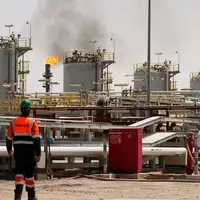
  • Saudi Aramco hires US firm to upgrade shared oil field as Iran lags behind

    Saudi Aramco hires US firm to upgrade shared oil field as Iran lags behind

  • Iran looks for escape routes as US sanctions close in
    INSIGHT

    Iran looks for escape routes as US sanctions close in

  • China shifts to Iraqi oil: is Iran using old workaround to beat US blockade?
    ANALYSIS

    China shifts to Iraqi oil: is Iran using old workaround to beat US blockade?

Banner
Banner
•
•
•

More Stories

Teenage boy dies in custody after beating by Iran's Basij forces, source says

Oct 9, 2026, 16:29 GMT+1
•
Pooya Jahandar
100%
Omid Ghanouni

A 17-year-old boy died in custody in Iran’s Isfahan province after the IRGC’s paramilitary Basij forces beat him during his arrest and a judge refused his father’s plea for hospital treatment, a source familiar with the case told Iran International.

Omid Ghanouni, from Arjanak village in Khansar county, died during judicial questioning at the Khansar courthouse on Tuesday, October 6, less than 24 hours after his arrest, according to the source.

He was detained on Monday evening, following a verbal dispute with a Basij member. Basij forces severely beat him with rifle butts before handing him over to police, the source said.

Ghanouni spent the night at Vist police station and was taken to the courthouse the following morning.

Father’s plea for hospital treatment rejected

During questioning, Ghanouni was suffering from severe abdominal pain and was visibly unwell, according to the source.

His father, who was at the courthouse, asked judicial officials to allow his son to be taken to hospital. He even offered to remain in custody in his son’s place so the teenager could receive treatment.

The judge rejected the request and questioning continued, the source said. Ghanouni then collapsed from his chair and died at the courthouse. His body was subsequently taken to Khansar’s Fatemiyeh Hospital.

Medical staff at the hospital identified internal bleeding as the cause of death, according to the source, who also described extensive bruising and injuries on the teenager’s body and face.

The source said there had been obstruction in the process of referring his body for forensic examination.

100%
A funeral notice for 17-year-old Omid Ghanouni, who died in custody in Iran’s Isfahan province on October 6, 2026.

Iran International has not yet obtained an official forensic report or independent medical records confirming the cause of death.

Ghanouni was buried in his home village on Thursday, October 8. His family has come under pressure to remain silent about the circumstances of his death, the source said.

Family demands answers

On Friday, Ghanouni’s family gathered outside Vist police station to demand answers from officials.

“Officers arrested him outside the house on Monday, October 5, and on Tuesday, October 6, the Khansar courthouse handed me my son’s body,” his mother told officers. “Tell me what happened to my son.”

No official explanation from judicial or police authorities about the cause of his death was available at the time of publication.

The case follows other deaths in or after custody reported by Iran International in recent months.

Those include the deaths of Ali Hashemi and Akbar Mohammadi in Isfahan’s Dastgerd prison, Taghi Salimi in Amol prison and Arash Tolou Sheikhzadeh following arrest and interrogation in Mashhad. Reporting on those cases has included allegations of torture, denial of medical care and uncertainty over the causes of death.

In a separate case, Pejman Sourani, a 33-year-old man from Najafabad in Isfahan province, was killed on October 3 following a confrontation with government supporters at the Aminabad petrol station and a beating by security forces, according to information previously reported by Iran International.

Forensic officials identified blows to the head as the cause of Sourani’s death, according to the reporting on his case.

Iran turns on Pakistan as Saudi defense pact takes effect

Oct 9, 2026, 15:23 GMT+1
•
Maryam Sinaiee
100%
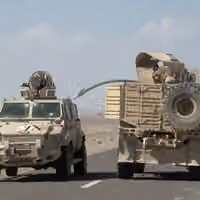
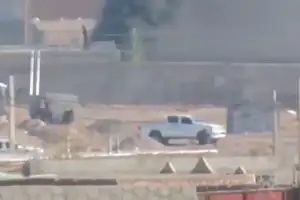
Military vehicles travel along a road during what Saudi-backed Yemeni government forces say was an advance against the Iran-backed Houthis, near Dhubab, Taiz Governorate, Yemen, in this still image taken from video released October 5, 2026.

Iran has sharpened its criticism of a Saudi Arabia-Pakistan-Turkey defense pact after it became operational, warning against intervention in Yemen and questioning Pakistan’s role as a mediator between Tehran and Washington.

The trilateral pact entered its operational phase on October 5 following an escalation in Houthi missile and drone attacks on Saudi infrastructure. Turkey and Pakistan said they had begun taking measures to support Saudi Arabia.

Under arrangements discussed by the three countries, Pakistani and Turkish forces are expected to provide military, technical and intelligence support to Saudi Arabia, including defensive capabilities inside the kingdom. Officials have said the forces will not take part in offensive operations in Yemen.

Iranian Foreign Ministry spokesman Esmail Baghaei, asked on Sunday about reports that tens of thousands of Pakistani troops could be deployed to Saudi Arabia, said: “We have also heard this rumor, and we hope it is not true.”

“The countries of the region are well aware that any intervention in the Yemen issue could have undesirable consequences for the region,” he added, expressing hope that pacts such as the Mecca agreement would not be used “against the interests and welfare of the Muslim community.”

The Saudi Arabia-Turkey-Pakistan defense pact, signed in August in Mecca, stipulates that an attack on any one of the three countries will be treated as an attack on all three.

‘Begging for security’

Foreign Minister Abbas Araghchi, without directly referring to the pact, called on neighboring countries to pursue “self-reliance” and a policy based on “genuine brotherhood.” He also said such agreements would not constrain Iran.

Several lawmakers dismissed the pact as largely symbolic. Ahmad Bakhshayesh, a member of parliament’s National Security and Foreign Policy Commission, called it a “paper and political pact.”

Sharper criticism came from committee member Ebrahim Rezaei.

“The Saudis should know that a paper agreement with Turkey and Pakistan will not bring them security, just as years of one-sided milking of the Americans did not bring them security,” he wrote on X. “Correct your policies so that you do not have to beg others for security.”

That tone has hardened as the pact has moved into its operational phase.

Alaeddin Boroujerdi, a member of parliament’s National Security and Foreign Policy Committee, said Thursday that Turkish and Pakistani involvement in the Saudi conflict with Ansarullah, as the Houthis are formally known, would neither weaken the group nor restrict its ability to operate in the Bab al-Mandeb Strait.

“The entry of Pakistan and Turkey will definitely work to their own detriment,” he told ISNA. “They should learn from history ... Saudi Arabia once had a coalition with a large number of countries, but after seven years of war in Yemen, it was defeated.”

‘Regional intervenor’

Iranian criticism has focused more heavily on Pakistan than Turkey, in large part because of Islamabad’s prominent role in mediating between Tehran and Washington.

Lawmaker Ahmad Naderi wrote on X that “Pakistan’s entry alongside Saudi Arabia into the war against the people of Yemen … shows that Pakistan should no longer be considered a mediator but a regional intervenor.”

The Tabnak news website went further, saying Iran viewed the deployment of Pakistani forces to Saudi Arabia as a threat to its security and “will not tolerate Pakistan’s military presence for military operations in the Yemen war.”

It also warned that Pakistan’s increasingly overt alignment with Saudi Arabia could heighten sectarian tensions at home and bring instability to the Iranian-Pakistani border.

Conservative commentator Hassan Hanizadeh similarly accused Saudi Arabia of seeking to create a religious divide, describing a recent meeting in Riyadh involving Saudi, Pakistani and Turkish officials as a sign of “the formation of a Shiite-Sunni polarization in the region.”

Boroujerdi pointed to potential domestic opposition in Pakistan, saying its people were “revolutionary, Muslim and highly sensitive to such issues” and that Islamabad would not have an easy path if it entered the war.

‘Alliance against the oppressed?’

Iranian state media have adopted a more confrontational tone as the pact has become operational, while giving extensive coverage to warnings from Houthi officials directed at Turkey and Pakistan.

Tasnim described the development as “Turkey and Pakistan join the Saudi war against the Yemeni people,” while Nour News, which is close to Iran’s Supreme National Security Council, asked: “Mecca alliance or alliance against the oppressed people of Yemen?!”

In a Thursday commentary, Tasnim warned that if Ankara and Islamabad participate in attacks on Yemen, “they may be directly harmed through attacks on their ships, interests and perhaps even their own territory.”

UK court hears how alleged Iran spy operation targeted Iran International

Oct 9, 2026, 13:07 GMT+1
100%
Court sketch from Woolwich Crown Court. Credit: SWNS/Julia Quenzler

Men accused of spying for Iran exchanged information about Iran International’s offices and presenter Kambiz Hosseini, while one defendant discussed money transfers and his legal troubles with contacts in Iran, a London court heard.

Jurors at Woolwich Crown Court were taken through photographs, messages and phone records documenting communications among the three defendants and between Mostafa Sepahvand and two men in Iran.

Sepahvand, 41, Farhad Javadi Manesh, 46, and Shapoor Qalehali Khani Noori, 57, have all pleaded not guilty to charges under Britain’s National Security Act 2023.

Prosecutors say they gathered information for Iranian intelligence to prepare for serious violence against at least one target, with Sepahvand expected to carry out an attack and the others helping to plan it.

Locations and social media

In an exchange on December 19, 2024, Sepahvand received a postcode from a UK mobile number and forwarded it to Javadi Manesh, the court heard.

The prosecutor told jurors the postcode identified the location of Volant Media, Iran International’s parent company. Sepahvand also forwarded the telephone number from which he had received it.

Messages from December 24 showed Sepahvand sending Javadi Manesh a photograph of Hosseini, a link to his Instagram account and information about Iran International’s website.

In one message, Sepahvand wrote: “go to insta and you will see both the dog and the car”.

The prosecution also reminded jurors of a video Noori had sent to Sepahvand showing a park where Hosseini walked his dog, Niko. Other messages referred to the dog’s name and a blue Volkswagen.

Jurors were shown photographs recovered from Noori’s phone depicting Malthouse Court in Brentford from several angles, taken from inside a car.

Prosecutors had previously told the court that Iran International journalist Mojtaba Pourmohsen lived there between 2019 and 2023, but the defendants appeared unaware he had moved.

  • Three Iranians spied on Iran International journalists in UK, prosecutors say

    Three Iranians spied on Iran International journalists in UK, prosecutors say

  • UK police charge man over Iran-linked foreign intelligence offence

    UK police charge man over Iran-linked foreign intelligence offence

  • Two Iranians charged over foiled plot targeting Manchester Jews

    Two Iranians charged over foiled plot targeting Manchester Jews

Money and contacts in Iran

The prosecution examined records of Sepahvand’s communications with Mostafa Ghorbani and another contact saved as “Amin Mostafa’s Friend”, both in Iran.

The exchanges included discussions about transferring money to Sepahvand and references to an account in his name at the Workers Welfare Bank.

Jurors also heard messages concerning Sepahvand’s court case in Iran. In one, Ghorbani wrote: “haji says your case will be fine”.

Sepahvand sent Ghorbani two Iranian court documents concerning vehicles linked to him. The documents included instructions to impound the vehicles and arrest Sepahvand if he was found driving them.

Shortly after sending the documents, Sepahvand called Ghorbani and the two spoke for nearly a minute and a half, according to the records presented to the jury.

In later exchanges, Sepahvand complained that nothing had happened with his case. The logs showed repeated attempts to reach Ghorbani, including unanswered calls in early January.

Prosecutors previously said Sepahvand wanted help resolving an Iranian criminal conviction, which they consider relevant to his motivation. Jurors were told not to treat the conviction itself as evidence against him.

A police witness was questioned about the dates, times and durations of calls and messages recorded in the logs, rather than asked to draw conclusions about their significance.

Defendants dispute prosecution’s account

According to the prosecution’s account of his defense, Sepahvand accepts conducting surveillance for Iran but says he feared the consequences of refusing and deliberately did a poor job. Prosecutors reject that account.

Javadi Manesh and Noori accept visiting locations and taking photographs and videos but say they did not know they were assisting Iranian intelligence, according to the prosecution.

Iranian security forces face wave of deadly attacks in restive southeast

Oct 9, 2026, 09:07 GMT+1
100%

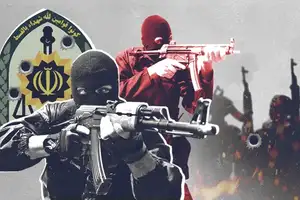
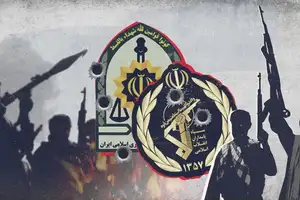
At least five Iranian military and police personnel were killed and several others wounded in four armed attacks across southeastern Iran within 24 hours, local rights group Haalvsh reported, as violence targeting security forces continued across the area.

Haalvsh, which covers developments in Sistan and Baluchestan, said more than 12 personnel were killed or wounded overall between Wednesday evening and Thursday evening in Nikshahr, Nosratabad, Faryab and Jaleq, but cautioned that the final toll could be higher because some casualties had not yet been identified.

The People's Fighters Front took responsibility for the attacks in Nikshahr, Nosratabad and Jaleq, according to Haalvsh. The alliance, announced in late 2025, includes several Baluch armed groups, among them Jaish al-Adl. The group had not taken responsibility for the killing in Faryab.

Nikshahr and Nosratabad attacks

In the Nikshahr area, Haalvsh said two vehicles carrying military personnel were attacked. Mohammadreza Okati was killed and five others were wounded, according to the outlet, which identified the wounded as Ali Najafi, Mohammadreza Hosseini, Mojtaba Mir and two others identified by the surnames Keikha and Iranmanesh.

Haalvsh said those casualties were taken to Mohammad Rasoulallah Hospital in Nikshahr, while other wounded personnel were evacuated by helicopter to medical facilities in Chabahar, Konarak and Iranshahr. It said it had not established their number or identities.

Iran's army separately confirmed on Thursday that Okati was killed when personnel from its 88th Armored Division came under fire while traveling for a shift change, but said three people were wounded.

In the Nosratabad area near Zahedan, Haalvsh said at least three security personnel were killed and two wounded when gunmen attacked a police commando patrol on the Lakhshak road. It identified two of those reported killed as Vahid Enayat and Abbas Aghaei.

  • Police officer killed in armed attack near Zahedan as violence continues in southeast Iran

    Police officer killed in armed attack near Zahedan as violence continues in southeast Iran

  • Five killed in roadside attack as violence spreads in southeast Iran

    Five killed in roadside attack as violence spreads in southeast Iran

  • IRGC says six gunmen killed in clash in Iran's restive southeast

    IRGC says six gunmen killed in clash in Iran's restive southeast

Iranian police had earlier confirmed only Enayat's death, saying officers returned fire and that several attackers were wounded before fleeing.

Police major killed in Faryab

In Faryab, Haalvsh reported that Major Mehdi Jamshidi was shot dead while traveling in a private vehicle in the center of the county.

The outlet said Jamshidi was struck by seven bullets. It also cited reports that he had been among police personnel present during a confrontation involving women and other protesters in the village of Pashmuki in June.

The People's Fighters Front had not issued a statement taking responsibility for Jamshidi's killing, Haalvsh said.

Jaleq police headquarters attacked

The fourth attack targeted the police command headquarters in Jaleq, the administrative center of Golshan County, on Wednesday evening.

Haalvsh said the People's Fighters Front announced that its fighters had used a mine, rocket-propelled grenades and other weapons in the attack and said six police personnel were hit.

Videos obtained by Haalvsh showed heavy gunfire around the facility and at least one support vehicle being targeted, according to the outlet. Haalvsh said it had not independently established the final number or identities of those killed or wounded. IranWire also reported an explosion and gunfire around the police facility.

Attacks follow weeks of violence

The latest incidents follow a series of attacks on Iranian security forces in the southeast. Earlier this week, gunmen attacked two military vehicles in Bampur, while last week a roadside attack near Zahedan and clashes in Rask and other areas produced further casualties.

Official Iranian accounts and reports from Haalvsh have repeatedly differed over casualty numbers in recent attacks. Haalvsh said the toll from the four latest incidents should therefore be treated as provisional, particularly because some wounded personnel were transferred to hospitals outside the areas where the attacks occurred.

Iraq creates PMF unit to take faction drones as arms plan advances - Erem News

Oct 9, 2026, 08:12 GMT+1
100%
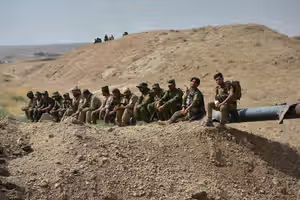
Members of Iraqi Popular Mobilization Forces (PMF) take part in a military parade in Diyala province Iraq, June 26, 2021. Media Office PMF Handout via REUTERS

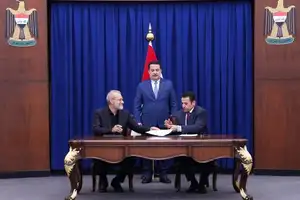
Iraq has created a specialized unit within the Popular Mobilization Forces to take control of drones held by armed factions as part of Prime Minister Ali Faleh al-Zaidi’s plan to bring weapons under state authority, Erem News reported on Friday, citing an Iraqi security source.

The source said three of the five factions covered by the plan had completed agreed handovers, but had not surrendered their entire arsenals. The process instead focused on heavy and specialized weapons and dismantling separate military headquarters.

The Popular Mobilization Forces, which the report said formally operates under Iraq’s commander-in-chief, had received the weapons and military headquarters covered by the agreements. It had also begun integrating faction members and severing their previous political and administrative affiliations, according to the source.

Drones placed under PMF structure

The new drone unit is intended to absorb the factions’ unmanned-aircraft capabilities into official state structures rather than leave them under independently run organizations, the source told Erem News.

But the source stressed that the agreements “do not mean complete disarmament.” Instead, they involve transferring specialized weapons and reorganizing armed formations within the PMF.

Erem News said effective control over those military capabilities would depend on completing the integration process and establishing the chain of command responsible for authorizing their use. The report did not identify the three factions that had completed the handover.

  • Iran’s security chief to push Iraqi Shia factions to approve militia integration law

    Iran’s security chief to push Iraqi Shia factions to approve militia integration law

  • Iran, Iraq discussed tighter curbs on Kurdish groups in Larijani visit, sources say

    Iran, Iraq discussed tighter curbs on Kurdish groups in Larijani visit, sources say

  • Iraq’s Iran-backed PMF militia fears terrorist label by the US

    Iraq’s Iran-backed PMF militia fears terrorist label by the US

Government seeks changes to PMF leadership

A political source close to Iraq’s Coordination Framework told Erem News that the government was also seeking amendments to the law governing the PMF, including limiting the term of its chairman to two years and bringing professional officers from the regular military into senior posts.

The proposal would directly affect the position of current PMF chairman Falih al-Fayyadh, according to the report. The source said the plan faced opposition within the Coordination Framework, particularly from Nouri al-Maliki’s State of Law coalition, which wanted any changes tied to a broader political agreement.

Two factions continue to resist

Erem News said Kataib Hezbollah and Harakat al-Nujaba remained opposed to surrendering their weapons, while other factions had accepted the principle of integration into state security institutions.

Zaidi has set June 30, 2027, as the deadline for completing the weapons-control plan and has said decisions on war and peace belong exclusively to Iraq’s constitutional authorities. According to the political source, he has also told Coordination Framework leaders that he intends to continue implementing the plan even if political agreement on some of its details stalls.

The source said Zaidi warned that failure by groups with armed wings to meet agreed commitments could expose Iraq to security, economic and political consequences, including additional sanctions or pressure, while adding that the prime minister still favored negotiations over a direct military confrontation with factions resisting the plan.