UK police charge man over Iran-linked foreign intelligence offence

British police charged a 39-year-old man on Friday with assisting a foreign intelligence service in a case linked to Iran, following an investigation by Counter Terrorism Policing.
British police charged a 39-year-old man on Friday with assisting a foreign intelligence service in a case linked to Iran, following an investigation by Counter Terrorism Policing.
Police said Vahid Aberi, of Liverpool, was charged under Section 3 of the National Security Act 2023 with assisting a foreign intelligence service. They said the foreign state to which the investigation relates is Iran.
Aberi was arrested on Wednesday in the Birmingham area and taken to a West Midlands police station. Officers also carried out searches at addresses in Birmingham and Liverpool.
He was remanded in custody and was due to appear before Westminster Magistrates' Court on Friday.
Police say no direct threat identified
Commander Helen Flanagan, head of Counter Terrorism Policing London, said the investigation reflected what she described as a sustained increase in national security casework.
"We have seen a significant and sustained increase in the tempo of our work in national security investigations in recent years," she said in a statement.
She said police had "intervened to disrupt suspected activity linked to foreign intelligence services" but declined to comment further on the allegations because criminal proceedings had begun.
Flanagan added that police had not identified any direct threat to the public, nor any threat to a community or individual, in connection with the investigation.
The charges were authorised by the Crown Prosecution Service.
Scrutiny of alleged Iran-linked activity
The case comes as Britain has intensified efforts to counter what it says is hostile activity linked to Iran.
Earlier this month, a London court sentenced two Romanian nationals to a combined 20 years in prison for stabbing Iran International journalist Pouria Zeraati outside his home in Wimbledon in 2024. The judge accepted the prosecution's case that the attack was carried out on behalf of the Iranian state. Iran has previously rejected accusations that it has been involved in attacks or plots in Britain.
Separately, the British government announced this week that it intends to designate Iran's Revolutionary Guards under new state threats legislation. If approved by parliament, supporting or assisting the group under the new legal framework could carry a prison sentence of up to 14 years.
The government has said the designation is separate from proscription under Britain's terrorism laws and is intended to address foreign state-backed activity, including espionage, interference, sabotage and physical attacks.
British authorities have repeatedly said they have disrupted a number of alleged Iran-linked plots in recent years. Iran has previously dismissed British allegations that it has directed hostile activity in the UK.
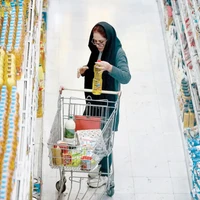








Rising daycare fees and mounting economic pressure are prompting more Iranian families to forgo kindergarten enrollment and rely on grandparents for childcare, raising concerns among sociologists about the long-term impact on children's social development.
The Hamshahri newspaper reported on Thursday that falling birth rates, coupled with soaring daycare costs, have reduced demand for kindergartens and preschool centers across the country.
Monthly daycare fees vary widely across Tehran, according to the report. In middle-income neighborhoods, tuition ranges from 50 million ($25) to 80 million rials (over $40), while families in wealthier districts pay between 250 million (around $130) and 300 million rials ($160).
The average monthly income in Iran is estimated at $150–$200, depending on fluctuations in the open-market exchange rate. By comparison, the minimum monthly cost of basic living expenses, including food and housing, is estimated at $385–$400, leaving many households unable to meet essential needs.
Daycare operators in affluent areas attributed the higher fees to rising rents and staff wages, saying the increased costs have discouraged many parents from enrolling their children.
More than 60% of kindergarten operating costs are spent on personnel under Iran's labor law, Hamidreza Sheikholeslam, head of the National Organization for Early Childhood Education, said in June.
Sheikholeslam said staffing costs, the number of teachers and children, operating hours, rent, facilities and equipment, and other operating expenses all influence tuition fees.
Many families, the report said, have responded to rising childcare costs and broader financial pressures by turning to lower-cost alternatives, most commonly asking grandparents to care for young children.
Experts warn of social consequences
Sociologists quoted by Hamshahri said removing daycare from household spending is not only an economic decision but could become a broader social challenge.
They argued that young children benefit from interacting with their peers in educational settings and warned that replacing daycare with care by relatives could undermine their social development.
The concerns follow earlier reports highlighting the growing burden on extended families. In May, the Shargh newspaper reported that prolonged preschool closures following the recent war left many working parents scrambling for childcare, with some relying on grandparents and relatives.
Another report published by Haft-e Sobh daily in February warned that rising daycare costs had effectively turned many grandparents into full-time caregivers, raising concerns about the physical and psychological burden on older adults as well as differences in parenting approaches across generations.
Nearly 100,000 people signed a petition within a day urging members of Iran’s ultraconservative Paydari Front to visit the southern war zone, reflecting anger at hardliners who oppose talks with Washington while remaining far from the fighting.
The petition, hosted on the Iranian platform Karzar, calls on prominent Paydari figures, including lawmakers Hamid Rasaei and Amirhossein Sabeti, to travel to the southern cities of Sirik and Bandar Abbas, where residents have faced repeated attacks during the conflict.
Its authors said such a visit would help the politicians "better understand the realities on the ground" and avoid decisions that could endanger civilians.
Challenge to hardline rhetoric
The petition says residents of southern Iran have lived under "direct and around-the-clock threats" while military personnel and civilians alike face fears of further attacks and damage to critical infrastructure.
It argues that politicians who have called for a wartime posture should experience those conditions themselves, saying a field visit could lead to "more realistic decision-making" and greater solidarity with local communities.
The Paydari Front is one of Iran's most hardline political factions and has been among the strongest opponents of negotiations with the United States. Its lawmakers have repeatedly criticized President Masoud Pezeshkian, Parliament Speaker Mohammad Bagher Ghalibaf and Foreign Minister Abbas Araghchi over diplomacy with Washington.
Earlier this week, parliament removed two of the bloc's most outspoken critics of negotiations from senior positions on the National Security and Foreign Policy Committee, reflecting growing tensions within Iran's conservative establishment over the handling of the conflict.
Southern anger
The petition has coincided with growing criticism on Persian-language social media over the burden borne by southern Iran, where much of the fighting has been concentrated.
In a video posted on Instagram, a comedian and influencer from southern Iran accused officials of downplaying attacks on the region. He said that when Tehran and other parts of the country came under attack, authorities described them as missile and drone strikes, but now that the south was bearing the brunt of the fighting, incoming rockets were being referred to simply as "projectiles."
"They've sanitized the language," he said. "It's as if a four- or five-year-old neighbor's child has thrown a stone at someone." He added: "You may not have the courage to call it what it is, but at least have some humanity. Don't treat southerners differently from everyone else."
Journalist Azadeh Mokhtari wrote on X that southern Iran was "the beating heart of Iran's economy," saying its ports were vital to imports, cargo handling and supplying much of the country.
Another X user argued that the Islamic Republic had turned large parts of the southern coastline into military zones and missile sites while residents continued to struggle with poverty despite the region's strategic importance and natural wealth.
A third wrote that Iranians should not pretend there was no war simply because the attacks were concentrated in the south. "Southern Iran is an inseparable part of this country," the post said. "Its pain is the pain of all Iran."
Unity message meets political divisions
The petition emerged as Iran's Press Supervisory Board instructed media outlets not to highlight political or factional disputes, urging them instead to avoid content it said could harm national cohesion or amplify social divisions.
The guidance told outlets to avoid "highlighting political and factional differences," "reproducing internal disputes" and publishing material that could undermine public unity.
Iran ranks among the world's lowest countries for press freedom, according to Reporters Without Borders, which says state repression continues to weigh heavily on independent journalism.
Iranian pensioners say their monthly income no longer covers basic living expenses, with many forced to seek additional work as inflation continues to erode their purchasing power.
“The pension is only enough to cover the equivalent of 13 days of basic work,” one woman receiving her late husband's pension told Iran International, describing monthly payments as far below the cost of supporting her family.
Other retirees also told Iran International that decades of contributions to the social security system have left them with pensions insufficient to meet basic expenses.
Several said that after 35 years of paying into the system, they now receive around 220 million rials ($117) a month, an amount they say does not even cover rent in many parts of the country.
The average monthly income in Iran is approximately $150 to $200, depending on fluctuations in the open market currency rate. This level of income falls far short of the cost of living, which requires around $385 to $400 per month to afford basic necessities like food and housing.
“Last year my husband's pension was 90 million rials ($48). This year it has increased by about 22% to 110 million rials ($58),” another woman supporting her two children told Iran International.
Many said they have turned to driving for ride-hailing services or other informal work after retirement to supplement their income.
Official data show year-on-year inflation for food and beverages has remained above 130% in recent months, placing further pressure on households already struggling with rising living costs.
Pension system under growing strain
The financial hardship described by pensioners reflects broader strains on Iran's retirement system, which has faced mounting funding shortages and growing concern over the sustainability of pension funds.
Mostafa Salari, head of the Social Security Organization, said on July 13 that the organization faces an 820 trillion rials ($436 million) funding gap to pay pension arrears for the first two months of the Iranian year and is also struggling to finance July payments.
The government has also moved to raise the retirement age as it seeks to ease pressure on the pension system, a step that has drawn criticism from labor advocates.
Economists have for years warned that demographic pressures, underfunding and broader economic problems have left Iran's pension funds increasingly vulnerable.
In 2022, Sajjad Padam, then director-general for social insurance at the Ministry of Labour and Social Welfare, warned that even selling three million barrels of oil a day without sanctions would not be enough to resolve Iran's pension crisis, underscoring the depth of the structural challenges facing the country's retirement system.
Britain's decision to create a new legal framework targeting Iran's Revolutionary Guards was driven less by political pressure than by the scale of alleged Iranian activity on British soil, according to Jonathan Hall, the UK government's independent reviewer of terrorism laws.
"There’s been a lot of pressure for some time to do something about the activities of the Revolutionary Guard Corps," Jonathan Hall KC told Iran International.
But while political calls to act had grown louder, he said the more important factor was the number of alleged Iranian plots disrupted by Britain's intelligence services and the public concern they generated.
"If you listen to what the director general of MI5 has been saying, there's been an extraordinary number of plots in the last few years that the intelligence services have had to disrupt and deal with," Hall said.
The government says MI5 identified at least 20 potentially lethal Iran-backed plots against people in Britain over the course of a year. It says the IRGC has used proxies and criminal networks to target Iranian dissidents and members of the Jewish community overseas.
Terrorism law 'never suitable'
Hall said the government had wanted to take stronger action against the IRGC but could not simply proscribe it under the Terrorism Act 2000 because the legislation was never designed to apply to the military or intelligence institutions of another state.
"The Terrorism Act was never suitable," Hall said. "It was never designed to deal with state bodies."
The Terrorism Act allows the government to proscribe organizations, making membership and various forms of support criminal offences. Hall said Parliament had never intended those powers to be used against the official institutions of foreign states.
The home secretary commissioned Hall in December 2024 to examine whether Britain's counterterrorism powers could be adapted to address state threats. His review concluded that they could not and instead recommended creating a separate designation regime under national security legislation.
"So rather than proscribing the IRGC or any other state body under the Terrorism Act, there's now a new piece of legislation," he said.
The National Security (State Threats) Act 2026 received royal assent on July 8, amending the National Security Act 2023 to allow the home secretary to designate bodies involved in foreign power threat activity where necessary to protect the UK's safety or interests.
The government laid draft regulations before Parliament on July 13 to designate the IRGC, the Iran-linked Islamic Movement of Companions of the Right and Russia's GRU Volunteer Corps. The House of Commons approved the regulations on Wednesday, while the House of Lords is due to consider them on Thursday.
The designations cannot take effect without the Lords' approval.
Targeting paid proxies
Hall said the primary aim of the new framework is to deter people in Britain from accepting money to conduct surveillance, violence or other activities on behalf of the IRGC.
"We know that the way that the Iranian regime operates in the UK is usually through proxies," he said. "These are individuals obviously willing to take money to carry out certain conduct."
He said the legislation could apply to someone paid to conduct reconnaissance outside the home of a television journalist, follow and stab an Iranian dissident or set fire to a synagogue.
A person could face prosecution if they knew, or should reasonably have known, that their conduct was likely to assist the IRGC.
"It's about credibly saying to people who might take £500, £1,000 or whatever to do that sort of thing: you are at risk of committing a National Security Act offence," Hall said.
"The desire is that people should be deterred. And, of course, if they do carry out that sort of proxy activity, they will then go to prison for a long time and be convicted under an exceptionally serious piece of legislation."
The law creates offences relating to supporting or assisting a designated body, or receiving a material benefit from one, carrying maximum prison terms of 14 years.
People convicted of espionage, sabotage or foreign interference carried out for, on behalf of, or with the intention of benefiting a designated body could face life imprisonment. Prosecutors would also no longer have to establish a separate foreign-power connection in every case.
Conscripts not criminalized
Hall said the legislation deliberately avoids creating a criminal offence of membership in a designated state body, partly to avoid penalizing Iranian men who had to complete military service in IRGC units.
"This conscription point was quite influential on me when I did my analysis," he said.
Hall said membership of a proscribed terrorist organization could be criminalized because an individual generally chooses whether to join or remain in such a group. That approach would be inappropriate for someone compelled to serve in a state institution.
"That obviously wouldn't be right in the case of someone who's got no choice about whether they are a member of a state body," he said.
Asked whether the law could affect Iranian men required to complete military service in IRGC units, Hall replied: "The answer is this law doesn't apply in any way."
Protecting communities targeted by the IRGC
Hall said the new measures are intended to make it riskier for IRGC proxies to target journalists, Iranian dissidents and members of the Jewish community in Britain.
"It's not just about finances," he said. "What it does is it provides a little bit extra."
"From the perspective of journalists and dissidents and Jews in the UK, the point actually is to make it more risky for proxies to act and to make it tougher for them to operate."
Prime Minister Keir Starmer said the government would not allow foreign states to use Britain to spread fear, division and violence, while Home Secretary Shabana Mahmood said the new powers would make it easier to prosecute people carrying out hostile activities on behalf of Iran, Russia and other foreign actors.
The government has cited alleged IRGC-linked plots targeting two Iran International journalists in Britain as an example of the activity the new framework is intended to address.
It also says the Islamic Movement of Companions of the Right claimed responsibility for seven attacks against sites linked to Jewish and Israeli communities and Persian-language media between March and May, with members of the IRGC's Quds Force "almost certainly" directing the group's activities across Europe.
For Hall, however, the legislation's purpose is ultimately straightforward: to close a gap in British law by giving authorities a tool specifically designed to tackle hostile state organizations—something he says terrorism legislation was never intended to do.
Iran's national team exited the World Cup in the group stage, yet two Iranians may still command Sunday's final: an exiled violinist on the halftime stage and the referee tipped for the whistle. Neither arrives representing the Islamic Republic.
When the whistle blows for halftime at MetLife Stadium on Sunday, July 19, football's first-ever World Cup halftime show will begin – an 11-minute spectacle curated by Coldplay's Chris Martin, headlined by Madonna, Shakira, Justin Bieber, BTS and Burna Boy, with conductor Gustavo Dudamel and the PS22 Chorus.
And if the past week's frenzy in the Persian-speaking world is to be believed, somewhere in that lineup will stand Bijan Mortazavi, the Iranian violin virtuoso, with his famous white violin.
The story first surfaced through Persian-language music outlets, which reported that FIFA had selected Mortazavi for a live performance during the final's interval.
Skepticism followed almost immediately. FIFA's official announcements listed the marquee names but made no mention of the 68-year-old Iranian, and veteran music journalists would only call it the closest rumor to reality.
Then Mortazavi himself all but ended the debate. He posted a photograph alongside Chris Martin and Gustavo Dudamel, describing an "excellent and fruitful" first rehearsal with the New York Philharmonic, an image Coldplay fan accounts quickly carried around the world.
FIFA has yet to publish his name. But artists do not rehearse with the show's musical director and its conductor by accident, and reports say he will perform one of his instrumental works, with a solo passage on the white violin that has been his visual signature for three decades.
The news set Persian social media alight. Posts declaring "It's confirmed" drew hundreds of thousands of views within hours, and the pride quickly turned pointed.
Users contrasted an artist whose albums are still denied release permits inside Iran standing on the world's biggest stage, while the officials who ban his music watch from a country at war and in crisis. Others noted the bitter symmetry: Iran's team went home; Iran's music reached the final.
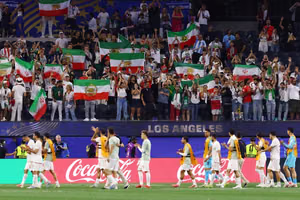
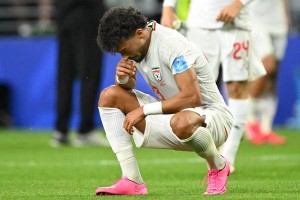
That symmetry stings because the national team's bond with its own public has frayed. After the side's elimination – three draws in three games – many Iranians described the failure less as a sporting loss than as a verdict on players seen as siding with the government during the nationwide protests, with defender Ramin Rezaeian's name recurring most often.
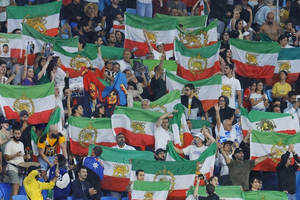
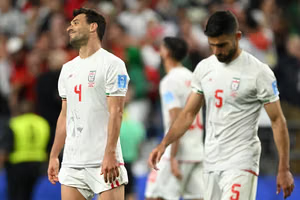
Unlike past tournaments, the matches drew few public gatherings inside Iran, and some openly welcomed the exit. When Shoja Khalilzadeh's late goal against Egypt was ruled offside by five centimeters, users linked it mockingly to his past pledge to dedicate goals to the Supreme Leader.
For millions of Iranians, representation has quietly migrated from the federation's badge to individuals in the diaspora, and Mortazavi embodies that shift.
Born in Sari in 1957, he began violin at three, trained in Tehran under masters including Parviz Yahaghi, and – in a fitting twist – played as a youth goalkeeper, part of Iran's junior national football setup, before music won out.
He left Iran after high school, studied in England, moved to the United States in 1979 and settled in California, where his blend of Persian melody and Western pop made him the best-known Iranian violinist in the world. In 1994 he became the first Iranian artist to headline Los Angeles' Greek Theatre.
He may not be the only Iranian at MetLife on Sunday. Alireza Faghani – born in Kashmar and the first man to referee at four men's World Cups – is widely reported as FIFA's leading candidate to take charge of the final itself.
Faghani left Iran for Australia in 2019, a move linked to his support for the protest movement, and now officiates under the Australian flag. State media in Tehran has attacked him – even censoring footage of him receiving his 2025 Club World Cup final medal – while many Iranians claim him proudly as their own.
No World Cup has ever had a halftime show. Shakira's "Waka Waka" in 2010, Ricky Martin's "La Copa de la Vida" in 1998 and Jung Kook's Qatar 2022 performance all belonged to the ceremonies, never to the final's interval.
Which means that if Mortazavi walks out on Sunday, he will not just be the first Iranian on a World Cup final stage. He will be part of the first such stage ever built.
If FIFA's final appointments hold, Sunday could end with an Iranian raising a violin at halftime and another raising the whistle for kickoff – two men who left, on the one stage the country's team could not reach.
Millions inside Iran will likely watch them the way they watch most things now: on any screen but state television's.


