• العربية
  • فارسی
Brand
  • Iran Insight
  • Politics
  • Economy
  • Analysis
  • Special Report
  • Opinion
  • Podcast
  • Live TV
  • Iran Insight
  • Politics
  • Economy
  • Analysis
  • Special Report
  • Opinion
  • Podcast
  • Live TV
  • Theme
  • Language
    • العربية
    • فارسی
  • Iran Insight
  • Politics
  • Economy
  • Analysis
  • Special Report
  • Opinion
  • Podcast
  • Live TV
All rights reserved for Volant Media UK Limited
volant media logo

US sanctions most major Iranian airlines in sweeping aviation crackdown

Sep 8, 2026, 15:37 GMT+1Updated: 17:34 GMT+1
An Iranian Qeshm Air flight

The US Treasury on Tuesday imposed fresh Iran-related sanctions on one individual and 35 entities, including 27 Iranian airlines, as Washington expanded pressure on Tehran’s aviation sector and networks supporting sanctioned carrier Mahan Air.

The Office of Foreign Assets Control added airlines including Iran Aseman Airlines, Iran Airtour, Kish Air, Qeshm Air, Taban Airlines, Sepehran Airlines, Varesh Airlines, Zagros Airlines, Karun Airlines, Chabahar Airlines and Fly Persia to its Specially Designated Nationals list.

Newer carriers including Air Shiraz, Ava Airlines, Fly Kish, Mehr Airways, Raimon Airways and Soroush Air were also listed.

Saha Airlines, formally listed as the Armed Forces Air Transport Service, was among those targeted. OFAC describes it as providing both passenger and freight air transport. The Iranian airlines were designated under Executive Order 13902 and are subject to secondary sanctions, according to Treasury’s notice.

Treasury Secretary Scott Bessent warned companies against doing business with Iranian airlines in a post on X.

“Let this be a warning to anyone doing business with Iran’s remaining airlines, all of which we sanctioned today: You are at risk of being cut off from the global financial system,” Bessent said.

He said the measures were part of Operation Economic Outcast, Washington’s campaign to cut financial lifelines to the Islamic Republic, adding that the United States had also sanctioned companies continuing to support Mahan Air.

The new sanctions follow an Aug. 24 determination by the Treasury making Iran’s aviation sector, along with its digital asset, gold, shipping and technology sectors, subject to sanctions under Executive Order 13902.

A separate group of designations targeted aviation and logistics companies outside Iran with links to Mahan Air. They included ECT Aviation Support in the United Arab Emirates, ECT Aviation Support Ltd in Britain, Malaysia-based iCargo, Kazakhstan-based Tour Invest and Turkish companies MES Cargo, S Sistem Logistics and Sky Phoenix Airways. Dubai-based Aerobravo Airplane Management and Operation was also sanctioned through its link to ECT Aviation Support.

OFAC also designated Mahran Ibrahim, an Egyptian national based in the UAE, listing him as linked to ECT Aviation Support.

Mahan Air has been under US counterterrorism sanctions since 2011. Washington accuses the carrier of serving as a conduit for the Revolutionary Guards, including by transporting personnel, weapons and military equipment. Treasury has stepped up action against companies providing logistical and commercial support to the airline in recent months.

Most Viewed

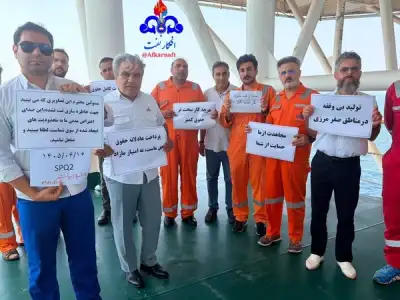
Iran oil workers protest pay conditions at offshore platforms, Assaluyeh
1

Iran oil workers protest pay conditions at offshore platforms, Assaluyeh

2
PODCAST

Iran, where eggs are a better bet than cash

3

US carried out covert four-month Hormuz mine-clearing mission - FT

4

Iran doubles gasoline price amid fears of renewed unrest

5
ANALYSIS

The gamble behind US attacks on Iran’s oil tankers

Banner
Banner
Banner

Spotlight

  • Iran deploys security forces as gasoline price rise takes effect
    VOICES FROM IRAN

    Iran deploys security forces as gasoline price rise takes effect

  • Iranian protester undergoes months of secret treatment to save wounded leg
    EXCLUSIVE

    Iranian protester undergoes months of secret treatment to save wounded leg

  • Iran’s new war strategy seeks to turn blockade into broader economic confrontation
    ANALYSIS

    Iran’s new war strategy seeks to turn blockade into broader economic confrontation

  • Europe’s third-way ambitions on Iran give way to alignment with Washington
    ANALYSIS

    Europe’s third-way ambitions on Iran give way to alignment with Washington

  • The gamble behind US attacks on Iran’s oil tankers
    ANALYSIS

    The gamble behind US attacks on Iran’s oil tankers

  • Starlink next door could loosen Iran’s grip on internet
    ANALYSIS

    Starlink next door could loosen Iran’s grip on internet

•
•
•

More Stories

UK expands Iran sanctions over nuclear program and hostile activity

Sep 8, 2026, 11:56 GMT+1
100%
A general view of the Houses of Parliament at sunrise, in London, Britain.

Britain said on Tuesday it was expanding sanctions on Iran, targeting key sectors including energy, metals, banking, insurance and shipping as part of efforts to restrict Tehran's nuclear program and other hostile activity.

Minister of State Stephen Doughty said the government was introducing legislation to tighten financial and trade restrictions, widen powers to sanction ships linked to Iran and bar Iranian aircraft from landing in the UK unless exemptions apply.

“Today we are laying legislation which will tackle Iranian nuclear activity and other hostile Iranian activity,” Doughty said in a written statement to parliament.

Focus on nuclear program

Doughty said Iran had expanded its nuclear program in ways that had no credible civilian justification and pointed to its stockpile of more than 400 kg of uranium enriched to 60%.

  • If Britain backs US plan, Iran's London bank shuts down on October 22

    If Britain backs US plan, Iran's London bank shuts down on October 22

“Iran is the only country without nuclear weapons to enrich uranium to this level,” he said.

Britain restored UN sanctions on Iran in October 2025 after the snapback mechanism was triggered and also designated 71 people and entities linked to Iran's nuclear program, including financial institutions and energy companies.

Wider trade and financial restrictions

The new rules expand restrictions on goods, technology and services tied to sectors including energy, software, metals and gold, as well as shipping, insurance and banking.

They also ban exports of additional goods and technology that Britain says could support Iran's conventional weapons and nuclear capabilities.

Doughty said the financial measures would “further reduce the Government of Iran’s ability to access the UK financial system and raise funds in support of its nuclear programme.”

  • UK minister says new state-threat bill could pave way for IRGC designation

    UK minister says new state-threat bill could pave way for IRGC designation

Shipping and aviation targeted

Britain will also gain broader powers to sanction ships that it says enable or facilitate Iran's nuclear program or other destabilizing activity.

Iranian aircraft will be barred from landing in the UK unless exemptions apply, following Britain's termination of bilateral air service arrangements with Iran in 2024.

The legislation includes exemptions to allow continued operations at the Shah Deniz gas field in Azerbaijan, which supplies energy to European countries.

Doughty said Britain remained committed to diplomacy, saying a negotiated outcome was “the only long-term solution” to the dispute over Iran's nuclear program.

Canadian court orders visa decision for former Bushehr nuclear plant manager

Sep 8, 2026, 09:30 GMT+1
•
Mahsa Mortazavi
100%
Naser Mansoursharifloo

Canada’s Federal Court has ordered the government to decide within 60 days on a visitor visa application from a former project manager at Iran’s Bushehr Nuclear Power Plant after the case remained in security screening for more than 900 days.

Naser Mansoursharifloo, an Iranian citizen, applied for the visa in January 2024. About six weeks later, government records marked his case as “approved pending info from partners,” but no final decision followed for more than two years.

By the time the case reached a court hearing in August, the application had spent about 911 days in security screening, far longer than government processing estimates for Iranian visitor visas during the period.

Mansoursharifloo holds a doctorate in mechanical engineering and previously worked as a project manager at the Bushehr Nuclear Power Plant. He also served as head of engineering at Islamic Azad University in central Tehran, according to the court.

The court said the government had not provided enough evidence to explain why the screening had taken so long. It ordered authorities to make a decision within 60 days of the September 1 ruling.

The order does not require Canada to approve Mansoursharifloo’s visa and the court did not find that he was inadmissible. It only requires the government to make a decision.

  • Canada vows action against transnational repression after Iran threats

    Canada vows action against transnational repression after Iran threats

Canada steps up action against Iranian officials

The case comes amid a broader push by Canada to keep out or remove former senior officials of the Islamic Republic, particularly people whose past government roles could make them inadmissible under Canadian law.

Ottawa moved in 2022 to bar senior Iranian government officials from entering or remaining in Canada after the Islamic Republic’s crackdown on nationwide anti-establishment protests.

Canada has since pursued a number of cases involving former Iranian officials already in the country, while immigration authorities have increased scrutiny of applicants with backgrounds in Iranian government institutions.

Canada also listed the Islamic Revolutionary Guard Corps as a terrorist entity in 2024, adding another layer to its increasingly confrontational approach toward people and institutions tied to the Islamic Republic.

  • Canada says ex-Iranian official 'critical' to revenue tied to terror funding

    Canada says ex-Iranian official 'critical' to revenue tied to terror funding

Former officials face deportation cases

In one recent case, Canadian authorities are seeking to deport Abbas Omidi, a former senior official in Iran’s Ministry of Industry, Mines and Trade who lives in Toronto.

Canadian government documents reported by Global News said Omidi had played a significant role in Iran’s mining sector and that revenue generated by the sector helped support the Iranian government, its military and the IRGC.

Omidi acknowledged during his deportation proceedings that he had served as a deputy director general in the ministry but said his position was mainly technical.

  • Canada deports former Iranian official linked to 2019 protest crackdown

    Canada deports former Iranian official linked to 2019 protest crackdown

The Canada Border Services Agency is seeking his removal on the grounds that he served as a senior Iranian government official.

Canada has also pursued other former officials under measures introduced after 2022, including people connected to Iranian state institutions and security bodies.

Europe’s third-way ambitions on Iran give way to alignment with Washington

Sep 7, 2026, 16:00 GMT+1
•
Clément Therme
100%
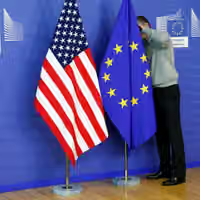
A worker adjusts European Union and U.S. flags at the EU Commission headquarters in Brussels, November 11, 2013.

The Trump administration may be overstating Europe’s formal role in its “Economic D-Day” campaign against Iran, but years of economic and political convergence have increasingly aligned Europe with Washington.

The European Union has welcomed additional economic pressure on Tehran, including through the US-led Operation Economic Outcast, but has not formally endorsed every element of Washington’s strategy.

Yet the distinction over formal alignment conceals a more consequential reality: since the United States withdrew from the nuclear agreement in 2018, Europe has increasingly behaved as Washington’s junior partner on Iran.

This alignment predates the current war. Since the late 2000s, Europe has increasingly substituted declaratory diplomacy for autonomous action, defending multilateralism and dialogue while adapting in practice to US policy.

This gap became particularly evident after Trump’s withdrawal from the JCPOA and reimposition of US sanctions on Iran in 2018: despite European opposition, the blocking statute and INSTEX failed to sustain meaningful trade, as almost every major European company abandoned Iran to preserve access to the US market.

This choice was economically rational. The US market and financial system are vastly more important to European companies than Iran. The international dominance of the dollar enables Washington to impose sanctions with effects far beyond US territory.

European banks, insurers, shipping companies and industrial groups remain highly exposed to US regulators and financial markets. Whatever the official position of their governments, companies have overwhelmingly prioritized continued access to the United States over commercial opportunities in Iran.

The weakness of direct EU-Iran trade should not obscure Europe’s remaining economic significance. According to the European Commission, trade in goods between the EU and Iran amounted to €3.7 billion in 2025, comprising €2.97 billion in EU exports to Iran and €760 million in imports from Iran.

This left the EU a significant trading partner for Iran, even though Iran accounted for only around 0.1 percent of EU exports.

These figures also underestimate indirect commercial links. European products reach Iran through Türkiye and, above all, the United Arab Emirates, which serves as a crucial platform for re-exports.

Stronger US pressure on Ankara, Dubai-based traders, logistics companies and regional banks would therefore affect European-origin goods even when European firms have no direct contractual relationship with an Iranian buyer.

“Economic D-Day” is not directed solely against Iran: it is designed to force Iran’s remaining commercial intermediaries to choose between Tehran and access to the US financial system.

Europe’s gradual alignment also has a political and diplomatic dimension. In August 2025, following unsuccessful talks with Tehran, France, Germany and the United Kingdom triggered the UN “snapback” mechanism with US support.

UN sanctions were restored on September 28, prompting the EU to reimpose its own nuclear-related economic and financial restrictions the following day.
The EU formally reimposed those measures on September 29.

After the deadly repression of the January 2026 protests, the EU went further, formally designating the Islamic Revolutionary Guard Corps as a terrorist organization in February and imposing additional sanctions targeting human rights violations, Iran’s missile and drone programs, and Iranian operations on European soil.

This convergence has since extended to the multilateral arena. In September 2026, the United States and the E3 began pressing for an International Atomic Energy Agency Board of Governors resolution reporting Iran to the UN Security Council for the first time in 20 years.

The push has further deepened the confrontation over inspections: IAEA Director General Rafael Grossi said on September 7 that Tehran had told the agency it would not cooperate until there was progress in broader political negotiations, while Iran warned it would take reciprocal action if the resolution was adopted.

Grossi said the agency was receiving no information and had been told Iran would not cooperate without progress in broader political negotiations.

The proposed referral would mark a significant escalation in the nuclear standoff and further narrow the space for Europe’s long-standing ambition to pursue a third way between Washington and Tehran.

The war launched by the United States and Israel on February 28, 2026 initially generated considerable European frustration. European leaders had not been consulted or even properly warned by their principal ally, despite their earlier coordination with Washington over the snapback process.

They called for restraint and respect for international law while expressing concern about the regional and economic consequences of the offensive.

But this dissatisfaction did not produce an autonomous European strategy. Europe lacked the military capabilities, economic leverage and political unity needed to shape the conflict.

The decisive talks involved Washington, Tehran and regional intermediaries such as Pakistan, Oman and Qatar. European governments remained largely peripheral, even as they condemned Iranian attacks against neighboring countries and commercial vessels.

The current hardening of the European position should therefore also be understood in the context of transatlantic relations and the war in Ukraine. For European leaders, preserving US support for Ukraine and preventing a strategic rapprochement between Washington and Moscow remain overriding priorities.

Iran offers them a potential means of demonstrating their usefulness to the Trump administration. By cooperating with Washington on sanctions, nuclear restrictions and regional security, Europeans hope to facilitate dialogue with an administration whose disengagement from Ukraine is their greatest strategic fear.

This calculation resembles the strategy adopted by several European governments at the beginning of Trump’s second presidency: concede or cooperate on secondary issues to preserve US engagement on the issue considered existential for European security. Iran is thus treated partly as a bargaining instrument within the transatlantic relationship.

This does not mean that European and US objectives are identical. Most European governments remain wary of regime-change strategies, uncontrolled military escalation and the humanitarian consequences of comprehensive sanctions.

They continue to emphasize diplomacy and international law and have not formally subscribed to Washington’s campaign of total isolation. The Trump administration is consequently overstating Europe’s political endorsement.

Yet the practical difference is narrower than European rhetoric suggests. Europe’s declaratory autonomy cannot compensate for its financial dependence, limited military capabilities and reliance on the United States for its own security.

Nor can European governments fully control the commercial decisions of private companies, which overwhelmingly prioritize access to the US market and the dollar-based financial system over limited opportunities in Iran.

Washington may therefore be exaggerating when it says that Europe has joined “Economic D-Day.” But since 2018, the structural alignment it describes has become increasingly difficult to deny.

Satellite images show Iran’s key ports falling quiet under US blockade

Sep 5, 2026, 21:25 GMT+1
•
Fardad Farahzad
100%
File photo shows container cranes and cargo facilities at Shahid Rajaee Port near Bandar Abbas, southern Iran, in 2025. Photo by ISNA

Satellite imagery reviewed by Iran International shows a sharp fall in visible shipping activity at Shahid Rajaee and Imam Khomeini ports since the US naval blockade was reimposed in mid-July, underscoring the growing squeeze on Iran’s imports and exports.

Sequences of Copernicus satellite images comparing the months before the war with the period under the blockade show a striking change at both ports.

At Shahid Rajaee near Bandar Abbas, pre-war images show vessels occupying multiple berths and denser use of the container terminal, while later images show far fewer ships and large sections of the port appearing largely inactive.

AfterAfter
BeforeBefore
Drag the handle left or right to compare

Copernicus satellite images from January 2, 2026 and September 4, 2026 show Shahid Rajaee Port near Bandar Abbas before the war and during the US blockade, with far fewer vessels visible at its berths in the later image.

Shahid Rajaee is Iran’s most important export port and, after Imam Khomeini Port, its second-largest gateway for imports. It is also the country’s largest container port, handling nearly 80% of Iran’s container loading and unloading, according to official figures.

A similar pattern is visible at Imam Khomeini Port in southwestern Iran, the country’s largest import gateway, where satellite imagery shows markedly reduced vessel presence and terminal activity compared with the period before the conflict.

AfterAfter
BeforeBefore
Drag the handle left or right to compare

Copernicus satellite images from February 25, 2026 and September 5, 2026 show Imam Khomeini Port in southwestern Iran before the war and during the US blockade, with a marked decline in visible vessel and terminal activity.

The images provide a visual measure of the disruption at ports that are critical to Iran’s economy. Shahid Rajaee handles more than 55% of Iran’s imports and exports and an estimated 85% to 90% of its container trade, according to Iranian port data.

Imam Khomeini Port plays a particularly important role in imports of food and other basic commodities. Iran’s Ports and Maritime Organization said the port handled more than 48 million tons of cargo in the year ending March 2025, including 19.2 million tons of imported goods.

The satellite evidence reinforces other indications that the blockade is increasingly biting. Video published from Shahid Rajaee in late August showed no ships docked and little apparent loading or unloading activity.

Iran International reported in July that activity at the port had been reduced to a minimum, with thousands of containers stranded and about half of its workforce laid off.

Iranian officials have also increasingly acknowledged the economic impact. President Masoud Pezeshkian said in late August that blocked routes were preventing goods, including gasoline, from entering the country.

Reuters reported this week that Iranian trade had fallen by as much as 35% amid the blockade and intensified sanctions, while gasoline supplies had tightened sharply.

The effect has been even more pronounced on Iran’s oil trade. Iranian crude loadings fell from around 2 million barrels per day before the war to roughly 220,000–255,000 bpd in August, according to shipping data cited by Reuters.

Washington says the blockade can be sustained indefinitely. As of Aug. 23, US Central Command said its forces had redirected 70 commercial vessels attempting to breach it, while three had been disabled and two boarded.

Iran’s foreign trade has contracted sharply since the conflict with the United States began, with non-oil exports and imports falling by around a quarter or more, according to customs data released after months of delay.

  • Iran loses ground on trade as war hits oil and non-oil exports

    Iran loses ground on trade as war hits oil and non-oil exports

Iran exported about $15 billion worth of non-oil goods, including natural gas and LPG, through August 16, nearly five months into the Iranian calendar year that began on March 21. That was nearly 30% below the figure reported for the first five months of the previous year.

Imports fell to about $17 billion over the same near-five-month period, about a quarter below the full five-month figure reported a year earlier.

The figures show a sharp deterioration in Iran’s trade during a conflict that has disrupted key industries and shipping routes, adding to an economy already struggling under years of sanctions, declining oil revenues and chronic shortages of foreign currency.

US sanctions Turkish bank as Iran financial crackdown widens

Sep 4, 2026, 20:58 GMT+1
100%
File Photo: Signage is seen at the United States Department of the Treasury headquarters in Washington

The United States on Friday sanctioned Turkey’s Golden Global Bank and two subsidiaries over alleged financial dealings with Iran, escalating a campaign targeting foreign institutions accused of helping Tehran move money around sanctions.

The Treasury Department said Golden Global Yatirim Bankasi and its asset-management and leasing subsidiaries had facilitated tens of millions of dollars in transactions for the Islamic Revolutionary Guard Corps-Quds Force and provided Iranian institutions with access to international banking channels.

The action was taken under Operation Economic Outcast, a campaign launched on August 24 to target financial networks and foreign institutions that Washington says help sustain the Islamic Republic’s economy and circumvent sanctions.

Treasury alleged that the Istanbul-based bank was established to help Iran’s shadow-banking network transfer oil revenues from China to Turkey, where money exchangers could convert the proceeds into cash and gold. It also accused Golden Global of knowingly offering correspondent banking services that enabled transactions through accounts controlled by the IRGC-QF and its proxies.

Golden Global rejected the allegations, saying it had complied with domestic and international banking and compliance requirements and had no direct or indirect dealings with the individuals and entities named in the US sanctions decision. The bank said it would pursue its legal rights over what it called unfounded allegations.

Iran International also contacted Golden Global for comment on the Treasury allegations and whether it planned to challenge the designation, but had not received a response at the time of publication.

The three entities were added to the Treasury’s Specially Designated Nationals list, blocking property and interests in property under US jurisdiction and generally barring US persons from transactions involving them. Treasury also issued a general license allowing transactions necessary to wind down dealings with the sanctioned entities.

Treasury Secretary Scott Bessent described the designation in an interview with America’s Voice News as “code for you are out of business” and said another bank could be sanctioned as soon as next week.

“We know who you are, you know who you are, it’s over,” Bessent said, adding that US allies were assisting the campaign.

The move comes a week after Washington targeted the UAE operations of Banque Misr, Egypt’s second-largest bank, using a different legal mechanism.

Rather than imposing a full OFAC designation, the Treasury’s Financial Crimes Enforcement Network proposed a rule under Section 311 of the USA Patriot Act that would prohibit US financial institutions from opening or maintaining correspondent accounts for Banque Misr UAE. The proposal is subject to a public comment process before it can be finalized.

Treasury estimated that Banque Misr UAE processed about $1.8 billion between January 2024 and June 2026 for 103 companies potentially linked to Iranian shadow-banking networks.

  • US crackdown leaves much of Iran’s shadow banking untouched

    US crackdown leaves much of Iran’s shadow banking untouched

An Iran International investigation subsequently found that funds originating from Iran’s central bank were being directed to accounts at Banque Misr’s UAE operations as early as November 2022, based on leaked correspondence and transaction records from sanctioned Iranian lender Bank Parsian. The investigation found no evidence that the foreign banks involved knowingly facilitated sanctions evasion.

The Golden Global designation represents a further escalation from the Banque Misr action. Bessent told Reuters last week that Treasury expected to announce new secondary sanctions roughly every week, initially focusing on banks.

“You’re going to see a lot more of these every week,” he said. “We’re starting with the banks, and we’re telling the banks it’s not okay to have Iranian money and to aid the regime.”

The campaign marks an effort by Washington to move beyond already-sanctioned Iranian institutions and target the foreign financial infrastructure that US officials say allows Tehran to turn overseas revenues into money it can use.

When launching Operation Economic Outcast on August 24, Bessent said Washington’s objective was to “sever every economic lifeline” sustaining the Islamic Republic. He also appealed directly to Iranian soldiers facing economic hardship and invoked the fall of the Berlin Wall, when East German forces ultimately declined to fire on civilians.

Friday’s action also marked the first time a bank in a NATO member state had been targeted under the new campaign, according to Reuters, underscoring the widening reach of Washington’s effort as Treasury signals that further action against foreign banks is likely to follow.