• العربية
  • فارسی
Brand
  • Iran Insight
  • Politics
  • Economy
  • Analysis
  • Special Report
  • Opinion
  • Podcast
  • Iran Insight
  • Politics
  • Economy
  • Analysis
  • Special Report
  • Opinion
  • Podcast
  • Theme
  • Language
    • العربية
    • فارسی
  • Iran Insight
  • Politics
  • Economy
  • Analysis
  • Special Report
  • Opinion
  • Podcast
All rights reserved for Volant Media UK Limited
volant media logo

UK, Italy considered for Hezbollah disarmament mission - Reuters

Aug 12, 2026, 16:19 GMT+1

Israel and Lebanon have agreed on Britain, Italy, Switzerland and Indonesia as potential contributors to a mechanism that could deploy foreign troops to verify the disarmament of Iran-backed Hezbollah, Reuters reported Wednesday, citing people familiar with the matter.

The shortlist emerged from US-mediated talks in Rome last week, according to the report. A Lebanese official told Reuters that Washington would decide which countries from the agreed list would ultimately take part.

Most Viewed

Iran plays down Mecca Pact as regional security order shifts
1
INSIGHT

Iran plays down Mecca Pact as regional security order shifts

2

Mojtaba Khamenei orders integration of Iran’s top military command bodies

3
INSIGHT

All Mojtaba's men: Old guard shapes Iran’s new order

4

Iran parliament advances Hormuz bill targeting US, Israeli transit

5

Protest crackdown veteran Taeb returns to lead Basij, expand intel network

Banner
Banner
Banner

Spotlight

  • Iran loses ground in oil market as neighbors rebound
    ANALYSIS

    Iran loses ground in oil market as neighbors rebound

  • US ship strike tests Tehran’s narrative of victory in Hormuz
    INSIGHT

    US ship strike tests Tehran’s narrative of victory in Hormuz

  • Iran hardliners tout offensive posture as Khamenei reshapes military command
    INSIGHT

    Iran hardliners tout offensive posture as Khamenei reshapes military command

  • The Kinglet’s rookie mistake: how an Iranian hacker was caught at US request
    SPECIAL REPORT

    The Kinglet’s rookie mistake: how an Iranian hacker was caught at US request

  • Rising costs leave Iranians 'nothing' for a coffee
    VOICES FROM IRAN

    Rising costs leave Iranians 'nothing' for a coffee

•
•
•

More Stories

When the language of home is no longer the language of life

Aug 12, 2026, 13:02 GMT+1
•
Tahmineh Rostami
100%
The photo shows Persian-language textbooks used in Iranian elementary schools.

The child understands every word her grandmother says in Persian. She answers in English. She can ask what's for dinner in her parents' language, but not describe her anxiety, her love or her future in it. She calls herself Iranian. Persian is no longer the language of her life.

In the study of migration and bilingualism, Persian is, for many children of Iranian immigrants, a heritage language: a language passed down through family and cultural background while another language dominates their schooling and social world.

The term is not the same as mother tongue. A mother tongue is usually the first language learned in childhood; a heritage language may lose its dominant place very early, sometimes before the child can read a word of it.

For Iranians, this is not merely a question of language teaching. More than four decades of political, social and economic emigration have built a multigenerational society outside Iran, one now entering its third generation.

The question is no longer how many Persian words the children know. It is how much of the language, the family memory and the direct connection to Iran will reach the generations after them.

  • One in 15 Iranians lives abroad after 45 years of Islamic Republic rule

    One in 15 Iranians lives abroad after 45 years of Islamic Republic rule

One generation weakens a language; the next can lose it

Starting school is one of the deepest turning points in a child's linguistic life. The host country's language is not just the language of lessons; it becomes the language of friendship, play, jokes, music, the internet and most of the child's social world. Even in a family where the parents speak Persian at home, the real share of Persian in the child's day shrinks, steadily and without anyone deciding it should.

The shift rarely happens suddenly. First the child understands Persian and answers in Persian. Then she still understands her parents but replies in the dominant language. Later, Persian narrows to family matters and daily routine, while feelings, schoolwork and personal disputes migrate to the other language.

Nor are understanding, speaking, reading and writing a single skill. A person may understand Persian almost completely yet grope for words when speaking, or speak fluently yet be unable to read a simple text. At that point, direct access to Persian literature, media, history and much of the written world of the language closes too.

The experience of other immigrant communities shows how deep the shift can run within two or three generations, a pattern sociolinguists have described since Joshua Fishman's classic model of three-generation language loss.

In the United States, 89 percent of first-generation Latino youth and 79 percent of the second generation report speaking Spanish well; in the third generation the figure falls to 38 percent, and only 26 percent report strong reading and writing.

Canadian data show the shift happening inside the family itself: in households where both immigrant parents shared the same non-official mother tongue, 24.4 percent of children used only English or French at home, against 2.5 percent of their parents.

These numbers are not about Iranians and cannot be transferred to them directly. But the pattern they draw is unambiguous: a language's strength in the first generation is no guarantee it will reach the third.

When the shared language shrinks, the hard conversations shrink with it

The consequences are not only cultural. One of the most consequential facts of immigrant family life is the gap that can open between the linguistic reach of parents and children.

A child usually learns the host country's language faster and deeper than her parents do. A father or mother may handle the new language perfectly well for work and errands, yet still feel a memory, an emotion or a complicated thought most precisely in Persian. The child may lack sufficient Persian in exactly those places.

In childhood the gap barely shows. School, food and tomorrow's plans need only a narrow band of language. Adolescence demands other conversations: anxiety, love, identity, discrimination, gender, politics, the future, the family's own disputes.

A shrinking common language does not by itself produce a family crisis, and the difficulties of immigrant families cannot be reduced to language. Economics, the migration experience itself, generational difference and social pressures all play their part. But the more complicated the conversation, the more the linguistic ceiling makes itself felt.

In Iranian families, the bond with the older generation carries its own weight. A child with limited Persian can manage daily talk with her grandparents. Hearing the story of a life, the memory of an emigration, an argument about history, is harder.

For a community whose modern experience is knotted together with revolution, war, repression, protest and wave after wave of departure, this is not only about preserving literature and culture. Language is one of the principal carriers of family and historical memory. The narrower it becomes, the more the next generation's access to its own family's lived experience will depend on summaries, and on translation.

The third generation: who will teach Persian, and with which Iran?

About the coming generations there is still no comprehensive data. Nobody knows how many Iranian children abroad understand Persian, how many speak it, how many can read and write it. Even the size of the diaspora resists precise measurement, because countries classify people differently, by birthplace, citizenship, ancestry, ethnicity or language.

Yet the third generation's challenge is already visible in outline. The first generation typically carried complete Persian out of Iran. The second may hold a reduced version: strong comprehension, weaker speech, little literacy. When that generation becomes parents, its narrower Persian is no longer a private matter; it directly constrains what can be passed to the next child.

For Iranians, teaching the language carries a political complication too. Many immigrant families are caught between the need to preserve Persian and their distrust of institutions that are official, or tied to the Islamic Republic. Not everyone has access to a Persian school, and some parents refuse to let their child's language lessons come bundled with religious instruction, ideological content or the state's official narrative of Iran's history and identity.

So the question is not only how Persian should be taught. It is who teaches it, with what content, and with which image of Iran.

A few hours of weekend class will not carry a language on their own. A language survives when a child has reasons to use it: books and media made for her age, friendships with other Persian speakers, and the ability to talk in Persian not only about home and food, but about her own world.

For part of the second generation, Persian is still the language of home but no longer the language of life. For the third, the question is more fundamental: will Persian remain the language of home at all?

That question is not only about the survival of a language. Its answer will decide how directly generations who may never live in Iran can reach their family's memory, their people's modern history and the Iranian experience itself; whether Iran, for them, will be a land whose language they know, or a story that always arrives in translation.

New online poll suggests eight in ten would like to leave Iran

Aug 12, 2026, 11:10 GMT+1
•
Saba Heidarkhani
100%
Travelers line up with their luggage at check-in counters inside an airport departure terminal in Iran.

More than eight in 10 respondents to an Iran International Instagram poll said they would leave Iran if given the opportunity, reflecting deep frustration among those who took part over the country’s economic and social conditions.

The poll drew nearly 100,000 responses, with 83% saying they would emigrate and 17% saying they would stay. Economic hardship, inflation, social restrictions and uncertainty about the future featured prominently in comments from respondents considering leaving.

“We didn't have money to emigrate before; now we don't even have money to live in Iran,” one respondent wrote. Another said that with the exchange rate reaching 2 million rials to the US dollar, even getting to the border had become unaffordable.

Many emphasized that their desire to leave stems from a basic wish for stability, dignity, and a normal life without constant anxiety. "We only get one chance at life and youth, and I wish we could spend it somewhere in good spirits," one respondent wrote. "Why should we keep waiting years for Iran to be fixed?"

The findings align with independent research on societal hopelessness in the country. A poll conducted in March 2024 by the Washington-based Stasis Institute found that 76 percent of Iranians believed young people saw no successful future for themselves in Iran, a figure that rose to 82 percent among those aged 18 to 29.

  • One in 15 Iranians lives abroad after 45 years of Islamic Republic rule

    One in 15 Iranians lives abroad after 45 years of Islamic Republic rule

According to United Nations data, more than 4.14 million Iranians have sought asylum abroad since 1980. Iran International estimates that an additional two million Iranians have emigrated through legal channels, meaning roughly one in every 15 Iranians now lives abroad, out of a population of 87 million. Unofficial estimates place the first-generation Iranian diaspora at over eight million.

Economic strain and brain drain

Persistent inflation, eroding purchasing power and limited job opportunities remain among the main factors driving the desire to leave. Iran has consistently ranked among the leading countries of origin for international students in North America and Europe and ranks fourth worldwide as a source of doctoral students in the United States.

Socio-political restrictions, air pollution, and declining public infrastructure further exacerbate the sense of impasse. Foreign diplomatic operations in Iran have also slowed following recent regional escalations, leaving many visa applications halted and adding to public frustration.

100%
Travelers walk with their luggage inside an airport departure terminal in Iran.

Sociologist Hossein Ghazian previously told Iran International that push factors within Iran have consistently played a greater role in driving emigration than opportunities abroad. As those domestic pressures intensify, he said, the desire to leave is likely to grow.

Resistance versus departure

Despite the overwhelming majority favoring emigration, a segment of respondents rejected the idea, framing it as a surrender to the Islamic Republic. Some argued that remaining in Iran to demand political change is the only viable path forward.

"Emigrating means giving up," one respondent wrote. "Instead, we should rebuild Iran." Another added: "No, the ones who should leave are the Islamic Republic."

Others cited the popular protest song Suroud-e Zan (Women's Anthem) by Singer Mehdi Yarrahi, echoing its line: "Why travel? Stay and take it back."

For many, the decision remains contingent on the political regime itself. "If Iran were in good shape, never, but with the clerics in power, yes," one comment read.

For others, family ties remain the sole anchor. One woman noted she would have left two decades ago were it not for her mother, while another said she still hoped to build a better future for her children, even as she felt her own youth had slipped away.

As economic pressures intensify, the debate between leaving for stability and staying to push for change continues to define the daily reality of millions of Iranians.

Oil slicks hit Qeshm mangroves and Oman coast in mounting war fallout

Aug 12, 2026, 10:42 GMT+1
100%

Oil has reached mangrove forests on Iran's Qeshm island while a separate vast slick spreads toward Oman's coast, raising fears of environmental damage in waters already disrupted by war.

Oil slicks along Qeshm's southern coast have entered mangrove forests near the village of Naqasheh, prompting authorities to begin monitoring and cleanup operations, Iranian state news agency IRNA reported on Wednesday.

The source of the pollution has not been determined, IRNA said. Authorities were assessing the spread of the oil and working to prevent more from entering the mangrove forests.

The head of Qeshm's natural resources and watershed department said authorities were coordinating efforts to control and clean up the pollution.

"The exact cause and source of the oil slicks will be announced after expert assessments and the reports of the relevant agencies are finalized," he said, according to IRNA.

The pollution was first detected on Sunday night along about one km (0.6 miles) of the coast near Suza and had since spread to the Shib Deraz area, the head of Qeshm's environmental protection department, Shahmorad Jafari, was quoted as saying by Mehr news agency.

Shipping tracker points to Iranian attack

TankerTrackers.com, which monitors oil shipments and vessel movements, said on Wednesday that the Qeshm pollution appeared to have come from an Iranian attack on the bulk carrier Minoan Pioneer off Oman on Aug. 3.

"The spillage then drifted across the strait over to Iran," TankerTrackers said on X, describing it as "a self-inflicted wound by Iran."

Iranian authorities have not said the Qeshm slick was caused by the attack, and Iran's environmental officials said their investigation into the source was continuing.

Vast slick reaches Oman

Oil leaking from the grounded tanker Caroline Bezengi has started reaching Oman's mainland, the UN's International Maritime Organization said on Wednesday.

"Oil is drifting offshore to the northeast of Oman's Al-Qibliyyah Island, with some oil reported to be reaching the mainland," an IMO spokesperson said, adding that contingency planning was in place.

The Caroline Bezengi, carrying about 800,000 barrels of Russian oil bound for Asia, ran aground off Oman on June 30 and has been leaking for some time, the IMO said. Seasonal monsoon conditions have limited access to the vessel and delayed salvage operations.

Oman's government said on Monday that the slick covered almost 400 square km (150 square miles) near a nature reserve around the Hallaniyat Islands. The reserve is home to wildlife including Arabian Sea humpback whales and Socotra cormorants.

An environmental expert told Reuters that oil reaching shallow waters and the coastline could affect coral, birds and fish and could remain in the environment for years.

100%
A view of Hara forests in Qeshm

Sensitive ecosystems

Qeshm's mangrove forests (Hara forests) are among the island's most important coastal ecosystems and provide habitats and breeding grounds for marine life and birds, IRNA said.

Iranian authorities stressed the need for urgent action to stop the pollution from spreading and limit possible damage to the mangroves.

Qeshm lies in the Strait of Hormuz along Iran's southern coast, while the Caroline Bezengi is grounded off Oman in the Arabian Sea.

The pollution on both sides comes as the war has disrupted shipping across waterways around Iran and the Arabian Peninsula, though authorities have not linked either spill to the hostilities.

From Hormuz to Bab el-Mandeb, conflict converges on vital shipping lanes

Aug 12, 2026, 08:51 GMT+1
•
Negar Mojtahedi
100%
یکی از حامیان حوثی‌ها با تصویری از علی خامنه‌ای در تجمعی در صنعا، ۱۵ اسفند ۱۴۰۴

Six people were killed when Iran-backed Houthis attacked a vessel in Bab el-Mandeb, an escalation experts say reflects not a second front in the Iran war but two conflicts converging, as the Houthis pursue their own interests while adding pressure on Iran’s adversaries.

Analysts disagree over how directly Tehran is involved and what is driving the Houthis back into action after largely sitting out the Iran war. But whether Tehran is directing them or benefiting from decisions they make independently, renewed Houthi activity puts additional pressure on Iran's adversaries, particularly Saudi Arabia.

On Tuesday, the Houthis fired missiles at the Tanzania-flagged cargo ship Tihamah in the Bab el-Mandeb strait, killing four crew members and two members of the government-allied National Resistance Forces, according to Yemeni authorities.

Later on Tuesday, the Houthi-affiliated Al-Masirah network said the group targeted another vessel carrying what it described as Saudi “military equipment” in the Bab el-Mandeb.

Houthis pursue their own war

The Houthis' return to action appears rooted first in their own calculations inside Yemen.

Kamran Bokhari, a senior resident fellow at the Middle East Policy Council and strategic forecaster, describes Iran's so-called Axis of Resistance as a corporate brand in which some groups operate more like Iranian-controlled subsidiaries, while the Houthis resemble an independent franchise.

“They'll come in and participate in a conflict and they'll act as and when they see that it's in their interest to do so,” Bokhari told Iran International. “They're not like, you know, Iran says jump and they say how high?”

For months, that interest appeared to lie in staying out of the Iran war while its trajectory remained uncertain.

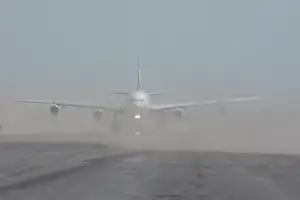
The calculation began to change following a confrontation involving an Iranian aircraft bound for Houthi-controlled territory. Saudi Arabia struck a Yemeni airfield after the aircraft attempted to land, helping trigger a renewed cycle of attacks between the Houthis and Riyadh.

  • One flight, two chokepoints: why Iran wants an air bridge to Yemen

    One flight, two chokepoints: why Iran wants an air bridge to Yemen

The escalation also comes amid growing activity by Saudi-backed government forces and UAE-backed southern separatists inside Yemen.

“It's all domestic, is what I'm trying to say. It has nothing to do with Iran,” Bokhari said of the immediate Houthi calculation.

But that domestic struggle is unfolding in a regional environment transformed by the Iran war.

Iranian disruption around the Strait of Hormuz has already increased pressure on Saudi Arabia and other Persian Gulf states. Renewed Houthi activity around Bab el-Mandeb means Riyadh increasingly has to contend with threats around two critical waterways.

Saudi Arabia is also trying to build a stronger security architecture around itself. The recently signed Saudi-Pakistani-Turkish defense pact could give the kingdom greater regional support as it confronts those threats.

  • Mecca pact ties three Sunni powers together as Iran-backed attacks loom

    Mecca pact ties three Sunni powers together as Iran-backed attacks loom

That may give the Houthis an incentive to press Riyadh now.

“The Houthis want to be able to extract concessions from the Saudis before the grid goes up, if you will,” Bokhari said.

Their ultimate objective, he argues, remains establishing themselves as Yemen's dominant political and military power and forcing Riyadh to accept that they cannot simply be eliminated.

Iran benefits

But the Houthis' pursuit of their own objectives does not mean Tehran is a bystander.

Fatima Al-Asrar, a Yemen and Iran specialist, sees the renewed Houthi pressure as increasingly intertwined with Iran's broader strategy against the United States.

“Of course, they [Iran] see it as an extension to them. They're no longer hiding it,” Al-Asrar told Iran International, pointing to Iranian rhetoric linking pressure around the Strait of Hormuz and Bab el-Mandeb.

She said Tehran is closely watching growing US fatigue with the Iran war and sees the approaching midterm elections as an opportunity to increase pressure on Washington.

“They're very transparent, very calculating, and they're using the Houthis on that front in order to press their advantage,” she said.

New reporting from Saudi-owned Asharq Al-Awsat raises the possibility of a more direct Iranian operational role.

Citing Yemeni security sources, the newspaper reported on Tuesday that IRGC officers are overseeing aspects of the Houthi escalation and that an Iranian official, Ali Mohammad Rezaei, is supervising an operations room managing military and security affairs in Houthi-controlled territory. Iranian officers have also helped establish additional missile and drone launch positions, according to the report.

Iran International has not independently verified the claims.

What will this lead to?

In July of this year, US President Donald Trump has warned Washington would hold Tehran responsible for renewed Houthi attacks, describing the group as an Iranian “Surrogate and/or Proxy” and threatening military punishment against both.

100%

But retired Royal Navy Commander Tom Sharpe, who served for 27 years and commanded four warships, told Iran International that he doubts Trump will want to launch another major military campaign against the Houthis.

“He definitely doesn't want to be embroiled on a second tangent here,” Sharpe told Iran International.

Bab el-Mandeb also does not carry the same strategic weight as the Strait of Hormuz, Sharpe said, because ships have alternative routes, albeit at considerably greater cost and distance.

Yet Iran can still benefit.

Greater Houthi disruption could complicate shipping and potentially force the United States and its partners to devote resources to another strategic waterway.

“I think they'll be pleased,” Sharpe said of Tehran. “If it does draw away resources, US resources from the Gulf of Oman, then that's in Iran's favor.”

At least 916 executed in Iran since January - rights group

Aug 12, 2026, 08:38 GMT+1
100%

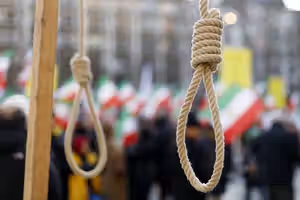
Iran has carried out at least 916 executions since the start of 2026, including 15 so far in August, the Abdorrahman Boroumand Center for Human Rights in Iran said on Tuesday.

The actual number of executions was likely much higher because Iranian authorities withhold information about many cases, the US-based rights group said.

It said many protesters were also facing charges that could carry the death penalty and criticized their trials as rushed and lacking due process.

The center said Iranian authorities were using death sentences and executions to intimidate the public and deter further protests.

Executions since March

The figures come amid growing concern from the UN over Iran's use of the death penalty, particularly in cases involving people arrested over anti-government protests.

UN human rights chief Volker Türk said last week that Iran had executed at least 56 people on national security-related charges since March 19, including 27 in cases linked to protests earlier this year.

Türk said executions and death sentences had increased since March, while more than 100 other people faced similar charges that could result in execution.

He called on Iranian authorities to halt all executions and move toward abolishing the death penalty.

  • Iran executed at least 56 people since March, UN rights chief says

    Iran executed at least 56 people since March, UN rights chief says

Iranian authorities executed 20-year-old Arvin Kheirkhah at Shahroud prison on Aug. 1 after he was sentenced to death over his involvement in protests in January, according to information obtained by Iran International.

Kheirkhah had been convicted by a Revolutionary Court on charges including moharebeh, or "waging war against God."

His family gathered outside the prison before his execution in an effort to stop the sentence from being carried out.

Isfahan protest case

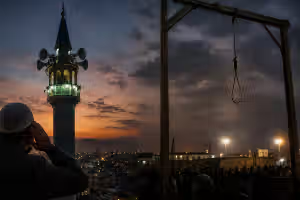
Authorities also hanged Amirhossein Safari and Abolfazl Sepahi in Isfahan's Alikhani Square in late July. They were among 12 young men sentenced to death in a case stemming from January protests in the city.

  • Iran executes 20-year-old protester as fears grow for other detainees

    Iran executes 20-year-old protester as fears grow for other detainees

Iranian authorities accused the defendants of involvement in the deaths of four security personnel as well as arson and vandalism.

Two other defendants in the same case, Golmohammad Mohammadi and Erfan Esfandiari, were executed on July 19.

A group of UN human rights experts urged Tehran in July to halt executions in the case, raising concerns about closed proceedings, alleged ill-treatment and the use of confessions broadcast on state television.

  • Anti-Islam posts follow Iran's dawn executions, sparking hardline backlash

    Anti-Islam posts follow Iran's dawn executions, sparking hardline backlash

"Sentencing 12 people to death in one hearing, in a closed courtroom and without clarity as to each defendant's individual responsibility violates established fair trial standards," the experts said.

They said the defendants, who ranged from their late teens to early twenties, had faced arbitrary detention, enforced disappearance and, in some cases, ill-treatment.