US infrastructure threats no reason to continue talks, senior Iranian cleric says
A senior Iranian cleric said on Wednesday that Iranian officials should not continue negotiations with the United States by citing concerns over damage to the country's infrastructure, after President Donald Trump threatened to strike Iran's power plants and bridges.
Alireza Arafi, head of Iran's seminaries, said officials should not continue "negotiations and the memorandum with the infidels" because of economic difficulties, fear of the costs of war or the prospect of infrastructure being targeted.
"Officials must not retreat from the legitimate rights of the Islamic nation under the pretext of economic problems, fear of the costs of war or strikes on infrastructure, and they must not continue the path of negotiations and the memorandum with the infidels any further," Arafi said in a statement.
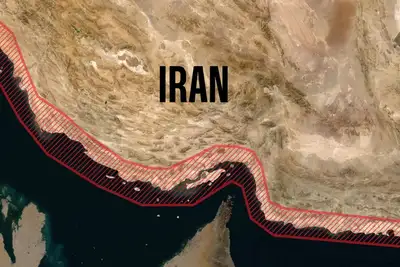
US forces began a new wave of strikes against Iran at 6 a.m. ET on Wednesday, targeting military capabilities used to attack commercial shipping in the Strait of Hormuz, US Central Command said.
“At 6 a.m. ET today, U.S. Central Command forces began launching a wave of strikes against Iran,” CENTCOM said in a statement.
“The strikes are designed to further degrade military capabilities Iranian forces have used to attack commercial shipping in the Strait of Hormuz,” it added.
Iran’s parliamentary health committee is investigating the allocation of $55 million in subsidized foreign currency to one importer of hip and knee implants, after its chairman said much of the equipment went to private hospitals and a small group of surgeons.
Hossein-Ali Shahriari told the ILNA news agency that the company, which he did not identify, imports implants made by US medical-device manufacturer Zimmer. He said it received about $37 million at the heavily subsidized rate of 42,000 rials to the dollar in the Iranian year ending March 2025, followed by another $18 million at 285,000 rials per dollar in the following year.
Both rates were far more favorable than those available on Iran’s open currency market, giving importers access to dollars at a fraction of their market cost. For comparison, the dollar trades at about 1,875,000 rials on Iran’s open market today. Average monthly income in Iran is about $150.
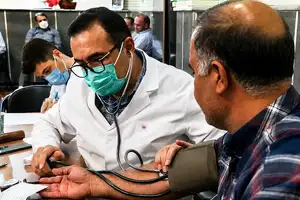
Shahriari said the committee had received complaints from across Iran about shortages of knee and hip implants in public hospitals. It has sought records from the Central Bank and the Food and Drug Administration to determine which companies received subsidized currency and what happened to the imported equipment.
According to figures cited by Shahriari, 73% of the implants distributed in Tehran went to private hospitals. He also reported sharply unequal distribution outside the capital, with some provinces receiving only a fraction of the supply.
Patients in several provinces were required to pay money directly before company representatives would provide an implant, he said. “Why should people have to pay hundreds of millions, which many of them cannot afford, leaving them either to die or to sell their homes and cars for treatment?” Shahriari said.
He called on the judiciary, the national inspectorate and intelligence and oversight agencies to examine the company’s previous currency allocations, arguing that the scale of the case suggested a wider network rather than the actions of one person.
Shahriari did not provide evidence establishing criminal wrongdoing, and the importer was not named in the interview. No response from the company or Iran’s Food and Drug Administration was included in the ILNA report.
The allegations point to a recurring problem in Iran’s multiple-exchange-rate system. Preferential dollars were intended to keep medicines and medical equipment affordable, but the gap between subsidized and market rates created lucrative opportunities for intermediaries. President Masoud Pezeshkian acknowledged the problem in January, saying recipients of dollars at the 285,000-rial rate had “pocketed” the benefit rather than passing it to consumers.
The dispute comes during a broader healthcare crisis. People in Iran have sent messages to Iran International about severe medicine shortages, delays in foreign-currency allocations and price increases of up to 400% for some drugs, pushing more patients toward unaffordable or illicit sources.
US President Donald Trump said he would expand military strikes on Iran to power plants and bridges unless Tehran returned to negotiations, warning in a Fox News interview broadcast on Tuesday that attacks would intensify next week.
"We're going to hit them very hard tonight," Trump said. "We're going to hit them hard tomorrow night. We're gonna hit them really hard the night after."
"Next week it gets really bad for them because next week comes the power plants," he said. "Next week comes the bridges. We're gonna knock out all their power plants. We're going to knock out all their bridges unless they get to the table and negotiate."
Trump said US representatives had recently spoken with Iranian negotiators but said Tehran had repeatedly broken agreements.
"They want to make a deal. But every time they make a deal, they break it," he said.
An Iranian lawmaker said on Wednesday that the public must be prepared to bear the costs of pursuing revenge against the US, warning that Iran’s infrastructure could be damaged.
“We want to break an idol that has oppressed people for years, consumed blood and shed blood,” said Salar Velayatmadar, a member of parliament’s national security committee. “This will have costs, and the people must be ready to pay them.”
He said the public should be told clearly about such costs, adding that, “Our infrastructure may be damaged, and we may face shortages in the society.”
Bahrain's military said its air defense systems intercepted and destroyed several Iranian missiles and drones targeting the country early on Wednesday.
In a statement, the Bahrain Defense Force condemned Iranian attacks targeting civilians and said its air defense systems successfully confronted and destroyed a number of incoming aerial threats.
The military said its forces remain at the highest level of readiness and urged the public to avoid approaching any suspicious objects or debris from the attacks and to report them immediately to the authorities. It added that engineering teams were prepared to safely dispose of any remnants.