• العربية
  • فارسی
Brand
  • Iran Insight
  • Politics
  • Economy
  • Analysis
  • Special Report
  • Opinion
  • Podcast
  • Iran Insight
  • Politics
  • Economy
  • Analysis
  • Special Report
  • Opinion
  • Podcast
  • Theme
  • Language
    • العربية
    • فارسی
  • Iran Insight
  • Politics
  • Economy
  • Analysis
  • Special Report
  • Opinion
  • Podcast
All rights reserved for Volant Media UK Limited
volant media logo

Iranian lawmaker rejects Trump proposal on use of unfrozen funds

Jun 27, 2026, 09:54 GMT+1

Iranian lawmaker Alaeddin Boroujerdi rejected President Donald Trump's proposal that Iranian funds unfrozen under the US-Iran memorandum of understanding be used to buy American agricultural products, calling the idea "baseless" and saying Tehran should not accept food imports from the United States.

Boroujerdi, a member of parliament's National Security Committee, said Trump's remarks that Iranian funds would be earmarked for purchases from US farmers were "unrealistic" and reflected what he described as the US president's "illusions" about international affairs and Iran.

"Iran's sources for buying grain are completely clear, and we have no need to import from America," Boroujerdi said.

He said food security and public safety must come first and argued Iran could not rely on US food products because "there is no trust" in them.

"Any import of food products from America, even if they meet standards, is unacceptable," Boroujerdi said, adding that the government "should not go along with it."

Most Viewed

Iran held by Egypt, waits on results in bid for first World Cup knockout place
1

Iran held by Egypt, waits on results in bid for first World Cup knockout place

2

Khamenei posters expose struggle over who owns Lebanon’s ceasefire

3
OPINION

Iran's Pride Match is about visibility, not politics

4
PODCAST

US policy on Iran: can money achieve what sanctions couldn't?

5
INSIGHT

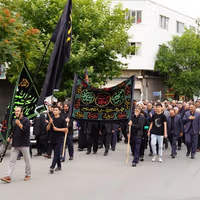
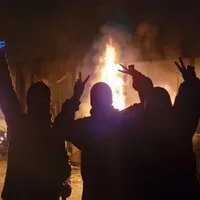
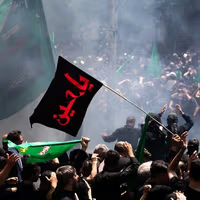
Rival visions of Iran take to the streets during Ashura

Banner
Banner
Banner

Spotlight

  • How a US-Iran deal can reshape the Middle East
    ANALYSIS

    How a US-Iran deal can reshape the Middle East

  • Iran's Pride Match is about visibility, not politics
    OPINION

    Iran's Pride Match is about visibility, not politics

  • Iranians recast Ashura mourning to remember January protest victims
    VOICES FROM IRAN

    Iranians recast Ashura mourning to remember January protest victims

  • Investigation traces January protest deaths to Gharazi Hospital in Isfahan
    SPECIAL REPORT

    Investigation traces January protest deaths to Gharazi Hospital in Isfahan

  • US-Iran MoU pauses conflict but leaves nuclear dispute unresolved

    US-Iran MoU pauses conflict but leaves nuclear dispute unresolved

  • Rival visions of Iran take to the streets during Ashura
    INSIGHT

    Rival visions of Iran take to the streets during Ashura

  • Iran’s negotiators have 60 days; its factories may not
    ANALYSIS

    Iran’s negotiators have 60 days; its factories may not

•
•
•

More Stories

Swedish court upholds dismissal of migration official over Iran security concerns

Jun 27, 2026, 09:41 GMT+1
Swedish court upholds dismissal of migration official over Iran security concerns
100%

A Swedish court upheld the dismissal of a Migration Agency case officer after finding the agency had lawful grounds to fire him based on security concerns linked to contacts with Iranian intelligence operatives and people connected to organized crime.

In a ruling published on Friday, Solna District Court said the employee had, over several years, maintained extensive contacts with "an Iranian intelligence officer, an agent linked to refugee espionage and individuals connected to a motorcycle gang environment," according to Swedish media.

The court said the contacts posed "a concrete risk" that sensitive information held by the Migration Agency could be passed on and amounted to a serious breach of the employee's duty of loyalty.

National security concerns

The Migration Agency argued it was particularly vulnerable to foreign intelligence activity because it holds information on asylum seekers, Iranian government critics and others who could be of interest to foreign states.

  • Iran secretly buries executed Swedish citizen at site linked to mass graves

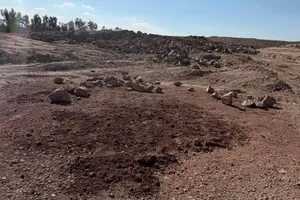
    Iran secretly buries executed Swedish citizen at site linked to mass graves

The court agreed that the employee's contacts were incompatible with his position, saying they undermined confidence in both the individual and the agency.

Court rejects appeal

The former official, who had worked at the agency since 2016 and was dismissed in February 2025, sought reinstatement and damages, arguing the agency lacked sufficient grounds to dismiss him.

The court rejected the claims, found testimony from Sweden's Security Service (Säpo) to be credible and detailed, and ruled the agency had acted within the legal time limit for the dismissal.

The former employee was also ordered to pay the state 168,000 Swedish kronor ($17,600) in legal costs.

Drone strikes Iranian Kurdish opposition camp near Erbil

Jun 27, 2026, 09:35 GMT+1

An explosive drone struck a camp belonging to an Iranian Kurdish opposition group north of Erbil in Iraq's Kurdistan region on Saturday, Iraqi security sources told Reuters.

There were no immediate reports of casualties or damage, and no group claimed responsibility for the attack.

The strike came amid heightened regional tensions following recent fighting involving Iran, the United States and Israel.

UAE adviser welcomes Lebanon-Israel framework agreement

Jun 27, 2026, 08:57 GMT+1

Anwar Gargash, diplomatic adviser to the president of the United Arab Emirates, welcomed the US-brokered framework agreement between Lebanon and Israel, saying it was an important step toward restoring Lebanon's full sovereignty.

In a post on X, Gargash said Lebanese people had "suffered for decades from the consequences of others' conflicts on their soil" and had "paid a heavy price."

"The consolidation of state authority and sovereignty remains the true guarantee of Lebanon's stability and future," he wrote.

Iran’s banks keep failing, but no one explains why – Iranian daily

Jun 27, 2026, 08:38 GMT+1
Iran’s banks keep failing, but no one explains why – Iranian daily
100%

Iranian daily Shargh says Iran’s banking system is trapped in a familiar cycle: cyberattack, service collapse, public confusion, brief official statements and a gradual return to normal without any clear report on what failed or who was responsible.

The newspaper wrote that banking outages have become almost routine for many Iranians over the past two years. Cards stop working, ATMs and mobile banking services fail, customers line up outside branches, and officials ask people to be patient and follow news from official sources.

Then, after hours, days or sometimes weeks, services return without a full explanation of the cause, the damage, the vulnerable points in the system or the responsibility of the banks and regulators involved.

The latest wave of disruption hit several major banks in June, including Melli, Saderat, Tejarat and the Export Development Bank of Iran. Mobile banking, internet banking, ATMs, point-of-sale terminals and card-based services were disrupted. The Coordination Council of Banks and the Informatics Services Corporation confirmed cyberattacks but said customer data remained safe.

  • Banking disruption hits services at eight Iranian banks

    Banking disruption hits services at eight Iranian banks

Days later, another wider disruption affected card-based services across the banking network, with Melli, Saderat and Tejarat again among the banks most affected. The Informatics Services Corporation said some services had been deliberately restricted to prevent unauthorized access and protect customers’ data and assets.

But Shargh said many users were still reporting problems even after officials said services had been restored. The paper said ordinary transactions had become difficult for some people, including buying bread, paying taxi fares and transferring or receiving money.

The pattern is not new. During the 12-day Iran-Israel war last year, Bank Sepah suffered a major cyberattack that disrupted non-branch services.

The hacker group Predatory Sparrow claimed responsibility and said it had destroyed part of the bank’s infrastructure. Bank Pasargad was also hit shortly afterward. The government confirmed attacks on both banks and said public data had not been harmed, but full restoration of some services took days or weeks.

Shargh said the repeated failures have left one central question unanswered: why does Iran’s banking network collapse every few months, while no transparent report is published on the cause of the attacks, the scale of the damage or the responsibility of the institutions in charge?

  • CoinEx became key channel for Iranian crypto flows – WSJ

    CoinEx became key channel for Iranian crypto flows – WSJ

Nima Amirshakari, an electronic banking specialist, told Shargh that the root of the problem is Iran’s weak connection to the outside world. He said parts of the country’s banking infrastructure are nearly three decades old and were built around systems bought long ago from foreign companies.

According to Amirshakari, many of those systems have been expanded through hardware upgrades, with more processors, storage and equipment, but their core software has not been properly modernized. A system that is not updated, patched or redesigned, he said, becomes easier for attackers to predict.

He argued that banks connected to the global financial system are forced to keep pace with changing standards in security, credit, lending and technology. Iranian banks, by contrast, operate in a closed environment where modernization is often treated as a choice rather than a necessity.

Shargh also quoted cybersecurity expert Saeed Souzangar as saying that the problem is not just technology. Sanctions, internet restrictions, weak administrative structures and limited investment in skilled personnel have left many institutions with expensive equipment but not enough expertise to use it securely.

Souzangar said banks and regulators in Iran do not appear to face a serious obligation to inform the public during cyber incidents. In many countries, organizations hit by cyberattacks must explain the scope of the incident, the number of users affected and the corrective steps taken. In Iran, he said, such reporting is often replaced by short and general statements.

That absence of accountability may be the most damaging part of the crisis. If banks face no clear legal, financial or reputational cost for service failures or security weaknesses, there is little pressure to invest seriously in prevention, training and public reporting.

The latest attacks have also triggered a political dispute over whether access to the international internet made the banking system more vulnerable.

Some officials blamed the reopening of internet access, but Behdad Akbari, deputy communications minister and head of Iran’s Infrastructure Communications Company, rejected the claim, saying the affected core banking systems were not connected to the public internet.

Shargh’s experts said blaming internet access alone is not a serious explanation. Internet restrictions can weaken security by limiting updates and access to global tools, but the causes of repeated banking failures cannot be reduced to a single technical claim without a proper investigation.

Iran says US breached MoU, warns neighbours over use of territory

Jun 27, 2026, 08:13 GMT+1

Iran's foreign ministry said US airstrikes on coastal surveillance facilities in southern Iran violated the US-Iran memorandum of understanding and warned neighbouring countries against allowing their territory or facilities to be used for future attacks on the Islamic Republic.

The ministry said the strikes late on Friday were a "clear violation" of Article 2(4) of the UN Charter and a "direct breach" of the first clause of the June memorandum of understanding ending the war.

It also said Israel had attacked Lebanon "in coordination with the United States," calling it another breach of the same clause of the agreement.

The ministry urged countries along the southern coast of the Persian Gulf to observe the principle of good neighbourliness and prevent "aggressor parties" from using their territory or facilities to commit acts of aggression against Iran.

It said responsibility for the consequences lay with the United States and any parties that "in any way" assisted US actions against Iran.

The foreign ministry said Iran had an "inherent right" to self-defence under Article 51 of the UN Charter and would defend its sovereignty, security and national interests "with all its power."

It said Iranian strikes against targets linked to US forces were carried out on that basis.