• العربية
  • فارسی
Brand
  • Iran Insight
  • Politics
  • Economy
  • Analysis
  • Special Report
  • Opinion
  • Podcast
  • Iran Insight
  • Politics
  • Economy
  • Analysis
  • Special Report
  • Opinion
  • Podcast
  • Theme
  • Language
    • العربية
    • فارسی
  • Iran Insight
  • Politics
  • Economy
  • Analysis
  • Special Report
  • Opinion
  • Podcast
All rights reserved for Volant Media UK Limited
volant media logo

Iran’s banks keep failing, but no one explains why – Iranian daily

Jun 27, 2026, 08:38 GMT+1

Iranian daily Shargh says Iran’s banking system is trapped in a familiar cycle: cyberattack, service collapse, public confusion, brief official statements and a gradual return to normal without any clear report on what failed or who was responsible.

The newspaper wrote that banking outages have become almost routine for many Iranians over the past two years. Cards stop working, ATMs and mobile banking services fail, customers line up outside branches, and officials ask people to be patient and follow news from official sources.

Then, after hours, days or sometimes weeks, services return without a full explanation of the cause, the damage, the vulnerable points in the system or the responsibility of the banks and regulators involved.

The latest wave of disruption hit several major banks in June, including Melli, Saderat, Tejarat and the Export Development Bank of Iran. Mobile banking, internet banking, ATMs, point-of-sale terminals and card-based services were disrupted. The Coordination Council of Banks and the Informatics Services Corporation confirmed cyberattacks but said customer data remained safe.

Days later, another wider disruption affected card-based services across the banking network, with Melli, Saderat and Tejarat again among the banks most affected. The Informatics Services Corporation said some services had been deliberately restricted to prevent unauthorized access and protect customers’ data and assets.

But Shargh said many users were still reporting problems even after officials said services had been restored. The paper said ordinary transactions had become difficult for some people, including buying bread, paying taxi fares and transferring or receiving money.

The pattern is not new. During the 12-day Iran-Israel war last year, Bank Sepah suffered a major cyberattack that disrupted non-branch services.

The hacker group Predatory Sparrow claimed responsibility and said it had destroyed part of the bank’s infrastructure. Bank Pasargad was also hit shortly afterward. The government confirmed attacks on both banks and said public data had not been harmed, but full restoration of some services took days or weeks.

Shargh said the repeated failures have left one central question unanswered: why does Iran’s banking network collapse every few months, while no transparent report is published on the cause of the attacks, the scale of the damage or the responsibility of the institutions in charge?

Nima Amirshakari, an electronic banking specialist, told Shargh that the root of the problem is Iran’s weak connection to the outside world. He said parts of the country’s banking infrastructure are nearly three decades old and were built around systems bought long ago from foreign companies.

According to Amirshakari, many of those systems have been expanded through hardware upgrades, with more processors, storage and equipment, but their core software has not been properly modernized. A system that is not updated, patched or redesigned, he said, becomes easier for attackers to predict.

He argued that banks connected to the global financial system are forced to keep pace with changing standards in security, credit, lending and technology. Iranian banks, by contrast, operate in a closed environment where modernization is often treated as a choice rather than a necessity.

Shargh also quoted cybersecurity expert Saeed Souzangar as saying that the problem is not just technology. Sanctions, internet restrictions, weak administrative structures and limited investment in skilled personnel have left many institutions with expensive equipment but not enough expertise to use it securely.

Souzangar said banks and regulators in Iran do not appear to face a serious obligation to inform the public during cyber incidents. In many countries, organizations hit by cyberattacks must explain the scope of the incident, the number of users affected and the corrective steps taken. In Iran, he said, such reporting is often replaced by short and general statements.

That absence of accountability may be the most damaging part of the crisis. If banks face no clear legal, financial or reputational cost for service failures or security weaknesses, there is little pressure to invest seriously in prevention, training and public reporting.

The latest attacks have also triggered a political dispute over whether access to the international internet made the banking system more vulnerable.

Some officials blamed the reopening of internet access, but Behdad Akbari, deputy communications minister and head of Iran’s Infrastructure Communications Company, rejected the claim, saying the affected core banking systems were not connected to the public internet.

Shargh’s experts said blaming internet access alone is not a serious explanation. Internet restrictions can weaken security by limiting updates and access to global tools, but the causes of repeated banking failures cannot be reduced to a single technical claim without a proper investigation.

Most Viewed

FIFA lets fans take rainbow flags to Iran-Egypt match, but bars Lion and Sun
1

FIFA lets fans take rainbow flags to Iran-Egypt match, but bars Lion and Sun

2

World Cup déjà vu: Iran’s ominous Brazil-Scotland quake memory haunts Venezuela

3

Omani shipping corridor rattles Iran hardliners over Hormuz control

4
INSIGHT

Rival visions of Iran take to the streets during Ashura

5
VOICES FROM IRAN

Power, water outages disrupt daily life across Iran

Banner
Banner
Banner

Spotlight

  • How a US-Iran deal can reshape the Middle East
    ANALYSIS

    How a US-Iran deal can reshape the Middle East

  • Iran's Pride Match is about visibility, not politics
    OPINION

    Iran's Pride Match is about visibility, not politics

  • Iranians recast Ashura mourning to remember January protest victims
    VOICES FROM IRAN

    Iranians recast Ashura mourning to remember January protest victims

  • Investigation traces January protest deaths to Gharazi Hospital in Isfahan
    SPECIAL REPORT

    Investigation traces January protest deaths to Gharazi Hospital in Isfahan

  • US-Iran MoU pauses conflict but leaves nuclear dispute unresolved

    US-Iran MoU pauses conflict but leaves nuclear dispute unresolved

  • Rival visions of Iran take to the streets during Ashura
    INSIGHT

    Rival visions of Iran take to the streets during Ashura

  • Iran’s negotiators have 60 days; its factories may not
    ANALYSIS

    Iran’s negotiators have 60 days; its factories may not

  • Banking disruption hits services at eight Iranian banks

    Banking disruption hits services at eight Iranian banks

  • CoinEx became key channel for Iranian crypto flows – WSJ

    CoinEx became key channel for Iranian crypto flows – WSJ

•
•
•

More Stories

Iran held by Egypt, waits on results in bid for first World Cup knockout place

Jun 27, 2026, 06:18 GMT+1
Iran held by Egypt, waits on results in bid for first World Cup knockout place
100%
Iran's Ramin Rezaeian and Mehdi Taremi look dejected after the Group G match against Egypt at Seattle Stadium, Seattle, Washington, US, on June 27, 2026.

Iran’s official national team missed the chance to qualify automatically for the World Cup knockout stage for the first time in its history after a 1-1 draw with Egypt in Seattle, but can still advance depending on results in other groups.

Iran finished third in Group G with three points from three draws after Belgium beat New Zealand 5-1 in the simultaneous match to top the group. Egypt also advanced, finishing second on five points but behind Belgium on goal difference.

The draw leaves Iran in the ranking of third-placed teams, with the expanded 48-team World Cup sending the top two teams from each group and the eight best third-placed teams into the Round of 32.

Iran can still qualify with three points if one of several remaining results goes its way: Ghana beats Croatia, DR Congo fail to beat Uzbekistan, or the Austria-Algeria match produces a winner.

Any one of those outcomes would be enough to keep Iran inside the qualifying places among third-placed teams.

  • Can Iranians cheer Team Melli without cheering the state?

    Can Iranians cheer Team Melli without cheering the state?

  • Iran's Pride Match is about visibility, not politics

    Iran's Pride Match is about visibility, not politics

The match began badly for Iran. Mahmoud Saber scored for Egypt in the fifth minute, the fastest World Cup goal in Egypt’s history, after Iran failed to clear inside the area.

Iran had a quick chance to respond when Mehdi Taremi stepped up for a penalty six minutes later, but Egypt goalkeeper Ahmed Shobeir saved his shot.

Ramin Rezaeian equalized in the 14th minute, finishing from a tight angle after Milad Mohammadi’s shot had been pushed away.

Rezaeian has now scored in two of Iran’s three matches at this World Cup, after also scoring in the opening 2-2 draw with New Zealand.

The game then settled after a frantic start. Egypt lost Mohamed Salah in the second half when he was substituted in the 57th minute, apparently because of discomfort in his hamstring.

Iran’s biggest moment came deep into stoppage time. Shoja Khalilzadeh appeared to have scored a late winner that would have sent Iran through automatically, but the goal was ruled out for offside after a VAR review.

  • FIFA lets fans take rainbow flags to Iran-Egypt match, but bars Lion and Sun

    FIFA lets fans take rainbow flags to Iran-Egypt match, but bars Lion and Sun

  • Team Melli Or Team Mullah: Iranian Soccer Fans Disown National Team

    Team Melli Or Team Mullah: Iranian Soccer Fans Disown National Team

  • World Cup déjà vu: Iran’s ominous Brazil-Scotland quake memory haunts Venezuela

    World Cup déjà vu: Iran’s ominous Brazil-Scotland quake memory haunts Venezuela

Moments later, Saeid Ezatolahi struck the post from close range, leaving Iran with another draw and no control over its own qualification.

Iran had entered the final group match after two draws: 2-2 against New Zealand in its opener and 0-0 against Belgium in its second game.

The three-match unbeaten run is the first time Iran has completed a World Cup group stage without defeat, though it has still not won a match at the tournament.

The result is therefore both Iran’s strongest unbeaten group-stage return and another missed opportunity.

The match also took place in a politically charged atmosphere for Iranians.

The national team remains a divisive symbol for many inside Iran and across the diaspora, with some viewing it as a football team to be separated from politics and others seeing it as inseparable from the Islamic Republic it officially represents.

Those tensions had already followed Iran through the tournament. Before the Egypt match, FIFA said rainbow flags would be allowed inside the stadium, while Iran’s pre-revolutionary Lion and Sun flag remained barred from World Cup venues under rules against political symbols.

Iran's Shoja Khalilzadeh scores a goal past Egypt's Mostafa Shoubir that was later disallowed.
100%
Iran's Shoja Khalilzadeh scores a goal past Egypt's Mostafa Shoubir that was later disallowed.
Egypt's Mohanad Lashin and Egypt's Mohamed Hany celebrate as Iran's Saeid Ezatolahi looks dejected after the match.
100%
Egypt's Mohanad Lashin and Egypt's Mohamed Hany celebrate as Iran's Saeid Ezatolahi looks dejected after the match.

Khamenei posters expose struggle over who owns Lebanon’s ceasefire

Jun 26, 2026, 12:26 GMT+1
Khamenei posters expose struggle over who owns Lebanon’s ceasefire
100%
Billboards showing Iran’s new Supreme Leader Mojtaba Khamenei and his late father, Ali Khamenei, on the road to Beirut’s airport (June 2026)

Lebanon has ordered the removal of billboards showing Iran’s new Supreme Leader Mojtaba Khamenei and his late father from the road to Beirut’s airport, turning a dispute over public posters into a test of who gets to define the country’s fragile post-ceasefire moment.

The billboards, installed this week along the route to Beirut-Rafic Hariri International Airport, carried the slogan “Thank you to loyal Iran.” They appeared days after a ceasefire was announced between Israel and Hezbollah as part of wider US-Iran negotiations, and as Lebanese and Israeli officials continued direct US-mediated talks over southern Lebanon.

Interior Minister Ahmad Hajjar said Thursday he had ordered the banners and posters removed within two days. Speaking on the sidelines of a Cabinet meeting, he said the decision was part of efforts to regulate public spaces and enforce existing laws.

But the timing gave the order wider political weight. Hezbollah and its allies have portrayed the ceasefire as proof of Iran-backed “resistance” leverage, while Lebanon’s government is trying to show that decisions over the country’s territory, security and public space still belong to the Lebanese state.

The airport road is one of Lebanon’s most visible political corridors. For years, posters and banners linked to Hezbollah, Amal and Iran-aligned figures have lined parts of the route into Beirut.

Shiite mourners walk past a banner depicting Iran's late Supreme leader Ali Khamenei as they mark Ashura, the holiest day on the Shiite Muslim calendar, in the southern suburbs of Beirut, Lebanon, June 26, 2026.
100%
Shiite mourners walk past a banner depicting Iran's late Supreme leader Ali Khamenei as they mark Ashura, the holiest day on the Shiite Muslim calendar, in the southern suburbs of Beirut, Lebanon, June 26, 2026.

In 2022, Lebanon’s Tourism Ministry asked Hezbollah and Amal to remove billboards showing religious and political figures from the same road and replace them with signs promoting tourism.

The latest posters carried a sharper message. By thanking Iran days after the ceasefire, they presented Tehran not as an outside power in Lebanon’s war but as the loyal patron whose support helped shape the outcome.

That message comes as the ceasefire itself remains unsettled. Lebanese and Israeli officials have been engaged in US-mediated talks over southern Lebanon, including proposals for Israeli forces to hand some areas to the Lebanese army and for Hezbollah to be kept out of those zones.

Israel, however, has signaled it does not intend to leave southern Lebanon quickly. Prime Minister Benjamin Netanyahu has said Israel will remain in a southern security zone as long as required, while Defense Minister Israel Katz has said Israeli troops will not withdraw even under US pressure.

The ceasefire has also been strained by continued violence. Local and international reports have described Israeli strikes and gunfire in southern Lebanon since the truce was announced, while Hezbollah has accused Israel of violating the agreement.

Hezbollah, for its part, has rejected any settlement that resembles normalization with Israel. In a televised Ashura address on Friday, Hezbollah leader Naim Qassem said Israel must leave Lebanon “unconditionally” and said the group would accept no normalization, no end to hostility with Israel, no gains for Israel and no partial Israeli presence on Lebanese soil.

His remarks placed Hezbollah on a collision course with the logic of the US-mediated talks, which depend on a negotiated security arrangement in the south. They also reinforced the message carried by the airport road billboards: that Iran and Hezbollah see the ceasefire as part of a wider regional struggle, not merely a Lebanese border arrangement.

For Lebanon’s government, the posters created an immediate sovereignty problem. Leaving them in place would allow an Iran-Hezbollah victory message to dominate the country’s main international gateway at the very moment Beirut is trying to negotiate under its own authority.

Removing them, however, exposes the limits of that authority. The Lebanese state can clear a road, but it cannot easily resolve the deeper conflict behind the posters: Hezbollah’s weapons, Israel’s presence in the south, Iran’s role in the ceasefire and Washington’s attempt to keep Lebanon’s track separate from its broader deal with Tehran.

US-Iran MoU pauses conflict but leaves nuclear dispute unresolved

Jun 26, 2026, 09:30 GMT+1
•
Kambiz Tavana
US-Iran MoU pauses conflict but leaves nuclear dispute unresolved
100%
Greg Priddy - Analyst, Center for the National Interest

The US-Iran understanding appears more likely to freeze the conflict than resolve it, leaving the future of Iran's nuclear program as the central unresolved issue, according to Washington-based analyst Greg Priddy.

The arrangement follows months of confrontation and is designed to reduce the risk of renewed escalation. But it does not settle the core dispute between Washington and Tehran: how much uranium enrichment Iran will be allowed to retain, and under what conditions.

That question has long been the hardest part of any agreement. The latest understanding may ease immediate tensions, but it leaves unanswered what comes next and whether follow-on talks can produce a more durable settlement.

"The question is, do the follow-on talks yield a final deal that everyone can live with, do we go back to conflict, or do we just keep kicking the can down the road," Priddy said. "I think the most probable outcome is that they keep extending it."

Iran is unlikely to give up enrichment permanently, while the Trump administration has shown little interest in returning to a JCPOA-style framework that would allow limited enrichment under international safeguards.

Priddy said any long-term arrangement would probably need to include monitored enrichment, even if that remains politically difficult for Washington to accept.

"Iran is not going to concede to giving up enrichment forever," he said. "If we got to the point where the US could say yes, you could have limited enrichment under safeguards, a lot of other things start to become negotiable."

Priddy also said hardliners in Tehran may believe they have gained leverage after threatening the Strait of Hormuz, particularly after demonstrating they could use energy pressure to shape Washington's response.

"What I'm worried about at this point is I think there's a lot of hubris in Tehran right now among hardliners that they won the war," he said. "They can ask for everything now and get away with conceding very, very little."

Fears of higher gasoline prices and broader economic disruption helped push Washington toward restraint, while Persian Gulf energy infrastructure remained exposed.

Priddy described the situation as "mutually assured vulnerability," saying both sides now know they can target each other's energy infrastructure even if neither can eliminate the threat.

The regional fallout is likely to shape the next phase as much as the nuclear talks themselves. Persian Gulf states are likely to diversify their defence partnerships, while the United States may maintain a military presence in the region but with a smaller, more cautious footprint.

Israel remains the biggest wildcard in the next phase of negotiations. Washington appears intent on limiting further escalation, particularly in Lebanon, but Prime Minister Benjamin Netanyahu may still favour a more confrontational approach.

Priddy said he does not expect the current understanding to produce a grand bargain or a warmer relationship between Washington and Tehran. Instead, he said, the most likely outcome is a hostile but transactional relationship that is repeatedly extended rather than fundamentally resolved.

Global index says torture is embedded in Iran’s laws, courts and prisons

Jun 26, 2026, 03:37 GMT+1
Global index says torture is embedded in Iran’s laws, courts and prisons
100%
Students hold up blood-red handprint paintings as an act of protest at a girls’ school in Iran.

Iran was listed among the world’s highest-risk countries for torture, impunity and state violence in the 2026 Global Torture Index, released Thursday by the World Organization Against Torture (OMCT) and partner groups.

The index, produced for Iran in collaboration with Impact Iran, said torture remained deeply embedded in the country’s law, policy and practice, and warned that US and Israeli strikes on Iran during the June 2025 military escalation had further increased the risk of torture, ill-treatment and arbitrary detention.

The report said Iran scored at the most severe level on six of the index’s seven pillars: political commitment, police and institutional violence, impunity, victims’ rights, the right to defend human rights, and protection for all. It rated Iran as high-risk on conditions in detention.

It said Iran had not ratified the UN Convention against Torture, did not criminalize torture as a distinct offense, and continued to allow punishments such as flogging and amputation.

The report also cited the use of confessions in convictions, saying this created incentives for torture and ill-treatment to extract statements, including confessions later broadcast by state media.

It said at least 1,639 executions were recorded in Iran in 2025, including executions of people who were under 18 at the time of their alleged offenses.

The index also pointed to what it called near-total impunity, saying no independent body investigates torture allegations or deaths in custody, while overcrowded detention facilities operate with little or no outside oversight.

Women and girls, ethnic minorities, LGBTQIA+ people, human rights defenders, journalists and lawyers face heightened risks of torture, arbitrary detention and other abuse, the report said.

“In Iran, torture is not a failure of the system – it is the system: written into law, rewarded by the courts, and concealed behind prison walls,” said Rose Richter, Impact Iran’s executive director.

Richter said security forces fired on civilians even inside hospitals during the crackdown of December 2025 and January 2026, when more than 50,000 people were arrested and more than 7,000 killed.

Other rights groups and monitoring organizations have previously reported higher figures for the crackdown, pointing out the difficulty of verifying casualties and arrests amid restrictions on access, intimidation of families and limited independent reporting inside Iran.

  • Over 36,500 killed in Iran's deadliest massacre, documents reveal

    Over 36,500 killed in Iran's deadliest massacre, documents reveal

“Behind each of those numbers is a person whose suffering was deliberate, and a family still waiting for the truth,” Richter said.

Gerald Staberock, secretary general of OMCT, said the index was intended to turn “scattered warnings into evidence that cannot be ignored.”

“The Global Torture Index should be read by development agencies, but also by security actors and businesses seeking to engage or invest in the countries covered,” Staberock said.

OMCT urged Iran to halt executions and judicial corporal punishment, ratify the UN Convention against Torture, criminalize torture, end the use of coerced confessions and give the UN Fact-Finding Mission unhindered access.

Rival visions of Iran take to the streets during Ashura

Jun 25, 2026, 23:52 GMT+1
•
Maryam Sinaiee
Rival visions of Iran take to the streets during Ashura
100%
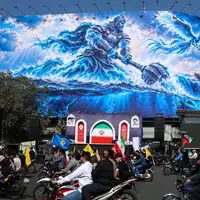
Mourners at an Ashura procession in Tehran. June 24, 2026.

Iran's Ashura commemorations have again become a stage for competing political narratives, with government supporters and opponents alike using Shi'ite mourning rituals to advance sharply different messages.

Every year during the Islamic month of Muharram, millions of Shi'ite Muslims across Iran commemorate the martyrdom of Imam Hussein, the grandson of the Prophet Muhammad who was killed in 680 AD.

Hardliners often invoke his example to argue Iran should continue confronting the United States, while government critics use the same symbolism to condemn injustice at home.

Political messaging also comes through speeches by eulogists (maddahs), who preside over ceremonies recounting Hussein's sacrifice and heroism.

At one ceremony, well-known maddah Reza Narimani criticized President Masoud Pezeshkian for disclosing in a recent speech that funds equivalent to the value of 20 million barrels of oil had been allocated to the Revolutionary Guards' Aerospace Force during the war.

Narimani also claimed Supreme Leader Mojtaba Khamenei opposed negotiations and an agreement with Washington and had merely observed the government's recent diplomatic efforts.

Another eulogist, Mohammad Reza Bazri, criticized officials he accused of ignoring "the ten conditions of the Imam"—a reference to slain leader Ali Khamenei—while pursuing an agreement with Washington and failing to respond to what he described as US violations of the ceasefire.

"The Iranian people would never consent to an agreement with the United States," he claimed.

Opposition mourning

Government critics have likewise used Ashura ceremonies to express dissent, often through traditional mourning chants or carefully worded speeches condemning injustice without directly naming officials.

Religious gatherings in Yazd and Bushehr have become known for incorporating such politically charged poetry.

One widely performed lament, heard again this year, calls on people to rise up and "bring down the idols and palaces of tyrannical rulers."

Another popular mourning chant, which has gained prominence among religious opponents of the government in recent years, criticizes what it portrays as state-sponsored religion.

"In your religion, there is God's name, but God is absent," the lyrics say.

The poem's author, Shahabeddin Mousavi, was detained for a period after it became widely known.

Remembering those killed

While many ceremonies are organized or supported by the state, independent local communities also hold mourning processions that sometimes become venues for political expression.

According to social media posts, some Ashura gatherings this year included performances of the patriotic song Az Khoon-e Javanan-e Vatan ("From the Blood of the Nation's Youth") in memory of thousands of young people killed during the January unrest.

Originally composed during Iran's Constitutional Revolution more than a century ago, the song likens the blood of fallen youth to red tulips blooming from the earth.

At some ceremonies, eulogists reportedly read aloud the names of those killed.

In the central city of Arak, the mother of Mohammad Radmannia, a 29-year-old who was fatally shot in the back of the head with live ammunition in Tehran, urged mourners to continue her son's path.

In a village in the northern province of Gilan, mourners attached a photograph of Mani Safarpour, an 18-year-old from Lahijan who was also killed in Tehran, to a ceremonial drum and cymbals before gathering at his grave to perform chest-beating rituals.

Some opposition activists criticized fellow government opponents for attending Ashura ceremonies, arguing that the events are widely viewed because of state promotion as expressions of support for the Islamic Republic.

"The massacre of protesters in January was carried out on the direct orders of the leader of Shi'ites (Ali Khamenei), while other senior clerics remained silent," one user wrote on X. "A couple of Yazdi or Bushehri mourning chants cannot erase that crime from our society's memory."

Another user wrote: "The blood that was unjustly spilled will never be washed away. No lament or elegy can diminish the scale of this tragedy in our collective memory."

Others defended participation in the ceremonies.

"These mourning chants serve to remind people of those tragedies," one user argued.

Another wrote that participating in Ashura ceremonies was "part of the struggle to reclaim religious symbols" from the government.

A further comment added: "When will people understand that many ordinary religious Iranians have nothing to do with the government or its hardline supporters?"