• العربية
  • فارسی
Brand
  • Iran Insight
  • Politics
  • Economy
  • Analysis
  • Special Report
  • Opinion
  • Podcast
  • Iran Insight
  • Politics
  • Economy
  • Analysis
  • Special Report
  • Opinion
  • Podcast
  • Theme
  • Language
    • العربية
    • فارسی
  • Iran Insight
  • Politics
  • Economy
  • Analysis
  • Special Report
  • Opinion
  • Podcast
All rights reserved for Volant Media UK Limited
volant media logo
EXCLUSIVE

Iran secretly buries executed Swedish citizen at site linked to mass graves

Farnoosh Faraji
Farnoosh Faraji

Iran International

May 4, 2026, 21:53 GMT+1
Kourosh Keyvani's burial site in Khavaran outside Tehran

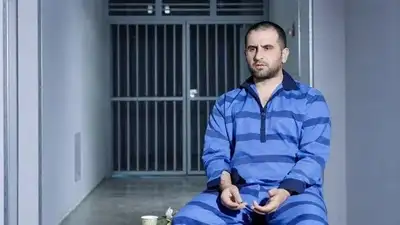
Iran's security agents secretly buried the body of Iranian-Swedish citizen Kourosh Keyvani in the Khavaran area outside Tehran after he was executed in March on charge of spying for Israel, sources familiar with the matter told Iran International.

The sources said Keyvani was executed on the morning of March 18 without his family being informed, and his body was buried on March 23 in Khavaran.

Keyvani’s family later tried to mark the unmarked gravesite by placing stones nearby, but authorities removed them to prevent the burial location from being identified, the sources told Iran International.

Khavaran, in southeast Tehran, is known as a burial site associated with executed political prisoners, including victims of Iran’s 1988 mass executions. Families of those buried there have long accused authorities of preventing them from marking graves or holding public mourning ceremonies.

Kourosh Keyvani's grave site in Khavaran
100%
Kourosh Keyvani's grave site in Khavaran

Sources said Keyvani had been arrested on June 16, 2025, in Kordan, a mountainous village in Alborz province, west of Tehran and near the city of Karaj.

One source said Keyvani had a strong interest in motorcycling, especially jumping with motorcycles, and was riding in Kordan on the day of his arrest.

The source said security agents confiscated his phone during the arrest and used landscape photos he had taken in the area as evidence in the case, alleging links to Mossad and opposition groups.

Iran's judiciary-linked Mizan news agency on March 18 announced that Keyvani had been executed after his death sentence was upheld by the Supreme Court. Mizan alleged that Keyvani had passed “images and information of sensitive locations” to officers of Israel’s Mossad intelligence agency.

At the time, Swedish Foreign Minister Maria Malmer Stenergard expressed deep regret over the execution and said the Swedish government sympathized with Keyvani’s family in Sweden and Iran. She added that the legal proceedings leading up to the execution did not meet the standards of due process.

Kourosh Keyvani
100%
Kourosh Keyvani

Sources told Iran International that on the night before the execution, Keyvani was summoned via loudspeaker without prior notice and held in solitary confinement until morning.

After Keyvani's detention, his family had no information about his condition or whereabouts for around 40 days. He was held in solitary confinement for nearly eight months and was told he would be released if he accepted the charges and made a "forced confession," according to the sources.

According to forced confessions later published by Iranian state media, Keyvani said he had been forced into espionage because of financial need and residency issues.

But sources indicated to Iran International that he had lived in Sweden for around 10 years and did not face financial difficulties. The sources also described him as intelligent and fluent in six languages.

Keyvani was among the latest in a series of executions in Iran of people accused of espionage for Israel, a pattern that has intensified since the 12-day war in June 2025. The executions have continued during and after the 2026 US-led war.

Iran has one of the highest execution rates in the world and has long used the death penalty in national security cases, including allegations of spying.

Following the conflict, rights groups and international media have reported a sharp increase in arrests and executions on such charges.

Most Viewed

Abroad they talk, at home they hang
1
TEHRAN INSIDER

Abroad they talk, at home they hang

2

Islamic Republic puts another political prisoner to death

3
INSIGHT

War shadow lays bare divisions among Iran’s clerics

4

Internet shutdown drives Iranians to leave country for access

5

Trump wants deal soon or may bomb Iran - Axios

Banner
Banner

Spotlight

  • Iran’s warnings give way to action as US launches Hormuz 'escort' plan
    INSIGHT

    Iran’s warnings give way to action as US launches Hormuz 'escort' plan

  • Iran secretly buries executed Swedish citizen at site linked to mass graves
    EXCLUSIVE

    Iran secretly buries executed Swedish citizen at site linked to mass graves

  • Abroad they talk, at home they hang
    TEHRAN INSIDER

    Abroad they talk, at home they hang

  • War shadow lays bare divisions among Iran’s clerics
    INSIGHT

    War shadow lays bare divisions among Iran’s clerics

  • Who speaks for Iran: What the public rift means, and what it hides
    INSIGHT

    Who speaks for Iran: What the public rift means, and what it hides

  • ‘Permit for a terrorist’: Canada opposition asks who cleared ex-IRGC official’s entry
    PODCAST

    ‘Permit for a terrorist’: Canada opposition asks who cleared ex-IRGC official’s entry

•
•
•

More Stories

Iran bars jailed British couple from seeing each other

May 4, 2026, 17:04 GMT+1

British couple Lindsay and Craig Foreman, sentenced to 10 years in prison on espionage charges in Iran, have been barred from visiting each other in Tehran’s Evin prison for three weeks, sources familiar with the matter told Iran International.

The Foremans, both in their 50s, were arrested in January 2025 while on a motorcycle trip through Iran. Their family says they had valid visas, a licensed guide, and an approved itinerary. They deny the espionage charges.

The Foremans are being held in separate wings of Tehran’s Evin prison, which rights groups have long criticized over alleged torture and inhumane conditions.

A source familiar with the matter said visits between political prisoners and their families were cut off after the Iran-US-Israel war began, with cabin visits restored for some prisoners only in the past two to three weeks.

The source said prisoners with relatives also held in Evin had been allowed ward-to-ward visits.

But when Lindsay and Craig Foreman asked prison officials on Sunday to see each other, they were told they had been banned from both in-person and cabin visits for three weeks because of their BBC World interview, the source said.

Lindsay Foreman said in the interview that her situation was frightening, adding that while it would one day end for them, “for these people it may never end.”

Craig Foreman said four of his cellmates had been taken away for their sentences to be carried out since he was transferred to Evin, with news of their executions broadcast on state television the following day.

Britain’s Foreign, Commonwealth and Development Office has previously said it was “deeply concerned” by the couple’s detention and that it continued to raise the case directly with Iranian authorities.

Rights groups and Western governments have long accused Iran of engaging in so-called “hostage diplomacy” by detaining foreign nationals to gain political or economic concessions, an allegation Tehran rejects, saying it faces Western intelligence infiltration.

Trump wants deal soon or may bomb Iran - Axios

May 4, 2026, 11:40 GMT+1

US President Donald Trump could pursue major military action against Iran if talks do not soon produce the outlines of an achievable deal, Axios reported on Monday, citing a senior US official.

“It’s either we’re looking at the real contours of an achievable deal soon, or he's going to bomb the hell out of them,” the official said.

The report said Trump wants pressure on Iran while keeping diplomatic channels open.

Trump’s envoys Jared Kushner and Steve Witkoff are still exchanging proposals with Iran’s Foreign Minister Abbas Araghchi, it said, citing officials.

A senior US official said the two sides remain far apart.

“There are talks. There are offers. We don't like theirs. They don't like ours,” the official said.

One source described Trump’s Project Freedom to help guide stranded ships out of the Strait of Hormuz as “the beginning of a process that could lead to a confrontation with the Iranians.”

According to the United States Central Command, military support to Project Freedom will include guided-missile destroyers, drones, over 100 land and sea-based aircraft and 15,000 troops.

Internet shutdown drives Iranians to leave country for access

May 4, 2026, 08:33 GMT+1

As Iran has experienced a systematic disruption of the international internet for 65 days, access to the free flow of information has turned into a luxury and a symbol of structural inequality, a crisis that has triggered a new wave of migration – migration for internet access.

One consequence of the shutdown has been the emergence of short-term, urgent migration to countries such as Armenia and Turkey. Individuals whose businesses depend on global markets have been forced to temporarily leave the country to preserve their livelihoods.

A technology specialist currently in Yerevan told Iran International: “I spent all my savings from the past year to stay in Armenia for two months. This migration is not voluntary; if I cannot connect, all my foreign contracts will be canceled. Some of my friends even sold their wives’ gold or household items just to reach the internet and not lose their jobs.”

These forced migrations not only drive human capital out of the country but also impose heavy costs on families already under economic strain, especially as such options are only available to a limited number of people.

Three Iranian citizens working in internet-dependent businesses told Iran International they had traveled to Istanbul and rented a small home in a remote area to make use of the 90-day visa-free stay for work.

One of them, a programmer and father of two, said: “The only solution was to leave my wife and children behind so I could finish a project in these three months. That’s just to pay off debts from the past four or five months and cover part of the travel costs. Then we’ll see what happens next.”

  • Iranians denounce tiered internet plan as discriminatory and corrupt

    Iranians denounce tiered internet plan as discriminatory and corrupt

He added that his wife had lost her job due to the internet disruption, saying thre temporary migration and separation from family was the only option available. “Despite all difficulties, my friends and I know that even being able to come to Turkey is not possible for everyone, and that adds to our sense of guilt.”

Security as justification; internet under control

Since February 28, coinciding with the start of military conflict, authorities have used “national security” as justification to restrict access for millions of people, without providing clear answers about the duration of the disruption, instead linking restoration to a return to “normal conditions.”

At the same time, inequality has extended into the digital sphere. While the majority are confined to the domestic network, a black market for “free internet” has emerged, with prices ranging from 5000,000 to 20 million rials per gigabyte ($2.5 to over $10). Average Iranian incomes have contracted to roughly $100–$150 per month due to severe inflation and currency devaluation.

100%

“White SIM cards”: privileged access

Alongside widespread restrictions, authorities have distributed tools known as “white SIM cards,” a term first used during the 2022 protests to describe unfiltered and unmonitored internet access for insiders.

Holders of these SIM cards, often linked to security institutions or state-affiliated media, are able to access global platforms and publish narratives aligned with official messaging.

In addition, services marketed as “Pro internet” have been offered to selected companies and individuals, effectively turning internet access into a state-controlled privilege.

  • Two months offline: Iran blackout drives losses, access splits

    Two months offline: Iran blackout drives losses, access splits

Government spokeswoman Fatemeh Mohajerani confirmed the system on April 28, saying the service had been approved to maintain business connectivity during crisis conditions.

Economic and human toll

The consequences of the shutdown extend beyond statistics. Preliminary estimates from Iran’s Chamber of Commerce put daily losses at around $80 million, both directly and indirectly.

But the deeper impact is human. Disrupted communication, lost educational opportunities, and pressure on healthcare systems reliant on global data have all contributed to rising psychological strain.

Teenagers deprived of digital interaction and elderly individuals cut off from relatives abroad are living in what many describe as enforced isolation.

By formalizing unequal access to the internet, authorities have effectively restricted a basic right. As planes and buses carry workers and professionals across borders in search of connectivity, many inside Iran remain in digital darkness, facing the gradual erosion of their livelihoods and aspirations.

Abroad they talk, at home they hang

May 4, 2026, 02:38 GMT+1
•
Tehran Insider

One thing never stops here: executions. War or no war, talks or no talks, crisis or calm, the machinery moves at its own pace: steady and unbroken, as if insulated from everything else.

In recent weeks, as the country absorbs the shock of conflict, economic strain and uncertainty, the hangings have continued quietly in the background.

Rights groups say at least 21 people have been executed since late February, some linked to the January protests, others accused of ties to opposition groups or espionage.

Iran already had one of the highest execution rates in the world, but the pace has quickened, with trials that remain opaque and outcomes that few expect to change.

And yet, walking through the city, you would not necessarily know it.

Shops are open. Traffic moves. People go to work, or look for it. Life has narrowed to the essentials: finding money, paying rent, getting through the day. Internet access remains so limited that many only hear of these executions days later, if at all.

Mana, a 30-year-old mother of one, says she no longer allows herself to dwell on it. “You can’t think about everything,” she says. “You just have to get through the day.”

Hamed, 19, serving his mandatory military service, puts it more bluntly: “Nothing surprises us anymore after January. It doesn’t even add anger or hatred. It is hard to add to something that already feels complete.”

The latest case that briefly broke through that surface was that of Sasan Azadvar, a 21-year-old karate athlete from Isfahan who had been arrested during the January protests and was executed this week.

The judiciary accused him of “effective cooperation with the enemy,” saying he had damaged police vehicles, incited unrest and encouraged others to take part in riots.

His funeral was held under heavy security presence. But an image emerged of his family curled over his body, pain visible in every still movement.

For a moment, his name travelled through word of mouth, through whatever fragments of connection still function.

Nahid, 56, a clerk at a public institution, says that when news like this spreads, people do feel it. “You get sad, you curse the rulers,” she says. “But then you go back to your life, as helpless as the day before.”

Officials describe executions as a matter of law, of security and deterrence. Many here understand them differently, as a message that requires no elaboration: if you come out into the streets, you may be shot; if you are arrested, you may not return.

What makes this moment harder to ignore is the contrast. The same system shows itself capable of patience and negotiation when dealing with its external adversaries.

After months of war, after airstrikes and the killing of senior commanders, officials are willing to sit across the table from those they describe as enemies, debating terms, exchanging proposals and searching for a settlement.

The logic is not difficult to grasp, as Mana puts it.

“I’m not into politics, but even I can see they pursue a deal with Trump because it can consolidate their power. A conversation at home would do the opposite.”

To engage openly with dissent would mean acknowledging it as something real, something that cannot simply be dismissed or suppressed. It would mean accepting a form of legitimacy that the system has long refused to grant.

And so the contrast persists: negotiation with those who bombed the country, but no dialogue with those who live in it.

The executions continue quietly, steadily, almost routinely, even as the country absorbs war, economic strain and isolation. Each case briefly punctures the surface, then recedes into the background of a society that has learned, out of necessity, to carry on.


Islamic Republic puts another political prisoner to death

May 3, 2026, 09:05 GMT+1

The Islamic Republic executed another political prisoner in Urmia prison on Sunday, the judiciary reported, identifying him as Mehrab Abdollahzadeh.

Born in 1997 in Urmia, he had been arrested on October 22, 2022 during the “Woman, Life, Freedom” protests.

The judiciary said Abdollahzadeh had been sentenced to death on charges of “corruption on earth” in connection with the killing of Abbas Fatemiyeh, described as a “volunteer force” member in Urmia.

Mizan, the judiciary’s media outlet, said the conviction was based on confessions, witness testimony, images and security reports, adding that the Supreme Court upheld the sentence.

He was executed after previously saying in a message from prison, “From the very first day of my arrest, they extracted confessions from me through torture and threats, all of which were false.”

Rights groups cite coercion concerns

Rights organizations also said the case relied on forced confessions obtained under pressure and lacked fair trial guarantees.

The Kurdistan Human Rights Network said Abdollahzadeh was interrogated for 38 days without access to a lawyer or family contact and faced physical and psychological pressure.

The group added he denied the charges and requested mobile location data to challenge his presence at the scene.

Timeline and broader executions

Abdollahzadeh was arrested at his workplace during nationwide protests and later sentenced to death by a revolutionary court in Urmia in September 2024.

Rights groups reported he was moved to solitary confinement days before the execution following a dispute with a prison official.

The execution came after two other men were hanged in the same prison a day earlier on charges of spying for Israel, with rights groups raising concerns over fast-track proceedings and lack of due process.

  • Two more men hanged in Iran as authorities ramp up executions

    Two more men hanged in Iran as authorities ramp up executions

UN human rights chief Volker Turk said this week that at least 21 people have been executed and more than 4,000 arrested on national security charges since the latest conflict in February, warning that rights in Iran continue to face severe restrictions.

"I am appalled that – on top of the already severe impacts of the conflict – the rights of the Iranian people continue to be stripped from them by the authorities, in harsh and brutal ways," Turk said.