• العربية
  • فارسی
Brand
  • Iran Insight
  • Politics
  • Economy
  • Analysis
  • Special Report
  • Opinion
  • Podcast
  • Iran Insight
  • Politics
  • Economy
  • Analysis
  • Special Report
  • Opinion
  • Podcast
  • Theme
  • Language
    • العربية
    • فارسی
  • Iran Insight
  • Politics
  • Economy
  • Analysis
  • Special Report
  • Opinion
  • Podcast
All rights reserved for Volant Media UK Limited
volant media logo

Iran state TV says Tehran still controls Hormuz traffic

Jun 19, 2026, 12:59 GMT+1Updated: 14:07 GMT+1

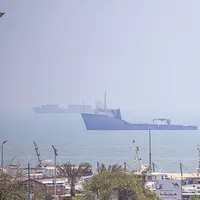
Iran’s state broadcaster said ships passing through the Strait of Hormuz must still obtain permits, framing the process as evidence that Tehran continues to control and manage the strategic waterway.

The report said Iran’s Supreme National Security Council viewed the permit requirement as a sign that Tehran’s authority over the strait remains in place.

It also said commercial traffic at Iranian ports had resumed, with three commercial vessels entering Iranian ports.

The state TV reporter said shipping procedures had been largely coordinated with Oman and that Iran planned to charge fees for services it provides in the waterway.

Most Viewed

US says Iran won't get funds upfront under MoU
1

US says Iran won't get funds upfront under MoU

2

Khamenei shifts responsibility for MoU as Iran, US implement Hormuz terms

3
INSIGHT

Tehran's familiar battle lines return over deal with US

4

US says Iran deal will end enrichment, destroy uranium stocks, cap missiles

5
VOICES FROM IRAN

Iranians say US deal leaves people out of the equation

Banner
Banner
Banner

Spotlight

  • A US-Iran deal alone won't rescue Iran's oil economy
    ANALYSIS

    A US-Iran deal alone won't rescue Iran's oil economy

  • Iran's Qatar power link exposes a deeper energy dilemma
    ANALYSIS

    Iran's Qatar power link exposes a deeper energy dilemma

  • Who in Tehran is opposing a deal with Washington?
    INSIGHT

    Who in Tehran is opposing a deal with Washington?

  • A fragile compact: ambiguities that could undermine US-Iran MoU
    ANALYSIS

    A fragile compact: ambiguities that could undermine US-Iran MoU

  • A thaw with the US won't fill Iranian tables overnight
    INSIGHT

    A thaw with the US won't fill Iranian tables overnight

  • Why some think a weakened Iran could emerge stronger
    ANALYSIS

    Why some think a weakened Iran could emerge stronger

•
•
•

More Stories

Trump says Iran war showed there are ‘no limits’ to his power

Jun 19, 2026, 12:53 GMT+1

US President Donald Trump said he had discovered there were no limits to his power since going to war with Iran, while also arguing that extending the conflict could have risked a global economic crisis, Axios reported.

In an interview with Axios, Trump portrayed the Iran deal as a display of US dominance, insisting the outcome amounted to Iran’s unconditional surrender and regime change, even as critics on the right said the agreement fell short of his earlier demands.

Axios said Trump repeatedly described power in terms of submission, saying Israel respected him and would follow his direction, while dismissing Republican hawks who opposed the Iran deal.

"If it weren't for me, Israel would not exist today," Trump told Axios, adding that his relationship with Prime Minister Benjamin Netanyahu is "good, but we have to keep him a little bit sane."

He said prolonging the war to satisfy those critics could have triggered a worldwide depression, pointing to falling oil prices and rising stock markets as proof that he was right to back a deal aimed at ending the Iran war.

“I have one primary wish as president. I never want to be the late, great Herbert Hoover,” Trump said, referring to the US president associated with the Great Depression.

Axios also cited a forthcoming book by New York Times reporters Maggie Haberman and Jonathan Swan saying Trump had entertained the idea that he may be more powerful than historical conquerors and dictators, including Napoleon, Mao, Stalin and Hitler.


Karaj Friday prayer leader says US remains Iran’s main enemy despite talks

Jun 19, 2026, 12:53 GMT+1

Karaj’s Friday prayer leader said Iran would continue to regard the United States as its main enemy even if negotiations go ahead, arguing that talks would not change Tehran’s view of Washington.

Mohammad-Mehdi Hosseini Hamedani told Friday prayers in Karaj that Iran would not make what he called a strategic miscalculation and still viewed the United States as untrustworthy.

He said any negotiations would be aimed at demanding Iran’s rights and would be conducted from a position of strength, not as the kind of political trade-off some people expect.

Hosseini Hamedani also described Supreme Leader Mojtaba Khamenei’s message on the US memorandum as wise and timely, saying all sides were now waiting to see whether the conditions set out in it would be fulfilled.

Friday prayer leader says officials should follow Khamenei’s original position

Jun 19, 2026, 12:44 GMT+1

Sari’s Friday prayer leader said officials should act according to Supreme Leader Mojtaba Khamenei’s original position on talks with the United States, seizing on Khamenei’s own caveat that he had held a different view before allowing the memorandum to be implemented.

Mohammad-Bagher Mohammadi Laeini told Friday prayers in Sari that Khamenei’s “principled view” had been different and said officials were expected to follow what he called the Leader’s main position.

Responding to US officials’ remarks about the memorandum with Tehran, Mohammadi Laeini said Washington still had not understood Iran.

“The Islamic Republic will not accept the disgrace of compromise with America,” he said, adding that Iranians had shown they were “not a nation of compromise.”

MP warns against reopening Hormuz before Lebanon ceasefire and Israeli withdrawal

Jun 19, 2026, 12:39 GMT+1

An Iranian lawmaker warned that reopening the Strait of Hormuz before a full ceasefire in Lebanon and an Israeli withdrawal would amount to the “premature birth” of the US memorandum’s implementation.

Meysam Zohourian wrote on X that any opening in the Strait of Hormuz before those conditions were met would signal Iran’s acceptance of implementing the memorandum with Washington.

The phrase sharpened criticism of the sequencing of the agreement, suggesting that movement on Hormuz could hand Washington an early win before Iran’s demands on Lebanon are met.

MP challenges Hormuz fee waiver over Israeli shipping

Jun 19, 2026, 12:37 GMT+1

A member of parliament’s National Security Committee criticized Iran’s announced 60-day fee waiver for ships passing through the Strait of Hormuz, questioning why Israeli vessels should be allowed to transit without payment.

Mahmoud Nabavian wrote on X that, according to the Supreme National Security Council, Iran would not charge commercial ships crossing the strait during the 60-day period. He asked whether the decision reflected Iran’s own choice or had been made under US pressure.

Nabavian said allowing Israeli ships to pass through the Strait of Hormuz without payment contradicted Supreme Leader Mojtaba Khamenei’s position on cutting off Israel’s economic arteries.