North Koreans fear possible deployment as Iran war intensifies - report
North Korean leader Kim Jong Un, accompanied by his daughter Kim Ju Ae, supervises what North Korean state news agency KCNA reports is an offensive tactical drill involving a new type of tank, at a training base in Pyongyang, North Korea, March 19, 2026,
North Koreans are increasingly worried about the possibility of overseas troop deployments as the Iran war intensifies, with rumors of involvement spreading in border regions and among families of military-age men, according to reports from North Korea.
North Koreans fear possible deployment as Iran war intensifies - report | Iran International
Daily NK reported that residents in northern areas were closely following the war and asking whether it could eventually pull Pyongyang in.
One source said some were alarmed that the fighting had continued despite the killing of Iran’s top leader.
“Some parents with sons about to be conscripted are worried it could lead to overseas deployment,” the source said, while others urged caution, saying, “The war in Russia is not even over – would they really send troops to the Iran war as well?”
The same report said rumors tied to the conflict were spreading in Yanggang and other northern areas, adding to a broader sense of unease already fueled by worsening living conditions.
Residents were said to be more focused on rising prices and food shortages than on military achievements. According to sources cited by the outlet, repeated missile launches have drawn a cold response from the public as inflation and exchange-rate pressure deepen the burden on households.
“Which people would applaud this in such a situation?” one source said. Others complained that “it would be better if they reduced the number of launches and brought in more rice,” reflecting frustration that resources were being directed toward military activity rather than basic needs.
Another source said rhetoric about strengthening defense or expanding strike capabilities was failing to resonate with ordinary people.
“Words like ‘strengthening defense capabilities’ and ‘strike capacity’ do not even register with residents,” the source said, adding that for people struggling to survive day to day, the only welcome news would be lower prices for rice and other essentials.
The reports suggest a widening gap between official propaganda and public sentiment, with concerns about deployment, food costs and daily survival outweighing state messaging about military strength.
North Korean state media, however, has used the Iran war to reinforce its long-held argument for retaining and expanding nuclear weapons.
Leader Kim Jong Un this week accused the United States of carrying out “state terrorism and acts of aggression throughout the world” in comments widely interpreted as referring to the war.
According to KCNA, Kim said North Korea had made the decision to “permanently and irreversibly consolidate the possession of nuclear weapons,” adding that Pyongyang was “prepared to respond” whether its adversaries chose confrontation or peaceful coexistence.
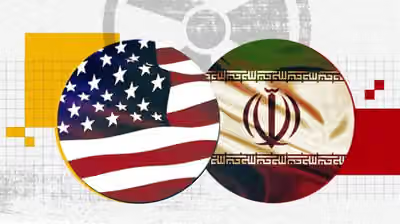
Iran has received a US 15-point proposal via Pakistan aimed at opening a path toward a ceasefire, a senior Iranian source told Reuters on Wednesday, though the venue for any talks was still under discussion and Tehran publicly denied that negotiations with Washington had begun.
The reported proposal, described by Pakistani and Egyptian officials speaking to the Associated Press, covers sanctions relief, civilian nuclear cooperation, curbs on Iran’s nuclear and missile programs, stronger International Atomic Energy Agency monitoring and guarantees for shipping through the Strait of Hormuz.
One Egyptian official described it as a “comprehensive deal,” but said it was being treated only as a basis for further talks, adding that Iranian officials remained “very skeptical” of the Trump administration.
That skepticism has been reinforced by Iran’s public messaging. Iran’s ambassador to Pakistan, quoted by state media, said no direct or indirect talks with the United States had taken place, even as he said “friendly countries” were trying to create conditions for dialogue.
An Iranian military spokesman was even more dismissive, mocking Washington’s diplomatic push and saying Iran would never “come to terms” with the United States.
“Do not call your defeat an agreement... Have your internal conflicts reached the point where you are negotiating with yourselves? You will see neither your investments in the region nor the former prices of energy and oil again until you understand this: stability in the region is guaranteed by the strong hand of our armed forces,” said the spokesperson for Iran’s Khatam al-Anbiya Central Headquarters, Ebrahim Zolfaghari.
The mixed signals come after President Donald Trump said the United States was “in negotiations right now” with Iran and suggested Tehran wanted a deal.
Pakistan has emerged as a possible channel, with Prime Minister Shehbaz Sharif saying Islamabad was ready to host talks, while Saudi Arabia’s crown prince also discussed Pakistan’s mediation effort with Sharif, according to the AP report.
According to a senior Iranian talking to Reuters on Wednesday, Turkey had also "helped to end the war and either Turkey or Pakistan was under consideration as the venue for such talks."
Even as diplomacy stirred, the war showed little sign of pausing. The United States was moving about 1,000 troops from the 82nd Airborne Division to the region and deploying two Marine units, while Israel launched new wide-scale strikes and Iran continued attacks on Israel and across the Persian Gulf region.
Israeli officials were described as surprised by the submission of a ceasefire plan, having pushed Trump to keep up military pressure.
Still, major uncertainties remain over who in Iran has the authority to negotiate, what terms Tehran might ultimately accept, and whether any proposal can survive continued fighting.
Reflecting that uncertainty, the Kremlin said on Wednesday it had received no information from Iran about the reported US plan and could not assess the reliability of the reports.
British police arrested two men on Wednesday in connection with the suspected antisemitic arson attack on four Jewish community ambulances in north London earlier this week.
Police said the suspects, aged 47 and 45, were arrested at addresses in northwest and central London and were being held in custody.
The ambulances were set on fire early on Monday in an attack Prime Minister Keir Starmer described as a “deeply shocking antisemitic arson attack.” No injuries were reported.
Police, who had earlier said they were examining a possible Iran link, said the investigation was continuing, with CCTV suggesting at least three people were involved.
An Iran-aligned militant network claimed responsibility for the arson attack early on Monday, the SITE Intelligence monitoring service reported, linking the incident to a string of similar fires across Europe.
A group calling itself the Islamic Movement of the People of the Right Hand carried out the attack near the synagogue in Golders Green, the SITE said, adding that it had also been behind fires in Belgium, Greece and the Netherlands.
Israel’s embassy in Britain has called for decisive action in response to the attack.
“Enough is enough,” the embassy said on Monday. “There must be a thorough investigation and decisive action to put an end to this climate of intimidation before it spirals further.”
Reports that the United States is considering Iran’s parliament speaker as a potential negotiating channel, alongside a proposal for high-level talks, have brought into focus a deeper question: is Washington probing who truly holds power inside Iran?
It suggests that the emergence of Iran Parliament Speaker Mohammad Bagher Ghalibaf’s name is less about his standing among Iranians and more about how Washington is reading power inside the Islamic Republic.
US President Donald Trump on Monday indicated he was in contact with a senior Iranian figure without naming a formal office. “We’re talking to a top person in Iran,” he said, describing the contacts as “very good and productive,” remarks that coincided with his decision to delay strikes on Iran’s energy infrastructure.
Ghalibaf rejected the suggestion outright. “There has been no negotiation with the United States,” he wrote on X, adding that such reports were being circulated “to manipulate financial and oil markets.”
Mohammad Bagher Ghalibaf appears in IRGC uniform while presiding over a parliamentary session, in a symbolic show of support following the Guard’s designation by the EU as a terrorist organization.
A test channel, not a political endorsement
What places Ghalibaf in this discussion is not legitimacy or popularity, but how he fits a specific operational need.
Washington appears to be searching for a test channel – a figure embedded enough within Iran’s power structure to determine whether pressure has shifted internal calculations, yet visible enough to engage without committing to a formal negotiation track.
Ghalibaf fits that role. As parliament speaker with a background spanning the Islamic Revolutionary Guards Corps, the police, and executive administration, he sits at the intersection of political authority and coercive power. Over time, he has also sought to project a more technocratic and managerial image, particularly during election campaigns.
That combination makes him more legible to Washington than figures whose authority is either opaque or purely symbolic.
The central question for US policymakers is not who represents Iran – but who can act. President Masoud Pezeshkian, despite holding elected office, is widely seen as constrained by unelected centers of power. At the same time, killing of former Supreme Leader Ali Khamenei and uncertainty around leadership structures has made it difficult to identify a single decisive authority.
In that environment, Ghalibaf emerges as a practical option. He connects political, military, and administrative networks and is positioned to transmit signals across factions.
Mohammad Bagher Ghalibaf sits in a pilot’s cockpit during a night-time flight, reflecting his background as a former IRGC air force commander.
This also aligns with a broader pattern in Trump’s foreign policy. His approach has consistently favored leaders perceived as decisive and capable of enforcing outcomes.
Engagements with figures such as Abdel Fattah el-Sisi, Vladimir Putin, and Kim Jong Un reflect a preference for authority and deliverability over institutional legitimacy.
Ghalibaf fits that pattern as well – not because of what Trump put as being “respectable,” but because of perceived functionality.
Yet the same factors that make Ghalibaf useful to Washington also define his limits. Iran’s strategic decisions are not delegated to individual officials. Authority remains concentrated within tightly controlled security and leadership circles, with networks aligned with the IRGC shaping core policy direction.
Recent statements from these circles have reinforced resistance to negotiations under pressure, with some going further by demanding concessions rather than offering them.
Mohsen Rezaei, a military adviser to the country’s new Supreme Leader Mojtaba Khamenei, warned that escalation would be met with force. “If they make this mistake [hitting Iran power plants], we will paralyze them and sink them in the Persian Gulf,” he said in a televised interview Monday night.
Rezaei added that “the war will not end until sanctions are lifted, compensation is paid, and legal guarantees are provided that aggression against Iran will not be repeated,” ruling out any ceasefire under current conditions.
Mohammad Bagher Ghalibaf in IRGC uniform during his tenure as commander of the IRGC Air Force in the 1990s.
His remarks feature the broader reality facing any potential channel: even if figures like Ghalibaf are engaged, key security actors continue to set maximalist terms that leave little room for negotiation under pressure.
In that context, even a well-positioned figure like Ghalibaf does not have the authority to shift policy. At most, he can serve as a conduit – not a decision-maker.
Mohammad Bagher Ghalibaf served as Iran’s chief of police from 2000 to 2005.
Public perception
Ghalibaf’s record includes involvement in past crackdowns, including student protests, as well as longstanding corruption allegations. These factors have shaped his image within Iranian society and limit his credibility beyond state structures.
This creates a structural contradiction. A figure who may be functional within the system is not necessarily acceptable outside it.
This gap becomes more pronounced when viewed against recent unrest. Large-scale protests in January, met with a heavy security response in which Ghalibaf was part of the broader system response, showed the depth of public anger toward figures associated with the state.
Mohammad Bagher Ghalibaf made three bids for the presidency of Iran.
Slogans widely heard during those demonstrations – including “This is the final battle, Pahlavi will return” and “Reza Pahlavi is the national slogan” – showed that the opposition is widely rallying around the exiled son of Iran’s last Shah, rejecting any one associated with the Islamic Republic.
In that context, any attempt to elevate a figure such as Ghalibaf – even as a de facto interlocutor or transitional figure – would likely face immediate resistance from a public that has already signaled its rejection of the existing power structure.
Therefore, the focus on Ghalibaf is not that much about elevating him – it appears it is about testing the system around him.
For Washington, he represents a point of access into Iran’s power structure at a moment of uncertainty, a figure through whom pressure can be measured rather than resolved.
On the other hand, for Tehran, the episode highlights how tightly controlled that structure remains, with authority dispersed across networks that limit any individual’s room to act.
This makes the channel inherently narrow. It may reveal whether pressure has altered internal thinking, but it does not resolve the deeper constraints that define decision-making in Iran.
In that sense, the question is not whether Ghalibaf can deliver – but whether anyone within the current structure can.
Remarks by Donald Trump suggesting backchannel contacts with a figure inside Iran’s government have stirred intense political debate in Tehran.
The controversy intensified after reports by Israel’s Channel 11 and Politico suggested that Parliament Speaker Mohammad-Bagher Ghalibaf could be the “pragmatic partner” potentially engaging with the Trump administration.
According to the Politico report, “at least some White House officials see him as someone who could lead Iran and negotiate in a next phase of conflict with the Trump administration.” However, the report added that the White House “is not yet ready to bet on a single figure” and is exploring multiple options.
The mere suggestion that a sitting Iranian parliament speaker could be engaged—formally or informally—with Washington carries significant implications within Iran’s political system, where any perception of independent diplomatic outreach can trigger backlash, particularly during periods of heightened tension.
Iran’s Revolutionary Guards (IRGC)-linked media outlets have strongly rejected claims of secret negotiations.
Fars News Agency described the reports as a “psychological operation,” asserting that the narrative was designed with three goals: “character assassination of Ghalibaf, incitement toward possible physical targeting, and sowing division in the country.”
Similarly, Tasnim News Agency called the reports a “complex enemy design to create the perception of internal tension,” arguing that it aimed to distract political forces from the ongoing conflict.
Even political figures outside Ghalibaf’s immediate camp have echoed concerns about psychological warfare.
Mohammad-Javad Azari-Jahromi, telecommunications minister under President Hassan Rouhani, wrote on X that Trump’s contradictory statements—and media suggestions that Ghalibaf could be conducting secret talks—are intended to “create division within the government and among military forces.”
Hesameddin Ashena, a former media adviser to Rouhani, also warned of “character assassination,” describing the amplification of such claims as effectively “aligning with the enemy.”
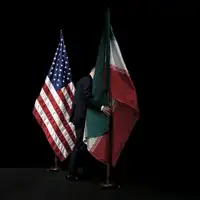
Iranian officials have acknowledged indirect communications with Washington through intermediaries. Foreign Minister Abbas Araghchi and spokesman Esmail Baghaei said countries such as Egypt, Turkey, and Pakistan have been exchanging messages between the two sides in recent days in an effort to reduce tensions.
At the same time, Iranian officials stressed that Tehran’s core positions remain unchanged.
These include its stance on the potential closure of the Strait of Hormuz—a position that has contributed to escalating rhetoric, including reported threats by Trump to target Iran’s energy infrastructure and impose a short deadline.
An Iranian official told Al Jazeera that Washington has so far refused to meet Tehran’s key conditions for negotiations: “payment of war reparations and acknowledgment of aggression against Iranian territory.”
Meanwhile, reports from Reuters and The Wall Street Journal suggest that potential talks to end the conflict could take place in Pakistan or Turkey, possibly involving figures such as Steve Witkoff, Jared Kushner, and Vice President J. D. Vance in the coming days.
Despite official denials, the issue has gained traction on social media—particularly among Iranians abroad, given severe internet restrictions inside Iran since the war began.
Thousands of responses to Ghalibaf’s denial of secret talks with Washington on X framed the issue in terms of suspicion and alleged betrayal.
Some users pointed to his absence from certain recent public events, while others noted that his name had not appeared in US bounty lists targeting Iranian officials, interpreting this as suspicious though without evidence.
Others revived longstanding allegations of financial corruption and nepotism raised by hardline factions such as the Paydari Front and supporters of Saeed Jalili—claims that have circulated in Iran’s political rivalries for years.
A missile fired from Iran struck Lebanon’s coast hours after Beirut expelled Tehran’s ambassador, sources told Iran International, contradicting earlier reports that it had been intercepted.
The projectile was not intercepted in Lebanese airspace and instead landed on the coast, according to Iran International sources, disputing earlier reporting by Reuters.
The strike came shortly after Lebanon declared Iran’s ambassador to Beirut, Mohammad Reza Raouf Sheibani, persona non grata and ordered his expulsion.
Lebanese Foreign Minister Youssef Raggi said on X that the decision had been formally communicated and that the envoy must leave the country by March 29.
Lebanon also recalled its ambassador from Tehran for consultations, accusing Iran of violating diplomatic norms and established protocols between the two countries.
Israel’s military said that, based on its assessments, a ballistic missile launched from Iran fell in Beirut around the same time as missile attacks targeting Israel. In a statement, the army said the projectile was fired by the “Iranian regime” and landed inside Lebanon.
Diplomats from several Persian Gulf states told Iran International on Tuesday that Tehran was acting like a “runaway horse,” warning that attacking another Arab country crossed a new red line and would not be tolerated.
According to Iran International sources, since the start of the current conflict following US and Israeli strikes in early March, Iran has targeted at least 12 countries in the region. Lebanon is now the 13th.
Reactions to Lebanon’s move were swift. Israel’s President Isaac Herzog called the expulsion a “very courageous decision,” according to Israeli media. Foreign Minister Gideon Sa'ar welcomed the move, describing it as “justified and necessary” in response to Iran’s actions in Lebanon, including its backing of Hezbollah.
Israeli Defense Minister Israel Katz said Israel would continue its attacks against Iranian positions “with full force.”
Hezbollah condemned the decision, warning it could undermine national unity and deepen internal divisions.
Meanwhile, Bloomberg reported on Tuesday that Saudi Arabia and United Arab Emirates are growing increasingly impatient after attacks on energy infrastructure and airports, and could join US- and Israeli-led strikes if Iran targets critical facilities.