Russia, China push back against Hormuz restrictions

Russia and China expressed concern on Monday over restrictions in the Strait of Hormuz and warned that further escalation could widen the conflict and disrupt global energy supplies.
Russia and China expressed concern on Monday over restrictions in the Strait of Hormuz and warned that further escalation could widen the conflict and disrupt global energy supplies.
Russia’s foreign ministry said on Monday it opposed any blockade of the waterway but added that the situation should be viewed within a broader global context, according to Interfax.
China urged all sides to halt military activity and return to negotiations, warning that continued confrontation risks destabilizing the region.
“Should hostilities continue to escalate and the situation deteriorate further, the entire region will be plunged into chaos,” foreign ministry spokesperson Lin Jian said. “The use of force will only lead to a vicious cycle.”
Disruptions shake energy markets
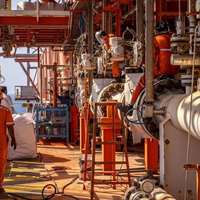
Recent limits on shipping through the strait have disrupted energy flows and driven oil prices higher, highlighting the route’s role as a conduit for roughly one-fifth of global crude and liquefied natural gas.
The disruption follows rising tensions that have curtailed maritime traffic and raised concerns among energy-importing countries over prolonged supply constraints.
US President Donald Trump on Monday said he would postpone planned strikes on Iranian energy infrastructure after what he described as constructive talks with Tehran.
“Based on the tenor and tone of these in-depth, detailed, and constructive conversations, I have instructed the Department of War to postpone any and all military strikes against Iranian power plants and energy infrastructure for a five-day period,” Trump wrote on Truth Social.
The remark follows his earlier 48-hour ultimatum warning Iran to reopen the strait or face military action targeting its energy sector.
This comes weeks after large-scale US and Israeli strikes on Iran began on February 28, killing Supreme Leader Ali Khamenei, senior commanders and destroying military infrastructure.
Iran sets terms for access
Iran’s Defense Council said on Monday that passage through the strait would depend on coordination with Tehran for countries it described as non-belligerent.
“The only way to pass through the Strait of Hormuz for non-belligerent states is by coordinating passage with Iran,” the council said.
The statement warned that any attack on Iran’s energy infrastructure would draw a strong response and raised the possibility of mining maritime routes if Iranian territory were targeted.
Diplomatic push to keep waterway open
NATO Secretary General Mark Rutte said 22 countries were working together to ensure the strait remains open, reflecting growing international concern.
Earlier this month, China held discussions with Iran aimed at securing safe passage for oil and liquefied natural gas tankers through the Strait of Hormuz as the conflict intensified, according to three diplomatic sources talking to Reuters.