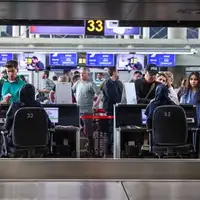
Inside Iran, fears of widespread blackouts have prompted many citizens to prepare for worst-case scenarios. In the past two days social media reports indicate that many have rushed to purchase home generators, batteries, radios, flashlights, water, food, medicine, and fuel in the past two days.
Users on X, many among whom use the hashtag #SpareIranPowerPlants warn that destroying power plants could trigger “the complete collapse of other vital infrastructures,” including water systems, sewage networks, the internet, and mobile communications, and could lead to food shortages and the breakdown of healthcare services.
“Striking power plants only helps the Revolutionary Guards (IRGC) portray its savagery as legitimate and could be the biggest miscalculation of this war,” one user posted.
Trump postpones ultimatum
On Monday, as Trump’s 48-hour deadline to Tehran drew near, he wrote on Truth Social that he had ordered the Pentagon to halt “all military attacks” on Iran’s power plants and energy infrastructure for five days.
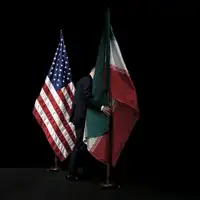
Trump said “very good and constructive talks” aimed at a “complete resolution of hostilities in the Middle East” had taken place over the past two days between Tehran and Washington and added that discussions would continue through the week.
According to Axios, officials from Turkey, Egypt, and Pakistan have been mediating and passing messages between Tehran and Washington in recent days.
In a phone interview with CNBC, Trump described the talks as “very intense” and said he remained hopeful for a “very significant outcome.”
Iran's foreign ministry spokesman, Esmaeil Baghaei, rejected any talks with Washington over the past 24 days, saying that Tehran's position on the Strait of Hormuz and its conditions for ending the war have not changed.
Diverging interpretations
The five-day pause has temporarily eased tensions but deepened uncertainty over Washington’s intentions. In Iran, some interpreted the pause as a retreat.
Mohammad Hossein Khoshvaght, a former government official with close ties to the ruling establishment wrote: “As predicted, Trump backed down from the threat of attacking our power plants in the face of Iran's power and resolve, showing that he only understands the language of strength and submits to it!”
Some others described the move as deception or an attempt to stabilize global markets.
A pro-government user wrote: Trump's contradictory behaviors indicate that we are dealing with a clear pattern of ‘deception operations’.”
“Just a few days ago, he claimed there was no one in Iran to negotiate with, and now he's talking about delaying the attack and engaging in dialogue. This fluctuation is not a sign of Trump's strength, but rather an effort to reduce the pressures of war and manage global public opinion,” he added.
Yet others, particularly among the opposition, appear confused by what they see as inconsistencies in Trump’s positions.
“So, while Trump was holding ‘deep, precise, and constructive’ negotiations with the Islamic Republic, he set a 48-hour ultimatum to strike Iran's energy infrastructure, and when he felt he'd had a ‘very good and constructive’ negotiation, he extended the ultimatum by five days?” a user asked.
Responsibility and blame
Some among the opposition argue that the responsibility for the crisis lies with the Islamic Republic and the IRGC.
“We must firmly demand that the Islamic Revolutionary Guard Corps accept Trump’s 48-hour ultimatum to reopen the Strait of Hormuz If we are truly concerned about ‘Iran’,” dissident academic Ali Sharifi-Zarchi posted on X.
From a legal perspective, UK-based human rights lawyer Mohammad Moghimi warned that destroying power grids would “jeopardize access to water, food, and medical care” and argued that attacking civilian infrastructure is “a clear violation of international law and a war crime.”
Exiled prince's position
Iran's exiled Prince Reza Pahlavi on Sunday called on Trump and Benjamin Netanyahu to avoid targeting civilian infrastructure while maintaining pressure on the Iranian government.
“Iran’s civilian infrastructure belongs to the Iranian people and to the future of a free Iran. The Islamic Republic’s infrastructure is the machinery of repression and terror used to keep that future from becoming reality,” he wrote on X, adding: “Iran must be protected. The regime must be dismantled.”
In a separate post, he added: “President Trump is right (about Peace Through Strength). This regime only understands strength… When Iran is free, the world will have lasting peace.”