Iran judiciary issues 10,538 arrest orders for protesters


Iran’s judiciary has issued 10,538 arrest orders and 8,843 indictments for protesters so far, the judiciary spokesman said on Tuesday.
Asghar Jahangir also rejected a European Parliament resolution on Iran that has condemned systematic repression by Iran’s authorities.
In a resolution adopted by 524 votes in favor, three against and 41 abstentions, members of the European Parliament (MEPs) demanded an immediate end to violence against civilians, including arbitrary detentions, enforced disappearances and torture.
Jahangiri also said Iran’s judiciary has issued 10,538 arrest orders for protesters.

Russia, Iran and China have sent warships to take part in joint naval exercises in the Strait of Hormuz, Russian presidential aide Nikolai Patrushev said in remarks published on Tuesday.
The drills, named “Maritime Security Belt - 2026,” will be held in the coming days in the strategic waterway, Patrushev told the Argumenty i Fakty newspaper.
Iran’s Tasnim news agency earlier reported that the three countries would hold their eighth joint naval exercise in late February in the northern Indian Ocean.
The drills will involve units from the Iranian navy, the navy of the Islamic Revolutionary Guard Corps, as well as Chinese and Russian naval forces, Tasnim said.
The “Security Belt” exercises have been held since 2019 at the initiative of Iran’s navy and aim to strengthen maritime trade security, according to the agency. The joint activities include counter-piracy operations, efforts to combat maritime terrorism and search-and-rescue missions.

The United States and Iran are set to hold indirect talks in Geneva on Tuesday under Omani mediation, with the threat of military action hanging over diplomacy and both sides still far apart on uranium enrichment and missiles.
The negotiations, mediated by Omani Foreign Minister Sayyid Badr Albusaidi, bring together US envoys Steve Witkoff and Jared Kushner and an Iranian delegation led by Foreign Minister Abbas Araghchi. The talks are expected to focus on uranium enrichment levels, sanctions relief and the economic benefits Iran seeks in return.
US President Donald Trump said he would be involved “indirectly” and signaled that Tehran may be open to a deal.
“I don’t think they want the consequences of not making a deal,” Trump told reporters aboard Air Force One on Monday, referring to previous US B-2 bomber strikes on Iranian nuclear targets last year. “We could have had a deal instead of sending the B-2s in.”
Yet even as diplomacy proceeds, the Pentagon is preparing for the possibility of weeks-long military operations should Trump order an attack, two US officials told Reuters.
Iran began military drills in the Strait of Hormuz on Monday, signaling the risk of confrontation in one of the world’s most critical oil shipping lanes.
The talks follow a failed attempt to revive negotiations last June that collapsed after Israel launched an air campaign against Iran, later joined by US strikes on nuclear facilities. Tehran says it has since halted uranium enrichment, though Western powers remain skeptical.
Iran enters the talks weakened by months of anti-government protests, suppressed at the cost of tens of thousands of lives, and by a sanctions-driven economic crisis that has sharply reduced oil revenues.
At the same time, Washington has deployed what Trump has described as a “massive” naval presence in the region.
Iran insists the negotiations must remain strictly nuclear in scope and has ruled out discussing its ballistic missile program, its support for regional militia groups or abandoning enrichment entirely. US officials have sought to broaden the agenda beyond nuclear issues.
On Monday, Araghchi met International Atomic Energy Agency chief Rafael Grossi in Geneva to discuss cooperation with the UN watchdog and technical aspects of the talks.
Iran says full sanctions relief is an essential component of any agreement, and the presence of economic and technical advisers in its delegation reflects that priority.
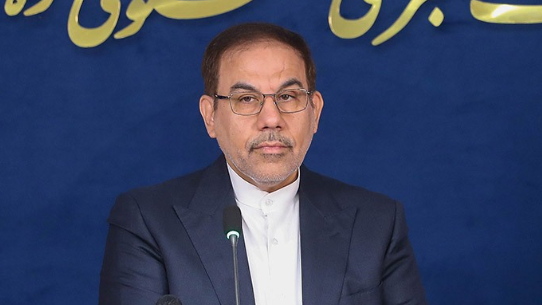
The second round of indirect talks between Iran and the United States will begin at around 9 a.m. Geneva time at the Omani embassy in Switzerland, Iranian state television IRIB reported.
The agenda will focus only on Iran’s nuclear program and lifting of US sanctions, IRIB said, adding that Iran has stressed it will preserve uranium enrichment.
Foreign Minister Abbas Araghchi is accompanied by his deputies for political affairs, legal and international affairs, and economic diplomacy, as well as the foreign ministry spokesperson, the report said.
Technical, legal and economic experts are also part of the Iranian negotiating team at this stage of the talks, according to IRIB.
Araghchi said in a social media message shortly after arriving in Geneva that “surrender to threats” was “absolutely not” on the agenda, and that he had traveled with “real initiatives” for a fair and balanced agreement.
He met his Omani counterpart in Geneva on Monday to present Iran’s positions within its negotiation framework, IRIB said.
The foreign minister is also due to attend and speak at a disarmament conference and hold other diplomatic meetings during his visit to Geneva, the report said.
About a quarter of cafés in parts of Iran have shut down in the past three months, according to a senior industry official who says protests, legal pressure and economic strain have severely affected the sector.
Ali Za’fari, deputy head of the coffee shop owners’ union, said cafés have faced waves of closures, legal cases and official sealing orders since protests began earlier this year.
“From the beginning of the protests, there were lots of reports about cafés – from sealing to judicial cases and the closure of many of them,” he was cited as saying by the website Kafenevesht.
As President Trump weighs options against Iran, he faces a legacy‑defining choice that could reshape the century, with the Islamic Republic at its most precarious moment since 1979 after years of US pressure and a determined popular uprising.
The emergence of Iran’s exiled Crown Prince Reza Pahlavi as the clear leader of the democratic opposition, should offer reassurance to President Trump, who is weary of protracted military entanglements. During the January uprising in Iran, Pahlavi’s name was the only one consistently chanted on Iran’s streets, even as the regime’s brutal crackdown claimed over 30,000 lives.