Iranian authorities are still carrying out a chain of crimes linked to the protest crackdown, including extrajudicial killings, deaths under torture and the systematic mistreatment of detainees and their families, according to the executive editor of Iran International TV.
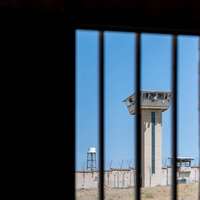
Asghar Ramezanpour said the violence has not ended with the suppression of mass demonstrations, warning that detainees face ongoing threats to their lives, denial of medical treatment and collective detention in unconventional holding facilities.
He also cited systematic harassment of families of those killed or detained, as well as continued efforts by authorities to block information from reaching the public.
Ramezanpour’s comments followed the release of a new report estimating that at least 36,500 people were killed in the crackdown on protests, with the deadliest violence concentrated on January 8 and 9, according to classified government documents seen by Iran International.

Iran’s state broadcaster has reached a point where control no longer translates into attention, exposing how years of manipulation, omission and distrust have hollowed out its authority and left a system that still fills airtime but is no longer watched.
Islamic Republic of Iran Broadcasting has lost the few audience it once assumed it possessed. According to a 2024 survey by the state-run ISPA, only 12.5 percent of Iranians follow the news through the state broadcaster, and 11.5 percent watch films and TV series on state TV.
Viewers have migrated elsewhere, disengaged, or stopped watching altogether. The result is a broadcaster that retains infrastructure and reach on paper but has been stripped of public relevance in practice.
This erosion matters because the system was never designed to retain an audience. Its function was to define reality by default, assuming passive consumption rather than active belief. Once viewers disengaged, repetition lost its force. Control of distribution no longer compensates for the absence of viewers.
During moments of nationwide crisis, when internet shutdowns leave citizens with few information sources, state television no longer functions as a reference point. Instead, it serves as a tool of narrative management: selecting what can be shown, omitting what cannot be explained, and substituting political reality with staged images of normalcy.
Broadcasting without an audience
For decades, Iran’s media model assumed a captive audience. State television and aligned agencies – particularly Guards-affiliated outlets such as Tasnim and Fars – operate not as independent newsrooms but as synchronized instruments of governance. Their role has been to speak in a single vocabulary, regardless of whether anyone is listening.
This model depends on two conditions: uninterrupted control of distribution and a public compelled to accept official framing as the baseline. Periods of unrest strain both. Authorities respond by narrowing the information space – blocking platforms, jamming opposition satellite networks, sidelining independent outlets and cutting internet access – to prevent images and testimony from circulating outside official filters.
Yet this strategy also exposes weakness. When viewers are forced back to a channel they no longer trust, omissions and contradictions become more visible, not less. Absence of alternatives does not restore authority; it highlights how little credibility remains.
Managing perception through omission
One of the clearest techniques used by Iranian state media during crises is substitution: replacing destabilizing political reality with curated depictions of normalcy. While protests across the country have been driven by explicit rejection of the political system – including chants calling for the overthrow of Supreme Leader Ali Khamenei – state television has persistently reframed unrest as a response to economic pressure.
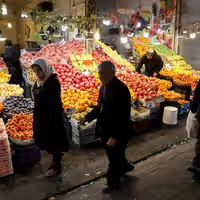
Instead of addressing violence, casualties or political slogans, IRIB dispatched reporters to city streets to highlight the availability of basic goods such as chicken meat. These segments emphasized supply while omitting that prices had surged several times over in recent weeks.
By focusing on availability rather than affordability – and by recasting a political uprising as economic grievance – the broadcasts constructed an image of stability. The effect was to depoliticize a movement defined not by price demands, but by calls for the end of the ruling order.
Alongside omission sits coercive performance: televised confessions aired by Fars and Tasnim from detained protesters presented as “leaders” of unrest. These segments are not designed to persuade skeptics. They function as demonstrations of power, signaling the state’s ability to script guilt and enforce compliance.
From staged crowds to synthetic reality
What distinguishes the current phase is not the presence of propaganda, but its tools. Traditional methods – recycled crowd shots, selective framing and inflated attendance claims – have long been used. What is new is reliance on digitally manipulated or AI-assisted content that blurs the line between documentation and fabrication.
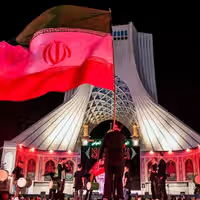
A recent example illustrates such shift. State media circulated a video presented as aerial helicopter footage of pro-government rallies, promoting it as evidence of mass popular support. Viewers quickly questioned its authenticity, pointing to visual inconsistencies in lighting, movement and composition, as well as the absence of basic helicopter safety features.
The state’s instinctive response – denial, external blame and further restriction – reinforced the cycle. Each tightening of control signaled anxiety. Each refusal to address substantive questions accelerated the erosion of credibility.
Whether every technical critique was correct was secondary. The significance lay in the reaction. Official visuals were no longer treated as authentic; they were examined as artifacts to be tested for manipulation.
This marked a shift from propaganda as persuasion to propaganda as evidence production. The aim was no longer only to frame events, but to manufacture visual proof. Paradoxically, the more sophisticated the techniques, the faster trust eroded.
Rasht Bazaar: A disaster told through one voice
The fire at Rasht’s central bazaar showed how narrative control operates under blackout conditions.
During protests in the northern city on January 8 and 9, a large section of the historic market caught fire as internet and phone services were cut, limiting residents’ ability to document events. State television retained full operational capacity and sent reporters to the scene while the fire was still burning.
Official coverage attributed the blaze to protesters and focused on material damage, repeatedly citing the number of shops destroyed. Casualty figures were absent. Later segments emphasized economic losses through interviews with selected shopkeepers and officials, while avoiding scrutiny of security forces.
Eyewitness testimony carried by Iran International described a sharply different sequence: crowds pushed toward the bazaar, people trapped by smoke in narrow corridors, and security forces firing on those emerging with raised hands to surrender.
In this environment, state broadcasting operated with technical access but without an audience willing to accept its account. The absence of open networks and real-time citizen reporting produced a one-sided evidentiary landscape shaped by coercion and selective disclosure.

Beyond access: a crisis of credibility
Iran’s media crisis is often framed as a problem of access – blocked platforms, censored outlets and restricted bandwidth. It is more fundamentally a crisis of credibility.
A broadcaster that has lost its viewers may still produce content, but it no longer produces belief. Control without an audience is not influence. And in politics, messages that are not believed might as well not be seen.

One year after US President Donald Trump returned to the White House and revived the "maximum pressure" sanctions on Iran from his first term, available data show the country’s energy exports remain largely intact.
Data from the commodity intelligence firm Kpler, seen by Iran International, show that in 2025 Iran delivered an average of 1.38 million barrels per day (bpd) of crude oil and gas condensate to China—a decline of just 7 percent compared with 2024.
After Iranian oil exports to Syria halted in December 2024, China effectively remained Tehran’s sole buyer of crude oil over the past year.
Unlike crude oil, Iran’s petroleum product exports—fuel oil (mazut), naphtha and liquefied petroleum gas (LPG)—are relatively diversified, with shipments mainly destined for China, the United Arab Emirates, Malaysia and Singapore.
According to Kpler, Iran exported an average of 190,000 bpd of naphtha and 256,000 bpd of fuel oil last year, a combined decline of about 13 percent compared with 2024.
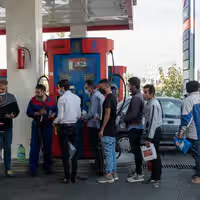
The drop, however, was driven not by tighter US sanctions but by Iran’s worsening domestic gas shortages, which forced power plants and industrial facilities to burn more fuel oil, reducing volumes available for export.
Data from tanker-tracking firms Kpler and Vortexa show that the modest decline in crude oil exports was offset by increased shipments of natural gas and LPG.
Iran has also continued exporting natural gas to Turkey and Iraq.
Tehran and Baghdad don’t publish official figures, but data from Turkey’s energy ministry indicate that natural gas imports from Iran increased about 9 percent during the first 11 months of last year compared with the same period in 2024.
One reason US sanctions have struggled to significantly curb Iran’s energy exports has been the continued operation of the so-called shadow fleet—a network of oil tankers that transport sanctioned crude through flag changes, disabled tracking systems, ship-to-ship transfers, and opaque ownership structures.
According to estimates by TankerTrackers, roughly 1,500 oil tankers worldwide were involved in shadow fleet activity last year, with nearly 40 percent linked to Iranian oil shipments.
Although the United States stepped up sanctions on such tankers in 2025, existing data suggests that hundreds of non-sanctioned vessels remain active in transporting Iranian oil through opaque trading routes and intermediary networks, undermining the enforcement capacity of US measures.
Further data from Kpler indicate that widespread domestic protests in Iran in recent weeks have had no noticeable impact on the country’s oil and petroleum product export volumes.
While China has remained the sole buyer of Iranian crude oil and condensate, the United Arab Emirates—one of Washington’s closest regional allies—has emerged as the largest importer of Iranian fuel oil, accounting for nearly 70 percent of those exports.
Estimates by Iran International put the total value of Iran’s exports of crude oil, petroleum products, and natural gas last year—excluding discounts and the costs of sanctions evasion—at roughly $60 billion.
The figure highlights the gap between early US projections that Iran’s oil exports would collapse by as much as 90 percent and the far more limited impact visible in the data so far.

Russia likely views Iran’s mass anti-regime protests with deep unease, but may ultimately adapt just as it did in Syria to preserve influence whether the Islamic Republic survives or a new political order emerges.
After the loss of longtime Russian allies Bashar al-Assad in Syria and Nicolas Maduro in Venezuela, the Kremlin can hardly wish to suffer further loss of an ally in Tehran.
Supreme Leader Ali Khamenei may yet remain in power—thanks partly to ongoing Russian-Iranian cooperation. But even if he does not, Vladimir Putin may still be able to salvage the situation.
Moscow, according to an analysis by the Carnegie Endowment, does not seem likely to intervene militarily in Iran to defend the Islamic Republic against its opponents. Russian forces, after all, are preoccupied with the war in Ukraine.
Yet, as detailed in an article in Foreign Policy, Moscow has long provided Tehran with electronic and other tools of repression. Since the Iranian demonstrators are not an armed opposition, Russian military intervention may not be needed to contain or suppress the unrest.
The situation might change, of course, if US president Donald Trump follows through on his threats to intervene in Iran. Both Tehran and Moscow want to avoid this. But how?
While Putin himself has been remarkably quiet about events in Iran, the one initiative Russia has engaged in so far is mediation between Iran and Israel. Both governments have reportedly conveyed to Moscow that neither will preemptively attack the other.
This Russian mediation effort may be highly important for protecting the Islamic Republic. Unlike just before and during the June 2025 twelve-day war—when Israeli Prime Minister Benjamin Netanyahu was urging the United States to join attacks on Iran—Netanyahu is now reportedly counseling restraint in Washington regarding military intervention.
While Israel has long opposed Iran’s acquisition of nuclear weapons, Netanyahu may prefer that a weakened Islamic Republic remain in power rather than be overthrown and replaced by either a more hostile regime, or one more closely aligned with the West in ways Israel cannot shape.
Netanyahu has already found himself at cross-purposes with Trump over Syria, where the United States has sought to cooperate with the new leadership under Ahmed al-Sharaa, while Israel views the government in Damascus as a threat.
Moscow’s coordination with Israel may therefore increase Putin’s ability to dissuade Trump from intervening in Iran.
For Moscow, the best outcome in the current crisis is that the Islamic Republic defeats its internal opponents and survives. But Russia may still retain significant influence and cooperation with Iran after a change in leadership—or even regime.
In Syria, Moscow has kept its naval and air bases despite the fall of Assad. In Venezuela, Russia has moved quickly to re-engage with the post-Maduro authorities, seeking to preserve economic and strategic ties despite a major political rupture.
If Khamenei falls but the Islamic Republic remains intact, Tehran is likely to continue cooperating with Russia despite any newfound willingness to work with the United States.
Even if the Islamic Republic collapses, its replacement will almost certainly continue to envision Iran as a regional great power.
A new Iranian government may pursue more cooperative relations with Washington while still seeking ties with Russia, China, and others—much as new leaderships elsewhere have attempted to diversify their external partnerships.
Moscow, for its part, will actively seek cooperation with any new authorities in Tehran to prevent Iran from becoming overly dependent on the West.
With regard to Ukraine, Putin has shown little flexibility, pressing ahead despite extraordinary human and financial costs. But when it comes to supporting anti-Western allies in the Global South, Moscow has been more pragmatic.
The demands of the war in Ukraine limit Russia’s ability to defend embattled partners elsewhere, while Putin’s long-standing efforts to cultivate relations with traditionally pro-Western governments have reduced the strategic necessity of rigid ideological allies.
It is undoubtedly embarrassing for Moscow to see longtime partners fall from power, but this is hardly unique to Russia—as the collapse of the Western-backed government in Afghanistan demonstrated.
Putin appears to understand that the downfall of any government in the Global South is typically followed by competition among outside powers for influence. This is not a moment to lament losses, but to adapt—to engage new leaders eager to keep their options open rather than rely on a single great-power patron.
Moscow’s preferred outcome in Iran remains the survival of the Islamic Republic and the continuation of close cooperation. But if leadership—or even regime—change occurs, Russia will move quickly to adjust.
If Putin’s success in retaining Russian bases in Syria despite backing the losing side is any guide, he may well succeed in doing so in Iran as well.

The unprecedented brutal crackdown on recent protests in Iran suggests Tehran's rulers are no longer attempting to govern a discontented society but are in open conflict with it.
The large-scale killing of protesters may look like a panicked security response, but it is better understood as a calculated effort to destroy protest both on the streets and in people’s minds.
By deploying overwhelming force, the state is seeking to reframe protest as an act that guarantees death—so dangerous that it becomes irrational to attempt.
This logic has been reinforced by the nationwide internet shutdown. Cutting communication is not simply about hiding abuses from the outside world; it is about isolating protesters from one another, breaking networks of trust, and leaving individuals to face fear alone.
When information collapses, collective will fractures. The aim is to ensure that even before a demonstration forms, the decision to join it feels like a solitary, suicidal gamble.
The state has effectively pushed society into an impossible position, where enduring daily life is as unpleasant—and as unimaginable—as any attempt to change it. This paralysis is not accidental. It is Tehran’s endgame, and increasingly its only means of survival.
'Us against them'
The violence of January 9 and 10 served another purpose as well: consolidating power from within.
By tying the survival of the political system to the actions of those carrying out repression, the state has produced what might be called forced loyalty. Security forces and affiliated actors are drawn into violence so severe that there is no path back.
Once hands are stained with blood, survival becomes inseparable from the survival of the system itself. This creates a hardened core of enforcers whose only perceived option is to push forward, no matter the cost.
This dynamic encourages a “scorched earth” approach. The conflict is no longer managed or contained; it is framed as a total struggle between “us” and “them,” with protesters cast as enemies rather than citizens.
In such a framework, compromise is not weakness—it is betrayal. Mediation disappears. Violence becomes the only remaining language.
Murky repression
By ignoring collective demands and stripping the public of political relevance, the Islamic Republic has effectively dismantled politics itself. What remains is not governance, but a permanent security posture.
The use of plainclothes forces and paramilitary units fits squarely within this logic. By blurring the boundary between state and society, the authorities have sought to reframe repression as “people against people.”
Protesters are portrayed as violent elements within society, already dehumanized through labels such as “rioters” or “terrorists.” This allows the state to deflect responsibility while deepening social fragmentation.
Slain senior Revolutionary Guard commander Hossein Hamedani once boasted about mobilizing convicts and thugs to suppress protests. “They are not afraid of blood,” he said.
Their role is not only physical repression but also narrative production: muddying responsibility, normalizing brutality, and casting doubt on the moral legitimacy of protest itself. Their unofficial status also provides the state with plausible deniability.
Burned bridges
At the same time, the machinery of repression has become increasingly bureaucratic. Killings are absorbed into routine procedure; violence is carried out as a duty—lawful, necessary, even sacred.
Statements from military and security institutions during this period make clear that the deaths of protesters are not seen as a national loss, but as a means of preserving the political order.
This moment also exposes a deeper vulnerability. A system that securitizes everything produces nothing but control and coercion. Maintaining such a structure requires constant expenditure—of resources, manpower, and legitimacy—both at home and abroad.
A crisis in the domestic security sphere cannot remain contained indefinitely; it will eventually spill outward, generating external pressure and international consequences.
What is unfolding in Iran is therefore not a temporary crackdown. It is the outcome of a long shift from governing society to confronting it as an enemy.
It is almost impossible to predict where Iran is headed, but its rulers appear to have bet on the iron fist—suspending politics for a permanent emergency and burning all bridges back to mediation and consent.

The future of the Islamic Republic is unresolved, but if and when change comes, Iran’s return to global trade would carry far-reaching consequences for the region’s economy.
A deadly crackdown may have quieted Iran’s streets for now, but the state appears increasingly brittle, with no clear answer to a deepening economic crisis that is eroding living standards and confidence.
External pressures are also likely to intensify after Tehran’s crackdown on protesters, narrowing revenue channels and shrinking the government’s economic room to maneuver.
Left unresolved, those pressures are likely to generate further unrest and, in time, a political transition that seeks normalization with the world.
A normalized Iran—able to trade, borrow, insure cargoes and receive investment like other upper-middle-income economies—would likely enjoy a large upside, given how much of its economy has been operating below potential.
Its advantages are straightforward: scale, in the form of a large domestic consumer market; a relatively diversified industrial base by regional standards; deep energy and petrochemical capacity; and a geographic position that could turn the country into a natural junction linking the Persian Gulf, the Caucasus, Central Asia and Turkey.
The most immediate gains would come from energy exports unleashed from sanctions and sharply lower transaction costs. Over time, however, the larger prize would be productivity. Access to global supply chains and affordable capital, combined with Iran’s labor force, could lift output across all sectors.
None of this would be automatic. The payoff would depend on restoring basic economic credibility: stable money, predictable regulation and a solid banking system.
Turkey stands out as the clearest short-term beneficiary of such a shift in Iran. Proximity, road links and established distribution networks would allow Turkish firms to move quickly, while airlines and tourism operators would likely benefit from a surge in outbound Iranian travel.
Iraq would gain from formal payment channels and more predictable energy trade, easing pressure on the dinar and reducing transaction costs.
Pakistan’s upside would lie in infrastructure: if sanctions risk were removed, long-stalled energy links could become commercially viable, easing power constraints and lowering industrial costs.
The United Arab Emirates would likely lose some of the high margins associated with sanctions-bypass trade but gain as a platform where Iran-bound capital is raised, structured and eventually deployed.
Azerbaijan could benefit if Iran became a reliable bridge to Russia and Eurasia through freight, swaps and grid connections.
Israel could also emerge as a beneficiary. A normalized Iran would lower the region’s risk premium and potentially reduce energy costs, while Israeli firms—particularly in technology and water and agricultural solutions—could potentially compete for contracts in a large, untapped market.
The clearest losers would be producers and hubs that have quietly benefited from Iran’s isolation.
In energy markets, a sanctions-free Iran re-entering at scale would intensify competition between price and market share, leaving oil-dependent exporters such as Saudi Arabia and Kuwait more exposed to revenue volatility and fiscal trade-offs.
In gas, Qatar’s dominance in Asian LNG contracting could face pressure as investment and technology return to Iran’s side of South Pars, potentially narrowing bargaining power and affecting pricing over time.
Iran’s reintegration would also challenge business models built on being indispensable detours. Kuwait, for example, could find that costly hub ambitions become less compelling if Iraq–Iran rail and port combinations offered cheaper trade routes.
More subtly, some early beneficiaries could face second-round competition once Iran begins producing and exporting at scale.
Turkey may initially sell heavily into the Iranian market, but over time a revitalized Iranian manufacturing sector could begin displacing Turkish goods in nearby markets.
For Pakistan, cheaper Iranian energy would be an opportunity, but a fully functional Chabahar and Iran-centered transit corridors could divert trade away from Gwadar unless Pakistan integrates its infrastructure into those routes.
If Iran were to return as a normal economic actor, regional debates would shift from ideology to competition. The central question may no longer be who can contain Tehran, but who can compete with it.
In that environment, the advantage would likely accrue to states that adapt fastest, moving away from protected niches and easy rents toward productivity, technology and integration.
A reopened Iran would not simply add another participant to the regional economy; it would change the structure of the marketplace itself.