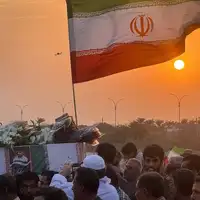
Female supporters of Iran's new Supreme Leader Mojtaba Khamenei gather in northeaster city of Mashhad, March 9, 2026
Mojtaba Khamenei’s rise to power amid a war with Israel and the United States—in which his parents, wife and a daughter were killed—has led many to wonder whether his leadership will be shaped more by vengeance than by strategy or reconciliation.
Inside Iran, political figures who disappeared from public view after the February 28 strike are gradually re-emerging through statements congratulating him on his elevation to leadership.
Among them are Mohammad Mohammadi Golpayegani, the former leader’s chief of staff, and Asghar Mirhejazi, his powerful security chief, who issued a rare joint message despite earlier reports that Mirhejazi had been killed in the attack.
Former President Mahmoud Ahmadinejad, also rumored to have died in a strike on his home, released a similar message.
These congratulatory notes appeared during one of the most solemn Shiite mourning periods, commemorating Imam Ali. At the same time, part of the country is mourning the former leader, while Mojtaba himself is grieving the loss of close family members.
State officials, including President Masoud Pezeshkian, Majles Speaker Mohammad Bagher Ghalibaf and security chief Ali Larijani, have recently appeared in simple, Zelensky-style military uniforms without insignia. All three have pledged allegiance to Mojtaba.
Social media has filled with dark humor about Ali Khamenei’s death and Mojtaba’s life expectancy.
More serious posts include the resurfacing of an old video circulated widely on X, reportedly with IRGC encouragement, in which reformist politician Faezeh Hashemi says she would prefer Mojtaba to the “fanatic elderly candidates” for leadership. Like others, she suggested he might introduce reforms.
Mojtaba’s record since 2005, however—particularly during elections and protest crackdowns—offers little evidence of reformist tendencies. Many analysts warn that Iran may become even more radicalized under his rule, noting his long-standing ties to vigilante groups involved in suppressing dissent.
Debate over hereditary succession has intensified. Critics argue that dynastic leadership contradicts the Islamic Republic’s founding principles. Others counter that hereditary succession mirrors the lineage of the Twelve Imams.
Members of the first group note that Khomeini’s son Ahmad was never allowed to inherit power—an argument echoed implicitly by some of Khomeini’s descendants, including his great-grandson Ali, on X.
Former IRGC commander Mohsen Rezaei and former state TV chief and tourism minister Ezzatollah Zarghami have both said they have been close friends of Mojtaba for years, describing him as “modest” and “simple.”
Rezaei, who appeared frequently on state television after Khamenei’s death, has promised to share more about Mojtaba in the coming days.
State TV’s IRINN channel has twice acknowledged that Mojtaba’s leadership faced serious resistance within the Assembly of Experts. In an unusual live broadcast comment, one analyst even suggested opposition to Mojtaba might emerge from within his own support base.
Some media outlets, including Khabar Online, cautiously suggested this week that Mojtaba’s rise could signal a more prolonged and unpredictable phase of conflict, reflecting broader uncertainty inside Iran’s political establishment over the direction his leadership may take.
Iran’s shutdown of international internet access has entered its tenth day, leaving millions cut off from global communication and raising fears the blackout is putting civilians at risk during wartime.
According to the internet monitoring group NetBlocks, ordinary users’ access to the global internet inside Iran remains at roughly one percent, effectively isolating most citizens from international platforms.
The blackout — the third nationwide shutdown since the 12-day war in June — has severely limited the flow of information and made it nearly impossible for citizens to receive warnings about potential attacks or communicate with relatives.
Many Iranians who manage intermittent access through virtual private networks (VPNs) say the wartime blackout has deepened anxiety and isolation.
Several users have described the shutdown as comparable to a war crime because it disrupts civilian communication and limits access to critical information during attacks.
‘War crime’
One user wrote on X: “If a government deliberately cuts communications while providing no warning or protection mechanisms for civilians, and this leads to widespread harm, it could be examined as a serious violation of international obligations and in some circumstances even a war crime.”
Critics say authorities have not introduced any nationwide warning system to protect civilians from airstrikes. One user wrote that what they expected from government SMS alerts was “to tell me to take shelter because they’re bombing the street next to me—not to report the price of oil.”
Iranian newspaper Shargh highlighted the psychological toll in an article titled “The Sound of Bombs, the Silence of the Internet: The Iranian Psyche in Crisis.”
The paper wrote: “Restrictions on internet access and the circulation of incomplete information have made the true picture of the crisis more complex. Every rumor, every partial analysis and every tense environment erodes the collective psyche and intensifies the sense of insecurity.”
“When people face only the sound of fighter jets in silence and with limited information, the psychological impact of this crisis can be as significant as the physical destruction,” the article added.
Privileged access
Beyond the immediate risks, the shutdown has also inflicted economic damage, forcing many online businesses, freelancers and digital services to halt operations.
Heavy signal jamming has also made Persian-language satellite television channels difficult or impossible to receive in many areas. Without access to often costly VPNs, which only a minority can afford, state television has effectively become the primary source of information for many Iranians during wartime.
Government institutions and state-affiliated media have been sending mass text messages warning that those who access international internet services could face legal consequences, while also distributing official narratives and government-approved news.
Despite the restrictions on the general population, critics say some government figures—including Mohammad Marandi, who continues posting online and giving interviews to international media—retain unrestricted access.
Diaspora activist Azadeh Davachi wrote: “They cut the internet for the people while they themselves sit online tweeting and threatening the public. If you really care about the people, at least restore the internet.”
Calls for help
For millions of Iranians abroad, the blackout has meant losing nearly all contact with relatives inside the country. Many say they have had no news from family members since the war began.
International phone calls are also heavily restricted, often working only from inside Iran to outside and frequently dropping in less than a minute.
For diaspora communities already anxiously following the conflict, the prolonged silence has only deepened fears for loved ones inside Iran.
The prolonged shutdown has prompted calls from activists abroad for emergency connectivity solutions. Some diaspora campaigners have launched an online appeal using the hashtag DirectToCellForIran, urging Elon Musk to activate Starlink’s Direct-to-Cell service so mobile phones could connect directly to satellite internet.
One activist wrote: “We urge you to activate Starlink Direct-to-Cell in Iran, even on a trial or testing basis. This could be a vital solution for internet connectivity.”
Why would anyone celebrate bombs falling on their own country? The question were widely asked after videos emerged showing some Iranians cheering strikes on regime targets.
But trauma specialists say those reactions reflect something deeper: decades of repression that have fundamentally shaped how many Iranians perceive danger. For many inside the country, the regime itself—not the bombs—has long been the most immediate threat to their lives.
The discussion gained attention after a viral Instagram reel by Iranian-origin actor and producer Tara Grammy. In the video, Grammy recounts a conversation a friend in Iran said they had with their therapist—a moment that appeared to capture what many Iranians had already been expressing online.
According to Grammy, her friend admitted they found themselves celebrating the sound of bombs hitting Tehran—something that surprised even them. The therapist’s explanation, she said, was psychological.
“When your entire life you have lived under the constant threat of the Islamic Republic—arrests, prison, executions, morality police, surveillance, people disappearing after exercising their right to protest—your brain learns to fear the thing that actually controls your life,” Grammy said in the video.
“Psychologists call this threat normalization.”
The concept describes how people living under long-term repression can come to see the greatest danger not as an external threat such as war, but the authority that controls their daily lives.
To better understand the reaction, Iran International spoke with two therapists who work with Iranians affected by political repression and trauma.
Clinical psychotherapist Azadeh Afsahi, founder of Iran House and an NGO in contact with political prisoners inside Iran, said many reactions seen online cannot be understood without recognizing the depth of suffering many Iranians have endured.
“I think what we need to look at is the big picture: why is it that a nation is celebrating what the whole world fears—bombs?” Afsahi said.
“For them, the bomb can feel like a form of liberation, as sad as that sounds. For 47 years they have lived under oppression without meaningful help.”
Afsahi said many Iranians understand the risks and potential loss of life associated with conflict. But for some, the possibility that the Islamic Republic could finally fall outweighs those fears.
According to Afsahi, many messages she has received from inside Iran reflect a mix of fear, anxiety and renewed hope. After recent crackdowns and mass killings during protests, she said many Iranians had fallen into what she described as a “collective depression.”
“Right now, despite their houses being bombed and loved ones being killed, there is still an element of hope,” she said. “Because the pain is being seen internationally, and somebody is intervening.”
Another trauma counselor, Farnaz Farrokhi-Holmes, said decades of repression have left many Iranians living with complex trauma—a condition caused by prolonged exposure to violence and fear.
“When trauma happens repeatedly, the brain begins to normalize the threats around it,” she explained.
Over time, she said, the brain adapts to survive in an environment of constant danger.
“The bombs are no longer perceived as the primary threat. The imminent threat is the IRGC—its survival and its continued power.”
Farrokhi-Holmes said she is currently providing pro bono counseling to a young Iranian woman who survived the January 2026 protest crackdowns and later escaped the country after witnessing security forces shoot demonstrators.
The trauma many Iranians carry, she said, is difficult for outsiders to fully grasp. Unless someone has lived under a system where arrests, violence and executions can happen without warning, the psychological response may be hard to understand.
Both therapists emphasized that reactions inside Iran remain complex. Many people are afraid. Many are grieving. But some, they say, also feel something absent for years: hope.
As Afsahi put it, many Iranians are not celebrating war itself but the possibility that decades of repression could finally end.
“They’re not happy about the war,” she said. “They are happy about the possibility of liberation.”
By elevating Mojtaba Khamenei—a figure most Iranians have never heard speak—the Islamic Republic has completed a long drift away from popular legitimacy.
For years, Mojtaba has operated largely behind the scenes within Iran’s political and security elite. The only public recording of his voice is a one-minute video in which he tells seminary students that his classes have been cancelled.
He appears to lack any significant public profile or popular following among the wider population—an element the Islamic Republic now seems increasingly unconcerned about.
Mojtaba played a significant role in the election of Mahmoud Ahmadinejad in 2005 and has long been seen as influential in the expansion of the Revolutionary Guards’ intelligence and economic reach, as well as in policies used to suppress dissent.
His rise reflects the priorities of a system that now appears to value internal cohesion and security ties more than public stature.
The issue of choosing the supreme leader has always posed both a philosophical and practical challenge in the Islamic Republic. If the leader is the representative of God on earth and a successor to the Prophet Mohammad, the question is how that authority is conferred: through popular recognition or divine designation.
These two impulses have shaped debates over the nature of the Islamic Republic for decades. One emphasizes the system’s republican and electoral elements; the other gives primacy to its theocratic foundations.
Popularity factor
The question barely arose when Ruhollah Khomeini came to power. He embodied both elements: he enjoyed broad popular support and was among the most prominent religious figures of his time.
Khomeini’s ascendancy preceded the formal codification of the office of supreme leader. The robe, as a Persian expression would have it, was cut to his measure
This was reflected in the first constitution adopted after the 1979 revolution, which described the leader as one “recognized and accepted by the overwhelming majority of the people,” as was the case with Khomeini.
That provision was revised in 1989, when Ali Khamenei was selected as the second supreme leader. The reference to popular acceptance was removed, assigning the decision solely to the Assembly of Experts.
Yet popularity still mattered. Ali Khamenei did not hold a high religious rank at the time and was not yet an ayatollah. But after eight years as president he was a familiar national figure, and public recognition and political experience were judged more important than clerical standing.
Staying the course
The selection of Mojtaba suggests those considerations now carry far less weight. He has been elevated not because of religious stature, executive experience or public standing, but largely because of his ties to the security establishment.
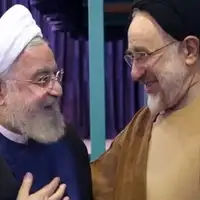
If the Islamic Republic had followed its previous trajectory, it might have been expected to choose one of the former cleric presidents—most plausibly Hassan Rouhani, who in recent months appeared to be positioning himself for such a role.
By choosing Mojtaba, the Islamic Republic has effectively crossed a threshold. The system that once defined itself in opposition to hereditary rule now appears willing to tolerate it, prioritizing continuity and control over ideological consistency.
While officials have presented Mojtaba’s appointment as an emergency wartime decision, his decades of behind-the-scenes activity suggest a far longer process of consolidation.
His succession also narrows the already limited space for fundamental change.
As Iran confronts war with the United States and Israel abroad while continuing to face deep mistrust at home, the balance of power now points firmly toward continuity—and toward a system with little interest in resolving tensions either with its own society or with its adversaries.
Israeli military images of an underground tunnel complex attributed to Ali Khamenei appear to confirm long-circulating rumors of a network stretching several kilometers beneath central Tehran, under medical centers, schools, and residential neighborhoods.
On March 5, shortly after heavy strikes targeted areas near the Pasteur government complex in central Tehran – a district that houses the Iranian presidency and several key government offices – the Israeli military published a video depicting what it described as Khamenei’s underground bunker system.
The complex resembles a subterranean city. According to the video and accompanying imagery, the facility appears to have been used as a secure shelter for Iran’s leadership and may still be used by remaining officials following Khamenei’s death.
A tunnel network stretching nearly five kilometers
Analysis of the imagery released by the Israeli military, using publicly available online mapping tools, suggests the tunnel network extends close to five kilometers in length.
To understand the scale of the project, it helps to compare it with ordinary infrastructure construction in Tehran.
According to statements by Tehran mayor Alireza Zakani and members of the Tehran City Council, building one kilometer of metro tunnel in Tehran currently costs between 5,000 and 6,000 billion tomans – roughly $30-36 million at an exchange rate of about 166,000 tomans per dollar.
This estimate covers only the excavation and structural work. It does not include interior finishing, equipment, ventilation systems, or other underground facilities.
Based on those figures, building five kilometers of underground tunnel would cost about 25,000 to 30,000 billion tomans, or roughly $150-180 million.
Given the secrecy and security requirements surrounding such a project, the actual cost was likely significantly higher than that of a standard transportation tunnel.
Under normal conditions, tunneling contractors in Tehran can excavate around 10 meters per day. At that pace, building a five-kilometer tunnel system would take at least 500 days – roughly 17 months.
Considering the classified nature of the project and the additional infrastructure involved, the construction timeline may have been considerably longer.
The core of the complex: beneath a medical facility
The video appears to place the central section of the bunker complex southwest of the presidential compound in the Pasteur district.
The site sits directly beneath the Shahid Shourideh Medical Center, a clinic affiliated with Iran’s Ministry of Agriculture. The facility has operated since 1985 and effectively functions as part of the broader Pasteur government complex.
Based on the height of vehicle ramps and the dimensions of vehicles visible in the imagery, the central installation appears to be located 40 to 50 meters underground.
From there, the tunnel system extends northwest toward another entrance near the end of Rajabi Street, roughly 200 meters from the Shourideh hospital complex.
Shahid Shourideh Medical Center, which is affiliated with Iran’s Ministry of Agriculture, sits above what appears to be the main core of Khamenei’s bunker complex, estimated to be 40 to 50 meters underground.
Easternmost entrance: next to an elementary school
The easternmost known entrance to the tunnel network appears to be located in the Sheikh Hadi neighborhood, along Valiasr Street, beneath the Jami multi-story parking garage.
This parking structure stands directly beside Hejrat Girls’ Elementary School, while Saheb a-Zaman Boys’ Elementary School lies about 100 meters away.
At the northern edge of the network sits another multi-story garage known as the 12 Farvardin Parking Complex, located near the intersection of Jomhouri Eslami Street and Danesh Street.
Both parking structures were inaugurated on December 4, 2017, as part of a paired urban development project attended by Tehran’s then-mayor Mohammad Najafi.
One entrance to the tunnel network appears to lie beneath a building opposite the Karimeh Ahl-e Beit clinic near Hor Square in central Tehran.
An entrance beneath a mosque, beside a school
Another entrance appears west of Pasteur Square, between Hor Metro Station and the square itself.
This access point lies beneath Tohid Mosque. Adjacent to the mosque is a building, and behind it stands Shahid Kadkhodaei Boys’ Elementary School.
Roughly 200 meters away, another possible entrance is located on the southwestern side of Pasteur Square, along a street that houses the AJA University of Command and Staff – the staff college of the Islamic Republic of Iran Army.
Nearby are the Karimeh Ahl-e Beit dental clinic and medical clinic, as well as the 29 Farvardin Pharmacy, which is affiliated with Iran’s army.
The easternmost entrance to the tunnel complex appears to lie beneath the Jami multi-story parking garage, directly next to Hejrat Girls’ Elementary School.
Western entrance beside a football school
The westernmost identified entrance to the tunnel network appears to lie beneath a small building near an office responsible for issuing hunting weapon permits.
Immediately next to the building, sharing a wall, is a football training school, while dense residential complexes surround the area.
This location sits near the intersection of Sepah and Kamali streets, along Kashan Street, at the end of Fourth Street.
The tunnels also lie close to the Yas and Namjou residential complexes, which are affiliated with the Iranian army.
One of the entrances to the tunnel network appears to lie beneath a mosque next to Shahid Kadkhodaei Boys’ Elementary School.
Mojtaba Khamenei, long known as the discreet and powerful son of slain Ayatollah Ali Khamenei, was announced early Monday as Iran’s new Supreme Leader at a time when the country is at war and Israel has openly vowed to target any successor to his father.
For decades Mojtaba operated largely out of public view while building deep ties across the Islamic Republic’s political and security apparatus. His rise marks the formal emergence of a figure who had already been widely regarded as one of the most influential actors behind the scenes of Iran’s ruling establishment.
Mojtaba, the second son of Ali Khamenei, has long been considered the only member of his family with clear political ambitions. His younger brother, Masoud, worked only in administrative roles within their father’s office, while his other two brothers and two sisters are not known to have held political or bureaucratic positions.