Iran to attend DC World Cup draw as its fans due to be barred

Iran will attend the draw for the 2026 World Cup in Washington DC on Friday after initially threating a boycott, while a travel ban looks set to bar Iranian fans.

Iran will attend the draw for the 2026 World Cup in Washington DC on Friday after initially threating a boycott, while a travel ban looks set to bar Iranian fans.
Iran had sought nine visas for its delegation but only four were granted, including for head coach Amir Ghalenoei, spokesman Amir Mehdi Alavi said on Thursday.
Mehdi Taj, the federation’s president, did not receive a visa.
Earlier in the week, Iran's football authorities said they would boycott a draw for the US-hosted 2026 World Cup in Washington DC slated for Friday after visas for two top officials were rejected.
But on Thursday, Iranian media reported that the federation will now send Ghalenoei and Omid Jamali, the head of its international relations office, to attend the draw.
The White House on Wednesday said Iran’s national team will be allowed to enter the US for the World Cup but suggested that Iranian fans will be barred, citing existing travel bans and declined to rule out immigration raids at matches.
“The President has, in his executive order, certainly named Iran as one of the countries whose teams will be exempt to come here,” the head of the White House task force on the World Cup, Andrew Giuliani, told reporters.
Asked whether there would be ICE raids at matches, Giuliani said “the President does not rule out anything that will help make American citizens safer.”
Iran will play in their fourth straight World Cup finals when the tournament opens across the United States, Canada and Mexico on June 11.
Football fandom is endemic in Iran despite only lukewarm endorsement by the ruling Islamic theocracy and its team regularly qualifies for the World Cup.
Iran’s government said inflation stems from unfunded promises financed by unbacked money printing and bank credit, adding it has capped budget growth at about 2% and halted most other outlays in a bid to curb price pressures.
“The moment we print money without backing, inflation rises and people pay the price,” President Masoud Pezeshkian said during a visit to the southwestern city of Yasuj.
Monetary expansion driven by unfunded pledges, he said, “takes money from people’s pockets” and intensifies existing pressures.
Economists widely link Iran’s continued inflation and the collapse of the rial to persistent reliance on money creation.
The government’s use of bank borrowing and indirect central bank financing expands the monetary base without matching growth in real output, entrenching price instability.
Iran’s rial continued to weaken on Wednesday in a sign of flagging confidence in the country's troubled economy, with the US dollar trading at an all-time high above 1.2 million rials according to local exchange-rate websites.


Rapid liquidity growth
Iran's broad money doubled during the 2.5-year presidency of Ebrahim Raisi, according to statistics from the country’s Central Bank (CBI).
Broad money, the total money supply within an economy, is the primary cause of rampant inflation in Iran.
Over the past years, Iran’s Central Bank has ceased publishing government budget reports.
Local media tracking shows that in the past year, food prices in Iran have risen by an average of more than 66%.
According to the Supreme Audit Court of Iran, however, it is estimated that since 2018 – when the US withdrew from the Joint Comprehensive Plan of Action (JCPOA) and imposed sanctions on Iran’s oil exports – the government's annual budget deficit has consistently exceeded 30%.
The Iranian government has been compensating the budget deficit by borrowing money, in particular, from the banking system.

Budget capped
Pezeshkian said his administration set an unprecedented ceiling on expenditure. “For the first time, we have kept budget growth to around two percent and cut the rest,” he said.
Some recipients, he added, had protested reduced allocations but argued that expanding spending without resources would heighten inflation rather than solve shortages.
He added that the government could not “spend from people’s pockets” for short-term gains and warned that raising expectations without funding would deepen internal disputes.
“If we think the situation is fine, that the government has money and is not giving it, or if we only raise our own expectations, we will increase disagreements and conflicts.”

Iran’s judiciary chief said the current approach to hijab will not continue, outlining coordinated steps with police, prosecutors and regulators to curb what authorities call social disorders.
Part of today’s social disorder, Gholamhossein Mohseni Ejei said, stemmed from conduct related to hijab.
“This situation should not continue, and none of us can be indifferent toward what the law and the expectations of religious citizens demand,” Ejei added.
Intelligence bodies, Ejei said, had received orders to identify groups he described as “organized promoters of improper hijab,” and that police were obligated to intervene when offenses were openly visible.
“With such cases there will be legal action,” he warned. Restaurants, cafés and other venues had been warned they would face firm measures if violations occurred on their premises, he added, noting that closures would no longer be limited to brief periods.
He also said government bodies involved in public ceremonies would be held accountable if “unlawful behavior” occurred at their events.
Lawmakers press for firmer action
155 lawmakers on Tuesday wrote to Ejei accusing the judiciary of passivity toward growing noncompliance with the dress rules.
They said uneven enforcement by executive bodies had fueled what they called social disorder, urging the courts to “restore governance” by ensuring all institutions apply existing regulations consistently.
The lawmakers also criticized some judges and officials for what they described as lapses "that had allowed moral decline and social abnormalities to spread," urging action within the current legal framework.


Tensions intensified after a leaked audio file suggested Supreme Leader Ali Khamenei had issued written instructions for stronger implementation of the mandatory hijab following an intelligence ministry warning about declining discipline.
Officials confirmed the directive but rejected suggestions of cabinet disagreement, while conservative outlets described it as an explicit call for decisive measures.
Despite escalating pressure, many women and girls continue to appear unveiled in public spaces.
In numerous districts of the capital, uncovered women now form the majority on streets and in shops, while widely shared videos show mixed gatherings, music and casual clothing.

Iraq will remove Lebanon’s Hezbollah and Yemen’s Houthis from an asset-freeze list after the Iran-aligned groups were included in an official publication, officials said on Thursday.
The Justice Ministry’s gazette carried a committee decision freezing funds of designated entities and, in error, named Hezbollah and the Houthis, according to Reuters.
A letter from the acting deputy governor of the Central Bank asked the Committee for the Freezing of Terrorists’ Funds to delete the clause, two bank sources was cited by the outlet.
Tasnim, an outlet close to Iran’s IRGC, framed Baghdad’s correction as a climbdown under intense public and political pressure, saying Iraq’s Central Bank “backed off” after outrage over the Gazette notice.
Prime Minister Mohammed Shia’ al-Sudani said Iraq had approved freezing only the assets of entities and individuals linked to Islamic State and al Qaeda, in line with UN Security Council Resolution 1373 and following a request from Malaysia.
He ordered an urgent investigation “to hold accountable those responsible” for the mistake and stressed Baghdad’s stance on Lebanon and the Palestinians was “principled and not subject to exaggeration.”
The clarification followed publication in issue No. 4848 of the Iraqi Gazette of Decision No. 61 by the Committee for the Freezing of Terrorists’ Assets, which named 24 entities and ordered their funds frozen.
The committee is chaired by Central Bank Governor Ali Mohsen al-Alaq, with members from the anti-money-laundering office and the ministries of finance, interior, foreign affairs, justice, trade, communications, and science and technology, as well as the integrity, intelligence and counter-terrorism bodies.
The committee said on Thursday that the publication was meant to cover ISIS- and al-Qaeda-related listings only and that unrelated groups appeared because the list was released before final revisions were completed. It said a corrected version will be printed in the official gazette.
Publication of the committee’s decision in the Justice Ministry’s gazette led some outlets to report that Hezbollah and the Houthis had been designated terrorist entities, prompting denunciations from politicians aligned with Iran-backed factions.
Hussain Mouanes, a lawmaker from a bloc affiliated with Kataeb Hezbollah, called the government’s conduct “irresponsible” and accused it of failing to defend Iraq’s sovereignty.
Lawmaker Mustafa Sanad, who shared the gazette and is aligned with Popular Mobilization Forces-linked blocs, condemned the designations on social media.


Iraq has balanced relations with both the United States and Iran, but faces mounting risks to its financial system if it falls foul of global sanctions regimes.
Hezbollah and the Houthis are key members of a broader network of Iran-backed groups across the region.
Iran views Iraq as a strategic economic and political partner amid Western sanctions, while Baghdad remains wary of being drawn into US efforts to squeeze Tehran and its regional allies.

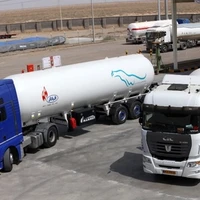
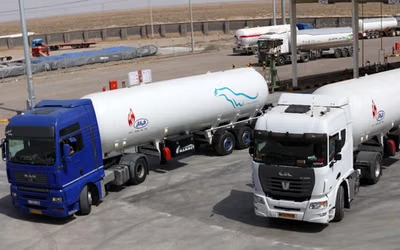
Despite facing a growing domestic gas deficit and widespread use of highly polluting fuel oil, Iran’s gas deliveries to Turkey have continued to surge according to official Turkish energy statistics.
Newly released data from Turkey’s Energy Market Regulatory Authority (EMRA), affiliated with the Ministry of Energy show that Iran supplied more than 5.5 billion cubic meters of gas to Turkey during the first nine months of 2025—17% more than in the same period last year and 45% higher compared to 2023.
Buffeted by stiff Western and international sanctions, Tehran appears to be seeking revenue from abroad even as it faces severe gas shortages at home.
A confidential Oil Ministry document obtained by Iran International in mid-2025 showed an annual jump by nearly half in fuel oil, or mazut, consumption last year.
This is despite its being one of the most polluting forms of fossil fuel on earth.
It is not yet clear how much mazut consumption has risen this year, but the deputy oil minister says Iran is expected to face a daily gas deficit of 300 million cubic meters during this winter’s peak demand. Last year, the shortfall was 250 million cubic meters; in 2023, it was about 200 million.
Bleak outlook
With the onset of cold weather and rising household gas demand across large parts of the country, industries and power plants have increasingly switched to burning mazut, causing dangerous air pollution in major cities including the capital Tehran.
A recent report by Iran’s Department of Environment on the mazut and diesel supplied to Tehran-area power plants shows sulfur content 10 to 100 times higher than international standards.
Had Iran halted its gas shipments to Turkey, the statistics show it could have reduced domestic fuel oil consumption by roughly 20 million liters per day, given that natural gas is the cleanest fossil fuel alternative.
Yet the Islamic Republic insists on maintaining its gas exports to Turkey and supplies roughly the same amount to Iraq.
Last year, Iran exported 15 billion cubic meters of gas, equivalent to 15 billion liters of mazut in energy content. If exports had been suspended, not only would Iran have avoided burning mazut domestically, it would have also saved 7 million liters of diesel per day.
Why does Iran have a gas shortage?
Part of Iran’s gas deficit stems from the slowdown in the development of gas production projects due to the government’s financial constraints and the limited technological capabilities of domestic oil companies.
Stiff Western and international sanctions have made updating the country's already creaky energy infrastructure yet more difficult.
For example, between 2010 and 2020, Iran’s gas output grew at an average annual rate of 5.2%, but growth has dropped to 1–2% in recent years, according to BP statistics.
Another critical factor is the decline in pressure at Iran’s section of the South Pars gas field, shared with Qatar—a decline that began in 2024. South Pars supplies over two-thirds of Iran's gas.
Years ago, Qatar collaborated with major Western energy companies to install 20,000-ton platforms—15 times heavier than Iran’s current offshore platforms—along with huge compressors in the Qatari section (the North Field).
But neither Iran nor its Chinese partners possess the technical capacity to manufacture such large-scale equipment.
Declining pressure
About nine months ago, Iran’s Oil Ministry signed a $17 billion contract with four domestic firms to implement pressure-boosting operations at South Pars. However, instead of installing 20,000-ton platforms, the plan calls for 4,000-ton structures, and for using weaker compressors instead of the massive units required.
An Iranian-British oil and gas engineer—designer of a BP mega-platform in Azerbaijan’s Caspian waters and currently working on the Qatari side of South Pars—told Iran International that the specifications of platforms and compressors outlined in the Iranian contract are inadequate to resolve the field’s pressure decline.
The engineer, who requested anonymity, added that restoring pressure on the Iranian side requires much larger platforms capable of hosting a full power plant, giant compressors and facilities for separating various gas streams and condensates.
The pressure in Iran’s section of South Pars was about 120 bar until two years ago, but has since been dropping by 6 bar per year, significantly reducing gas output.
Mohammad Oliya, CEO of MAPNA—one of the four companies awarded the $17 billion contract—said earlier this month that “no funding has yet been allocated” for the pressure-boosting project.
At the same time, the Revolutionary Guards-linked Tasnim news agency reported that although the contract was signed in March, no action beyond a series of study meetings and initial assessments has occurred.

The US military has created a task force to field its first squadron of new kamikaze attack drones in the Middle East, US Central Command (CENTCOM) said on Wednesday.
US arms developers reverse-engineered a captured Shahed drone from Iran to produce the new model, CNN reported citing a US defense official.
The unit, called Task Force Scorpion Strike, was formed after Defense Secretary Pete Hegseth ordered the Pentagon to speed up the delivery of low-cost drone technology to troops.
“This new task force sets the conditions for using innovation as a deterrent,” CENTCOM commander Admiral Brad Cooper said in a statement.
“Equipping our skilled warfighters faster with cutting-edge drone capabilities showcases US military innovation and strength, which deters bad actors.”
CENTCOM said the task force has already built a squadron using what it calls Low-cost Unmanned Combat Attack System drones, or LUCAS, developed by the Arizona-based company SpektreWorks.
'Flipping the script'
The drones can fly long distances, operate autonomously and be launched by catapult, rocket-assisted systems or mobile vehicles.
The LUCAS drones were created after developers reverse-engineered a Shahed drone from Iran, which the US captured a few years ago, CNN reported citing a US defense official.
CNN's report said the defense official acknowledged that the US military’s focus on larger and more expensive precision systems had “put our forces at a disadvantage” against cheap drones like those used by Iran.
“But now we’re flipping the script,” the official added.
The official declined to say how many drones the new squadron has, saying only there were “many” and more would be added. Each drone costs about $35,000, the official said.
'Low-cost option'
The official also told CNN that a damaged Iranian Shahed drone captured by the United States several years ago was examined by US companies, which worked to reverse-engineer elements of the system and use those findings in the development of LUCAS.
The official described the result as a US-produced, low-cost attack drone built to meet the needs of current conflicts.
Task Force Scorpion Strike, which helped lead the development of the drones, consists of nearly two dozen personnel, led by service members from Special Operations Command Central.
Not all of the personnel are based in the Middle East, CNN's report said citing the official.