• العربية
  • فارسی
Brand
  • Iran Insight
  • Politics
  • Economy
  • Analysis
  • Special Report
  • Opinion
  • Podcast
  • Iran Insight
  • Politics
  • Economy
  • Analysis
  • Special Report
  • Opinion
  • Podcast
  • Theme
  • Language
    • العربية
    • فارسی
  • Iran Insight
  • Politics
  • Economy
  • Analysis
  • Special Report
  • Opinion
  • Podcast
All rights reserved for Volant Media UK Limited
volant media logo

US State Department rejects Iran’s claim of 100 Americans killed in Dubai

Mar 5, 2026, 09:57 GMT+0
A person stands next to a motorcycle as smoke rises in the Fujairah oil industry zone following a fire caused by debris after interception of a drone by air defenses, according to the Fujairah media office, United Arab Emirates, March 3, 2026.

The United States rejected Iranian claims that more than 100 Americans were killed in an attack in Dubai, calling the reports “complete disinformation,” a State Department spokesperson said on Wednesday.
In a statement, the spokesperson said no one was killed or injured in the strike on a US diplomatic facility in Dubai and urged media outlets to verify information with official US government sources before publication.

“Any claim that Iran has killed 100 US military or civilian personnel in Dubai is complete disinformation. No one was killed or injured by the strike on the US Consulate in Dubai.”

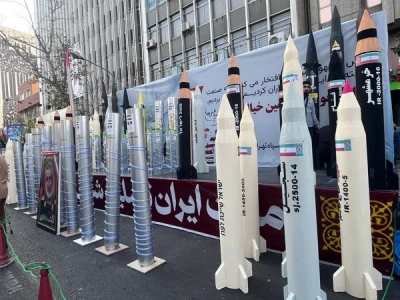
Iran’s Islamic Revolutionary Guard Corps said on Wednesday that a wave of attacks on US bases in Dubai killed more than 100 American military or civilian personnel.

The State Department said the world should condemn what it described as Iran’s “heinous and illegal attacks” on American diplomatic facilities and those of any country.

The department said it is in direct contact with Americans in the United Arab Emirates seeking information and assistance and is facilitating charter flights from the UAE.

It added that it is working through a 24/7 task force and regional teams to ensure Americans have accurate information and access to support. The department has also opened a crisis intake form for Americans in the UAE seeking departure assistance.

Separately, the United Arab Emirates said Iranian attacks since Saturday had killed three people and wounded 78 others.

The UAE defense ministry said those killed included one Bangladeshi, one Pakistani and one Nepali national.

The ministry said air defenses intercepted three ballistic missiles on Wednesday and detected 129 drones, destroying 121 of them while eight fell inside the country.

Since the start of the attacks, the UAE said it had detected 189 ballistic missiles, destroying 175, while 13 fell into the sea and one landed on its territory.

The ministry added that 941 Iranian drones had been launched toward the UAE, with 876 intercepted and 65 falling inside the country. It also said eight cruise missiles were detected and destroyed, and that interception operations caused some collateral damage.

The UAE condemned the attacks as a violation of its sovereignty and international law and said it reserves the right to respond.

Most Viewed

100 days after carnage: Iran economy reels from war, inflation, unemployment
1
INSIGHT

100 days after carnage: Iran economy reels from war, inflation, unemployment

2
EXCLUSIVE

Iranian assaulted in London amid concern over threats to regime critics

3

IRGC fires at Indian vessel in Hormuz

4
INSIGHT

A nation in limbo: 100 days after the massacre, has the world moved on?

5
ANALYSIS

From instability to influence: Pakistan’s pivotal role in US-Iran diplomacy

Banner
Banner

Spotlight

  • Ghalibaf defends Iran-US talks amid hardline backlash
    INSIGHT

    Ghalibaf defends Iran-US talks amid hardline backlash

  • From instability to influence: Pakistan’s pivotal role in US-Iran diplomacy
    ANALYSIS

    From instability to influence: Pakistan’s pivotal role in US-Iran diplomacy

  • A nation in limbo: 100 days after the massacre, has the world moved on?
    INSIGHT

    A nation in limbo: 100 days after the massacre, has the world moved on?

  • The Hormuz get out of jail card turned to a grave
    OPINION

    The Hormuz get out of jail card turned to a grave

  • How Tehran bends its own red lines to boost state rallies
    INSIGHT

    How Tehran bends its own red lines to boost state rallies

  • Iran blackout cripples freelancer, small business incomes
    VOICES FROM IRAN

    Iran blackout cripples freelancer, small business incomes

•
•
•

More Stories

Everyone is watching oil in Iran war, but real risk is water

Mar 5, 2026, 03:48 GMT+0
•
Umud Shokri

As war spreads across the Middle East and attention focuses on oil, the region’s most dangerous soft targets may be desalination plants.

A serious strike, sabotage operation, cyberattack, or contamination event affecting these facilities would not just damage commerce. It could trigger a rapid human security crisis by threatening drinking water, electricity, sanitation, and public order at the same time.

GCC countries account for around 40 percent of the world’s desalinated water and operate more than 400 desalination plants across the region. About 90 percent of Kuwait’s drinking water comes from desalination. The figure is 86 percent in Oman and 70 percent in Saudi Arabia.

In a region defined by extreme heat, scarce rainfall, overdrawn aquifers, and growing urban populations, desalination is not a technical supplement to national life. It is the infrastructure that makes national life possible.

Persian Gulf governments can absorb temporary shocks to tourism, reroute some trade, and rely on global markets to cushion part of an oil disruption. Water is different. It cannot be improvised at scale, and it cannot be politically rationed for long in cities that depend on the state to supply the basics of daily life.

Qatar’s prime minister warned last year that any attack on Iran’s nuclear facilities could “entirely contaminate” the region’s waters and threaten life in Qatar, the UAE, and Kuwait.

He also said Qatar had once assessed that it could run out of potable water after just three days in such a scenario, prompting the construction of 15 massive water reservoirs to expand emergency reserves.

Those comments were made before the current war reached today’s level of direct regional spillover.

The Middle East Institute warned in 2025 that the Gulf’s heavy reliance on centralized desalination infrastructure presents a clear strategic vulnerability for Iran’s Arab neighbors.

Research on Qatar’s water security has specifically warned that oil spills and red tides could interrupt desalination operations or force shutdowns for a considerable period. In peacetime, these are serious risks. In wartime, they become strategic liabilities.

A leaked 2008 US diplomatic cable from Riyadh stated that the Jubail desalination plant supplied over 90 percent of Riyadh’s drinking water and warned that the capital “would have to evacuate within a week” if the plant, its pipelines, or associated power infrastructure were seriously damaged or destroyed.

The same cable added that “the current structure of the Saudi government could not exist without the Jubail Desalinization Plant.”

That is why desalination plants may matter more in this conflict than many of the targets receiving greater attention.

Research on conflict-related water disruption has also shown that contamination or shutdown of desalination capacity can worsen water insecurity and heighten risks to public health.

Iran’s recent attacks across the region appear intended in part to internationalize the battlefield and raise the cost for Arab states of aligning with Washington. But targeting, or even credibly threatening, desalination infrastructure would raise those costs in a different and more dangerous way.

It would push GCC governments to treat water security as national survival rather than collateral risk. That, in turn, could draw them more directly into the conflict or harden support for wider retaliation.

A war that begins around missiles, nuclear facilities, and energy flows could therefore widen around something more elemental: whether people in the region can drink, cool their homes, and keep hospitals functioning in extreme heat.

The Arab nations surrounding the Persian Gulf can withstand price shocks, flight cancellations, and even temporary energy disruption more easily than they can withstand a major breakdown in potable water supply.

That is why the next phase of this war may not be defined by what happens to oil. It may be defined by whether anyone is reckless enough to turn the region’s water system into a battlefield.

From shadow to power: who is Mojtaba Khamenei?

Mar 4, 2026, 06:13 GMT+0
•
Negar Mojtahedi

Iran’s clerical body, the Assembly of Experts, has elected Mojtaba Khamenei, the son of the late Ali Khamenei, as the Islamic Republic’s new Supreme Leader, according to his informed sources who spoke to Iran International on condition of anonymity.

The decision marks one of the most consequential moments in the history of the Islamic Republic, effectively transferring power within the same family for the first time since the 1979 revolution.

But who exactly is Mojtaba Khamenei?

A powerful figure behind the scenes

Mojtaba Khamenei, 55, has long been considered one of the most influential figures inside Iran’s ruling system despite rarely appearing in public or holding formal political office.

For years he operated from within the Office of the Supreme Leader, serving as a gatekeeper and power broker around his father. His position has often been compared to the role played by Ahmad Khomeini, the son of Islamic Republic’s founder Ruhollah Khomeini, who served as a key aide and confidant during the early years of the revolutionary state.

Analysts say Mojtaba gradually built influence across the regime’s political, security and clerical institutions.

Dr. Eric Mandel, director of the Middle East Political and Information Network (MEPIN), told Iran International that Mojtaba has long been a central but opaque figure in Tehran’s power structure.

“Mojtaba Khamenei, the son of former Supreme Leader Ali Khamenei, has long operated behind the scenes in Tehran, building deep ties with the Islamic Revolutionary Guard Corps and consolidating influence within the regime’s power structure. He is widely viewed as one of the architects of the regime’s repression," Mandel said.

Author and Iran analyst Arash Azizi told Iran International Mojtaba is viewed with deep suspicion. "This is why he has been a bete noire of democratic movements at least since 2009 when he was rumored to have helped orchestrate the repression. He is also known to be a favorite of some sections of the establishment such as those close to Mohammad-Bagher Ghalibaf who has ambitions of becoming Iran’s strongman."

Ties to Iran’s security establishment

A key source of Mojtaba’s influence lies in his close connections to the Islamic Revolutionary Guard Corps (IRGC).

During the Iran-Iraq War in the 1980s, Mojtaba served in the Habib Battalion, a unit made up largely of volunteers connected to the Islamic Republic’s emerging revolutionary networks. The battalion operated under forces linked to the IRGC and took part in several major battles of the war.

Service in the Habib Battalion proved significant for Mojtaba. Many of the men who fought alongside him later rose to senior positions in Iran’s security and intelligence apparatus, including figures who would go on to lead parts of the IRGC’s intelligence organization and security commands responsible for protecting the regime.

Those wartime relationships are widely believed to have helped Mojtaba build lasting connections inside Iran’s powerful security establishment.

Over the years, opposition figures and political rivals have accused Mojtaba of playing a role in shaping election outcomes and coordinating crackdowns on dissent.

Questions over religious credentials

Iran’s constitution requires the Supreme Leader to possess deep knowledge of Islamic jurisprudence and be recognized as a senior religious authority.

Mojtaba, however, is not widely considered to be among the highest-ranking clerics in Iran. He studied in the seminaries of Qom under several prominent conservative scholars but does not hold the rank of ayatollah.

Despite that, Iran’s political system has historically shown flexibility when elite consensus forms around a candidate.

A controversial succession

Mojtaba’s elevation is likely to intensify criticism that the Islamic Republic founded as a revolutionary Islamic system is evolving toward dynastic rule.

For years speculation about his succession drew comparisons to hereditary monarchies.

For a man who has spent decades operating largely in the shadows of Iran’s power structure, Mojtaba Khamenei now finds himself at the center of one of the most consequential periods in the country’s modern history.

Trump says US stockpiles remain strong, Iran runs low on weapons

Mar 3, 2026, 16:40 GMT+0

US President Donald Trump says American munitions stockpiles remain robust while Iran is running out of key weapons and missile launchers amid continued US-Israeli airstrikes and Tehran's retaliatory attacks targeting regional countries.

“The United States Munitions Stockpiles have, at the medium and upper medium grade, never been higher or better,” Trump wrote on Truth Social.

The US, he wrote, has “a virtually unlimited supply of these weapons” and that “Wars can be fought ‘forever,’ and very successfully, using just these supplies.”

His remarks came after CNN and The Wall Street Journal reported concerns about the pace at which key US munitions are being consumed in the escalating war with Iran.

Meanwhile, Washington sustains both offensive strikes and defensive intercept operations across the region. US systems, including Patriot and THAAD batteries deployed in Israel and neighboring states, have been heavily engaged in countering Iranian ballistic missile and drone attacks.

CNN reported on Monday that US reserves of certain missile systems – including Tomahawk land-attack missiles and SM-3 interceptors – are under strain amid sustained operations.

  • Iran developing missiles that may soon reach US, Trump warns in SOTU address

    Iran developing missiles that may soon reach US, Trump warns in SOTU address

The Wall Street Journal also wrote Sunday that as the US planned operations against Iran, the military’s top general raised concerns about munitions stockpiles, particularly air defense interceptors needed to counter Iranian ballistic missiles and drones targeting regional sites hosting US forces.

Trump, in a separate post on Tuesday, called The Wall Street Journal report a “disgrace” on Truth Social, saying the United States has “unlimited mid to upper tier Weaponry – Brutal ‘stuff.’”

Iran’s arsenal under pressure

Trump told Politico on Tuesday that Iran was running out of crucial armaments.

“They’re running out and they’re running out of areas to shoot them, because they’re being decimated,” Trump said. “They’re running out of launchers.”

The New York Times reported Sunday, citing Israeli military officials, that Israeli airstrikes carried out since June last year have destroyed roughly 200 Iranian ballistic missile launchers and disabled dozens more – amounting to about half of Iran’s operational launcher fleet.

Israeli strikes, according to the report, during both the current offensive and last summer’s 12-day campaign also hit Iran’s primary explosives production facility. That complex provides key components for missile warheads and supports weapons programs including rockets, drones and cruise missiles.

Before last year’s assault, Israeli intelligence had assessed that Iran possessed approximately 3,000 ballistic missiles and was seeking to dramatically expand output, potentially reaching 8,000 missiles by 2027.

A Defense Express analysis on Tuesday said that as of Monday, Iran had launched at least 771 ballistic missiles at neighboring countries and Israel since the start of the conflict.

The figure is not definitive, as totals vary by reporting country and strikes remain ongoing. Defense Express noted that different states have published their own counts while Iran continues firing missiles, and Tehran has not released an official tally of launches.

Despite damage inflicted during the earlier campaign, The New York Times reported that Iran has attempted to rebuild its missile manufacturing capacity, with recent estimates suggesting output of dozens of missiles per month. The newspaper added that Iran has also sought components from abroad to restore its surface-to-surface missile arsenal.

China presses Iran to keep Hormuz open as Asian buyers brace for LNG shortfalls

Mar 3, 2026, 10:19 GMT+0

China is pressing Iran to avoid disrupting shipping through the Strait of Hormuz, particularly energy exports from Qatar, as conflict in the region threatens global supplies, Bloomberg reported.

According to senior executives at Chinese state-owned gas firms briefed by government officials, Beijing had urged Iranian counterparts not to target oil and liquefied natural gas tankers transiting the narrow waterway and to refrain from striking key export hubs such as Qatar.

China buys the vast majority of Iran’s oil, providing Tehran with a crucial economic lifeline. But the world’s largest energy importer depends more broadly on Persian Gulf supplies, with both crude and LNG cargoes passing through Hormuz.

Qatar accounts for roughly a fifth of global LNG supply and provides about 30% of China’s LNG imports, the executives said. The country is the world’s second-largest LNG producer after the United States.

Asian buyers take more than 80% of Qatar’s LNG shipments, according to data from analytics firm Kpler.

Reuters reported on Tuesday that India began rationing natural gas as countries across Asia moved to secure alternative supplies after conflict in the Middle East disrupted shipping and halted Qatari output.

Officials and executives in Japan, Taiwan, Bangladesh and Pakistan said they did not expect an immediate impact because some cargoes due this month had already arrived, but would diversify imports and buy spot LNG if the war drags on.

The Turkish government also plans to implement a fuel scheme to reduce the impact of rising global oil prices on inflation, according to Reuters on Tuesday.

Tanker traffic through the strait has largely stalled since US and Israeli strikes over the weekend and Iran’s subsequent missile attacks across the region.

According to US Central Command, the Strait of Hormuz is not closed despite statements by Iranian officials.

On Monday, Qatar halted production at Ras Laffan, the world’s largest LNG export facility, after an Iranian drone attack, marking the first full shutdown in nearly three decades of operations.

Chinese energy importers have been told Beijing is seeking to ensure vessels continue moving through Hormuz, the executives told Bloomberg.

Publicly, China has made limited comment. Foreign Minister Wang Yi told his Iranian counterpart Abbas Araghchi on Monday that while Beijing supports efforts to safeguard national security, Tehran should heed the “reasonable concerns” of its neighbors, according to a Chinese Foreign Ministry statement.

At a regular briefing, a ministry spokesperson said China was “deeply concerned” about the widening conflict.

Analysts say the immediate economic impact on China may be manageable, though higher oil prices could add to inflationary pressures.

Ex-CIA director says Iran erred by expanding attacks to Persian Gulf states

Mar 3, 2026, 09:45 GMT+0

Iran made a strategic error by expanding its attacks beyond US and Israeli targets to include Persian Gulf states, a move that could pull more countries into the war, former CIA Director David Petraeus told Iran International in an interview on Monday.

“I think that is a big miscalculation on the part of Iran,” Petraeus told 24 with Fardad Farahzad Show, arguing that striking Arab countries that had sought to avoid direct involvement could push them to contribute more directly to regional defense efforts.

US and Israeli forces, Petraeus said, have already “dramatically degraded” Iran’s retaliatory capabilities, though he cautioned it was too early to determine whether the decline in attacks over the past 12 to 24 hours signaled a lasting shift.

“I think it's premature at this point to judge whether or not that will degrade further or if the volume can pick back up,” he said.

Coalition dynamics shift

Petraeus said Tehran’s decision to target regional states – including those that did not allow their bases to be used for operations – may alter the strategic calculus across the Persian Gulf.

Many countries in the region, he said, are already contributing to an integrated air and missile defense network that includes US-supplied Patriot and Terminal High Altitude Area Defense systems, along with naval assets and aircraft capable of intercepting incoming projectiles.

While he stopped short of predicting expanded offensive participation, Petraeus said additional Western powers could also align more closely with the effort. “I’m confident they are all taking part in the defensive efforts that are ongoing,” he said.

Uncertain path to political change

Addressing whether military pressure could lead to political transformation inside Iran, Petraeus said any lasting shift would depend primarily on internal fractures within the security forces and leadership.

“The sad reality in such cases often is that the most guys with the most guns and the most willing to be brutal to the people prevail,” he said, cautioning against assumptions that external air campaigns alone can bring about regime collapse.

  • Iranians face war with fear, joy and hope

    Iranians face war with fear, joy and hope

Petraeus described exiled Prince Reza Pahlavi as a symbolic presence who has outlined a transition toward an elected government rather than dismantling all existing institutions.

Ultimately, he said, momentum would hinge on whether influential insiders conclude that continued confrontation has become unsustainable, shaping not only Iran’s future but the broader balance of power across the Middle East.