• العربية
  • فارسی
BrandBrand
  • Iran Insight
  • Politics
  • Economy
  • Analysis
  • Special Report
  • Opinion
  • Podcast
  • Live TV
  • Iran Insight
  • Politics
  • Economy
  • Analysis
  • Special Report
  • Opinion
  • Podcast
  • Live TV
  • Theme
  • Language
    • العربية
    • فارسی
  • Iran Insight
  • Politics
  • Economy
  • Analysis
  • Special Report
  • Opinion
  • Podcast
  • Live TV
All rights reserved for Volant Media UK Limited
volant media logo

Iranian government pins inflation on unbacked money printing

Dec 4, 2025, 10:50 GMT+0Updated: 23:46 GMT+0
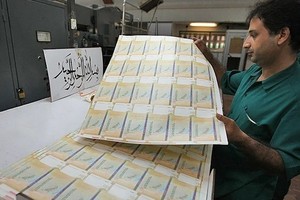
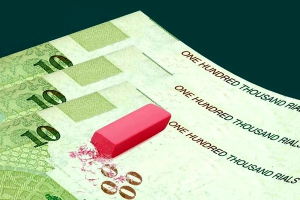
A worker stacks bundles of old Iranian banknotes

Iran’s government said inflation stems from unfunded promises financed by unbacked money printing and bank credit, adding it has capped budget growth at about 2% and halted most other outlays in a bid to curb price pressures.


“The moment we print money without backing, inflation rises and people pay the price,” President Masoud Pezeshkian said during a visit to the southwestern city of Yasuj.

Monetary expansion driven by unfunded pledges, he said, “takes money from people’s pockets” and intensifies existing pressures.

Economists widely link Iran’s continued inflation and the collapse of the rial to persistent reliance on money creation.

The government’s use of bank borrowing and indirect central bank financing expands the monetary base without matching growth in real output, entrenching price instability.

Iran’s rial continued to weaken on Wednesday in a sign of flagging confidence in the country's troubled economy, with the US dollar trading at an all-time high above 1.2 million rials according to local exchange-rate websites.

Rapid liquidity growth

Iran's broad money doubled during the 2.5-year presidency of Ebrahim Raisi, according to statistics from the country’s Central Bank (CBI).

Broad money, the total money supply within an economy, is the primary cause of rampant inflation in Iran.

Over the past years, Iran’s Central Bank has ceased publishing government budget reports.

Local media tracking shows that in the past year, food prices in Iran have risen by an average of more than 66%.

According to the Supreme Audit Court of Iran, however, it is estimated that since 2018 – when the US withdrew from the Joint Comprehensive Plan of Action (JCPOA) and imposed sanctions on Iran’s oil exports – the government's annual budget deficit has consistently exceeded 30%.

The Iranian government has been compensating the budget deficit by borrowing money, in particular, from the banking system.

100%
A worker inspects freshly printed Iranian banknotes

Budget capped

Pezeshkian said his administration set an unprecedented ceiling on expenditure. “For the first time, we have kept budget growth to around two percent and cut the rest,” he said.

Some recipients, he added, had protested reduced allocations but argued that expanding spending without resources would heighten inflation rather than solve shortages.

He added that the government could not “spend from people’s pockets” for short-term gains and warned that raising expectations without funding would deepen internal disputes.

“If we think the situation is fine, that the government has money and is not giving it, or if we only raise our own expectations, we will increase disagreements and conflicts.”

Most Viewed

US strikes on Iran now serve the blockade
1
ANALYSIS

US strikes on Iran now serve the blockade

2

Iran sends conflicting signals on US deal as Trump raises prospect of strikes

3
PODCAST

Baluch insurgency tests the limits of a war-weakened Islamic Republic

4

Pakistan talks peace with Iran, defends Saudis against Tehran’s proxies

5

US and Iran trade new threats as diplomacy yields no breakthrough

Banner
Banner
Banner
Banner
Banner

Spotlight

  • From six-day victory to wars of attrition: How has Israel ended its wars?
    ANALYSIS

    From six-day victory to wars of attrition: How has Israel ended its wars?

  • Baluch insurgency tests the limits of a war-weakened Islamic Republic
    PODCAST

    Baluch insurgency tests the limits of a war-weakened Islamic Republic

  • US strikes on Iran now serve the blockade
    ANALYSIS

    US strikes on Iran now serve the blockade

  • Salvation or tragedy? Iranians debate prospect of another war

    Salvation or tragedy? Iranians debate prospect of another war

  • More patrols, slower internet suggest Tehran is bracing for trouble
    VOICES FROM IRAN

    More patrols, slower internet suggest Tehran is bracing for trouble

  • Iran’s evasion network survives, but the crude feeding it has run dry

    Iran’s evasion network survives, but the crude feeding it has run dry

  • Once US blockaded Iran, China’s ‘Malaysian’ oil imports dried up
    ANALYSIS

    Once US blockaded Iran, China’s ‘Malaysian’ oil imports dried up

  • Istanbul meeting: A new division of labor in the Iran war?
    ANALYSIS

    Istanbul meeting: A new division of labor in the Iran war?

  • Iran Printing Huge Sums Of Money Amid Rising Inflation

    Iran Printing Huge Sums Of Money Amid Rising Inflation

  • Iran’s Central Bank ordered to slash four zeros from national currency

    Iran’s Central Bank ordered to slash four zeros from national currency