Afghans deported by Iran allege torture, but still seek return - Sky News
Afghans wait in line at the Soleimankhani centre for refugees in Tehran, Iran, October 24, 2016
Afghans deported from Iran amid a continuing crackdown on undocumented migrants said authorities there tortured them but deprivation back home was so extreme they are determined to return, Sky News reported on Wednesday.
Expulsions soared after a 12-day war with Israel in June in which Afghans were accused by officials of being potential fifth-columnists collaborating with Iran's foeas Tehran sought to boost populist bona fides after the bruising conflict.
Struggling with deepening economic malaise, Iran has been accused by rights groups of unfairly targeting the Afghan community as it faces dire poverty and repression by Taliban authorities back home.
More than 1.3 million Afghans have been expelled this year, many arriving exhausted and traumatized at the Islam Qala border crossing before being transferred to Herat, according to the report.
Deportees, including young men with scars on their bodies and faces, described violent arrests and beatings by Iranian police.
Rohullah Mohammadi said he was robbed and beaten, suffering an ear injury. “Is this how Islam is supposed to be practiced?” he asked.
Sky News said claims of mistreatment were submitted to Iranian authorities for comment, but no response was received.
Women and girls expressed despair over returning to Afghanistan, citing Taliban restrictions on education and employment.
One woman cried about unpaid work in Iran, while unaccompanied minors such as 15-year-old Tahir described over two weeks of abuse, being forced to sleep on concrete floors and kicked for protesting.
Despite the hardship, poverty forces many to consider returning. Tahir, reunited with his family after two years, said, “I love my homeland, but if there is no work here, how can I survive? I must work.”
His mother said life in Afghanistan is too difficult, while another young man supporting six family members said there are no local job opportunities.
Attempts by Afghan citizens to cross illegally into Iran have doubled over the past six months compared with the same period last year, a senior Iranian border commander said on Tuesday.
Iran set a September deadline for undocumented Afghans to leave, with reports indicating that even some legal residents were expelled.
Human rights groups warn that Afghanistan, already under strain from Taliban rule and Pakistani deportations, is nearing a breaking point.
An image of a young Iranian conscript resting during his compulsory military service with the IRGC.
Australia’s planned designation of Iran’s Revolutionary Guards as as a terror group will be “targeted and appropriate," a spokesperson at the Attorney-General's Department told Iran International, meaning conscripts may be spared any punishments.
Prime Minister Anthony Albanese announced in August that the government would legislate to list the Islamic Revolutionary Guard Corps as a terrorist organization.
The IRGC has long been sanctioned by the United States, citing its support for armed groups like Hamas and Hezbollah across the Middle East and repression at home.
The legislation to enable the listing was introduced to parliament on Wednesday by Attorney-General Michelle Rowland.
The move follows similar steps by the United States, which listed the IRGC in 2019, and Canada, which designated the force in 2023.
Following these listings, many ordinary Iranians who were not members of the force but were conscripted into the IRGC faced obstacles with visa applications, including tourist and student renewals, and residency permits, leading rights groups and the Iranian diaspora community in Australia to wonder about the new move's scope.
Iran International reached out to Australian authorities to ask whether the legislation would distinguish between IRGC members and conscripts and how it might affect visa or immigration applications.
"The Australian Government is committed to ensuring our new legislation to amend the Criminal Code to allow the listing of state entities as terrorist organizations is targeted and appropriate," the spokesperson at the Attorney-General’s Department told Iran International.
Australia’s Home Affairs Department, which is responsible for immigration and border security, said all non-citizens must meet character requirements under section 501 of the Migration Act.
“The Department of Home Affairs works with law enforcement and intelligence partners to cancel or refuse visas of non-citizens who are a risk to Australia’s national security,” a spokesperson said. “All visa applications are assessed on a case by case basis and all criteria must be satisfied before a visa can be granted.”
'Character test'
A person can fail the character test for several reasons, the spokesperson added, including “where a non-citizen has a substantial criminal record, is suspected of associating with, or being a member of, a group involved in criminal conduct, or where the individual may have been assessed as a risk to Australia’s national security.”
“The new framework within the Criminal Code will target state sponsors of terrorism by criminalizing certain interactions with or by the listed entity, criminalizing support for the listed entity, and hardening the Australian environment against the activities of listed entities,” the spokesperson added.
Senator Claire Chandler, who has long advocated tougher measures against the IRGC, asked about the legislation's impact on conscripts, said the opposition would back the government’s plan but scrutinize it to avoid unintended consequences.
“We will be supporting the change and will examine the legislation closely to make sure it is focused on genuine security risks and does not result in unintended harm to individuals caught up in the designation,” the Tasmania lawmaker from the opposition Liberal Party told Iran International.
Iranian activists in Canada who had advocated for designating the IRGC said they were assured by Canada's government the listing would avoid harming former conscripts, however, many soon faced immigration issues after being branded IRGC members.
A woman walks past posters with the portraits of Cecile Kohler and Jacques Paris, two French citizens held in Iran, on the day of support rallies to mark their three-year detention and to demand their release, in front of the National Assembly in Paris, France, May 7, 2025
An 18-year-old French national acquitted by an Iranian court of charges he had spied for Israel has been freed, its foreign minister said on Wednesday, adding that efforts continue to secure the release other detainees.
Jean-Noël Barrot gave no further details about the circumstances of Lennart Monterlos's release but called for of two other citizens held by Tehran on espionage charges to be freed as well.
He had been arrested in Iran in June around the time of a surprise Israeli air campaign that exposed intelligence failures and killed hundreds of military personnel and civilians.
A statement from the French Foreign Ministry said Monterlos has been reunited with his family.
"I do not forget Cécile Kohler and Jacques Paris, whose immediate release we demand," he added in a post on X.
Iran detained the pair 2022 and subsequently aired what appeared to be a forced confession in which they admitted to spying for Israel on state television.
Iranian Foreign Minister Abbas Araghchi suggested last month that the two could be exchanged for Mahdieh Esfandiari, an Iranian woman arrested in Lyon in February on charges of promoting terrorism through social media.
Last month, a British couple, Craig and Lindsay Foreman, appeared in court in Tehran on similar espionage charges after being held since January.
Western governments and human rights organizations accuse Tehran of detaining foreign nationals to gain political leverage in disputes with Europe and the United States.
Iran rejects the allegation, saying such cases are based on legitimate security concerns.
France withdrew its case against Iran at the International Court of Justice (ICJ) over the detention of Paris and Kohler, the court announced last month without elaborating. It was unclear if the move indicated their release was approaching.
Iran’s minimum wage has increased each year in local-currency terms, but its dollar value has dropped sharply as the rial weakened, leaving workers effectively poorer despite nominal pay rises, labor reports and activists say.
The state-run Supreme Labor Council has approved successive annual increases, including a 45% rise for 2025 that set the base salary at roughly 104.4 million rials.
Yet at current market rates at about 1,160,000 rials per dollar, that monthly wage is worth about $90–$110 depending on benefits, compared with about $238–$300 in 2016 when the minimum was over 81 million rials (today less than $7) and the dollar traded near 34,000 rials, according to calculations cited by ILNA.
Labor activist Bahram Hassaninejad said the living standards of wage earners have “severely declined in both quality and quantity,” adding that many now work merely to survive.
He said the erosion of workers’ material and social standing has deepened over time, with little sign of recovery to conditions seen a decade ago. “Every administration that has come to power has only completed the anti-labor policies of the previous one,” he added.
According to labor groups, modest state subsidies and food vouchers have failed to close the widening gap between wages and living costs. Many workers now take on extra or informal jobs -- from driving and street vending to collecting recyclables --in an effort to keep their families afloat.
Regular labor protests have continued over worsening economic conditions. Demonstrators often hold signs reading, “Our wages are in rials, but the costs are in dollars,” highlighting how dollar-linked prices and imported goods have eroded real incomes despite repeated pay increases.
Independent estimates reported by Iranian outlets suggest today’s base wage covers only a fraction of a typical household’s monthly expenses.
One labor advocate said a standard basket of basic goods for a three-person family far exceeds the minimum salary, adding, “With this income, a family can only cover a few days of essential costs.”
Officials say annual wage-setting follows the law, which requires consideration of inflation and basic needs. Economists caution that large nominal raises, without broader reforms, can feed prices while failing to restore purchasing power.
Photo of the seized tanker as released by Iranian state media.
Iran’s judiciary has indicted 17 foreign nationals accused of smuggling fuel after their tanker was seized in the Gulf of Oman in July, the head of Hormozgan province’s justice department said on Wednesday.
Mojtaba Ghahremani said the suspects, from four different countries, were detained when Iranian forces intercepted the vessel east of Hormozgan province. The ship was carrying more than 2.3 million liters of diesel, he said, adding that the case has now been sent to court for trial.
The indictment follows the July 14 seizure, when Iranian border guards and naval units boarded the tanker near the port of Jask. State media later identified the vessel as the Phoenix, sailing under the Cook Islands flag. Authorities at the time said the ship was transporting smuggled fuel, with the cargo valued at roughly $840,000.
Iran has stepped up maritime enforcement in the region, citing large-scale fuel smuggling driven by price differences with neighboring countries. In recent months, the Revolutionary Guard and other security forces have reported multiple operations in the Gulf of Oman and the Strait of Hormuz — a strategic waterway for global oil shipments.
In April, the IRGC Navy said it intercepted a vessel carrying about 100,000 liters of fuel and arrested six crew members. Around the same time, two other tankers alleged to be transporting more than 3 million liters of diesel were seized and taken to the port of Bushehr.
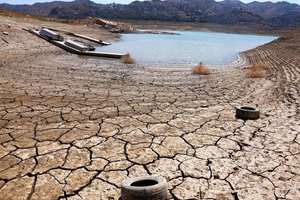
Expanding salt storms from the dried basin of Lake Urmia in northwestern Iran have forced residents to abandon nearby villages, damaged farmland and raised fears of long-term health risks, Iran’s Labor News Agency reported on Wednesday.
The outlet said years of drought and groundwater depletion have left once-fertile fields barren, destroying local agriculture and livelihoods.
Farmers told ILNA that widespread crop failure has driven them to close their orchards and shops, with some families migrating to nearby towns.
“The salt-laden winds have made breathing painful. People are leaving,” one resident said.
Local officials warned that the storms -- clouds of fine salt lifted from the desiccated lakebed -- are contaminating soil and water and triggering respiratory and even cancer-related illnesses among remaining residents.
In the village of GovarchinGhale, population has dropped from more than 470 families to around 130, mostly elderly people, according to the village council.
ILNA cited environmental experts linking the worsening crisis to decades of overpumping and illegal wells.
Urmia County Governor Rasoul Moghabeli said the number of wells in the lake basin had surged from 7,000 to over 90,000 in recent years, putting dangerous pressure on the groundwater.
Officials from the Urmia Lake Restoration Headquarters denied reports of mass migration, saying the reports were politically motivated, but acknowledged that more than 90% of water consumption in the region goes to agriculture -- much of it for water-intensive crops such as apples and sugar beet.
They warned that unless irrigation practices are reformed and unauthorized farmland reclaimed, the salt storms could expand across northwestern Iran within a decade, threatening millions of residents.
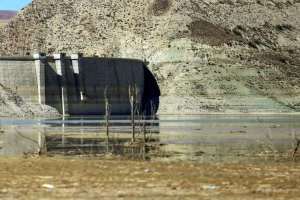
The report comes as Iran faces a deepening nationwide water emergency with 19 major dams close to depletion.