Iconic lake in western Iran dries up amid worsening water shortages
A file photo of Sarab Niloufar lake in Kermanshah province in 2011
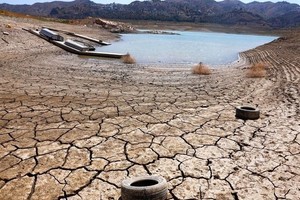
The Sarab Niloufar spring, one of western Iran’s most iconic natural landmarks, has dried up, local environmental officials said, warning that years of groundwater depletion, unregulated farming and drought have destroyed the 25-meter-deep lake once covered in lotus flowers.
Located near the city of Kermanshah, Sarab Niloufar -- famous for its blue lotus flowers and migratory birds -- has turned into cracked earth after years of over-extraction of groundwater, repeated droughts, and unregulated farming, Tasnim reported on Tuesday.
Provincial authorities blamed excessive water use for crop irrigation, illegal wells, and reduced rainfall for the collapse of the lake’s ecosystem.
Soraya Ghorbani, deputy head of Kermanshah’s Department of Environment, said this week that more than half of the factors driving the crisis stem from “repeated planting of water-intensive crops and poor management of groundwater resources.”
She warned that even heavy rainfall would no longer be enough to restore the body of water due to severe shortage of its groundwater.
A view from Sarab Niloufar lake in Kermanshah province in a recent photo
Experts say the drying of Sarab Niloufar mirrors a national trend of environmental decline.
A new satellite-based study shows that Iran is undergoing severe land subsidence across 106 regions covering about 31,400 square kilometers -- an area roughly the size of Belgium -- mainly due to excessive groundwater extraction for agriculture.
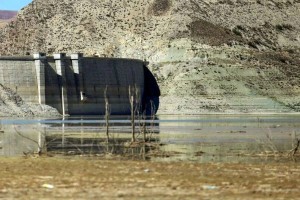
Iran’s water reservoirs have reached their lowest levels in decades -- with only 35% of dam capacity remaining, according to government data -- while 19 major dams are nearing depletion and three have already run dry.
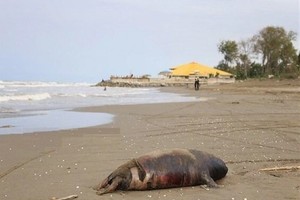
Across the north, wetlands in Golestan Province have also shrunk dramatically after years of drought and dam construction, leaving vast tracts of land barren and driving away hundreds of thousands of migratory birds.
Environmentalists warn that the loss of these wetlands could turn fertile regions into new dust storm hotspots, worsening air quality and threatening nearby farms.
In western Iran, the crisis has both ecological and social dimensions. Once a key habitat and tourist attraction, Sarab Niloufar supported local livelihoods and served as a natural water reservoir.
Officials say its disappearance shows how climate change, mismanagement, and overuse are converging to push Iran’s fragile water systems toward collapse.
“Without immediate national action on sustainable agriculture, groundwater control and interprovincial water sharing, more wetlands will follow the same fate,” Ghorbani said.
Outside the building of the General Directorate of Prisons of Semnan Province
A Swiss citizen Iran says died by suicide in prison was a 64-year-old tourist, a Swiss foreign ministry spokesman told Iran International, adding that Switzerland is seeking more details on his arrest and death from Tehran.
The foreign ministry added on Friday that the individual had been living in South Africa for the past 20 years and was traveling in Iran as a tourist.
The email response from the ministry said that the Swiss embassy in Iran was earlier denied access to the prisoner and now wants Tehran to provide full information about his arrest and death.
"Since Switzerland was informed of the arrest, the Swiss Embassy in Tehran has been in daily contact with the Iranian authorities to obtain more information about the circumstances of the arrest and to gain access to the detained Swiss citizen," the foreign ministry said.
"However, due to the accusations (espionage – national security), the requested consular access was not granted," it added. "Switzerland is demanding that the Iranian authorities provide detailed information."
The Swiss citizen who allegedly committed suicide in Semnan Prison on Thursday had been arrested while collecting soil samples in Iran’s central desert during an Israeli airstrike, media affiliated with Islamic Revolutionary Guard Corps reported.
Meanwhile, local media quoted unnamed Iranian official as saying that person was conducting espionage when he was arrested. The name of the Swiss citizen and the circumstances of his arrest and death remain unclear.
“This individual used prior intelligence training to take their own life during a specific opportunity,” Mashregh News, a publication affiliated with the Islamic Revolutionary Guard Corps (IRGC), reported late Thursday, citing an unnamed security official.
"Switzerland is demanding that the Iranian authorities provide detailed information on the reasons for his arrest and a full investigation into the circumstances of his death," the Swiss foreign ministry said.
The individual, detained by the IRGC Intelligence Organization, was accused of gathering information in a sensitive area during Israel's October air attack. The media report specifically said that this occurred during the Shahroud attack, which targeted an IRGC missile facility. Satellite imagery from Planet Labs later revealed significant damage to the site, known for building ballistic missiles and launching rockets as part of Iran’s space program.
After their arrest, the person was transferred to Semnan Prison, where they allegedly revealed information about their network and communication links, according to the outlet.
A local judiciary official confirmed the death on Thursday, saying that the Swiss national, facing espionage charges, had committed suicide in their cell.
Switzerland has also confirmed the death. "The FDFA confirms the death of a Swiss citizen in Iran," spokesperson Pierre-Alain Eltschinger told Iran International. "The Swiss Embassy in Tehran is in contact with the local authorities to clarify the circumstances of the death in an Iranian prison," he added.
According to Mizan, Iran's judiciary news website, the detainee asked their cellmate on Thursday morning to purchase food from the prison canteen. While alone in the suite, the detainee reportedly took their own life. "Prison officials immediately intervened to save the individual, but their efforts were unsuccessful," Mohammad Sadegh Akbari, a local judiciary official, was quoted as saying. “Suicide has been definitively confirmed.”
Iran has arrested dozens of dual nationals and foreigners in recent years, often on charges of espionage or security-related offenses. Some of these detainees have been released in exchange for deals involving Iranians held in foreign prisons.