Some bootleg alcohol in Iran is poisoned on purpose, top psychiatrist warns
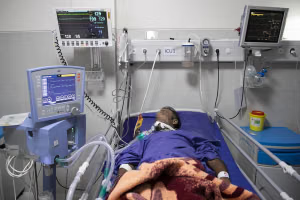
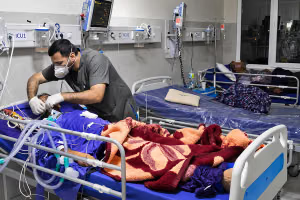
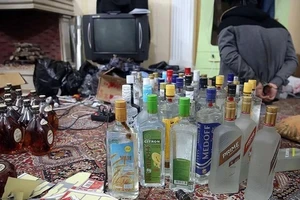
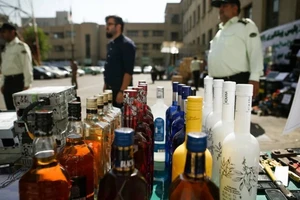
The head of Iran's psychiatric association has warned that some bootleg alcohol is being poisoned deliberately, as a wave of poisonings that has killed at least 26 people and sickened more than 550 spreads to a dozen regions, from Neyshabur to Bandar Abbas.
In large waves of alcohol poisoning, "people deliberately, and for various reasons such as profit, poison alcohol," Vahid Shariat, head of the Iranian Psychiatric Association, told the ISNA news agency on Friday. He did not say who they were or how they profited.
Drinkers have no way of telling whether what they buy is toxic, he said, and most of the harm could be prevented. He criticized what he called an "eliminationist" approach to alcohol and urged the state to put harm reduction first.
"There is widespread sloganeering at some levels of management, and those who make harsher slogans and bigger claims get more attention," he said.
'Which dealer can supply the whole country?'
The spread of the poisonings, from the northeast to the Persian Gulf coast and from Khoy in the northwest to Zabol in the southeast, has fed suspicion online that they are organized.
"It's obviously the state's doing, otherwise the whole country wouldn't be poisoned," one Iranian wrote to Iran International. "Which dealer or bootlegger can distribute across the whole country?"
Earlier this month, the London-based channel Manoto aired an audio message from a man in Iran who said people linked to the security services and the Revolutionary Guards were involved in distributing alcohol and deliberately contaminating some shipments, without many producers knowing. He offered no evidence, and the claim could not be verified.
Others who wrote to Iran International blamed the ban itself. "The one responsible is whoever won't let quality, standard products in," one said.
543 cases, 23 deaths in the national count
The Health Ministry recorded 543 poisonings and 23 deaths across 12 medical university regions between October 31 and Wednesday evening, and eight people declared brain dead, ministry spokesman Hossein Kermanpour said.
Neyshabur had the most cases, 214, followed by Hormozgan with 93, Shiraz with 81 and Tehran province with 69. Kordestan, Khoy, Alborz, Mashhad, Isfahan, Zanjan, Khalkhal and Zabol also recorded cases.
Of those poisoned, 205 needed dialysis, 33 were in intensive care and 38 had blurred vision. The average age was 31, and 92 were under 20, according to ministry figures.
The toll has risen since. In Hormozgan, 126 people had been poisoned and 10 had died by Friday morning, nine in Bandar Abbas and one on Qeshm Island, the provincial health spokeswoman said, up from seven deaths in the ministry's count. The youngest was 12. In Neyshabur, 238 people had been treated by Thursday, with five dead and five declared brain dead. In Khoy, in West Azarbaijan, 20 people were poisoned and three died.
"No alcoholic drink can be considered safe," Kermanpour wrote on X, adding that the figures were published "not to frighten or blame people" but to prevent more deaths.
'Even a small amount'
Methanol, an industrial alcohol, cannot be detected by smell, taste or appearance, and even a small amount can be dangerous, said Shervin Tabrizi, a spokesman for Tehran's emergency services.
Symptoms, which can appear hours after drinking, include blurred vision, headache, nausea, vomiting, abdominal pain and drowsiness. He urged anyone with symptoms to call the 115 emergency line at once.
A deadly market
Alcohol is banned in Iran for Muslims, who face flogging if caught drinking, and only recognized religious minorities may make it for private use. Bootleggers often stretch drinks with cheap industrial methanol, and mass poisonings recur.
The worst came in early 2020, when 796 people died after drinking methanol in the false belief that it protected against COVID-19, according to Iran's Legal Medicine Organization.
In 2023, methanol-laced drinks killed 17 people and blinded 191 in Alborz province, near Tehran. Four people were later sentenced to death for "corruption on earth" for distributing them.
A medical worker attends to a patient at a hospital in Iran.
Weak oversight and financial strain in Iran's healthcare system have left patients facing demands for under-the-table payments, some running to billions of rials for essential treatment, the state news agency IRNA reported on Wednesday.
IRNA called the practice, known in Iran as zirmizi, or "under the table," a possible form of "modern-day extortion" that exploits patients' dependence on their doctors and their fear of losing treatment.
Patients have reported demands for hundreds of millions of rials for routine operations such as removing an appendix or tonsils, and several billion rials for specialized treatment such as bone marrow procedures, IRNA said. One hundred million rials is about $36, and 3 billion rials about $1,070, at a time when the monthly minimum wage is about 166 million rials, or $59.
The payments fall outside insurance and can bypass hospital accounts through cash, personal bank accounts, intermediaries and installments. Patients have told Iran International that some doctors demanded cash or gold coins before performing surgery.
Fear of delayed surgery, retaliation or losing follow-up care keeps many patients from reporting unauthorized charges, which weakens a system of oversight that depends on formal complaints.
Many cases referred to the Government Discretionary Penalties Organization end in acquittal for lack of evidence, such as missing receipts, Deputy Health Minister Sajjad Razavi told local media last month.
There are no reliable figures, said lawmaker Mohammad Jamalian, who heads a parliamentary committee investigating the payments, because so few violations lead to complaints.
In August, the head of the Medical Council, Mohammad Raeeszadeh, cited a survey of more than 60,000 people in which only 5.6 percent said they had paid above approved rates. IRNA questioned the survey's method and whether it counted payments that went unreported.
Patients pay
Iranian patients are paying 55 to 75 percent of their healthcare costs out of pocket this year, and some medicine prices have risen 400 to 500 percent, Hosseinali Shahriari, chairman of parliament's Health Committee, said in September.
Nearly half of those who answered a voluntary Iran International audience survey from October 30 to November 3 said they had postponed treatment or medication because of rising prices. Rising costs have also pushed patients from private hospitals into overstretched public ones.
Much of the strain comes from the state itself. Hospitals and doctors say official tariffs are too low to cover costs, and some state-run basic and supplementary insurers are seven to eight months behind on their payments, Raeeszadeh has said.
None of that justifies unlawful charges, IRNA said, adding that fixing medical pricing and health financing was the job of policymakers, not patients. It called for insurers to pay on time, for transparent hospital billing, for protection for patients who report violations, and for disciplinary cases to be made public.
A woman shields her head from a man's raised fist in an image depicting domestic violence in Iran.
From childhood sexual abuse to violence at the hands of husbands and fathers, Iranian women have shared experiences they say they kept secret for years, revealing how fear, stigma and discrimination have silenced victims.
The accounts emerged after Iran International asked women on Instagram to describe violence they had experienced but never spoken about, ahead of the International Day for the Elimination of Violence Against Women on November 25.
Many women said fear of social judgment, pressure to protect their families' reputation and a lack of legal protection had prevented them from speaking out.
“I had so many painful experiences within my family and society that I did not want to have a daughter, fearing she might experience what I did, even at the hands of those closest to her,” one woman wrote.
When home is not safe
Many respondents described violence inflicted by their closest relatives, including fathers, brothers and husbands.
One woman said her father repeatedly struck her on the head with a clothes iron when she was 18 following an argument over her wearing makeup, leaving her hospitalized. Despite his subsequent apologies, she said she had never forgiven him.
Another described severe beatings by her husband during pregnancy, including an assault that damaged her amniotic sac when she was six months pregnant.
A third said abuse by her mother and older brother had driven her to attempt suicide at 15. She married at 17 to escape her family, only to find herself trapped in another cycle of violence that eventually ended in divorce.
The accounts emerged against a backdrop of killings of women and girls by relatives and other people known to them.
A woman sits inside a shelter for survivors of domestic violence in Iran. (NCRI Women’s Committee)
At least 84 women and girls killed in seven months
According to figures compiled from media reports, at least 84 women and girls were killed in Iran between March 21 and October 13 this year. In 75 cases, the perpetrator was someone known to the victim. Twelve victims were under 18, eight of whom were killed by fathers, brothers or other blood relatives.
The figures cover only cases made public through media reports.
One respondent said that had she not married, her abusive brothers might have subjected her to the same fate as Sogand Sayyadi, a 16-year-old girl who died earlier this month after falling from a fifth-floor window in Kermanshah.
Sayyadi's father is under investigation on suspicion of assault and murder, allegations he denies.
An illustrative image depicting sexual harassment against women in Iran.
Abuse beyond the home
Childhood sexual abuse, rape by relatives and harassment in public spaces also featured prominently in the responses.
One woman described being sexually abused by her grandfather and later harassed by men on the streets while looking for work.
A 24-year-old said she had experienced sexual harassment since the age of eight, on her way to school, in taxis, on the metro, at work and even among relatives.
For some, financial dependence made confronting abuse particularly difficult.
“Given the situation in the country, I could not change jobs,” one woman wrote. “The person harassing me knew I was silent out of fear and financial necessity, and continued his behavior.”
Hijab enforcers confront a woman without a headscarf near Tehran’s Grand Bazaar.
Discrimination begins at school
Several women traced their earliest experiences of violence and discrimination to school and the enforcement of compulsory hijab.
One recalled how her middle school principal took her to the school office and cut her hair with scissors because her thick, curly hair protruded beneath her head covering.
Another woman recalled being required to wear a headscarf from the age of six. “There, they taught us that because we were girls, we had no right to speak loudly, laugh or protest,” she wrote of her school.
Others described restrictions on education, employment and personal freedom imposed by their families.
“My family forced me into marriage without caring that I wanted to go to school and continue my education,” a woman who experienced child marriage wrote.
Several respondents also pointed to discriminatory laws under the Islamic Republic, which they said left women with little protection against abuse.
Women at a safe house for survivors of domestic violence in Iran. (NCRI Women’s Committee)
The price of speaking out
Fear of the consequences of reporting violence was a recurring theme, with women describing victim-blaming, family pressure, possible prosecution and the risk of further abuse.
One woman who had been physically assaulted at a social gathering said she abandoned plans to file a complaint after being told that a court might question her for attending an event with men unrelated to her.
Some respondents pointed to insulting comments and attempts to justify violence beneath Iran International's Instagram post itself as examples of why women often remain silent.
Others expressed solidarity with survivors and encouraged them to share their experiences.
But for many, escaping an abusive relationship or bringing physical violence to an end had not meant an end to their suffering. The psychological consequences, they said, continued years later.
Shiite clerics stand near women wearing black chadors in Iran, where temporary marriage, known as sigheh, provides a religiously and legally recognized framework for sexual relationships outside permanent marriage.
With marriages in Iran at half their 2010 peak and young people priced out of setting up a home, a lawmaker has proposed letting couples marry on paper and wait up to five years to live together, reviving debate over religious answers to an economic problem.
Amirhossein Bankipour, a member of parliament's Cultural Committee, said young Iranians faced a growing gap between sexual maturity and the means to start a household. Only 1 percent of young men and 20 percent of young women under 20 marry, he said.
"Our first solution is marriage, and if that is not possible, the second is chastity and modesty. But if these solutions alone are insufficient, we should not ignore the problem and must consider other options," he said.
His third option is a long engagement in law. In Iran, couples often sign a marriage contract, known as aqd, months before they hold a wedding and move in together. Bankipour proposed stretching that period to four or five years, until the couple has a job, a home or enough money to live on.
Half as many marriages
Official figures show how far marriage has slipped out of reach. Iran registered 431,415 marriages in the year to March 2026, down 8.8 percent from the year before and about half the 891,627 recorded in 2010, according to the national population headquarters, which cited civil registration data.
The average age at first marriage has risen to 28.2 for men and 24.1 for women.
Officials blame rising housing costs, dowry expenses, inflation and job insecurity. With inflation near 89 percent and rents a third higher than a year ago, some couples who divorce now cannot afford to move out of the home they shared.
A couple stands facing a religious shrine in an advertisement for a marriage registration office in Iran that also issues temporary marriage (sigheh) certificates.
Between desire and doctrine
Under Iranian law, sex outside marriage is a crime, which leaves young Iranians few legal options for intimacy.
One of them is temporary marriage, known in Persian as sigheh, a practice recognized in Shiite jurisprudence. Unlike permanent marriage, a sigheh has an agreed duration and a set dowry. It can last from a few hours to several years and ends without divorce.
Religious authorities present it as a way to meet sexual needs without breaking Islamic law. Bankipour did not explicitly propose it, but his remarks revive a long debate over how far marriage contracts can be stretched to fit lives that marriage no longer fits.
Sigheh's legal standing has not brought social acceptance. Even in religious families, it carries a stigma, especially for women, Iran International has reported.
Temporary marriage has also given commercial sex a legal cover.
A May 2025 Iran International investigation found online platforms offering paid encounters marketed as Islamic marriage. Intermediaries advertised women by age, appearance, education and location, offering arrangements from a few hours to monthly contracts. Contacts with several operators showed that some arranged real meetings rather than simply defrauding customers.
Iran's cyber police later acknowledged the spread of such platforms but described many as scams. Prostitution is banned in Iran.
Temporary marriage gives men and women very different rights. A man may have any number of temporary wives at once, and needs no permission from a permanent wife. A woman may have only one husband at a time, and must wait at least 45 days after a sigheh ends before entering another.
A woman in a temporary marriage has no right to maintenance after it ends and no right to inherit from her husband. Registration is required only if a child is conceived, which can make it hard for women to prove the marriage or the father's identity in court.
Those gaps fall hardest on women who enter a sigheh out of economic need. The same arrangement that gives men a religiously permitted route to sex can leave women with lasting social judgment.
Earlier this year, state-backed gatherings set up matchmaking stalls, urging young Iranians to marry earlier and expect less materially from married life. State-backed "spouse-finding" apps promote early marriage under a 2021 population law.
Bankipour's proposal also concedes that jobs and housing now stand between young Iranians and marriage. But instead of addressing those obstacles, it separates the marriage contract from the cost of setting up a home.
Young Iranians who choose relationships outside marriage, meanwhile, face legal risks, family expectations and social restrictions, often while still living with their parents
A young schoolboy covers his face as he cries in a classroom in Iran.
His homework was unfinished. His teacher broke his leg and threatened to beat him again if he told his father. The story of an eight-year-old Iranian schoolboy has stirred anguish among parents and revived painful childhood memories.
Siavash Madadi should be spending his days learning to read and write, running around the schoolyard and playing with children his own age. Instead, the second-grade student from a village in Lorestan province, in western Iran, is lying in a hospital bed with a severe fracture to his right leg.
In a video sent to Iran International, the boy explains why his teacher hit him. He simply had not finished his schoolwork.
But the punishment did not end with the blow. The teacher warned him against turning to the very person a child should be able to turn to when someone hurts them: his father, according to information obtained by Iran International.
Eight-year-old Siavash Madadi lies in a hospital bed alongside an X-ray showing the severe fracture to his right leg after his teacher beat him for failing to complete his homework.
Among those who responded to the report, there was disbelief at what the boy had endured.
“How could a child with a broken leg go home without his family noticing that he had been injured?” one person asked.
Some thought of their own children. Others remembered being children themselves, at the mercy of adults they had been taught to respect.
“Wasn’t school supposed to be the second-safest place for children?” another person wrote.
Hours after Iran International published the boy’s story, the public prosecutor of Lorestan province announced the teacher’s arrest and the opening of a criminal investigation.
But the announcement could not undo what had happened to the boy or erase the painful memories his story had brought back.
He is only eight
One parent who contacted Iran International had a son in second grade, just like Madadi. Another wondered whether the injured boy would be able to run and play again without difficulty.
For others, the boy’s story opened old wounds.
One person recalled how their younger brother had been beaten by his teacher on his very first day of second grade, leaving half his face bruised.
Iran’s independent teachers’ unions, whose leaders have faced arrest and prison, have long campaigned against violence in schools. Last week their coordinating council condemned a school in Kermanshah for handing 16-year-old Sogand Sayadi over to her father after she warned staff he would kill her.
The wounds no X-ray can show
Doctors can see where Madadi’s bone has broken. The other wounds that violence can leave on a child are harder to see.
“Corporal punishment leads to poor academic performance, undermines children’s self-confidence and may even make them lose the desire to go to school,” Nahid Husseini, a London-based researcher specializing in women’s affairs and education, previously told Iran International.
Teachers opposed to corporal punishment should join parents in widespread protests against physical violence, humiliation and verbal abuse in schools, Husseini said.
“I would warn parents that if they do not take action, it could be their own child who suffers psychological and emotional harm tomorrow,” she added.
The consequences of corporal punishment can persist into adulthood, affecting children’s health, academic performance and social relationships, the World Health Organization said in an August 2025 report.
A protection that existed on paper
Article 81 of Iran’s school regulations, adopted in 2021, prohibits corporal punishment and mistreatment under any circumstances.
In December 2025, the education ministry issued a nationwide directive instructing school administrators to enforce the prohibition.
Iran also passed a law in 2020 that makes harming a child a crime, after the killing of 14-year-old Romina Ashrafi by her father caused a national outcry. But Iran’s penal code still allows parents and guardians to physically discipline children within what it calls “customary limits,” a provision critics say leaves the line between discipline and abuse unclear.
Yet an eight-year-old ended up in a hospital bed because he had not finished his homework.
Several people questioned teachers’ psychological suitability and professional competence. Some criticized what they described as the prioritization of religious and political criteria in recruitment.
Applicants for teaching posts in Iran, like all state employees, must pass gozinesh, a vetting process that checks their religious practice and political loyalty to the Islamic Republic.
“Assess teachers’ mental health during recruitment,” one person wrote.
Others demanded the teacher’s dismissal and prosecution.
Madadi’s broken leg is being treated. His teacher is in custody. But an arrest alone cannot restore the trust of parents who send their children to school each morning believing they will be safe.
At eight years old, a child should know that when someone hurts him, he can turn to his parents. That he does not have to hide his pain. That telling his father is not something for which he will be punished.
It was Madadi’s own teacher who told him otherwise.
Police in the western Iranian city of Sanandaj have arrested the parents of Helia Fattahi on charges of killing their daughter, who rights groups said was strangled after telling her family she was two months pregnant.
Police in the western Iranian city of Sanandaj have arrested the parents of Helia Fattahi on charges of killing their daughter, who rights groups said was strangled after telling her family she was two months pregnant.
Both parents confessed during questioning, Shahram Abdi, head of the criminal police in Kordestan province, said on Tuesday. Detectives went to the house after a report of a young woman’s death, he said, and concluded she had been killed. The police, citing the parents, said the motive was “family disputes.”
Fattahi was killed on Saturday night at her family’s home in Sanandaj’s Naysar neighborhood, the rights group Hengaw reported. She had told her family she was pregnant the week before, Hengaw said, citing sources, and her parents beat her and then strangled her. Hengaw and another rights group, Hana, both described the killing as a so-called honor killing.
The police and Hengaw gave her age as 19. Hana said she was 16. The police did not comment on the pregnancy or on how she was killed.
Hana also said the Iranian news site Rokna had republished a photo of Fattahi first released by Hana, without credit, after digitally adding a hijab to it. Hana called it a distortion of the image and a breach of journalistic ethics.
Fattahi’s death is the third killing of a young woman or girl in Iran in a little over a week to draw national attention.
On November 18, Sadaf Haghbin, 23, was shot dead at her birthday party in Gilan province, in the north. Local media said a former boyfriend was the gunman, and the Khabaronline news site said the likely motive was her refusal to marry him.
Days earlier, Sogand Sayadi, a 16-year-old schoolgirl in Kermanshah, died after falling from the fifth floor of a building. A national network of teachers’ unions said she had warned school staff that her father would kill her if they sent her home with him. The coroner said she died of injuries from the fall, and Kermanshah’s prosecutor said the circumstances were under investigation.
‘No transparent data’
At least 84 women and girls were killed in Iran between March 21 and October 13, and in 75 cases the killer was someone they knew, according to a count of cases reported in the media. Twelve of the victims were under 18, and eight of those girls were killed by fathers, brothers or other blood relatives. The count covers only cases that reached the media.
Hana said on Monday, ahead of Wednesday’s International Day for the Elimination of Violence against Women, that it was alarmed by the rise in recorded killings of women in Iran. The lack of transparent data and the many cases of domestic violence that are never reported made it impossible to know the scale of the problem, its legal office said, calling for women at risk to have access to safe shelters and legal protection.
A bill to protect women from violence has been passed back and forth between the government, parliament and other state bodies for more than 15 years and has still not become law.
Under Article 301 of Iran’s Islamic Penal Code, a father or paternal grandfather who kills his child is exempt from qisas, or retribution in kind, the punishment for most murders. The exemption does not cover mothers. After Sayadi’s death, lawyers and women’s rights activists called for the law to be changed and for protective laws to be passed.