• العربية
  • فارسی
BrandBrand
  • Iran Insight
  • Politics
  • Economy
  • Analysis
  • Special Report
  • Opinion
  • Podcast
  • Live TV
  • Iran Insight
  • Politics
  • Economy
  • Analysis
  • Special Report
  • Opinion
  • Podcast
  • Live TV
  • Theme
  • Language
    • العربية
    • فارسی
  • Iran Insight
  • Politics
  • Economy
  • Analysis
  • Special Report
  • Opinion
  • Podcast
  • Live TV
All rights reserved for Volant Media UK Limited
volant media logo

Bootleg alcohol poisons 257 across three Iranian provinces, at least 10 dead

Nov 24, 2026, 10:38 GMT+0

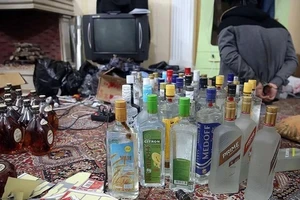
Bootleg alcohol has poisoned at least 257 people and killed at least 10 in three Iranian provinces in recent days, health officials said, as a wave that began in the northeastern city of Neyshabur spread to Shiraz and the southern port of Bandar Abbas.

In Hormozgan province, on the Persian Gulf, the number of people poisoned rose from 16 to 28 and the death toll from three to five, according to figures released by Tuesday. Twenty-four were admitted in Bandar Abbas, two on Qeshm Island and two in Minab, east of the city.

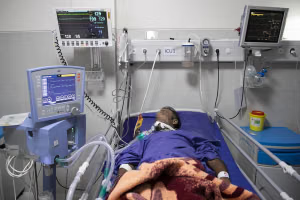
Four people died in Bandar Abbas and one on Qeshm, Farideh Hassanzadeh, spokeswoman for Hormozgan University of Medical Sciences, told the Mehr news agency on Monday night. Most of those in hospital had kidney damage and some were on dialysis, she said. Others had blurred vision. Officials have not said what substance caused the poisonings.

Neyshabur and Fars

In Neyshabur, in Razavi Khorasan province, 191 people had been admitted to hospital by Monday evening, up from about 120 a day earlier, said Seyed Milad Taghdisi Heydarian, acting deputy for treatment at Neyshabur University of Medical Sciences.

Four people have died and four have been declared brain dead. Ninety-five remain in hospital, 62 have been discharged and 34 have been sent to Mashhad and Sabzevar for treatment.

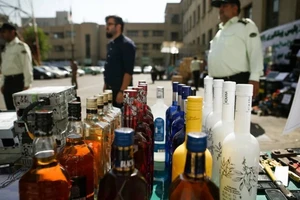
Neyshabur’s prosecutor said three people had been arrested in the case. Police had earlier said 12 suspects were detained.

In Fars province, 38 people have been admitted to public hospitals in Shiraz and nearby Marvdasht, up from about 30. One person has died, the provincial police chief said.

The Shiraz prosecutor said on Monday night that 18 were still in hospital and one patient in intensive care had been declared brain dead. Seven people have been arrested for distributing counterfeit drinks and three production sites have been sealed, he said.

‘Legal sales and health checks’

Some Iranians who wrote to Iran International said the ban on alcohol had fed a market where nobody checks what is in the bottle. Rather than blaming those who were poisoned, they called for legal sales and health inspections.

Alcohol is banned in Iran for Muslims, who face flogging if caught drinking, and only recognized religious minorities may make it for private use.

Homemade and counterfeit drinks, often made with cheap industrial alcohol, kill people in Iran several times a year. Methanol, a common cause, damages the kidneys and eyes, which fits the symptoms officials describe.

In November 2025, eight people died after drinking bootleg alcohol in Iranshahr and Bampur, in the southeast, and one lost their sight. In early 2020, hundreds died after drinking methanol in the false belief that it protected against COVID-19.

Alcohol accounted for about 5 percent of deaths from poisoning in Iran in the five months to August 2025, according to the Legal Medicine Organization.

  • Bootleg alcohol identified as top cause of deaths from poisoning in Iran

    Bootleg alcohol identified as top cause of deaths from poisoning in Iran

  • Who is behind the sale of lethal bootleg alcohol in Iran?

    Who is behind the sale of lethal bootleg alcohol in Iran?

  • Bootleg alcohol poisons 120 in northeastern Iran, four dead

    Bootleg alcohol poisons 120 in northeastern Iran, four dead

  • Deadly poisonings fuel anger over Iran's alcohol ban

    Deadly poisonings fuel anger over Iran's alcohol ban

Most Viewed

Truck drivers strike across Iran over economic hardship
1

Truck drivers strike across Iran over economic hardship

2

Tehran's subsidence zone expands 20% in two years

3

Trump threatens Iran strikes in new year, says blockade runners will be sunk

4
VOICES FROM IRAN

Deadly poisonings fuel anger over Iran's alcohol ban

5

'Happy Ending' pushes the limits of Iran's underground cinema

Banner
Banner
Banner
Banner
Banner
Banner
Banner

Spotlight

  • Iranian media walk back tanker convoy claims after days of blockade-breaking hype

    Iranian media walk back tanker convoy claims after days of blockade-breaking hype

  • Iraqi forces enter Iran-backed militia stronghold, but who holds power?
    ANALYSIS

    Iraqi forces enter Iran-backed militia stronghold, but who holds power?

  • Tehran claims its missiles can reach Europe. What has it shown?
    ANALYSIS

    Tehran claims its missiles can reach Europe. What has it shown?

  • New video reveals where Iran clerics chose Mojtaba Khamenei as supreme leader
    INSIGHT

    New video reveals where Iran clerics chose Mojtaba Khamenei as supreme leader

  • Iran's housing crisis keeps divorced couples under one roof

    Iran's housing crisis keeps divorced couples under one roof

  • 'Happy Ending' pushes the limits of Iran's underground cinema

    'Happy Ending' pushes the limits of Iran's underground cinema

  • Power cuts return across Iran, threatening over one million jobs
    VOICES FROM IRAN

    Power cuts return across Iran, threatening over one million jobs

  • Inside Iran's online gun market, where a few messages can start a deal

    Inside Iran's online gun market, where a few messages can start a deal

  • ‘The city smelled of blood’: Witness recalls Iran protest crackdown

    ‘The city smelled of blood’: Witness recalls Iran protest crackdown

•
•
•

More Stories

Deadly poisonings fuel anger over Iran's alcohol ban

Nov 23, 2026, 12:30 GMT+0
100%
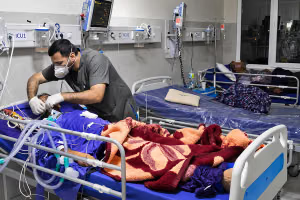
A healthcare worker tends to a patient receiving respiratory support in an intensive care unit at a hospital in Iran.

The poisoning of around 150 people and deaths of at least five from adulterated drinks have sparked widespread criticism of Iran's alcohol ban, with citizens blaming the policy for unsafe products and some accusing state institutions of distributing them.

At least five people have died after consuming counterfeit alcoholic drinks in Neyshabur, Shiraz and Marvdasht in recent days, according to official figures.

The number of people poisoned in Neyshabur reached 120, with four deaths, Milad Taqdisi Heydarian, acting deputy for treatment at Neyshabur University of Medical Sciences, said on November 22.

One patient was declared brain-dead and 11 others required intubation, according to the official figures.

Health officials in Shiraz also reported around 30 methanol poisoning cases in Shiraz and Marvdasht, leaving one person dead and four in intensive care.

Citizens blame prohibition for unsafe drinks

The poisonings prompted widespread reactions from Iran International's audience, with many arguing that the Islamic Republic's ban on alcohol production, sales and consumption has fueled an unregulated market.

  • Bootleg alcohol identified as top cause of deaths from poisoning in Iran

    Bootleg alcohol identified as top cause of deaths from poisoning in Iran

"Look at the result of prohibition. This is how they end up giving people poison," one citizen wrote.

Another criticized those who blamed the victims for drinking alcohol, questioning why Iran does not permit the sale of alcoholic drinks that meet international safety standards.

Several respondents argued that prohibition had failed to stop consumption while removing safeguards against dangerous products.

"People in our country drink alcohol. At least legalize it and regulate it. That would be better than the current situation," one citizen wrote.

"I don't drink, but its import and sale should be legalized," another said.

Fatal alcohol poisonings have repeatedly occurred in Iran. In December 2025, eight people died and one lost their sight after consuming contaminated drinks in separate cases in Iranshahr and Bampur.

Alcohol poisoning accounted for around five percent of 4,232 poisoning-related deaths during the first five months of the Iranian calendar year, according to a forensic medicine report published in October 2025.

Homemade and counterfeit alcoholic drinks were identified as major causes.

Revolutionary Guards accused of involvement

Some respondents accused institutions linked to the Islamic Republic, including the Revolutionary Guards, of distributing contaminated drinks.

"The Revolutionary Guards themselves distribute these counterfeit products," one citizen wrote.

Another described those supplying adulterated drinks as "system-affiliated sellers."

One respondent said methanol was advertised on Instagram as "90 percent corn alcohol" for 3000,000 rials per liter and accused the Revolutionary Guards of supplying it.

The actual number of alcohol poisoning cases could be [up to 10 times higher than emergency admission figures https, Deputy Health Minister Alireza Raisi said in October 2025, explaining that some victims avoid treatment because of fear or other reasons.

  • Who is behind the sale of lethal bootleg alcohol in Iran?

    Who is behind the sale of lethal bootleg alcohol in Iran?

Methanol poisoning can cause blindness, severe organ damage and death. Health officials in Neyshabur have yet to identify the substance responsible for the latest poisonings.

The deaths have renewed criticism of restrictions that citizens say leave consumers dependent on an unregulated market, with some demanding legalization and quality controls to prevent further fatalities.

Iran's housing crisis keeps divorced couples under one roof

Nov 22, 2026, 19:06 GMT+0
•
Sharareh Azizi
100%
File photo of a sunset in Tehran

After 12 years of marriage and one child, they agree to divorce, and on a summer afternoon it is registered. Then they leave the registry office and go back to the same home, where they had split the rooms between them long before the divorce.

The father has moved into their 10-year-old son's room. The mother stays in the room she once shared with her husband.

For some couples in Iran, the marriage is over, but the housing crisis will not let them leave it behind.

The divorce has been granted, and neither sees the other as a spouse anymore. Yet every night they come home to the same apartment: not to reconcile, not to rebuild, but because neither can afford a place of their own.

In Tehran, the cost of housing can turn even a divorce into a half-finished decision.

A home out of reach

The latest data from Tehran's housing market show asking prices still rising. An analysis of 43,307 apartment listings in the city between November 13 and 20 put the average asking price at about 3 billion rials (about $1,100) per square meter, up 12.5 percent from a month earlier. At that price, a single square meter costs about 18 months of the minimum wage.

  • Tehran rents hit three times many workers’ monthly pay

    Tehran rents hit three times many workers’ monthly pay

  • Shared housing spreads in Iran’s deepening rent crisis

    Shared housing spreads in Iran’s deepening rent crisis

  • Skyrocketing rents push Iranians back to parents’ homes, shared housing

    Skyrocketing rents push Iranians back to parents’ homes, shared housing

Prices are rising even though households have little purchasing power left and sales have stalled.

Renters are under pressure too. Rents in the month to October 22 were 33.4 percent higher than a year earlier, the Statistical Center of Iran said, rising 3.5 percent in that month alone. That is slower than overall inflation, but it does not make renting cheaper. Tenants still pay more each time they renew a lease or look for a new home, which puts independent living further out of reach for low-income families.

For some divorced couples, paying for two homes is simply impossible, so they stay under one roof after their marriage has ended.

'Like two housemates'

Soudabeh, a bank employee who asked that her real name not be used, told Iran International that rising rents and living costs were the main reason she and her former husband still live together.

She had thought about divorce for years, she said, but hesitated because she worried about how she would cover her living costs, especially rent for a home of her own. Renting two separate places was practically impossible, she said. Now that the divorce is official, they live in the same home like two housemates.

  • ‘Living in despair’: uncertainty, economic turmoil erode hope in Iran

    ‘Living in despair’: uncertainty, economic turmoil erode hope in Iran

  • Food, medicine, hope: what Iran's economic crisis is costing its people

    Food, medicine, hope: what Iran's economic crisis is costing its people

The arrangement has cut their costs, she said, and spared them the difficulty of finding a place to rent as single people. But it comes with problems of its own. Privacy and the psychological effect on her children are the hardest parts, she said.

Soudabeh grew up in a traditional family. "Apart from close relatives, no one knows we are separated, and they find it hard to accept, even unacceptable," she said.

She hopes the arrangement is temporary, and that they will soon be able to rent two smaller homes of their own.

Living together after a divorce can take a psychological and social toll on both partners. The loss of privacy and independence, the difficulty of starting new relationships and unresolved tensions can all add to the strain.

For children, it is even more confusing. Children who still see their parents living together after a formal divorce may struggle to understand what has changed, caught between hoping their parents will reconcile and accepting that they have split. Without clear boundaries, and with conflicts still unresolved, their sense of security can suffer.

Families behind a curtain

Living together after divorce is only one of the new ways of living that the housing crisis has forced on Iranians.

In recent years, more and more families have moved in together to share the cost of a single apartment. Some are not even related. They share a home to pay the rent, cover mortgage installments or cope with rising living costs.

In one account on social media, a woman described two families sharing a home in south Tehran. They had divided it with a curtain, she said, but still shared the kitchen, bathroom and toilet.

It is a picture of families forced to adapt to the cost of housing, in a country where privacy has become a luxury.

In August 2023, as parliament debated the government's seventh development plan, its own research center published a report on housing that identified eight forms of homelessness produced by the crisis and the failure of the state's housing policies.

Alongside people sleeping on rooftops, in boiler rooms, in cars, on buses and even in graves, the report listed people who keep moving from place to place, people who take jobs mainly to get a place to sleep, and "two or more families sharing a single housing unit."

The research center said these were the result of low-income families and tenants being priced out of decent housing, and of housing policies that had failed the most vulnerable.

Poverty reshapes the family

Iran's housing crisis is no longer just about being unable to buy a home or pay the rent. It is changing the shape of family life, people's relationships, and even whether they can end one.

For some, separation no longer means leaving home and starting a life of their own. It means dividing the rooms, keeping their distance behind closed doors and going on living in a shared space.

Beyond the financial strain, that carries a psychological and social cost: it makes adjusting to divorce harder for both partners, and leaves children exposed to uncertainty, tension and their parents' unresolved conflicts.

The divorce is registered, but the home is still shared. Sometimes what keeps a marriage going is neither love nor a wish to return, but the inability to pay for a separation.

'Happy Ending' pushes the limits of Iran's underground cinema

Nov 22, 2026, 16:37 GMT+0
•
Mo Abdi
100%
A scene from Atena Mahmoudi's Happy Ending, an underground Iranian film that premiered at the Tallinn Black Nights Film Festival in Estonia without its makers, who are banned from leaving Iran.

Happy Ending, Atena Mahmoudi's underground first feature about a young Tehran masseuse trying to leave Iran, premiered at Estonia's Tallinn Black Nights Film Festival without its makers, who are banned from leaving the country.

The film, shown in the first feature competition of the festival's 30th edition, was made without a state permit. Security agents raided the production and seized footage, but the filmmakers managed to save a copy and finish it. It reached Tallinn as one of a growing number of Iranian films made outside the state system, which tries to push past the limits that system imposes.

Underground filmmaking has become one of the few ways Iranian directors can show life as it is. Films made with a permit must follow the state's rules: women cannot appear without a headscarf, and men and women cannot touch on screen. Directors who break them risk prison and travel bans.

A woman under pressure

The film is a portrait of today's Tehran. Elaheh wants to leave Iran with her boyfriend, Soheil. She works in a secret massage parlor but refuses to offer sexual services, the "happy ending" of the title.

Mahmoudi sets out to show Elaheh's world through her relationships with her mother, her boyfriend and a society that expects different things of her. But the film's most important element is its portrait of a woman in a society on the brink of war, under pressure from every side.

  • Made without permission: how Iran’s underground cinema owned 2025

    Made without permission: how Iran’s underground cinema owned 2025

  • An Iranian film broke every taboo. Viewers say society broke them first

    An Iranian film broke every taboo. Viewers say society broke them first

  • Film shot inside Iran breaks censorship ground with intimate scenes

    Film shot inside Iran breaks censorship ground with intimate scenes

  • Iran filmmakers defy state censorship despite repression

    Iran filmmakers defy state censorship despite repression

On one side is a tempting offer from a "Haji," a man close to the state who invites her to his home. Elaheh badly needs the money, both to help her mother, who lives alone, pay her rent and to raise what she still needs to emigrate.

On the other side are her own instincts, her commitment to the social struggle around her and Soheil, all pointing her the other way.

The film is the story of that temptation, set in a tense society worn down by poverty.

Iran's present, and the political and social upheavals of the past year, run through it. Its ending ties the story unexpectedly to the war. There, the film steps back from its heroine and gives her a strange fate: a victim in a closed society with no way out.

Breaking the rules, and some clichés

Happy Ending wants to be frank and to drop every restriction of official cinema. Its characters reject compulsory hijab and have no qualms about physical contact with the opposite sex.

In that sense, it is a step forward both in getting around the censorship that governs Iranian cinema and in telling a freer story, even by the standards of underground film.

But at times it falls back on the clichés of underground cinema: drinking, drunkenness and forbidden late-night parties.

These scenes have become a staple of recent underground films that try to record the uncensored lives of Tehran's middle class. Here, though, the way they are shown and told feels repetitive, as if all these films were copying one another, and the director cannot find a different way to tell them. As a first feature, the film also has weaknesses in execution that hurt parts of it.

A killing in the opening scene

The film opens with a death. During protests three years earlier, Elaheh takes shelter in her father's car, and he is shot dead by security agents in front of her.

The shadow of that killing by the state hangs over the whole film. It drives Elaheh's hatred of everything to do with "them" and shapes her rebellious character.

The film struggles, however, to reach the more complex layers of its heroine and settles for watching her from a distance. That may explain the coldness of some scenes, and why the unexpected ending arrives without the audience fully feeling for her.

Truck drivers strike across Iran over economic hardship

Nov 22, 2026, 12:47 GMT+0
100%
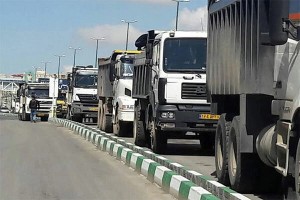
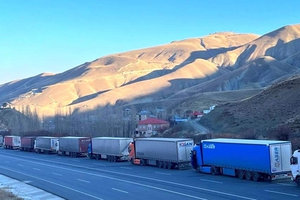
A line of trucks on a road in Iran at night, as truck drivers stage strikes over rising operating costs and worsening economic conditions.

Truck drivers in several Iranian cities have gone on strike over rising operating costs, stagnant freight rates and worsening economic conditions, with reports of work stoppages emerging on Sunday.

A video sent to Iran International showed a group of truck drivers stopping work in Shiraz, southern Iran, on Sunday.

The Telegram channel of the Union of Truck Drivers and Trucking Associations Across Iran also reported strikes in several cities, including Chabahar in southeastern Iran’s Sistan and Baluchestan Province and Dezful in southwestern Khuzestan Province, citing messages from its members.

“We went on strike because of these incompetent officials who do not care about the country or its people. We cannot go on like this anymore,” one driver wrote in a message to the union.

  • Explained: why Iran’s truckers are on strike and what it means

    Explained: why Iran’s truckers are on strike and what it means

Another driver pointed to soaring truck maintenance costs, saying 40 liters of engine oil and five filters now cost 620 million rials (approximately $230 at the free-market exchange rate).

For comparison, Iran’s minimum monthly wage in 2026 is about 166 million rials ($62), meaning the maintenance bill is equivalent to nearly four months of base pay for a minimum-wage worker.

A third driver urged colleagues to remain patient, arguing that the effects of a transport strike would take more than 24 or 48 hours to become visible.

“Be patient. Produce markets will empty, ports will empty, and factories will come to a halt,” the driver said.

Union backs nationwide strike

The Union of Truck Drivers and Trucking Associations Across Iran announced its full support for a nationwide strike on Saturday, November 21, calling on drivers across the country to stop work from November 22.

The union said freight rates had remained unchanged despite sharp increases in the prices of engine oil, tires and spare parts.

It also cited rising fuel, insurance, toll and repair costs, along with job insecurity and insufficient support for drivers, as reasons for the strike.

“This strike is a cry of protest from drivers who have spent years struggling under the weight of rising prices, injustice and neglect and can no longer endure these unbearable conditions,” the union said in its statement.

Economic pressures deepen

The strikes come as Iran faces renewed electricity outages and reports of long queues at petrol stations in several cities.

The continuation of the protests could encourage other professional groups to join, political analyst Iman Aghayari said in an interview with Iran International.

  • Truck driver strike tests Islamic Republic’s grip on road freight

    Truck driver strike tests Islamic Republic’s grip on road freight

The authorities are concerned about the potential spread of protests and are seeking to prevent other sections of society from joining through threats, inducements and repression, Aghayari added.

Iran's worsening economic conditions have placed growing pressure on households, particularly workers and pensioners struggling to meet everyday expenses.

Inside Iran's online gun market, where a few messages can start a deal

Nov 22, 2026, 12:39 GMT+0
•
Saman Rahmatian
100%

A few photographs, a price and an exchange of messages can be enough to initiate a gun deal in Iran, where sellers advertise everything from handguns and Kalashnikovs to weapons made with 3D printers.

An investigation by Iran International found dealers offering firearms through social media and messaging platforms, with some claiming they could deliver weapons anywhere in the country within two weeks.

The sellers describe a market shaped by financial hardship, fears of insecurity and demand from people seeking weapons to threaten or intimidate others.

But the scale of the trade remains unclear, as does how many advertised weapons actually change hands.

Who buys and sells guns in Iran?

One arms dealer told Iran International that some of his suppliers were livestock farmers, nomads and villagers who had owned rifles for years, including Brno, M1 and various shotguns.

Some legally possessed their weapons but had decided to sell them because of financial difficulties and rising living costs, he said.

Others owned unlicensed firearms, particularly military-style weapons, and feared their children or other family members might use them.

The dealer said he purchased weapons from their owners and resold them at a profit.

One seller said concerns about theft and personal security had prompted some wealthy Iranians to purchase firearms to protect themselves and their property.

Other customers, he claimed, were involved in illegal economic activities and sought weapons to collect debts, intimidate others or settle financial disputes.

From handguns to Kalashnikovs

Prices vary widely depending on the type, condition and country of manufacture of a weapon.

According to sellers interviewed by Iran International, prices for licensed Iranian-made firearms start at around 300 million tomans.

Handguns described as Turkish or Pakistani start at approximately 500 million rials, while weapons advertised as Beretta or Glock models can cost as much as $5,000.

One dealer quoted around 2 billion rials for a secondhand Chinese-made Kalashnikov, compared with as much as 8 billion rials for a Russian-made equivalent.

Ammunition is sold separately, with dealers quoting approximately 4,000,000 rials for a Kalashnikov cartridge and 8,000,000 rials for a Brno rifle cartridge.

These are asking prices rather than independently verified completed transactions.

Delivery across Iran

Social media advertisements examined by Iran International featured photographs and videos of firearms, accompanied by model names and prices.

One dealer claimed he could deliver weapons to different parts of Iran in less than 15 days. Another confirmed that delivery to Tehran was possible.

Some sellers demanded full payment before shipment, while others accepted deposits and the balance upon delivery.

One dealer claimed to have contacts with wholesale arms suppliers in Iraq's Kurdistan Region, allowing him to obtain different models from across the border. He promised refunds if a weapon could not be delivered.

Another seller said neither a buyer's identity nor the intended use of a weapon mattered to him. Once payment was received, he said, the firearm would be dispatched.

A market vulnerable to fraud

The proliferation of online gun advertisements has raised questions about how many sellers are genuine.

In a separate investigation conducted last year, reporters contacted five sellers advertising firearms through Telegram channels, but none provided a way to verify that they possessed the weapons on offer.

Two sent identical responses and price lists, raising questions about whether some advertisements were fraudulent or relied on common promotional templates.

Iranian police have reported operations against networks advertising and selling firearms online.

In early November, police announced that they had identified an online firearms distribution channel and seized two military-style handguns during an operation against suspects.

3D-printed guns enter the picture

The investigation also identified advertisements offering small, single-shot firearms described as having been manufactured using 3D printers.

Some have plastic bodies and unconventional shapes that can make them resemble toys, while their manufacture does not necessarily require industrial production facilities or the importation of complete firearms.

However, there is no reliable information about the number of producers in Iran, the volume of sales or the performance of the advertised models.

The emergence of such weapons has raised concerns internationally, with European researchers reporting increasingly sophisticated 3D-printed firearms and growing numbers of seizures.

Scale remains unknown

Official figures show thousands of illegal firearms being seized across Iran, although they offer only a partial picture of the market.

Police spokesman Saeed Montazerolmahdi said in November that firearms seizures had increased by 14% through the end of the Iranian month of Mehr, compared with the corresponding period a year earlier.

He said military-style weapons accounted for 31% of the firearms seized, with seizures in that category rising by 9%.

A review of police and judicial announcements across several provinces, alongside border enforcement reports, produced a combined total exceeding 12,300 firearms.

The figures cover different reporting periods and may overlap, meaning the total does not necessarily represent 12,300 separate weapons.

Iran's mission to the United Nations previously reported that more than 60,000 illegal firearms had been seized and collected during 2022 and 2023.

The Small Arms Survey estimated that Iranian civilians possessed approximately 5.89 million firearms in 2017, equivalent to 7.3 weapons per 100 people.

The estimate included both legally and illegally held weapons. No similarly comprehensive, more recent estimate is available.

The human cost

According to police figures, 1,163 shooting incidents were recorded in Khuzestan during the first six months of the current Iranian year, ranging from armed disputes to gunfire at public celebrations.

In October, two shootings involving family disputes in Dehloran and western Tehran left seven people dead. The perpetrators of both attacks also died by suicide.

The same month, lawyer Taher Ahmadi was killed after encountering an armed confrontation in Shush.

Gunfire at wedding celebrations has also claimed lives. Five-year-old Mohammad Chakeri was killed in Fanouj in August, while 12-year-old Mohammad Omar Tarek died in Dashtiari in September.

These incidents illustrate the consequences of firearm use, but no comprehensive, recent nationwide figures are available for deaths and injuries caused by guns.

Despite increased seizures and tighter laws, the true size of Iran's illegal firearms market remains unknown.

What begins with a photograph, a price and a promise of delivery can end with a weapon in the hands of someone whose intentions the seller never questioned.