• العربية
  • فارسی
BrandBrand
  • Iran Insight
  • Politics
  • Economy
  • Analysis
  • Special Report
  • Opinion
  • Podcast
  • Live TV
  • Iran Insight
  • Politics
  • Economy
  • Analysis
  • Special Report
  • Opinion
  • Podcast
  • Live TV
  • Theme
  • Language
    • العربية
    • فارسی
  • Iran Insight
  • Politics
  • Economy
  • Analysis
  • Special Report
  • Opinion
  • Podcast
  • Live TV
All rights reserved for Volant Media UK Limited
volant media logo

Iran dismisses US blockade, warns of broader confrontation

Nov 25, 2026, 19:08 GMT+0
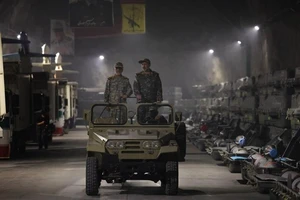
Visitors walk among missiles on display at the Islamic Revolutionary Guard Corps (IRGC) Aerospace Park, which opened to the public in November.

Iran stepped up its warnings against the United States, Israel and Arab countries in the Persian Gulf on Wednesday, threatening new military capabilities and demanding compensation from regional states it accused of facilitating attacks on its territory.

The combative rhetoric came as US officials claimed their blockade and sanctions campaign had brought Iranian oil exports to a standstill, depriving Tehran of a vital source of revenue.

Hassan Hassanzadeh, commander of the Islamic Revolutionary Guard Corps (IRGC) in Greater Tehran, said Iran's defense, missile and drone capabilities were “increasing day by day.”

“If the United States and Israel make another mistake, they will witness the unveiling of new targets, weapons and offensive plans,” he said.

Iran also directed its warnings at Arab countries in the Persian Gulf, accusing several of knowingly facilitating US and Israeli attacks by providing access to their territory, airspace, military facilities and logistical resources.

Iran's representative to the United Nations said those countries were legally obliged to compensate Tehran fully for the resulting damage.

US Treasury Secretary Scott Bessent said Wednesday that Iran had exhausted its floating oil stocks and failed to load a single tanker since Washington launched Operation Economic Outcast in August.

“The Iranian regime is a sinking ship,” Bessent wrote on X, adding that Iran “doesn’t have a drop of oil on the water left to sell.”

The economic pressure has also been reflected in Iran's currency, which fell to another record low on Tuesday, with the dollar reaching 2.856 million rials on Tehran's open market after Washington imposed fresh sanctions on Iranian financial networks.

But Revolutionary Guards spokesman Hossein Mohebbi said statements by American military commanders showed Washington was struggling to sustain the blockade.

He predicted that military exhaustion and mounting financial costs would force the United States to abandon its blockade and withdraw its forces from the region.

Mohebbi, however, said Washington would soon discover that its blockade was futile. He said Iran's armed forces remained fully prepared in equipment, resources and morale.

Meanwhile, China urged Washington and Tehran to keep the door to negotiations open, with Beijing's ambassador to Iran, Cong Peiwu, saying Wednesday that de-escalation and a return to talks should be the immediate priorities.

Cong said China supported a diplomatic settlement of the nuclear dispute and efforts to reach a comprehensive agreement over the Strait of Hormuz.

Most Viewed

Flogging of Iranian singer Parastoo Ahmadi sparks outrage on social media
1

Flogging of Iranian singer Parastoo Ahmadi sparks outrage on social media

2

Iran’s rial falls past 2.85 million to the dollar

3
ANALYSIS

Tehran claims its missiles can reach Europe. What has it shown?

4

Iranian media walk back tanker convoy claims after days of blockade-breaking hype

5
ANALYSIS

Iran’s disillusionment with Russia and China grows across political camps

Banner

Spotlight

  • Iranian women break silence on a lifetime of violence
    VOICES FROM IRAN

    Iranian women break silence on a lifetime of violence

  • Too poor to marry, young Iranians are offered religious workarounds
    INSIGHT

    Too poor to marry, young Iranians are offered religious workarounds

  • Persian Gulf oil exports near prewar levels despite Hormuz attacks
    INSIGHT

    Persian Gulf oil exports near prewar levels despite Hormuz attacks

  • Iran faces year-end cash squeeze if US blockade holds
    INSIGHT

    Iran faces year-end cash squeeze if US blockade holds

  • A broken leg and broken trust: Violence in Iran’s schools
    VOICES FROM IRAN

    A broken leg and broken trust: Violence in Iran’s schools

  • Iranian media walk back tanker convoy claims after days of blockade-breaking hype

    Iranian media walk back tanker convoy claims after days of blockade-breaking hype

Banner
Banner
Banner
Banner
Banner
Banner
•
•
•

More Stories

Iran develops new ballistic missile variants, US think tanks say

Nov 25, 2026, 10:04 GMT+0
100%
Iranian Fattah missiles are displayed during a military parade marking Sacred Defense Week in Tehran in September 2023.

Iran appears to be developing new ballistic missile variants designed to improve its ability to strike targets and evade air defenses, even as its capacity for mass production remains unclear, two US think tanks said on Tuesday.

The Revolutionary Guards have developed hybrid variants combining components from several existing ballistic missiles, according to a joint report by the Institute for the Study of War (ISW) and the Critical Threats Project (CTP) at the American Enterprise Institute.

Iran has previously used several of the missiles involved in attacks on Israel and US military assets in the region.

Recent footage released by the Revolutionary Guards showing underground missile facilities suggests Iran has continued manufacturing the new variants, the report said.

  • Tehran claims its missiles can reach Europe. What has it shown?

    Tehran claims its missiles can reach Europe. What has it shown?

Satellite imagery showed extensive construction near Iranian missile bases and reconstruction of military facilities damaged by US and Israeli strikes, the BBC reported on November 6.

Russia has also agreed to supply Iran with 90 launchers for advanced guided missiles despite its own military needs in Ukraine, the Financial Times reported on November 5, citing expanding military cooperation between the two countries.

Possible use of cluster munitions

Media affiliated with the Revolutionary Guards suggested on November 23 that Iran could equip one of its new missile variants with cluster munitions, the two think tanks said.

Iran has previously used cluster munition warheads in missile attacks on Israel and US forces in the region, including a September strike on Muwaffaq Salti Air Base in Jordan, added the report.

  • Iran's Revolutionary Guards unveil new underground missile site

    Iran's Revolutionary Guards unveil new underground missile site

  • Iran presses ahead with military, nuclear rebuilding despite economic woes

    Iran presses ahead with military, nuclear rebuilding despite economic woes

The extent of Iran's missile stockpiles and its capacity for mass production remain unclear following extensive US and Israeli strikes on missile bases and manufacturing facilities earlier this year, the report said.

Despite extensive damage to its military industry, Iran retains at least 1,700 ballistic missiles and is producing around 50 new missiles a month, Bloomberg reported on November 10.

Any settlement with Iran must address its ballistic missile program and support for regional proxy groups alongside its nuclear program and the Strait of Hormuz, the French foreign ministry said on November 16.

Persian Gulf oil exports near prewar levels despite Hormuz attacks

Nov 24, 2026, 23:04 GMT+0
•
Negar Mojtahedi
100%
Workers aboard the Indian-flagged tanker Desh Garima as it unloads crude oil at a terminal in Mumbai, India, after passing through the Strait of Hormuz, April 30, 2026. (Reuters)

Oil exports from Persian Gulf producers outside Iran have nearly returned to prewar levels despite attacks on shipping in the Strait of Hormuz, with Saudi Arabia and the United Arab Emirates surpassing their prewar crude and condensate export volumes, Kpler data show.

Across the Persian Gulf, producers outside Iran had nearly restored prewar export volumes, helped by the diversion of oil through pipelines.

Their combined exports averaged just under 14 million barrels a day in September and October, compared with 14 million before the war. Kuwait and Qatar remained below their prewar levels, Homayoun Falakshahi, head of crude oil analysis at Kpler, told Iran International.

The recovery contrasts with the sharp decline in Iran’s own oil exports, with the US naval blockade effectively halting its main crude trade with China, according to maritime sanctions expert Charlie Brown.

“We see the market pay more attention to fundamentals now than to headlines,” Falakshahi said.

Why November’s figures could rise

Kpler’s preliminary November estimate fell to about 12 million barrels a day. Falakshahi said tracking data for the most recent seven to 10 days tend to undercount shipments, meaning the November figure could be revised upward.

One reason is that more ships are crossing Hormuz with their tracking signals switched off, said Iman Nasseri, senior vice president for the Middle East and Asia at FGE NexantECA.

“Traffic might not have necessarily dropped but the behavior of the vessels and ship owners have changed,” Nasseri told Iran International.

Tracking firms can identify additional cargoes later, including when oil is loaded onto other vessels outside the strait. Nasseri said estimates for the first half of November had already been revised upward by more than 3 million barrels a day. He said he expected further revisions in December as more cargoes were identified.

Crude is in surplus while fuel supplies remain tight

Energy analysts who spoke to Iran International estimated that the global crude market was already in surplus by roughly 1 million to 2 million barrels a day in the fourth quarter.

Falakshahi said the global crude surplus could average around 2 million barrels a day in 2027 if export flows hold up. Without a fresh escalation, he saw little room for crude prices to rise.

Nasseri estimated that around 12 million barrels a day of oil had continued to flow through Hormuz since September, including roughly 10 million barrels a day of crude.

Refined product exports through the strait were running at about 1.5 million to 2 million barrels a day, down from around 5 million before the war.

Lower product exports and weaker refinery activity have kept diesel and jet fuel prices above prewar levels, he said.

Tehran threatens tighter restrictions

Iranian army chief Amir Hatami ordered tighter restrictions on shipping through Hormuz until Washington meets Tehran’s demands.

He warned that renewed US strikes would draw a more severe response that could extend beyond the region. Parliament Speaker Mohammad Bagher Ghalibaf also said Tehran was prepared to use military means to break the blockade.

Mohsen Rezaei, secretary of Iran’s Supreme National Security Council, said Tuesday that Tehran was determined to break the US naval blockade and would respond with full force to any renewed attack. In a post on X, he called the Trump administration’s blockade plans “delusional and futile.”

The warnings followed remarks by US President Donald Trump on Sunday that strikes could resume after the new year if no deal was reached. Trump also warned that Iranian vessels attempting to breach the blockade would be sunk.

The United Kingdom Maritime Trade Operations (UKMTO) said Tuesday that three vessels had been struck by unidentified projectiles while sailing east through the Strait of Hormuz on Monday. All three continued their journeys, and all crew members were accounted for.

The Islamic Revolutionary Guard Corps (IRGC) separately claimed three tankers caught fire after hitting mines despite US protection. The Joint Maritime Information Center said claims of tankers hitting mines were unconfirmed.

How Gulf exporters kept oil moving

The UAE was among the first countries to coordinate tanker convoys with the United States, Falakshahi said.

Charlie Brown, a senior adviser to United Against Nuclear Iran who focuses on maritime sanctions enforcement and illicit shipping, said Persian Gulf countries found shipowners willing to sail and took on some of the insurance risk themselves. US military support helped vessels get through, he said.

Crews still face the risk of attack. TradeWinds reported at least 64 strikes on ships near Hormuz since the end of September, with vessels operated by Sinokor, ADNOC Logistics & Services and Kuwait Oil Tanker Company among those most frequently targeted.

Iran’s crude exports remain squeezed

Falakshahi said Kpler was seeing no new Iranian crude or condensate exports. Some Iranian oil was already outside the blockade zone, while smaller shipments of refined products, liquefied petroleum gas (LPG) and petrochemicals continued to get through. He estimated those shipments at 120,000 to 150,000 barrels a day in recent months, down from around 800,000 before the war.

Falakshahi also disputed reports that a tanker carrying Iranian oil had breached the blockade, saying the purported ship’s tracking signal had been fabricated. He said satellite imagery showed a group of ships but gave him no evidence that they were moving through the blockade as a flotilla.

Iranian state media and officials later walked back reports of an imminent convoy operation. TankerTrackers said one of the purported vessels, called Line Breaker, did not exist.

Brown said the blockade had halted Iran’s main crude trade from Kharg Island to China. Other Persian Gulf exporters have found ways to keep shipping, he said, and the crews making those voyages are still putting their lives at risk.

“The real unsung heroes, even more so, are the seafarers themselves,” Brown said.

Iran faces year-end cash squeeze if US blockade holds

Nov 24, 2026, 21:56 GMT+0
•
Behrouz Turani
100%
A man looks at foreign currency exchange rates displayed outside an exchange shop in Iran. (ISNA)

Dwindling oil receipts and new US sanctions on Iran’s shadow banking networks could deepen Tehran’s foreign-currency squeeze in December.

Data analytics firm Kpler warned in October that Iran’s crude and condensate revenues could dry up by mid-December if the US naval blockade holds.
Chinese buyers typically pay one to two months after delivery, Kpler said, allowing income from earlier shipments to continue arriving after exports have been disrupted. The loss of those receipts would increase the importance of earnings from petrochemicals, metals and other exports.

Those are among the financial flows Washington is seeking to disrupt. The US Treasury on Monday sanctioned 22 entities and eight individuals under Operation Economic Outcast, targeting exchange houses, financial intermediaries and overseas companies it accused of helping Iran move money despite sanctions.

The measures could therefore compound the pressure from the blockade by making the proceeds of remaining trade harder to collect and use. For Tehran, the challenge is sustaining access to foreign currency while both its income and the channels available to move it come under strain.

Pressure on payments

The latest targets included the Iran Center for Exchange of Currency and Gold, Mellat Exchange, an intermediary linked to Bank Sarmayeh, and companies in the United Arab Emirates, Hong Kong and Turkey.

Treasury says Iranian exchange houses and bank-linked intermediaries use overseas front companies to receive and make payments for clients, including petrochemical exporters and Iran’s copper industry. The exchange center helps direct foreign currency earned by exporters to importers who need it to buy goods abroad.

In a separate report released Monday, Treasury’s Financial Crimes Enforcement Network identified about $14.7 billion in financial activity potentially linked to Iranian shadow banking between January 2025 and August 2026. Its findings draw on reports from US financial institutions, which FinCEN cautioned do not themselves establish illegality.

Central Bank Governor Abdolnasser Hemmati dismissed the measures in an interview with Tasnim on Tuesday, arguing that Washington had exhausted its options if it was targeting the exchange center.

He described it as a platform for recording transactions and questioned how an institution with a public address, visible signage and an accessible website could be portrayed as part of a shadow banking network.

Costs at home

The rial weakened on Tuesday. AFP reported that the dollar traded at around 2.82 million rials on the unofficial market, up about 5% from 2.68 million a day earlier.

A further loss of foreign-currency income would make it harder to finance imports and support the rial. For households, a weaker currency raises the local cost of imported goods and materials, while more expensive or unreliable payment channels could add to those pressures.

Businesses may face difficulties completing transactions even where buyers and suppliers remain willing to trade. Intermediaries could demand higher fees, withdraw from transactions or take longer to settle payments.

Foreign banks also risk secondary sanctions, including restrictions on access to the US financial system, for certain dealings with designated entities. That exposure can discourage companies outside the United States from handling Iranian business.

US rules retain authorizations for certain humanitarian trade, including food and medicine, but those permissions do not guarantee that banks will process payments.

The measures build on a broader campaign. Washington expanded its sanctions authority over sectors including aviation, shipping and digital assets in August, then added automotive and rail businesses in October. It also suspended authorizations for certain remittances and some academic, educational and sporting exchanges in August.

Limited alternatives

Iran can seek replacement intermediaries and new front companies, but rebuilding payment networks requires willing partners and can increase fees and the risk of funds being lost or withheld. By August, Treasury said it had carried out eight actions targeting Iran’s shadow banking apparatus that year, illustrating the continuing cycle of sanctions and adaptation.

Settling more trade in yuan or rubles is another option. Treasury says the Central Bank uses bonds issued by the currency and gold exchange center to facilitate such transactions. Using a different currency, however, does not by itself protect participating banks from US secondary sanctions.

Cryptocurrency offers another channel, but it also faces enforcement pressure. Washington sanctioned operators of the Shelbit exchange and the Iranian platform Aban Tether in August.

Maritime evasion methods face a separate constraint in the naval blockade. Treasury’s November 4 sanctions targeted an India-based network accused of supplying false flags and maritime certifications.

Land routes and barter offer other possibilities. Foreign Minister Abbas Araghchi said Monday that Iran’s border provinces and embassies were working to expand trade with neighboring countries and find new markets.

Those routes still require ways to settle payments. In October, Treasury sanctioned Iraq’s International Development Bank for Investment and Finance, accusing it of helping Iran obtain dollars. Greater reliance on neighboring countries therefore shifts some of the financial risk to partners that Washington can also target.

These alternatives may help preserve some trade, but payment arrangements cannot replace the income lost when oil exports stop. Their value depends both on how much business Iran can sustain and whether it can access the proceeds.

Pressure and diplomacy

The prospect of a sharper revenue squeeze increases the potential value of economic relief in negotiations, while giving Tehran further reason to resist appearing to yield under pressure.

Araghchi said Monday that Iran would continue pursuing negotiations to lift sanctions while strengthening its ability to withstand them.

The terms remain disputed. In an interview published Saturday, he ruled out transferring Iran’s stockpile of uranium enriched to 60% purity abroad. Tehran has also made reopening the Strait of Hormuz conditional on Washington meeting its demands, including sanctions relief and an end to the blockade.

Democratic control of Congress from January could bring greater scrutiny of the confrontation. But the latest designations draw on existing executive orders, and a change in congressional control would not automatically lift them.

A limited arrangement linking safer passage through Hormuz to partial easing of the blockade remains one possible route to de-escalation. It would require agreement on the sequence and verification of concessions while leaving the dispute over Iran’s nuclear program unresolved.

If Kpler’s forecast materializes, Tehran would face those choices with less oil income and greater pressure on its other sources of foreign currency. The resulting squeeze could increase the urgency of negotiations without determining whether Iran chooses compromise or further escalation.

Iran’s disillusionment with Russia and China grows across political camps

Nov 24, 2026, 12:47 GMT+0
•
Behrouz Turani
100%
Russian President Vladimir Putin, Chinese President Xi Jinping and U.S. President Donald Trump arrive for a trilateral meeting at Kylin Villa on November 19, 2026 in Shenzhen, China.

A sense of strategic disappointment has emerged across Iran’s political spectrum over the limits of Russian and Chinese support during the 2026 war and the US naval blockade that followed.

Rather than advocating a break with Moscow or Beijing, however, Iranian officials and commentators increasingly describe Russia and China as self-interested great powers, not reliable partners.

The prevailing view is that diplomatic backing in Vienna, home to the IAEA, and at the United Nations in New York cannot break the US blockade or ease Iran’s economic crisis.

The belief that a Russia-China-Iran alignment could offset American military and economic power in a direct confrontation, promoted by some Iranian officials and media until recently, has largely faded from Tehran’s political discourse.

In its place is a more sober assessment: Moscow and Beijing may provide diplomatic support and political cover, but Iran ultimately stands alone in confronting the United States in the Persian Gulf.

Doubts have deepened since the Trump-Xi-Putin summit in Shenzhen on November 19. The summit’s four-point declaration made no mention of Iran, prompting figures from reformists to hardliners to warn against mistaking Russian or Chinese rivalry with Washington for a commitment to defend Tehran’s interests.

Zarif and Javan

Most strikingly, the Revolutionary Guards-affiliated hardline daily Javan and former foreign minister Mohammad Javad Zarif, a leading figure of the reformist-pragmatist camp, reached remarkably similar conclusions from opposite ends of Iranian politics. Others have since echoed them.

“Neither in war nor in peace will anyone defend us; we must stand on our own feet,” Zarif said at a book signing in Tehran on Thursday. He had warned on October 2 that although Iran should keep strategic relations with Russia and China, those ties “must not lead to dependence on the East.”

Relying too heavily on either power, he said, weakens Iran’s leverage with both Washington and its neighbors.

Javan’s editor-in-chief, Gholamreza Sadeghian, put Russia and China in the same category as the United States, arguing that Moscow and Beijing benefit from what he called a “conscientious and cost-free” opposition to any change in Iran’s nuclear doctrine.

In his view, keeping Iran non-nuclear serves all three powers, while Iran alone bears the economic and military costs of confrontation.

The remarks stood out for three reasons. Zarif, who backed cooperation agreements with Russia and China as foreign minister under President Hassan Rouhani, now sounds more skeptical of relying on the East. Javan has traditionally portrayed China and Russia favorably. And Sadeghian’s reference to a possible “change in Iran’s nuclear doctrine” appeared to signal openness to revisiting one of the Islamic Republic’s longstanding taboos: building nuclear weapons.

Reformists, conservatives and clerics

On Monday, the reformist international relations professor Mohammad Javad Haghshenas argued that Moscow and Beijing negotiate around their own priorities, including Ukraine and Taiwan. A partnership has value, he said, only if it advances the security, development and welfare of Iranians, not if it serves as a bargaining chip for other powers.

Similar themes have come from conservative and religious circles. On Saturday, Massih Mohajeri, editor-in-chief of Jomhouri Eslami, argued that Washington’s failure to win anti-Iran commitments from Xi and Putin in Shenzhen was not in itself a diplomatic success for Tehran.

He urged policymakers to address Iran’s economic and social problems at home instead of counting on tensions among the major powers.

Official outlets such as IRNA continue to stress Russian and Chinese diplomatic support, including their joint statement at the IAEA on November 19 and their speeches at the UN Security Council condemning US-Israeli actions. But economic commentators and political analysts are increasingly asking what Russia’s and China’s interests actually are, and how closely they align with Iran’s.

Rhetoric and reality

Economic analysts point to a widening gap between words and deeds. China’s independent refiners, known as “teapots,” have reportedly stopped importing Iranian crude by sea since September, fearing US interdiction and secondary sanctions.

Iran has not had a single full month of crude exports since, despite Beijing’s repeated criticism of unilateral US sanctions.

The conservative Mehr news agency noted in a November 21 analysis that Russia “lacks the ideological, military and industrial capacity of the Soviet Union” and faces serious problems of its own.

Even conservative politicians have begun to emphasize Iran’s independence over the promise of a “Look East” policy.

On November 21, Abbas Moghtadaei, deputy chairman of parliament’s National Security Committee, said Iran makes its decisions solely on the basis of national interests and “seeks permission from no outside power, whether in Washington, Beijing or Moscow.”

Foreign Ministry spokesman Esmaeil Baghaei struck a similar note at his November 23 briefing. While still calling Russia and China “our friends,” he sought to reassure Iranians that “decisions regarding Iran are not made anywhere outside Tehran.”

All these remarks suggest a broader shift in Iranian political thinking. The debate is no longer about whether relations with Russia and China should continue, but about what they can realistically deliver. Across much of Iran’s political spectrum, expectations have dropped sharply, and the emphasis has moved from dependence to self-reliance.

Iranian media walk back tanker convoy claims after days of blockade-breaking hype

Nov 24, 2026, 09:43 GMT+0
•
Maryam Sinaiee
100%
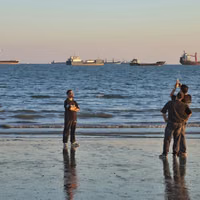
People on the waterfront in Bandar Abbas, Iran’s main port on the Strait of Hormuz, November 20, 2026.

Iranian state media and officials have denied that Iran was about to send tankers through the US naval blockade, after four days in which Guards-linked outlets, lawmakers and Friday prayer leaders spread the claim and AI-generated images showed ships breaking through.

The denials began on Sunday, the same day President Donald Trump said that if Iranian ships tested the blockade, “they’ll all be at the bottom of the sea like the rest of the navy.”

How the story grew

The reports began on Thursday, when the oil tracker TankerTrackers said Iran appeared to be preparing to ship out oil again. The Revolutionary Guards-affiliated Fars news agency had already published a commentary proposing a tanker convoy to break the blockade, and many readers took it as an operational plan.

  • Iran readies tankers to run US blockade, threatens Persian Gulf oil if fired on

    Iran readies tankers to run US blockade, threatens Persian Gulf oil if fired on

  • Iran hardliners push tanker convoy to defy US blockade

    Iran hardliners push tanker convoy to defy US blockade

The claims did not come only from commentators and social media. Friday prayer leaders in several cities called for the blockade to be broken, and some said tankers would soon sail from Kharg Island for China. Lawmakers repeated the claim over the weekend, and Foreign Minister Abbas Araghchi said on Friday that “the blockade must be broken.”

Hardliners welcomed the prospect of a confrontation. Propaganda images and videos, some built from real footage and others generated with artificial intelligence, claimed that an Iranian tanker named Khat Shekan, or “Line Breaker,” had crossed the blockade on Saturday. On Sunday, claims that 14 tankers had crossed spread widely online.

TankerTrackers said no tanker called Line Breaker existed. It also said an Iran-linked liquefied natural gas tanker named Tania Star that appeared in ship-tracking data on Sunday was a spoof, and that the vessel did not exist.

‘No basis in reality’

The Guards-affiliated Tasnim news agency said on Sunday that no operation had been planned for the weekend. The claims, it said, grew out of “a series of proposals by some individuals in the media or on social media,” and people had stitched together reports, some unrelated, to suggest an operation on Saturday or Sunday.

But Tasnim said Iran would not put up with the blockade forever. “Whether Iran will tolerate the naval blockade in the long term is not an issue of uncertainty; it will certainly break it, and this has been repeatedly stated by official military and civilian officials,” it said.

Iran was planning measures against the blockade and had prepared equipment and logistics, Tasnim said, but claims of an operation in the past day or two had “no basis in reality.” It accused people it called “capitulationists” of hoping to present a failed operation as proof that Iran had run out of options and should give in, and said the “enemy front” wanted to paint it as the failure of an Iranian military strategy.

Foreign Ministry spokesman Esmail Baghaei called the reports “media speculation” on Monday, blaming news sites, Telegram channels and other social media.

The state news agency IRNA, citing an account called the “War Message Center,” said no tanker convoy was moving toward the blockade as described or at the time claimed. The reports came from misreadings of ship-tracking data and speculation that hardened into claims of a confirmed operation through reposting, it said.

Iran’s response to the blockade was not limited to “a media scenario,” it said, and there were ways to get around or break the blockade whose details were not necessarily made public.

It is not clear who runs the War Message Center. It has not said it belongs to any state body, though accounts under that name have published war news and military statements since March.

‘Zero hour’

Nour News, which is close to the Supreme National Security Council, said on Sunday that the episode should not be judged only by whether an operation was confirmed or denied. The time for Iran to decide on breaking the blockade was “approaching rapidly,” it said, and everyone from Washington to regional governments and mediators should prepare for the coming “zero hour.”

Ending the blockade was becoming a public demand, it said, and the diplomatic window was not unlimited.

Mehdi Kharratian, a hardline commentator, told state TV’s Jahan Ara program on Sunday that he had not confirmed the tanker reports but that such news could influence decision-makers.

He urged officials to act, whether by halting all oil traffic through the Strait of Hormuz, confronting the UAE over what he called smuggling through the strait’s southern channel, or targeting ships heading for Arab ports.

“Ultimately, there are several solutions, and one of them has to be implemented,” he said.

Another hardline commentator, Ruhollah Jomei, wrote on X that the “project” had achieved its goals by stepping up regional diplomacy to lift the blockade. Regional capitals had been made to understand that “the Strait of Hormuz is either for everyone or for no one,” he wrote.

Fereydoun Majlesi, a former diplomat, told the Fararu news site that holding back a tanker operation, or denying it, showed “timely rationality.” The publicity and the threat of a US military response could have turned a maritime operation into a trap and a wider war, he said. “I believe we should not put the country in a position from which it would be difficult to exit, and which could cause damage that cannot be repaired.”

‘Lose-lose’

Some pro-government social media users asked why the reports had been allowed to run for days before being denied.

One, Abuzar Mashayekhi, suggested the reports had been a security operation to test reactions abroad, including in Arab countries, and public opinion at home, and that the late denial may have been deliberate.

Others said the confusion had damaged public trust. A user named Ario wrote on X that if the reports had only been meant to test the US response and measure support at home, the outcome was “lose-lose.” “Both the pragmatic credibility [of the approach] and social capital would be damaged,” the user wrote.