• العربية
  • فارسی
BrandBrand
  • Iran Insight
  • Politics
  • Economy
  • Analysis
  • Special Report
  • Opinion
  • Podcast
  • Live TV
  • Iran Insight
  • Politics
  • Economy
  • Analysis
  • Special Report
  • Opinion
  • Podcast
  • Live TV
  • Theme
  • Language
    • العربية
    • فارسی
  • Iran Insight
  • Politics
  • Economy
  • Analysis
  • Special Report
  • Opinion
  • Podcast
  • Live TV
All rights reserved for Volant Media UK Limited
volant media logo

Ex-boyfriend shoots woman dead at her birthday party in Iran

Nov 20, 2026, 12:36 GMT+0
Sadaf Haghbin
Sadaf Haghbin

A 23-year-old woman was shot dead at her own birthday party in Iran’s northern Gilan province by a former boyfriend after she refused to marry him, local media reported, days after a 16-year-old girl’s killing by her father set off a national outcry.

Sadaf Haghbin was killed in the early hours of Thursday in Choukam, in Khomam county near the road between Rasht and the Caspian port of Bandar Anzali.

A 29-year-old man walked into the party armed, locked the guests in a room and took Haghbin upstairs, local media in Gilan reported. The Kurdish rights group Hengaw, citing sources close to the family, said he beat her and pressed her to call her parents and say she agreed to marry him. When she refused, he shot her several times.

He shot her first in the heart, then in the face and finally in the head, the local outlet Hirkani reported, citing an informed source, before fleeing. He had a history of violence and abuse toward her, Hengaw said.

Khabaronline reported that her refusal of his proposal was the likely motive, though police have not confirmed it.

The police chief of Khomam county, Iman Jahandideh, said without naming Haghbin that a 29-year-old man had shot a 22-year-old woman with a hunting rifle over “personal disputes” and fled.

He was arrested a few hours later with the rifle, confessed and was handed to the judiciary, the police chief said.

Two killings in four days

Haghbin’s death came four days after Sogand Sayadi, a 16-year-old schoolgirl in the western city of Kermanshah, died after falling from the fifth floor of a building on November 15. Rights groups say her father threw her.

The day before, administrators at her girls’ high school had summoned her father over her relationship with a young man he opposed.

According to rights groups, he beat her in front of her classmates and school staff, after she had warned teachers that her father would kill her if they sent her home with him.

Kermanshah’s prosecutor opened an investigation, and her father was arrested on charges including assault and murder, along with the school principal, on charges of negligence. Iran’s main teachers’ union network condemned the school’s handling of the case.

A petition launched on Tuesday demanding a tough sentence for her father and a change to the law that shields him has gathered more than 220,000 signatures.

A law that protects fathers

Under Article 301 of Iran’s Islamic Penal Code, a father or paternal grandfather who kills his child cannot face qisas, or retribution in kind, the punishment for most murders. He faces at most a prison term, and in practice often a short one.

The rule has been at the center of Iran’s most notorious cases. In May 2020, 14-year-old Romina Ashrafi was beheaded with a sickle by her father in Talesh, also in Gilan province, after she ran away with a man he opposed.

He was sentenced to nine years. In February 2022, 17-year-old Mona Heydari was beheaded by her husband in Ahvaz, in the southwest, who walked through the streets with her head. Each case set off outrage online and calls for reform that were never met.

A bill to protect women from violence has been stuck for about 16 years between the government, parliament and other state bodies and has still not become law.

At least 84 women and girls

At least 84 women and girls were killed in Iran between March 21 and October 13, 12 of them under 18, the Emtedad news site reported on Monday, citing cases reported in the media. Eight of the underage victims were killed by fathers, brothers or other blood relatives.

In August, another 16-year-old in Kermanshah, Hana Rakan, was shot in the head by her father while she slept, Hengaw reported.

The Shargh newspaper reported on Thursday that 125 women and children had died from domestic violence between late March and November. Both counts rely on reported cases and are likely to understate the real number.

After Haghbin’s death, users on social media posted the names of women and girls killed by family members or partners in recent weeks.

Most Viewed

Tanker loads Iranian crude in Persian Gulf as Tehran weighs resuming exports
1

Tanker loads Iranian crude in Persian Gulf as Tehran weighs resuming exports

2
ANALYSIS

A tough winter for Iran's cement industry, a tougher one for steel

3

Houthi missile attack damages Riyadh’s tallest building

4

GTA 6 costs, slow internet frustrate Iranian gamers, fuel satire

5
INSIGHT

Ayatollah's death at 105 sparks ridicule over clerics' longevity

Banner
Banner
Banner
Banner
Banner
Banner
Banner

Spotlight

  • Ideology or history? Analysts clash over the roots of Iran’s enmity with the US

    Ideology or history? Analysts clash over the roots of Iran’s enmity with the US

  • A test of power: Who will control Iran's state TV?
    INSIGHT

    A test of power: Who will control Iran's state TV?

  • GTA 6 costs, slow internet frustrate Iranian gamers, fuel satire

    GTA 6 costs, slow internet frustrate Iranian gamers, fuel satire

  • A tough winter for Iran's cement industry, a tougher one for steel
    ANALYSIS

    A tough winter for Iran's cement industry, a tougher one for steel

  • Tehran seizes on NYT dam report to widen retaliation threats

    Tehran seizes on NYT dam report to widen retaliation threats

  • How Iranians are turning grief into defiance
    OPINION

    How Iranians are turning grief into defiance

  • Iran could launch dirty-bomb attack, but risks make it unlikely
    ANALYSIS

    Iran could launch dirty-bomb attack, but risks make it unlikely

  • Killing of Iranian schoolgirl sparks calls for legal reform

    Killing of Iranian schoolgirl sparks calls for legal reform

  • Iranian girl's suspected honor killing raises questions over school's role

    Iranian girl's suspected honor killing raises questions over school's role

•
•
•

More Stories

Iran sentences taekwondo champion to death over January protests

Nov 20, 2026, 11:37 GMT+0
100%

Iran has sentenced Pouya Fakhrabadi, a 25-year-old national taekwondo champion, to death over a fire during January’s protests in the central city of Yazd, and a source told Iran International he was tortured into confessing.

Judge Mohammad Bemani, who heads Branch 2 of Yazd’s Revolutionary Court, issued the sentence in a joint case known as the “Yazd telecommunications” case, according to information received by Iran International and the rights group HRANA.

Three other men in the case, Mehdi Rajabi, Mohammad Kargar and Mohini Makki, were each sentenced to 20 years, to be served in internal exile in the prison of Zahedan, in Sistan and Baluchestan province, more than 800 kilometers away.

  • The faceless judge who sentenced 11 Iranian protesters to death in 2026

    The faceless judge who sentenced 11 Iranian protesters to death in 2026

The charge announced was “taking part in setting fire to public property.” The details of the accusations against the men are not known, and it is not clear whether Fakhrabadi has appealed.

The case stems from protests on January 8 and 9, the days of the January massacre, when Imam Hossein Square in Yazd was one of the city’s main protest sites. The telecommunications building on the square and other government offices nearby, including one belonging to the Imam Khomeini Relief Committee, a state welfare foundation, caught fire.

100%
Pouya Fakhrabadi

‘They broke his head with a rifle butt’

Fakhrabadi, who holds a master’s degree in physical education, was arrested at his home in Yazd on February 20, a source familiar with the case told Iran International. Security agents broke his head with a rifle butt during the raid, leaving a wound that needed 20 stitches, the source said.

In solitary confinement he was severely beaten and tortured and lost about 30 kilograms, the source said. Agents forced him to confess by threatening to kill members of his family and to sexually abuse them. He was denied a lawyer throughout the case.

  • Abdanan protests draw solidarity and fears of renewed crackdown

    Abdanan protests draw solidarity and fears of renewed crackdown

His sister, who saw the violence during his arrest, suffered severe panic attacks and could barely speak for months afterward, the source said.

Fakhrabadi is a champion in hanmadang, the taekwondo discipline of creative and power breaking. He won gold at the international Kukkiwon Cup, organized by the sport’s world headquarters in South Korea, and has won a national title, setting a new record.

The Yazd detainees

Of 28 people from the January protests held in Yazd prison, 15 have been sentenced to between three and 21 years, and 13 are still awaiting a verdict, HRANA reported on Tuesday.

In the months since the protests, Iran’s judiciary has handed down death sentences, prison terms, floggings and asset confiscations to many of those detained and to other political prisoners.

On Wednesday, the UN General Assembly’s human rights committee adopted a draft resolution condemning the crackdown on the January protests and calling for a halt to all executions, with a view to abolishing the death penalty.

A lawyer facing a wartime charge

In Isfahan, prosecutors have extended the detention of human rights lawyer Amirsalar Davoudi by 30 days and added a new charge, his lawyer, Mehdi Karimi Farsi, told the Emtedad news site.

  • Iranian rights lawyer suffered heart attack in detention, rights group says

    Iranian rights lawyer suffered heart attack in detention, rights group says

  • UN experts warn Iran's crackdown on lawyers imperils fair trials

    UN experts warn Iran's crackdown on lawyers imperils fair trials

Davoudi, who was sentenced in 2019 to 30 years in prison and 111 lashes over his work defending political prisoners, was arrested again on October 11. He already faced charges of “spreading falsehoods online,” “propaganda against the system” and “inciting people to war and killing each other to disrupt national security.” He now also faces “producing and spreading false news against national security in wartime.”

Moein Khazaeli, a lawyer, wrote on X that prosecutors brought the new charge under Article 4 of a law toughening penalties for espionage, passed after the June 2025 war. It carries 10 to 15 years in prison, he said, or death if the court treats it as “corruption on earth.” He said the law was being used to stop lawyers defending their clients.

Part of the case against Davoudi stems from a recording he posted on Instagram on October 4 of a wedding ceremony conducted by phone between two of his imprisoned clients, Mahshad Keshani and Alireza Sepahi Badjani. Sepahi Badjani was executed the next day.

Davoudi suffered a heart attack in solitary confinement on November 8 and was taken to Isfahan’s Al-Zahra hospital, Iran Human Rights reported. The next morning, he was taken to court to be charged. He has had no contact with his family since his arrest, his lawyer said, despite a court order on November 15 allowing calls.

UN human rights experts said on November 9 that Davoudi’s arrest was part of a campaign of pressure on independent lawyers, at least 135 of whom faced judicial or security action in Iran between September 2025 and September 2026.

GTA 6 costs, slow internet frustrate Iranian gamers, fuel satire

Nov 19, 2026, 13:01 GMT+0
•
Hooman Abedi
100%
Promotional displays for the upcoming video game "Grand Theft Auto VI" (GTA 6) ahead of its scheduled release on November 19 inside a Saturn electronics store in Berlin, Germany, November 17, 2026

The release of Grand Theft Auto VI has sparked excitement, frustration and political satire among Iranian gamers, who face soaring prices, slow internet speeds and barriers to international payments.

For many Iranian gamers, the challenge goes beyond affording the game, with slow internet connections making downloading its roughly 200 gigabytes another obstacle.

"I really want to buy and download GTA, but when I think about having to download 200 gigabytes with this miserable internet speed and all the frustration that comes with it, I give up for now," one user wrote on X.

Another joked about the time required to download the game.

"With Iran's internet speed, I think my 200-gigabyte GTA download will finish by the time the next GTA comes out," the user wrote.

A game priced beyond many gamers' reach

GTA 6 costs an estimated 210 million rials in Iran, compared with 1.9 million rials for GTA 5 in 2013 and just 400,000 rials for GTA 3 in 2001.

That makes the latest installment more than 110 times as expensive as GTA 5 was 13 years ago and over 500 times the price of GTA 3 in 2001.

The increase largely reflects the rial's depreciation against the dollar. The US currency has risen from around 8,000 rials to 2.66 million rials on Iran's free market, an increase of more than 33,000%, while the game's international price has risen by just 60%, from $50 to $80.

For some gamers, purchasing the game is only part of the financial challenge.

"I want to play GTA, but I don't have the console. I'm just 1.9 billion rials short," one user joked, posting a bank account number alongside the message.

Another described the difficulties of buying the game legally through a gift card because Iranian consumers lack ordinary access to international credit cards and payment networks.

"I really went through hell to buy it. I wish we could use credit cards and the global financial system as easily as everyone else," the user wrote.

100%
Promotional displays for the upcoming video game "Grand Theft Auto VI" (GTA 6) ahead of its scheduled release on November 19 inside a Saturn electronics store in Berlin, Germany, November 17, 2026

The gamer said the purchase had eventually succeeded after a complicated process, adding that alternatives existed but they wanted to experience buying a game the way people with international credit cards do.

Download speeds expose digital divide

The game's large download size has also highlighted the difference between internet access inside Iran and abroad.

One Iranian user living outside the country posted that downloading approximately 210 gigabytes had taken just 32 minutes.

The post prompted a wave of responses from gamers inside Iran comparing their much longer download times.

"My download speed is great too," one user joked, sharing a screen showing 15 hours remaining.

Another user said downloading the game over an ADSL connection would take 72 hours, while a third reported an estimated 27 hours.

Gamers turn frustration into political satire

The excitement surrounding GTA 6 has also inspired digitally created images combining the game's release with jokes about Iran's political leadership and internet restrictions.

One satirical image shows Mojtaba Khamenei, Iran's supreme leader, reflected in a television displaying a PlayStation download screen for GTA 6.

Another manipulated screenshot replaces the game's estimated download time with the words "Until Mojtaba shows up," referring to new supreme leader’s continued absence from public view since the death of his father, Ali Khamenei, and his subsequent rise to power.

Other posts focused on the country's internet speeds, including a fabricated download screen estimating that the game would take 86 years and 22 days to download.

"I think the timing is perfect. By then, I'll have saved enough money to buy it, and we can play together," one commenter responded.

"Maybe in the next life, God willing," another wrote.

Excitement meets frustration

Despite the financial and technical barriers, anticipation for the game has remained high among Iranian social media users.

Some celebrated finally purchasing it, while others expressed disappointment at being unable to afford the necessary hardware or even watch gameplay videos online.

"The whole world is playing GTA 6 and having fun," one user wrote, describing their frustration with internet access in Iran.

"I don't even have enough internet to watch it in 240p," the user added.

Iranian students report heating restrictions despite cold weather

Nov 19, 2026, 10:20 GMT+0
100%
An empty classroom in an Iranian school, with a radiator alongside rows of desks.

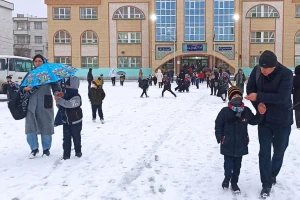
Students in Iran have reported restrictions on heating in schools despite cold weather, forcing some to bring electric heaters into classrooms, according to messages sent to Iran International.

One student said education authorities had issued a directive prohibiting schools from switching on heating systems until mid-December.

“The weather is very cold, and nobody is responding. The principal and deputy principal just tell us to wear more clothes,” the student said.

“We had to bring an electric heater into the classroom to keep ourselves a little warmer, although it barely makes a difference,” the student added.

  • Students shiver in classrooms as Iran government warns of gas cuts

    Students shiver in classrooms as Iran government warns of gas cuts

The complaints come as Iran faces renewed pressure on its energy supplies ahead of winter, with natural gas shortages affecting industrial production and raising concerns about heating and fuel availability.

Gas shortages affect schools and industries

Iran International has recently reported on gas supply problems affecting the steel and cement industries, where restrictions have disrupted production.

Authorities have also warned of possible gas cuts during the winter if consumption rises sharply, with officials estimating a potential daily supply deficit of up to 430 million cubic meters.

  • Gas-rich Iran turns to Russia for an energy lifeline

    Gas-rich Iran turns to Russia for an energy lifeline

The country's heavy reliance on natural gas for residential heating, electricity generation and industrial production means that shortages can affect several sectors simultaneously as temperatures fall.

Gasoline shortages have also disrupted road transport, with truck drivers forced to wait overnight at fuel stations for their next fuel allocation, a citizen told Iran International in a message.

The person said truck drivers were parking overnight near roadside fuel stations because they could not obtain enough diesel to continue their journeys.

The account comes after recent reports of long queues at gasoline stations across Iran, including in Shiraz, Asaluyeh, Genaveh, Gerash and Jam.

Food prices and bread restrictions add to household pressures

Messages from residents across Iran also described rising food prices and restrictions on bread purchases.

A resident of Malard near Tehran said the price of a cream cheese product had increased from 1.6 million rials ($0.60) to 2.5 million rials ($0.94) within a week, an increase of more than 56 percent.

The increases come as Iran's statutory minimum monthly base wage stands at approximately 166 million rials ($62), excluding allowances, leaving low-paid workers particularly exposed to rising food prices.

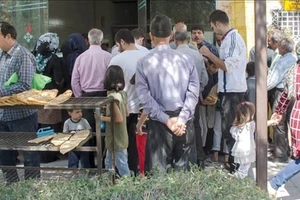
Bread shortages have added to the financial pressure on households, with residents in Ghiamdasht, southeast of Tehran, Qazvin, parts of the northern province of Mazandaran, and Khorramabad, the capital of western Lorestan province, reporting flour shortages and restrictions on bread purchases.

  • Daily reports secret bread rationing in two Iranian provinces

    Daily reports secret bread rationing in two Iranian provinces

A resident of Ghiamdasht said a bakery was limiting customers to two loaves of sangak traditional bread because of flour shortages. In Mazandaran, another resident said purchases of subsidized bread were restricted to six loaves per national identification number.

In Qazvin, a resident described flour rationing at bakeries, while a resident of Khorramabad said bread was being distributed according to household size and that flour purchased for home baking was of poor quality.

Hundreds of writers urge Iran to halt poet's execution

Nov 19, 2026, 09:27 GMT+0
100%
Peyman Farahavar, an Iranian poet sentenced to death on charges of armed rebellion and waging war against God.

Hundreds of poets and prominent literary figures worldwide have joined an international campaign calling on Iran to halt the execution of imprisoned poet Peyman Farahavar, whose death sentence has been upheld and referred for enforcement.

“Nowhere in the world should words and poetry be punishable by hanging,” the signatories said in a joint statement urging international action to save his life.

Among those backing the campaign are Goncourt Prize winners Leila Slimani and Marie NDiaye, International Booker Prize winner David Diop, American poet Charles Bernstein and French writer Daniel Pennac.

  • Iranian poet faces execution after review of death sentence denied

    Iranian poet faces execution after review of death sentence denied

Iranian poets and writers, including Hafez Mousavi, Fatemeh Ekhtesari, Fatemeh Shams, Mehdi Moosavi and Ziba Karbassi, also signed the appeal.

Death sentence upheld

The Writers' Association of Iran announced on November 15 that Farahavar's death sentence on charges of baghi (armed rebellion) and moharebeh (waging war against God) had been finalized.

Nobel Peace Prize laureate Narges Mohammadi said the same day that his case had been referred to the sentence enforcement department.

Human rights news agency HRANA reported on November 11, citing a source close to Farahavar's family, that he had informed relatives by telephone on November 9 that he had received official notification that his death sentence had been referred for enforcement.

100%
Peyman Farahavar, an Iranian poet sentenced to death on charges of armed rebellion and waging war against God.

Farahavar was sentenced to death in May 2025 by Branch One of the Revolutionary Court in Rasht. The Supreme Court upheld the sentence later that year and rejected his request for a retrial in April 2026.

Writers denounce forced confessions

Farahavar was arrested in 2022 over protest poetry, videos of poetry readings shared online and a solitary street demonstration, according to the campaign statement.

“His initial trial was conducted without a lawyer, and confessions extracted under duress formed the basis of his death sentence,” the signatories said.

The writers described the sentence as “manifestly unjust and contrary to recognized human rights standards and the principles of a fair trial.”

The statement also highlighted broader concerns about executions in Iran, particularly those involving protesters and people prosecuted for exercising freedom of expression.

“We, the poets signing this letter, call on the Iranian public, the media and international organizations, in the name of freedom and justice, to use every means at their disposal to compel the authorities of the Islamic Republic to immediately halt Peyman Farahavar's execution,” the statement said.

  • Jailed Iranian poet's death sentence upheld by Supreme Court

    Jailed Iranian poet's death sentence upheld by Supreme Court

The Writers' Association of Iran also said at least 20 writers and poets were serving prison sentences or being held in prolonged detention, with several facing serious charges.

The campaign called for an end to death sentences imposed for peaceful expression, warning that Farahavar's case reflected wider concerns over the treatment of writers and dissenting voices in Iran.

How Iranians are turning grief into defiance

Nov 18, 2026, 17:50 GMT+0
•
Saeid Golkar, Kasra Aarabi
100%
Family members dance beside the grave of Alireza Raeisi, a 21-year-old Iranian protester executed on October 5, 2026, in connection with the January protests in Isfahan.

Iranian families are turning funerals for slain protesters into acts of defiance, using music and dance to challenge the Islamic Republic's use of mourning rituals and symbols to reinforce its authority.

A father and mother dance in the center as crowds cheer and clap to upbeat music. They are outside, surrounded by bouquets of colorful flowers and white doves. From a distance, the scene could easily be mistaken for a wedding or a birthday celebration. But it is neither. It is a funeral, taking place at the grave of their child, who was killed in the Islamic Republic's crackdown on protesters.

This seeming contradiction gives the scene its political force: while the family grieves, they refuse to do so in the language of mourning expected by the country's religious and political establishment.

“This cheering [at the grave] is not mourning; it is a ritual of revenge.”

That line, written by Iranian songwriter Mona Borzouee and performed by legendary Iranian pop star Ebi, speaks directly to the scene captured in a video circulating online.

The song and music video “Bego be Donya” (“Tell the World”) mourn the thousands of Iranian protesters killed during the January 2026 protests. But throughout the song, mourning is not simply an expression of sadness. It becomes memory, anger and, most importantly, resistance.

The song evokes images of the dead, grieving parents, graves and dancing bodies, transforming personal loss into a public act that demands to be seen and remembered. Parents confront the unbearable pain of losing a child, refusing to let death have the final word.

At funerals and 40-day memorials for protesters killed in the streets, families have begun dancing, playing music, clapping, reading poetry and celebrating the lives of their children rather than expressing grief through traditional Islamic mourning rituals.

One of the most powerful expressions of this shift came from Majid-Reza Rahnavard, a 23-year-old Iranian protester detained during the 2022 protests and subsequently executed by the Islamic Republic.

Surrounded by masked guards and blindfolded, Rahnavard appeared on state television shortly before his execution. His final words were: “I don't want anyone to mourn upon my grave. I don't want them to read the Quran or pray. Just celebrate and play celebrating, happy music.”

Rahnavard's words challenged the symbolic structure of official mourning. Through music, dance and celebration, grieving families affirm the lives of their loved ones.

In this context, the phrase “a ritual of revenge” carries a deeper symbolic and political meaning: refusing to submit, preserving the memory of the dead and continuing to live despite the government's attempts to instill fear and silence.

Historically, Shia Islam has placed great emphasis on mourning and lamentation to commemorate the deaths of its religious leaders, particularly the Imams. For some, mourning is central to Shia identity.

While the Islamic Republic did not create Shia mourning traditions, it politicized, institutionalized and incorporated them into its political identity and survival strategy.

In the run-up to the 1979 revolution, fortieth-day mourning ceremonies for protesters killed by the Shah's security forces became occasions for renewed mobilization. Since coming to power, the Islamic Republic has used this tradition to galvanize supporters and reinforce its authority.

Lamentation and the symbols of death have become part of what critics describe as the “politics of sadness and grief,” or siasat-e gham-o ghoseh in Persian.

This historical context helps explain why contemporary scenes of dancing at protesters' graves carry such political significance. Families are reclaiming mourning from a state that has long sought to dominate the interpretation of martyrdom and sacrifice.

The Islamic Republic has built a significant part of its political identity around death, martyrdom and endurance. Many ordinary Iranians, in contrast, emphasize life, joy, music, dignity and the right to choose one's path.

The protest slogan “Woman, Life, Freedom” was important partly because its central emphasis was not only politics, but life itself.

The reconceptualization of mourning is not simply a rejection of religion or tradition. It is part of a broader pattern of identity-based resistance in Iran, where resistance is expressed not only through elections, demonstrations or political slogans, but also through clothing, the body, music, social relations, humor, language and even rituals surrounding death.

These practices are political because the state has spent decades regulating and politicizing many areas of everyday life. Ideological power weakens when people reject not only a government's policies, but also the language through which that government explains the world.

A political system may retain coercive power even as its influence over ideas of virtue, sacrifice and grief fades. Dancing at a grave sends a powerful message of defiance: you may have taken this life, but you will not decide how that life is remembered.