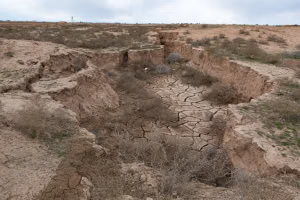
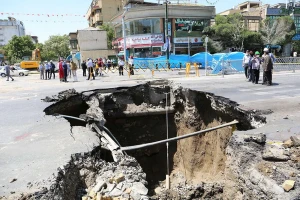
Deep cracks cut through dry ground in Iran, illustrating the impact of land subsidence.
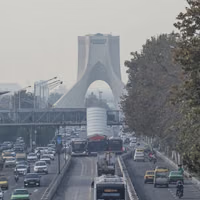
The area affected by land subsidence in southwestern Tehran has expanded by around 20% over the past two years, driven by continuous groundwater extraction to supply drinking water to the capital, a senior Iranian official said on Monday.
Around 650 million cubic meters of groundwater are extracted annually from approximately 1,200 wells to supply Tehran and its surrounding areas, Ali Beitollahi, head of the earthquake and risk assessment department at Iran's Road, Housing and Urban Development Research Center, said.
Unlike agricultural wells, which may operate for only a few hours a day depending on seasonal demand, urban water supplies require year-round extraction, he said.
The continued pumping of groundwater in areas already affected by subsidence is lowering water tables and degrading water quality, Beitollahi said.
Buildings, gas pipelines, water networks and sewage systems could suffer structural damage as the ground sinks, he warned, adding that population density and earthquake risks must also be considered when assessing the danger.
Subsidence spreads across Iran
Iran's largest subsidence zones overlap with its most densely populated metropolitan areas, particularly Tehran and neighboring Karaj, followed by Isfahan, Beitollahi said.
The entire Isfahan metropolitan area is exposed to subsidence risks, he added.
The scale of the problem has expanded nationwide. Land affected by subsidence increased tenfold over eight years, from approximately 10,000 to 100,000 square kilometers, Reza Shahbazi, deputy head of Iran's Geological Survey, said in September.
A parliamentary research report cited by Shargh newspaper in June warned that subsidence had reached a critical stage, with around half of Iran's population living in affected areas.
Population concentration strains water supplies
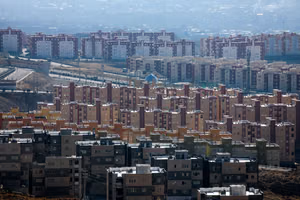
Around 40% of Iran's population lives within 100 kilometers of 10 major population centers, including Tehran and Mashhad, according to Beitollahi.
The concentration of jobs, infrastructure and services in these areas has increased demand for water, energy and food, placing further pressure on groundwater reserves.
Water conservation alone cannot resolve the problem because of the scale of population concentration, Beitollahi said.
He called for creating employment opportunities and improving living conditions elsewhere in Iran to reduce pressure on Tehran and Karaj, warning that continued population concentration would make future water supplies unsustainable.
After 12 years of marriage and one child, they agree to divorce, and on a summer afternoon it is registered. Then they leave the registry office and go back to the same home, where they had split the rooms between them long before the divorce.
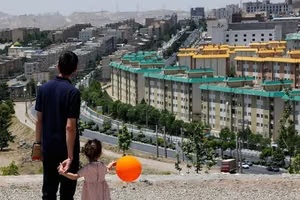
The father has moved into their 10-year-old son's room. The mother stays in the room she once shared with her husband.
For some couples in Iran, the marriage is over, but the housing crisis will not let them leave it behind.
The divorce has been granted, and neither sees the other as a spouse anymore. Yet every night they come home to the same apartment: not to reconcile, not to rebuild, but because neither can afford a place of their own.
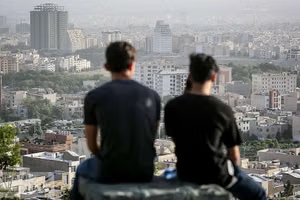
In Tehran, the cost of housing can turn even a divorce into a half-finished decision.
A home out of reach
The latest data from Tehran's housing market show asking prices still rising. An analysis of 43,307 apartment listings in the city between November 13 and 20 put the average asking price at about 3 billion rials (about $1,100) per square meter, up 12.5 percent from a month earlier. At that price, a single square meter costs about 18 months of the minimum wage.
Prices are rising even though households have little purchasing power left and sales have stalled.
Renters are under pressure too. Rents in the month to October 22 were 33.4 percent higher than a year earlier, the Statistical Center of Iran said, rising 3.5 percent in that month alone. That is slower than overall inflation, but it does not make renting cheaper. Tenants still pay more each time they renew a lease or look for a new home, which puts independent living further out of reach for low-income families.
For some divorced couples, paying for two homes is simply impossible, so they stay under one roof after their marriage has ended.
'Like two housemates'
Soudabeh, a bank employee who asked that her real name not be used, told Iran International that rising rents and living costs were the main reason she and her former husband still live together.
She had thought about divorce for years, she said, but hesitated because she worried about how she would cover her living costs, especially rent for a home of her own. Renting two separate places was practically impossible, she said. Now that the divorce is official, they live in the same home like two housemates.
The arrangement has cut their costs, she said, and spared them the difficulty of finding a place to rent as single people. But it comes with problems of its own. Privacy and the psychological effect on her children are the hardest parts, she said.
Soudabeh grew up in a traditional family. "Apart from close relatives, no one knows we are separated, and they find it hard to accept, even unacceptable," she said.
She hopes the arrangement is temporary, and that they will soon be able to rent two smaller homes of their own.
Living together after a divorce can take a psychological and social toll on both partners. The loss of privacy and independence, the difficulty of starting new relationships and unresolved tensions can all add to the strain.
For children, it is even more confusing. Children who still see their parents living together after a formal divorce may struggle to understand what has changed, caught between hoping their parents will reconcile and accepting that they have split. Without clear boundaries, and with conflicts still unresolved, their sense of security can suffer.
Families behind a curtain
Living together after divorce is only one of the new ways of living that the housing crisis has forced on Iranians.
In recent years, more and more families have moved in together to share the cost of a single apartment. Some are not even related. They share a home to pay the rent, cover mortgage installments or cope with rising living costs.
In one account on social media, a woman described two families sharing a home in south Tehran. They had divided it with a curtain, she said, but still shared the kitchen, bathroom and toilet.
It is a picture of families forced to adapt to the cost of housing, in a country where privacy has become a luxury.
In August 2023, as parliament debated the government's seventh development plan, its own research center published a report on housing that identified eight forms of homelessness produced by the crisis and the failure of the state's housing policies.
Alongside people sleeping on rooftops, in boiler rooms, in cars, on buses and even in graves, the report listed people who keep moving from place to place, people who take jobs mainly to get a place to sleep, and "two or more families sharing a single housing unit."
The research center said these were the result of low-income families and tenants being priced out of decent housing, and of housing policies that had failed the most vulnerable.
Poverty reshapes the family
Iran's housing crisis is no longer just about being unable to buy a home or pay the rent. It is changing the shape of family life, people's relationships, and even whether they can end one.
For some, separation no longer means leaving home and starting a life of their own. It means dividing the rooms, keeping their distance behind closed doors and going on living in a shared space.
Beyond the financial strain, that carries a psychological and social cost: it makes adjusting to divorce harder for both partners, and leaves children exposed to uncertainty, tension and their parents' unresolved conflicts.
The divorce is registered, but the home is still shared. Sometimes what keeps a marriage going is neither love nor a wish to return, but the inability to pay for a separation.
A shopkeeper works by lamplight inside a clothing store during a power outage in Iran.
Scheduled power cuts have resumed across Iran, disrupting homes, businesses and schools, with a lawmaker saying electricity shortages could cost more than one million jobs.
People in Tehran, Isfahan, Shiraz, Mashhad, Yazd, Kermanshah and Ardebil reported hours-long outages, often without notice, in messages sent to Iran International on Sunday.
“Today, November 22, we are at school and the power has gone out. It is cloudy, and we are sitting in class in the dark,” a student in Mashhad wrote.
The disruptions have also affected water supplies and internet access.
Fuel shortages force renewed power cuts
Mohammad Allahdad, chief executive of state electricity company Tavanir, announced Saturday that residential and commercial power restrictions would begin November 22 because of fuel shortages at power plants.
Outages could last two hours every other day, increasing to two hours daily if temperatures fall further, Allahdad said.
The cuts have returned just two months after summer. During winter, increased household demand for natural gas used in heating reduces supplies available to thermal power plants, which generate most of Iran's electricity.
Economic journalist Mahtab Gholizadeh told Iran International that worsening gas shortages had disrupted electricity supplies even before severe winter weather arrived.
“Reforming energy consumption is the country's most urgent and important issue, and these reforms must begin with natural gas, not gasoline,” Parliament Speaker Mohammad Bagher Ghalibaf said Sunday.
Natural gas accounts for 73% of Iran's energy mix, compared with 9% for gasoline, Ghalibaf added.
Electricity shortages threaten jobs
Electricity shortages have contributed to 600,000 job losses over the past six months by reducing industrial production, lawmaker Nasrollah Pejmanfar told parliamentary news agency Khaneh Mellat on Sunday.
More than one million workers could lose their jobs if the shortages continue, Pejmanfar added.
Residential buildings stand largely dark at dusk, illustrating the impact of recurring power cuts across Iran.
Around 16% of electricity demand at industrial estates went unmet during the Iranian year ending March 2026, with conditions worsening since then.
Industrial operators also face charges 4.5 times official electricity tariffs, squeezing profit margins and discouraging investment, Pejmanfar said.
Schools left in the dark
The outages have reached schools already struggling with inadequate heating.
Parents previously told Iran International that children attended lessons wrapped in blankets because heating systems were switched off.
“How are teachers supposed to teach and students supposed to learn with the lights off?” a Tehran resident asked, referring to President Masoud Pezeshkian's advice to conserve electricity.
Others described disruptions to water supplies and internet connections, alongside rising electricity bills.
In Arak, one person questioned why a 70-square-meter apartment had received a thirty-million-rial electricity bill despite continuing restrictions.
President's energy-saving advice draws criticism
President Masoud Pezeshkian said November 19 that he slept wearing a jacket and extra clothing and kept his household lights switched off to save energy.
“We sold our jackets so we could put bread on the table for our wives and children for one night,” a person in Mashhad wrote to Iran International.
Others questioned whether officials' families faced similar heating shortages.
Government spokesperson Fatemeh Mohajerani raised the possibility of natural gas cuts earlier in November, while Pezeshkian said November 21 that winter shortages could create further problems.
Some Iranians attributed the recurring outages to mismanagement of the country's energy resources.
The renewed cuts have intensified pressure on households and businesses already struggling with rising costs and reduced industrial production.
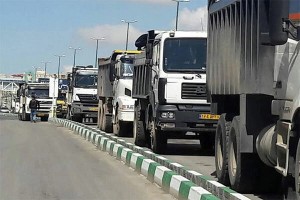
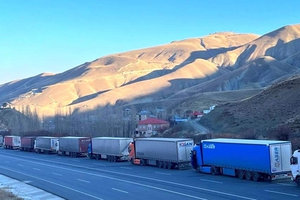
A line of trucks on a road in Iran at night, as truck drivers stage strikes over rising operating costs and worsening economic conditions.
Truck drivers in several Iranian cities have gone on strike over rising operating costs, stagnant freight rates and worsening economic conditions, with reports of work stoppages emerging on Sunday.
A video sent to Iran International showed a group of truck drivers stopping work in Shiraz, southern Iran, on Sunday.
The Telegram channel of the Union of Truck Drivers and Trucking Associations Across Iran also reported strikes in several cities, including Chabahar in southeastern Iran’s Sistan and Baluchestan Province and Dezful in southwestern Khuzestan Province, citing messages from its members.
“We went on strike because of these incompetent officials who do not care about the country or its people. We cannot go on like this anymore,” one driver wrote in a message to the union.
Another driver pointed to soaring truck maintenance costs, saying 40 liters of engine oil and five filters now cost 620 million rials (approximately $230 at the free-market exchange rate).
For comparison, Iran’s minimum monthly wage in 2026 is about 166 million rials ($62), meaning the maintenance bill is equivalent to nearly four months of base pay for a minimum-wage worker.
A third driver urged colleagues to remain patient, arguing that the effects of a transport strike would take more than 24 or 48 hours to become visible.
“Be patient. Produce markets will empty, ports will empty, and factories will come to a halt,” the driver said.
Union backs nationwide strike
The Union of Truck Drivers and Trucking Associations Across Iran announced its full support for a nationwide strike on Saturday, November 21, calling on drivers across the country to stop work from November 22.
The union said freight rates had remained unchanged despite sharp increases in the prices of engine oil, tires and spare parts.
It also cited rising fuel, insurance, toll and repair costs, along with job insecurity and insufficient support for drivers, as reasons for the strike.
“This strike is a cry of protest from drivers who have spent years struggling under the weight of rising prices, injustice and neglect and can no longer endure these unbearable conditions,” the union said in its statement.
Economic pressures deepen
The strikes come as Iran faces renewed electricity outages and reports of long queues at petrol stations in several cities.
The continuation of the protests could encourage other professional groups to join, political analyst Iman Aghayari said in an interview with Iran International.
The authorities are concerned about the potential spread of protests and are seeking to prevent other sections of society from joining through threats, inducements and repression, Aghayari added.
Iran's worsening economic conditions have placed growing pressure on households, particularly workers and pensioners struggling to meet everyday expenses.
A patient receives treatment in a hospital intensive care unit in Iran. (File photo)
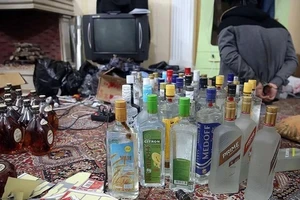
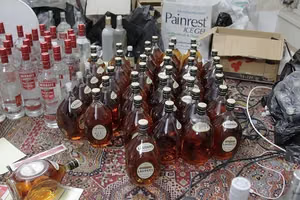
The number of people poisoned by bootleg alcohol in the northeastern Iranian city of Neyshabur has risen to 120, with four dead, health officials said late on Sunday, and police said they had arrested 12 people over its production and sale.
The toll has climbed fast. On Saturday, officials reported 66 people poisoned, and by midday Sunday, 72.
By Sunday night, 120 people had been admitted to hospitals, Seyed Milad Taghdisi Heydarian, acting deputy for treatment at Neyshabur University of Medical Sciences, told the Mehr news agency.
Eleven patients were on ventilators and one had been declared brain dead, he said.
All of the dead and the brain-dead patient were men. Eighteen patients have been sent to hospitals in Mashhad, the provincial capital, about 120 kilometers to the west, and 16 have been discharged.
Police first arrested eight suspects, then three men and a woman they described as the main producers and distributors, Neyshabur's police chief, Mojtaba Mohebbati, said. The investigation was continuing, he said.
Officials have not said what caused the poisonings. Methanol, an industrial alcohol often found in counterfeit drinks, causes blindness, kidney failure and death, and dialysis is one of the main treatments for it.
A banned drink, a deadly market
Alcohol is banned in Iran for Muslims, who face flogging if caught drinking. Only recognized religious minorities are allowed to make it for private use. The ban has created a large black market in which homemade and counterfeit drinks, often made with cheap industrial alcohol, have repeatedly caused mass poisonings.
The worst came in early 2020, when hundreds of people died after drinking methanol in the false belief that it would protect them from COVID-19.
In July 2025, 31 people sought hospital treatment after drinking counterfeit alcohol in Dezful, in the southwest. One died and five were admitted to intensive care. In November 2025, eight people died of alcohol poisoning in Iranshahr and Bampur, in the southeast. One lost their sight.
The real number of alcohol poisonings in Iran could be up to 10 times what emergency departments record, Deputy Health Minister Alireza Raisi said in October 2025. Many people who fall ill avoid hospitals for fear of prosecution.
In September 2025, Raisi called Iran's per capita alcohol consumption a public health challenge and urged more treatment centers. Admissions for alcohol dependence at addiction treatment centers had risen by as much as 50 percent over the previous five years, the Rouydad24 news site reported that month.
Medical personnel in Iran attend to a patient on a stretcher in a hospital emergency ward. (File photo)
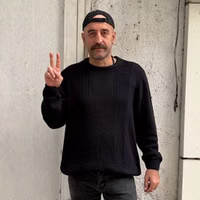
Iran's northern city of Rasht became a battlefield as security forces opened fire on unarmed protesters during January's anti-government demonstrations, leaving people lying in the streets, former political prisoner and protester Masoud Bidarigh told Iran International.
"It was really like a war," Masoud Bidarigh told Iran International, recalling the crackdown by state security forces during nationwide anti-government protests on January 8 and 9.
Bidarigh, a former boxing champion, described witnessing the shooting of a young man by security forces firing from a passing car near Somayeh Park in Rasht on January 9.
"I was just crying. There was nothing I could do," he said.
"People had come onto the streets empty-handed," he added, describing scenes of unarmed protesters collapsing amid gunfire and screams coming from nearby alleyways.
Bidarigh said large crowds gathered across Rasht on January 8 following a call for nationwide demonstrations by Iran’s exiled Prince Reza Pahlavi.
He described joining protesters as they moved through central Rasht, chanting against the Islamic Republic.
‘Gunfire across Rasht’
As demonstrators approached Municipality Square, security forces fired tear gas to disperse the crowds, he said.
Bidarigh said he heard gunfire near the municipality's clock tower and believed armed personnel were shooting from elevated positions.
The shooting intensified as demonstrators moved toward Pol-e Iraq bridge.
"When we reached Pol-e Iraq, the gunfire started," he recalled, describing sustained bursts of automatic weapons fire.
Protesters turned and fled as people fell to the ground, he said.
"The people were empty-handed. They had no weapons, nothing to defend themselves with."
Bidarigh described groups of 15 to 20 motorcyclists charging into crowds near Farhang Square, attacking and dispersing demonstrators.
He said the violence was particularly intense around Falakeh-ye Gaz, where he saw people lying in the streets and heard cries and screams from surrounding alleyways.
Security forces continued pursuing protesters through the streets, he said, as parts of the city were plunged into darkness after streetlights were switched off.
Rasht's historic bazaar engulfed in flames
Bidarigh also described scenes around Rasht's historic bazaar, which was devastated by fire during the January 8 crackdown.
He said he was on Shariati Street, near one of the market's entrances, and saw armed personnel positioned around the surrounding streets.
The market's narrow passageways and limited access routes made it difficult for people to escape or emergency vehicles to enter, he said.
Bidarigh said security forces prevented people from approaching the burning market to help those trapped inside.
"Nobody was allowed to do anything, neither to put out the fire nor to help people," he said.
He accused security forces of responsibility for fires across the city.
Iran International's May 28 investigation, based on testimony from witnesses in Rasht, reported that protesters fleeing gunfire were driven into narrow market passages as flames spread.
Witnesses described security forces blocking market exits and shooting at people attempting to escape. The investigation also documented allegations of delayed firefighting operations and restrictions on emergency personnel.
In a separate June 6 investigation, Iran International reported witness accounts of bloodstains and bloody handprints on buildings in central Rasht following the crackdown.
Armed Toyota vehicles deployed across Rasht
Bidarigh said state security forces deployed large numbers of armed Toyota vehicles across Rasht on January 9.
He said he witnessed a convoy traveling from the direction of Razi toward the city center at approximately 3 p.m.
He estimated that more than 100 vehicles were involved, some carrying masked armed men and weapons mounted on their rear cargo beds.
An October 29 Reuters investigation found that Iran had imported thousands of Toyota Hilux and Land Cruiser vehicles through a defense procurement agency identified as MOD 346428.
Reuters reported that the Islamic Revolutionary Guard Corps (IRGC) and allied groups modified the vehicles to mount heavy machine guns on their rear cargo beds.
The investigation also identified footage from the January protests showing security forces carrying machine guns in a convoy of Land Cruisers in Tonekabon, another northern Iranian city.
Bidarigh said he saw the convoy passing his supermarket before closing the shop at approximately 4 p.m.
He described a significant escalation in violence after 8 p.m., with armed security forces moving through the city on motorcycles, on foot and in vehicles.
"There was no mercy for anyone," he said.
"Gunfire could be heard across the whole of Rasht."
Bidarigh described motorcyclists on Saadi Street chanting "Heydar, Heydar" while firing toward people.
"Blood was smeared across the streets and walls of Rasht," he said.
"The whole city smelled of blood."
From boxing champion to political prisoner
Before his imprisonment, Bidarigh was a competitive boxer in Iran's northern Gilan province. He was also involved in political activism, distributing leaflets and writing anti-government slogans.
Bidarigh said six security personnel assaulted and arrested him on August 12, 2024, while he was distributing leaflets and writing slogans in Rasht's Golsar neighborhood.
He described being beaten and sprayed with pepper spray during the arrest.
Bidarigh said he spent 25 days in Intelligence Ministry custody, subjected to repeated interrogations, physical abuse and solitary confinement.
He described being kept in a small, dark cell, sometimes blindfolded and handcuffed, while interrogators beat and verbally abused him.
Security personnel also searched his supermarket and home, confiscating electronic equipment and approximately 5,000 political leaflets, he said.
He subsequently spent 38 days in Lakan Prison's Meysagh Ward before being released on bail.
Bidarigh said he was later sentenced to one year in prison following proceedings at which he was denied access to a lawyer.
The Iran Human Rights Society previously reported that Branch 3 of the Rasht Criminal Court, presided over by Judge Mehdi Rasekhi, sentenced him on charges including propaganda against the Islamic Republic, insulting Supreme Leader Ali Khamenei and disrupting national security.
The rights group also reported that Bidarigh publicly protested outside Lakan Prison in February 2025 against a death sentence issued for political prisoner Manouchehr Fallah, whom he had met during his imprisonment.
A prison document reviewed by Iran International lists September 6, 2024, as Bidarigh's detention date, 25 days after his reported arrest. Bidarigh said he spent those 25 days in Intelligence Ministry custody. Human Rights Watch has documented Iranian intelligence agencies holding detainees in unofficial facilities without formal registration.
Bidarigh said he returned to prison on April 6, 2025, to serve his sentence and was released on December 13, 2025.
Less than a month later, on January 6, around 10 security personnel confronted and assaulted him in Rasht's Sabzeh Meydan, he said. He was released after approximately 90 minutes.
The lasting toll of the crackdown
Bidarigh said continued threats from security authorities and fears of rearrest forced him to leave Iran in mid-2026.
Months after the January protests, he said he remained haunted by the violence he witnessed security forces inflict on protesters in Rasht.
"Every day, these scenes come back before my eyes," he said.
"I don't know how we survived. I really don't know."