A shopkeeper works by lamplight inside a clothing store during a power outage in Iran.
Scheduled power cuts have resumed across Iran, disrupting homes, businesses and schools, with a lawmaker saying electricity shortages could cost more than one million jobs.
People in Tehran, Isfahan, Shiraz, Mashhad, Yazd, Kermanshah and Ardebil reported hours-long outages, often without notice, in messages sent to Iran International on Sunday.
“Today, November 22, we are at school and the power has gone out. It is cloudy, and we are sitting in class in the dark,” a student in Mashhad wrote.
The disruptions have also affected water supplies and internet access.
Fuel shortages force renewed power cuts
Mohammad Allahdad, chief executive of state electricity company Tavanir, announced Saturday that residential and commercial power restrictions would begin November 22 because of fuel shortages at power plants.
Outages could last two hours every other day, increasing to two hours daily if temperatures fall further, Allahdad said.
The cuts have returned just two months after summer. During winter, increased household demand for natural gas used in heating reduces supplies available to thermal power plants, which generate most of Iran's electricity.
Economic journalist Mahtab Gholizadeh told Iran International that worsening gas shortages had disrupted electricity supplies even before severe winter weather arrived.
“Reforming energy consumption is the country's most urgent and important issue, and these reforms must begin with natural gas, not gasoline,” Parliament Speaker Mohammad Bagher Ghalibaf said Sunday.
Natural gas accounts for 73% of Iran's energy mix, compared with 9% for gasoline, Ghalibaf added.
Electricity shortages threaten jobs
Electricity shortages have contributed to 600,000 job losses over the past six months by reducing industrial production, lawmaker Nasrollah Pejmanfar told parliamentary news agency Khaneh Mellat on Sunday.
More than one million workers could lose their jobs if the shortages continue, Pejmanfar added.
Residential buildings stand largely dark at dusk, illustrating the impact of recurring power cuts across Iran.
Around 16% of electricity demand at industrial estates went unmet during the Iranian year ending March 2026, with conditions worsening since then.
Industrial operators also face charges 4.5 times official electricity tariffs, squeezing profit margins and discouraging investment, Pejmanfar said.
Schools left in the dark
The outages have reached schools already struggling with inadequate heating.
Parents previously told Iran International that children attended lessons wrapped in blankets because heating systems were switched off.
“How are teachers supposed to teach and students supposed to learn with the lights off?” a Tehran resident asked, referring to President Masoud Pezeshkian's advice to conserve electricity.
Others described disruptions to water supplies and internet connections, alongside rising electricity bills.
In Arak, one person questioned why a 70-square-meter apartment had received a thirty-million-rial electricity bill despite continuing restrictions.
President's energy-saving advice draws criticism
President Masoud Pezeshkian said November 19 that he slept wearing a jacket and extra clothing and kept his household lights switched off to save energy.
“We sold our jackets so we could put bread on the table for our wives and children for one night,” a person in Mashhad wrote to Iran International.
Others questioned whether officials' families faced similar heating shortages.
Government spokesperson Fatemeh Mohajerani raised the possibility of natural gas cuts earlier in November, while Pezeshkian said November 21 that winter shortages could create further problems.
Some Iranians attributed the recurring outages to mismanagement of the country's energy resources.
The renewed cuts have intensified pressure on households and businesses already struggling with rising costs and reduced industrial production.
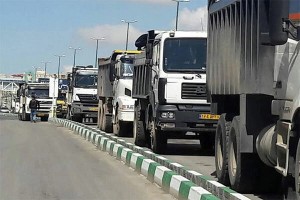
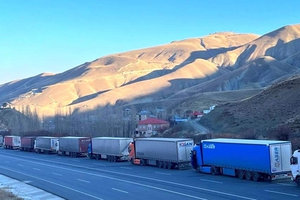
A line of trucks on a road in Iran at night, as truck drivers stage strikes over rising operating costs and worsening economic conditions.
Truck drivers in several Iranian cities have gone on strike over rising operating costs, stagnant freight rates and worsening economic conditions, with reports of work stoppages emerging on Sunday.
A video sent to Iran International showed a group of truck drivers stopping work in Shiraz, southern Iran, on Sunday.
The Telegram channel of the Union of Truck Drivers and Trucking Associations Across Iran also reported strikes in several cities, including Chabahar in southeastern Iran’s Sistan and Baluchestan Province and Dezful in southwestern Khuzestan Province, citing messages from its members.
“We went on strike because of these incompetent officials who do not care about the country or its people. We cannot go on like this anymore,” one driver wrote in a message to the union.
Another driver pointed to soaring truck maintenance costs, saying 40 liters of engine oil and five filters now cost 620 million rials (approximately $230 at the free-market exchange rate).
For comparison, Iran’s minimum monthly wage in 2026 is about 166 million rials ($62), meaning the maintenance bill is equivalent to nearly four months of base pay for a minimum-wage worker.
A third driver urged colleagues to remain patient, arguing that the effects of a transport strike would take more than 24 or 48 hours to become visible.
“Be patient. Produce markets will empty, ports will empty, and factories will come to a halt,” the driver said.
Union backs nationwide strike
The Union of Truck Drivers and Trucking Associations Across Iran announced its full support for a nationwide strike on Saturday, November 21, calling on drivers across the country to stop work from November 22.
The union said freight rates had remained unchanged despite sharp increases in the prices of engine oil, tires and spare parts.
It also cited rising fuel, insurance, toll and repair costs, along with job insecurity and insufficient support for drivers, as reasons for the strike.
“This strike is a cry of protest from drivers who have spent years struggling under the weight of rising prices, injustice and neglect and can no longer endure these unbearable conditions,” the union said in its statement.
Economic pressures deepen
The strikes come as Iran faces renewed electricity outages and reports of long queues at petrol stations in several cities.
The continuation of the protests could encourage other professional groups to join, political analyst Iman Aghayari said in an interview with Iran International.
The authorities are concerned about the potential spread of protests and are seeking to prevent other sections of society from joining through threats, inducements and repression, Aghayari added.
Iran's worsening economic conditions have placed growing pressure on households, particularly workers and pensioners struggling to meet everyday expenses.
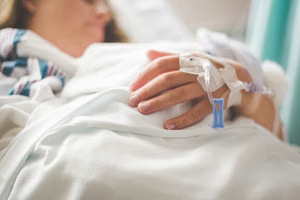
A patient receives treatment in a hospital intensive care unit in Iran. (File photo)
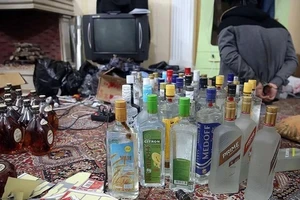
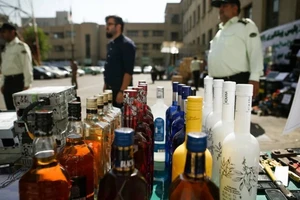
Three people died and 66 were poisoned after consuming counterfeit alcohol in the northeastern Iranian city of Neyshabur, health officials said, as police identified eight suspects linked to its production and distribution.
The number of people poisoned rose from 33 to 66, with the death toll remaining at three, according to updated figures from Neyshabur University of Medical Sciences.
Of those affected, 47 were hospitalized, eight were transferred to a hospital in Mashhad and seven were discharged after receiving treatment.
Eight patients were intubated, and one case of brain death was reported, health officials said.
Neyshabur's police chief said eight suspects had been identified in connection with the production and distribution of the contaminated alcohol.
Repeated cases of alcohol poisoning
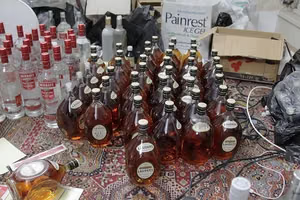
The deaths are the latest in a series of mass poisonings linked to counterfeit or homemade alcohol in Iran.
In July 2025, 31 people sought hospital treatment after consuming counterfeit alcohol in Dezful. One person died and five were admitted to intensive care.
In November 2025, eight people died from alcohol poisoning in separate cases in Iranshahr and Bampur. Reports also showed that one person lost their sight and three others were hospitalized in critical condition.
Official figures may underestimate the scale
The actual number of alcohol poisonings in Iran could be up to 10 times higher than emergency department figures suggest, Deputy Health Minister Alireza Raisi said in October 2025.
Some people avoid seeking medical treatment because of fear or other concerns.
Methanol, an industrial alcohol sometimes found in counterfeit alcoholic drinks, can cause blindness, organ damage and death. Health officials in Neyshabur have not identified the substance responsible for the latest poisonings.
Medical personnel in Iran attend to a patient on a stretcher in a hospital emergency ward. (File photo)
Alcohol sales are prohibited in Iran, fueling a widespread black market in which homemade and counterfeit alcoholic drinks have repeatedly caused mass poisonings.
Raisi also described high per-capita alcohol consumption as a public health challenge in September 2025 and called for expanding alcohol treatment centers.
Iranian news website Rouydad24 reported later that month that alcohol consumption had increased significantly, citing field reports and addiction treatment center data showing that admissions involving alcohol dependence had risen by as much as 50% over the preceding five years.
Iran's northern city of Rasht became a battlefield as security forces opened fire on unarmed protesters during January's anti-government demonstrations, leaving people lying in the streets, former political prisoner and protester Masoud Bidarigh told Iran International.
"It was really like a war," Masoud Bidarigh told Iran International, recalling the crackdown by state security forces during nationwide anti-government protests on January 8 and 9.
Bidarigh, a former boxing champion, described witnessing the shooting of a young man by security forces firing from a passing car near Somayeh Park in Rasht on January 9.
"I was just crying. There was nothing I could do," he said.
"People had come onto the streets empty-handed," he added, describing scenes of unarmed protesters collapsing amid gunfire and screams coming from nearby alleyways.
Bidarigh said large crowds gathered across Rasht on January 8 following a call for nationwide demonstrations by Iran’s exiled Prince Reza Pahlavi.
He described joining protesters as they moved through central Rasht, chanting against the Islamic Republic.
‘Gunfire across Rasht’
As demonstrators approached Municipality Square, security forces fired tear gas to disperse the crowds, he said.
Bidarigh said he heard gunfire near the municipality's clock tower and believed armed personnel were shooting from elevated positions.
The shooting intensified as demonstrators moved toward Pol-e Iraq bridge.
"When we reached Pol-e Iraq, the gunfire started," he recalled, describing sustained bursts of automatic weapons fire.
Protesters turned and fled as people fell to the ground, he said.
"The people were empty-handed. They had no weapons, nothing to defend themselves with."
Bidarigh described groups of 15 to 20 motorcyclists charging into crowds near Farhang Square, attacking and dispersing demonstrators.
He said the violence was particularly intense around Falakeh-ye Gaz, where he saw people lying in the streets and heard cries and screams from surrounding alleyways.
Security forces continued pursuing protesters through the streets, he said, as parts of the city were plunged into darkness after streetlights were switched off.
Rasht's historic bazaar engulfed in flames
Bidarigh also described scenes around Rasht's historic bazaar, which was devastated by fire during the January 8 crackdown.
He said he was on Shariati Street, near one of the market's entrances, and saw armed personnel positioned around the surrounding streets.
The market's narrow passageways and limited access routes made it difficult for people to escape or emergency vehicles to enter, he said.
Bidarigh said security forces prevented people from approaching the burning market to help those trapped inside.
"Nobody was allowed to do anything, neither to put out the fire nor to help people," he said.
He accused security forces of responsibility for fires across the city.
Iran International's May 28 investigation, based on testimony from witnesses in Rasht, reported that protesters fleeing gunfire were driven into narrow market passages as flames spread.
Witnesses described security forces blocking market exits and shooting at people attempting to escape. The investigation also documented allegations of delayed firefighting operations and restrictions on emergency personnel.
In a separate June 6 investigation, Iran International reported witness accounts of bloodstains and bloody handprints on buildings in central Rasht following the crackdown.
Armed Toyota vehicles deployed across Rasht
Bidarigh said state security forces deployed large numbers of armed Toyota vehicles across Rasht on January 9.
He said he witnessed a convoy traveling from the direction of Razi toward the city center at approximately 3 p.m.
He estimated that more than 100 vehicles were involved, some carrying masked armed men and weapons mounted on their rear cargo beds.
An October 29 Reuters investigation found that Iran had imported thousands of Toyota Hilux and Land Cruiser vehicles through a defense procurement agency identified as MOD 346428.
Reuters reported that the Islamic Revolutionary Guard Corps (IRGC) and allied groups modified the vehicles to mount heavy machine guns on their rear cargo beds.
The investigation also identified footage from the January protests showing security forces carrying machine guns in a convoy of Land Cruisers in Tonekabon, another northern Iranian city.
Bidarigh said he saw the convoy passing his supermarket before closing the shop at approximately 4 p.m.
He described a significant escalation in violence after 8 p.m., with armed security forces moving through the city on motorcycles, on foot and in vehicles.
"There was no mercy for anyone," he said.
"Gunfire could be heard across the whole of Rasht."
Bidarigh described motorcyclists on Saadi Street chanting "Heydar, Heydar" while firing toward people.
"Blood was smeared across the streets and walls of Rasht," he said.
"The whole city smelled of blood."
From boxing champion to political prisoner
Before his imprisonment, Bidarigh was a competitive boxer in Iran's northern Gilan province. He was also involved in political activism, distributing leaflets and writing anti-government slogans.
Bidarigh said six security personnel assaulted and arrested him on August 12, 2024, while he was distributing leaflets and writing slogans in Rasht's Golsar neighborhood.
He described being beaten and sprayed with pepper spray during the arrest.
Bidarigh said he spent 25 days in Intelligence Ministry custody, subjected to repeated interrogations, physical abuse and solitary confinement.
He described being kept in a small, dark cell, sometimes blindfolded and handcuffed, while interrogators beat and verbally abused him.
Security personnel also searched his supermarket and home, confiscating electronic equipment and approximately 5,000 political leaflets, he said.
He subsequently spent 38 days in Lakan Prison's Meysagh Ward before being released on bail.
Bidarigh said he was later sentenced to one year in prison following proceedings at which he was denied access to a lawyer.
The Iran Human Rights Society previously reported that Branch 3 of the Rasht Criminal Court, presided over by Judge Mehdi Rasekhi, sentenced him on charges including propaganda against the Islamic Republic, insulting Supreme Leader Ali Khamenei and disrupting national security.
The rights group also reported that Bidarigh publicly protested outside Lakan Prison in February 2025 against a death sentence issued for political prisoner Manouchehr Fallah, whom he had met during his imprisonment.
A prison document reviewed by Iran International lists September 6, 2024, as Bidarigh's detention date, 25 days after his reported arrest. Bidarigh said he spent those 25 days in Intelligence Ministry custody. Human Rights Watch has documented Iranian intelligence agencies holding detainees in unofficial facilities without formal registration.
Bidarigh said he returned to prison on April 6, 2025, to serve his sentence and was released on December 13, 2025.
Less than a month later, on January 6, around 10 security personnel confronted and assaulted him in Rasht's Sabzeh Meydan, he said. He was released after approximately 90 minutes.
The lasting toll of the crackdown
Bidarigh said continued threats from security authorities and fears of rearrest forced him to leave Iran in mid-2026.
Months after the January protests, he said he remained haunted by the violence he witnessed security forces inflict on protesters in Rasht.
"Every day, these scenes come back before my eyes," he said.
"I don't know how we survived. I really don't know."
Young Iranians socialize at a café, reflecting a generation navigating personal relationships and social expectations in a country where family attitudes toward dating and intimacy can differ sharply.
Some young Iranian women are leading private lives their families know little about, hiding relationships, sex and personal choices from parents, while an economy that keeps them at home and laws that punish private life leave them nowhere else to go.
Ladan’s mother knows she has a boyfriend. Her father doesn’t.
When the 21-year-old leaves home to meet him, her mother sometimes tells her father that she is going out with university friends.
It is a secret mother and daughter share. But there is another secret Ladan keeps from both parents.
She wants to have sex with her boyfriend before marriage.
“My mother knows I have a boyfriend, but if she found out I wanted to have sex with him, she would probably react very differently. My family doesn’t understand why I should wait for something that might never happen,” Ladan said.
In Ladan’s family, a boyfriend is something her mother can quietly tolerate, as long as her father doesn’t know. Sex is another matter. In families like hers, she said, a daughter’s virginity is still tied to the family’s honor, and a relationship parents might reluctantly accept can become a source of conflict if they believe it involves sex.
Many of her friends no longer see virginity as a measure of a woman’s worth, she said. They regard sex as a personal decision, not something that must wait until marriage.
The state does not. Under the Islamic Republic’s penal code, sex outside marriage is a crime. And Ladan worries about contraception and unintended pregnancy in a country that has made both harder to manage: a 2021 law meant to raise the birth rate ended the free distribution of contraceptives through public health services and tightened the already strict limits on abortion.
She also worries about what would happen if her family discovered her plans. Her mother has accepted one part of her private life and helps hide it from her father. Ladan fears that revealing the rest could cost her that support.
Ladan is one of five young women in Tehran who told Iran International about the parts of their lives they hide from their families. They spoke on condition that their identities be protected. Their names and some personal details have been changed.
Their secrets differ. But all five are hiding from the same two things: their families’ expectations, and a state that writes those expectations into law and has left them too poor to live anywhere else.
Two young people embrace during a nighttime gathering in Tehran.
Yasaman is 24. She works and earns her own money, but still cannot afford to move out of her parents’ home.
Her mother wants to know why she has not married. Yasaman’s answer is simple: she cannot afford it.
But there is another question nobody asks at home. What is she supposed to do about wanting emotional and sexual intimacy before marriage?
“I also need to have an emotional relationship with someone and feel close to him. But I’m not in a position to get married, and I don’t have a private space where I can spend time with someone I love without worrying,” Yasaman told Iran International.
In Iran, unmarried young adults commonly live with their parents. For many women, that reflects family expectations, but also the cost of living alone. With inflation near 89 percent and rents rising with it, a salary like Yasaman’s does not stretch to a home of her own. Moving out before marriage can also raise questions in more traditional families.
The state’s answer is marriage. It offers young couples marriage loans and urges them to have children. But Yasaman does not want to marry simply to have sex, and she does not have the money to set up a household.
She wants intimacy without being pushed into a marriage she is not ready for.
Yet she cannot afford the privacy that would let her have a relationship on her own terms.
For another of the women, the problem goes beyond finding somewhere private to meet a partner.
She cannot even tell her family whom she loves.
A young man and woman stand together outside a café in Iran at night.
More than a friend
Bahar’s family knows her closest female friend. She visits their home regularly and is one of the most important people in Bahar’s life.
What her parents don’t know is that the two women are in a romantic and sexual relationship.
Bahar is 27, and her family still asks why she has no plans to get married.
“My mother is always asking why I don’t have a boyfriend. I can’t tell her I have a girlfriend. I want to fall in love and live with someone I love, too. But the person I love is a woman,” Bahar said.
Her parents imagine a future in which she meets a man and marries him. Bahar wants to build a life with a woman they already know.
She was reluctant to speak at first, and agreed only after discussing how her identity would be protected.
Both Bahar and her partner live with their families. Neither can afford to rent a home of her own. Even a few hours together without worrying about who might walk in are hard to find.
The law offers them nothing and threatens them with a great deal. Under Iran’s penal code, sexual relations between women are punishable by flogging, and by death after a fourth conviction. Same-sex marriage is not recognized.
Two young women embrace on a street in Iran, where same-sex relationships remain socially sensitive and subject to legal restrictions.
For Bahar, revealing her relationship could mean facing her family’s expectations without the money to leave home.
“If I earned enough to have my own place, maybe I wouldn’t have to hide everything. But right now, if my family finds out, I don’t even know where I would go,” Bahar said.
The woman Bahar wants to share her future with can visit her family home. But in the eyes of Bahar’s parents, she must remain just a friend.
A secret too big to tell
Taraneh, 25, has a job. Last year, when her period was late, she took a pregnancy test.
The result was positive.
She was unmarried, and her boyfriend did not have a steady job. Neither was ready to have a child.
But before she could think about the pregnancy itself, she thought about her father.
“When I saw the test result, the first thing that came into my mind was what would happen if my father found out. Then I started thinking about where I could get the money to end the pregnancy,” Taraneh told Iran International.
She decided to end the pregnancy without telling her family. She did not have enough money to cover the cost, so she borrowed it from a friend.
In Iran, abortion is legal only in narrow cases, such as a serious threat to the mother’s life or a severe fetal abnormality, and only with official approval. The 2021 population law made even those harder to obtain. Women in Taraneh’s position are left with unlicensed clinics or pills bought on the black market, with no one to turn to if something goes wrong.
For an unmarried woman, seeking help with an unintended pregnancy can also mean revealing a sexual relationship her family knows nothing about, and one the law punishes.
Taraneh ended the pregnancy in secret.
Afterward, she worried about her health for some time. But she still could not bring herself to tell her mother.
Her mother had always told her she could come to her with any problem.
This time, asking for help would mean revealing the relationship, the pregnancy and the abortion.
“If I could have talked to my mother, maybe I wouldn’t have felt so alone. But at that moment, all I wanted was for nobody to find out,” Taraneh said.
Her family never found out, even when she was worried about her health.
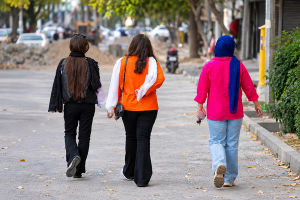
Young women walk along a shopping promenade in Iran.
The forbidden drawer
Not every secret carries consequences as serious as Taraneh’s.
For Sara, 20, secrecy begins with something much smaller: underwear.
She lives with her family and likes decorative lingerie. She says it is a matter of personal taste and does not necessarily have anything to do with having a sexual partner.
Her mother sees it differently.
Two young women walk together through a shopping mall in Iran.
“I even have to be careful about buying something I wear underneath my clothes. My mother thinks that kind of underwear is only for married women, but I want to decide for myself what I wear,” Sara said.
Her mother sometimes looks through her drawers and wardrobe while tidying her room. So Sara keeps some of her things where her mother is unlikely to look.
She is not hiding a relationship or a pregnancy. She simply wants to choose what she wears without having to justify it.
In a country where the state decides what women must wear in public, Sara is fighting for the last place it does not reach: a drawer that nobody opens without permission.
The weight of silence
In these homes, everyday life goes on. Parents ask their daughters where they are going, when they will marry and what they plan to do with their futures.
The daughters answer, but not always with the whole truth.
For some, the silence protects a relationship. For others, it hides a decision about sex, a medical experience or even an item of clothing.
Since the Woman, Life, Freedom protests of 2022, many young Iranian women have openly defied the state’s rules on how they dress and live. At home, the struggle is quieter. Some mothers have already crossed over, covering for their daughters, keeping their secrets, promising they can come to them with anything.
But each of these five women still has to decide how much of her private life she can share with the people she lives with.
And sometimes, the person she most needs to talk to is the one she cannot tell the truth to.
Australian broadcaster Erin Molan says she was targeted in an Iran-linked cyber-espionage operation after someone posing as a US think tank expert sent her an online meeting invitation.
Australian broadcaster Erin Molan said she was targeted by Iran-linked hackers posing as a US think tank expert, and that the head of Australia’s domestic intelligence agency told her she was one of three Australians targeted.
The other two were journalist Sharri Markson and political commentator Michael Kroger, she said. Molan, host of The Erin Molan Show, told Iran International’s Eye for Iran podcast that she found a security alert she had missed only after reading about a similar approach to Markson.
She contacted police and the head of the Australian Security Intelligence Organization, ASIO, who told her the operation had been linked to Iran.
The case adds to a list of suspected Iranian hacking operations aimed at journalists and public figures who speak out against Tehran, and comes a year after Australia expelled Iran’s ambassador over arson attacks that ASIO linked to Iran.
A message about her father
The first message arrived on X. The sender praised Molan’s work, cited specific things she had said in support of the Iranian people and brought up her late father, Jim Molan, a retired major general and senator.
“Anyone knows the way to my heart is talking to me about my dad,” Molan said. “It’s my favorite subject.”
The name on the message belonged to a real think tank expert. Molan found her profile on the organization’s website and saw she had appeared on CNN. About a month after the first approach, Molan clicked a link to join a meeting.
The screen behaved oddly and she heard strange noises, she said. Nobody joined. When she emailed to ask what had happened, the sender said the expert had been called away and would reschedule. Molan said she was annoyed at having set aside the time, and moved on.
Months later, Markson’s account prompted her to search her inbox, where she found an alert showing a security breach. She sent the material to police.
“The person inside her account was not her,” Molan said of the expert.
A borrowed account
Markson told NewsNation that she had received messages that appeared to come from a former Trump administration official she had known for years. The senders used his X account without his knowledge and repeatedly tried to set up an online meeting. She grew suspicious and contacted him directly. He knew nothing about it.
Markson said Australian intelligence officials linked the operation to Charming Kitten, a hacking group tied to Iran’s Revolutionary Guards that has long impersonated journalists and think tank experts to win targets’ trust.
She said she believed she was singled out for her coverage of antisemitism, her support for Israel and her criticism of the Islamic Republic.
Molan said the messages to her referred to her public statements distinguishing between Iran’s rulers and its people. “They were referencing specific things that I had said in defense of the Iranian people,” she said.
An FBI call
Jonathan Harounoff, a journalist and former Israeli spokesperson to the United Nations, told Eye for Iran that he received an Instagram message from someone posing as a reporter for Britain’s Telegraph.
The sender said they had read his book, Unveiled, and cited specific points they wanted to discuss in an interview.
He was ready to agree, he said, until the sender grew impatient and began sending more links. He contacted the reporter through her work email. She had not sent the messages, and the account was later disabled.
About six months later, he said, the FBI called to tell him he had been targeted in a hacking attempt it attributed to the Iranian state.
From hacking to sabotage
Iran’s cyber operations in the West have gone beyond espionage. On November 10, France blamed a Guards-affiliated unit for an October sabotage campaign against refrigeration controls at more than 700 stores, which French officials said caused fires and spoiled food worth tens of millions of euros (tens of millions of dollars).
Paris summoned Iran’s ambassador. Tehran rejected the accusation.
Molan said the experience made her question even routine encounters. When she arranged to hand her laptop to police in Sydney, she said, she wondered how she could be sure the people she was meeting were really officers.
She has faced threats before. After bomb threats following the October 7 attacks in Israel, she needed police escorts, and people close to her urged her to step away from the subject. She was back on air the following week.
“I cannot be silenced,” she said. “I will never be silenced.”