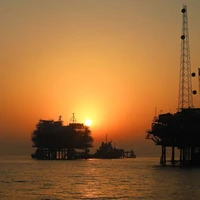
Iran's oil production fell by nearly half from pre-war levels in October, dropping below the amount its refineries consumed before the war, according to new figures from the International Energy Agency (IEA) and Iranian Oil Ministry data reviewed by Iran International.
The IEA estimated in its latest monthly report that Iran produced 1.86 million barrels of crude oil per day in October, down 46% from pre-war levels.
An Iranian Oil Ministry report reviewed by Iran International showed that the country's refineries consumed more than 1.873 million barrels per day in 2024–25, before the war disrupted production and refining operations.
New processing units have since been added to Iranian refineries, potentially increasing their crude oil requirements. However, wartime damage and disruptions mean actual domestic demand may differ from pre-war levels.
The steep production decline comes amid a US naval blockade that has effectively halted Iranian crude exports and severely restricted shipments of petroleum products, leaving Tehran with limited options for maintaining production.
Kpler previously told Iran International that Iranian crude oil loadings had stopped in mid-August, leaving the country with virtually no option but to keep production close to domestic consumption levels.
One possible contributing factor is the damage to Iran's Lavan refinery during the war, although the facility has a relatively small crude oil processing capacity of 35,000 barrels per day.
Threat to refinery operations
Homayoun Falakshahi, a senior analyst at Kpler, told Iran International on November 13 that Iranian naphtha loadings had fallen by 100,000 barrels per day in recent months.
He warned that if Iran cannot export the product, it may be forced to partially shut down some refinery units.
"Iran's fuel oil (mazut) loadings have also fallen to 15% of their pre-war levels. However, some of the surplus refinery products, such as fuel oil, can be sold to countries like Afghanistan and Pakistan, or absorbed through increased domestic consumption. Naphtha is a more complicated issue," he said.
Naphtha is primarily used as a feedstock for petrochemical production, although modern refineries can also process it into higher-value products such as gasoline.
During the war, several units at the major petrochemical complexes in Assaluyeh and Mahshahr, which account for 70% of Iran's total petrochemical production, were also targeted.
The damage, combined with restrictions on exports, has complicated Iran's ability to absorb or sell surplus refinery products.
Kpler data show that while crude oil loadings have come to a complete halt, shipments of some petroleum products, particularly liquefied petroleum gas (LPG), have continued at reduced levels.
United Against Nuclear Iran (UANI) recently reported that Iran had managed to move 11 LPG cargoes past the US naval blockade since it began.
Reuters estimated Iran's LPG exports that evaded the blockade between mid-July and mid-October at 4.1 million barrels. An Iran International analysis based on Kpler data showed that this was less than 14% of Iran's LPG exports over the same period last year.
In its latest assessment, UANI said another 12 small Iranian tankers carrying LPG were anchored in the Gulf of Oman, apparently waiting for an opportunity to cross the blockade.
There have been no confirmed reports of Iranian naphtha cargoes passing through the US blockade.
Region recovers as Iran's output falls
While Iranian oil production has plunged, other major producers in the Persian Gulf have been recovering from disruptions caused by the war.
New OPEC figures show that its members, together with the UAE, which left the organization on May 1, produced a combined 27.16 million barrels per day in October, up 1.96 million barrels from September.
Excluding Iran, daily production by OPEC member countries in October was nearly 900,000 barrels above the 2025 level.
OPEC figures also show that Iran's daily output fell by 1.34 million barrels compared with 2025, while combined production by Iraq and the UAE increased by 1.3 million barrels.
Iraq produced 4.5 million barrels per day in October, although its oil minister recently said production had exceeded five million barrels per day in November.
Saudi Arabia has also reported raising its daily output to 10.5 million barrels, around 1.3 million barrels above its October level.
The IEA said in its latest report that global oil production exceeded worldwide demand in October for the first time since the outbreak of the Middle East war, driven by recovering output among Arab producers in the Persian Gulf.
The agency also reported that global oil stocks held at sea increased by 86 million barrels during the month, underscoring the broader recovery in supply even as Iran's production remained severely constrained.
Trucks queue at the Bazargan border crossing between Iran and Turkey, one of Iran’s main overland trade routes
Tehran has dismissed US plans to restrict Iran’s overland trade routes as ineffective propaganda, but Iranian businesses report sharp increases in transportation costs and insurance premiums.
Some say these costs have multiplied several-fold, though it remains unclear how much of the increase can be attributed to the new operation.
Operation Iron Gate follows two earlier US initiatives, Economic Fury and Economic Outcast, which introduced a naval blockade and expanded secondary sanctions across five sectors: digital assets, technology, gold, aviation and shipping.
Iron Gate, by contrast, is a CENTCOM task force rather than a full-scale operation. Established on November 7 and operating with roughly 20 personnel based in Tampa, Florida, its long-term impact remains difficult to assess.
The economic damage
The International Monetary Fund projects a 5.4% economic contraction and 68.9% inflation for 2026.
CENTCOM asserts its blockade has prevented more than $25 billion in crude exports, although the figure has not been independently verified.
While CENTCOM has not specified the total volume of trade Iron Gate aims to block, its stated targets cover weapons, dual-use technology, sanctioned materials and illicit revenue moving through land and Caspian routes.
Ordinary trade is not explicitly targeted, but the scale of Iran's regional commerce illustrates the challenge of enforcing such restrictions.
Regional trade
Iraq has more land crossings with Iran than any other neighbouring country. On November 9, Washington reportedly requested that Baghdad close all but two crossings.
Iraq's Trade Ministry put bilateral trade at $12.5 billion in 2024, while Iranian customs figures showed Iraq purchased $11.9 billion in Iranian exports during the last Iranian calendar year, making it Iran's second-largest export market after China.
Smaller crossings have also expanded rapidly, with Mehran alone handling $453 million in exports over six months.
Reports by Alhurra, the US-funded Arabic-language broadcaster, have highlighted IRGC-supervised smuggling through militia-controlled routes into Iraq, potentially making these networks a particular target for Iron Gate.
Along the Turkish border, six-month bilateral trade reached $7.04 billion, according to Mehr News. Petrochemicals accounted for 48% of Iranian exports and oil products another 33%.
Bazargan remains a major bottleneck, with Iranian officials reporting that Turkey permits only 200 trucks a day, against the 500 requested by Tehran.
To the north, industry estimates published in Iranian economic media project Russia–Iran Caspian cargo volumes of approximately 10 million tonnes in 2026, nearly double the previous year's level.
Iranian exports to Pakistan and Afghanistan amount to roughly $2.4 billion each, alongside extensive informal fuel smuggling on which an estimated 2.4 million people in Pakistan's Baluchistan depend.
Internal strain
Many observers, including some Iranian officials, argue that additional restrictions are unlikely to bring about economic collapse, pointing to Iran's adaptation to nearly five decades of sanctions.
Assessments reported by Reuters have also suggested that renewed military strikes may be unlikely to change Tehran's negotiating position or destabilize its leadership.
Yet the ability of the Iranian state to withstand pressure does not mean its population can absorb the costs. Iranians contacting foreign-based Persian-language outlets, including Iran International, consistently describe the growing hardship facing ordinary households.
Iron Gate may prove more effective at raising trading costs and disrupting specific networks than at restricting Iran's overall commerce.
Oil-product flows through Iraq and Turkey, along with military-related shipments across the Caspian, could face additional scrutiny. But the task force's limited size and the geographical scale of its mission make its eventual impact uncertain.
Caspian maritime traffic, in particular, remains difficult for Washington to reach directly.
Iran may therefore be able to withstand further restrictions, even at the cost of prolonged economic hardship. Tehran could ultimately prefer what amounts to more pressure on ordinary Iranians over geopolitical concessions.
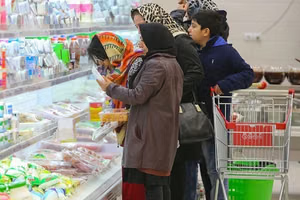
Shoppers walk through a market in Iran, where rising living costs and shrinking purchasing power reflect the economic toll of 47 years of Islamic Republic rule.
Nearly 47 years after Iran's 1979 revolution, a former football chief has asked what Iranians got for its promises, pointing to officials’ children living abroad, oil wealth that never reached wages and a state that answered protests with bullets.
“You haven’t done anything for 47 years. All you talk about is dignity, dignity, dignity. What dignity?” Mohammad Dadkan, former president of Iran’s Football Federation, said in an interview on the Persian-language podcast Tak be Tak.
The cost of confronting US
"What would we have to talk about if it weren't for 'Death to America'? What would we use to keep people occupied?" Dadkan asked.
The slogan has been at the heart of the Islamic Republic’s identity since 1979, when students loyal to Ayatollah Khomeini seized the US embassy and held its diplomats hostage.
Decades of confrontation, and the dispute over the nuclear program, brought broad US sanctions on oil, banking and trade.
They have deterred investment and raised the cost of imports, and the state’s own mismanagement has done the rest. Iranian households live with high inflation, falling purchasing power and few jobs.
Officials call resistance to Washington the measure of national independence. Iranians have paid for it in prices.
Shoppers crowd a bazaar in Iran, where decades of economic hardship, rising prices and declining purchasing power have taken a toll on everyday life.
Privilege at home, children abroad
"What have you done other than fill your own pockets, send your children abroad and take all the privileges for yourselves?" Dadkan said.
The children of senior officials living in the countries their parents denounce have long drawn anger.
Fatemeh Ardeshir Larijani, daughter of Ali Larijani, the former secretary of the Supreme National Security Council killed in an Israeli strike in March, worked as a cancer specialist at Emory University in the United States until January, when Emory said her employment had ended after protests by Iranian Americans. A government spokesman said she had already returned to Iran.
Issa Hashemi is the son of Masoumeh Ebtekar, a former vice president who was spokeswoman for the students who seized the US embassy in 1979.
He lived in Los Angeles with his wife and son until April, when US immigration authorities detained the family and Secretary of State Marco Rubio revoked their permanent residency over their connection to Ebtekar.
For most Iranians, a falling currency and closing visa doors have made studying or settling abroad ever harder.
Oil wealth and shrinking wages
"We have stone, gold, oil, the best resources and an excellent geographical position for attracting tourists. We haven't done anything," Dadkan said.
Iran has some of the world’s largest oil and gas reserves. Its people have not seen the benefit.
Annual inflation reached 76.8 percent in October, according to the Statistical Center of Iran, and prices were 88.7 percent higher than a year earlier.
The dollar traded at about 2.63 million rials in November, against about 1.6 million in early April: the rial lost nearly 40 percent of its value in seven months.
The base minimum wage for the Iranian year that began in March was set at about 166 million rials a month. At today’s rate that is about $63.
'National dignity’
Dadkan also turned the officials’ favorite word back on them, pointing to Iranian women driven into prostitution in neighboring countries.
The US State Department’s 2019 Trafficking in Persons Report cited growing numbers of young Iranian women in prostitution in Dubai, some controlled by networks that took their passports and threatened violence, and possible links between traffickers and members of the police, the Revolutionary Guards and the Basij militia.
Its 2022 report identified Iranian women as vulnerable to sex trafficking in Turkey, especially near the border.
Resilience, salaries and missiles
"They've come up with something new, and apparently they all say the same thing," Dadkan said, criticizing officials' repeated use of the term resilience.
The Persian term tabavari, meaning resilience or the ability to withstand hardship, has increasingly featured in speeches by Iranian officials urging the public to cope with economic and social pressures.
Shoppers browse fresh produce at a market in Iran.
The appeals have come as households struggle with persistent inflation, declining purchasing power, electricity outages and water shortages. Power cuts have disrupted businesses and industrial production, while water shortages have affected daily life in several provinces.
Dadkan's criticism focused on the expectation that citizens should repeatedly adjust to worsening conditions, with officials emphasizing their capacity to endure hardship rather than explaining how the underlying problems would be addressed.
Dadkan also challenged demands for higher parliamentary salaries.
"Why should your salary get increased? What have you done?" he asked.
He contrasted lawmakers' benefits with the struggles of retirees who have repeatedly demonstrated for pensions that keep pace with inflation.
Military priorities drew similar criticism.
"You come on television in the morning and say the missiles' range should be increased. Why is that your concern? Go take care of people's lives, their welfare and their security," Dadkan said.
Iranian officials have made expanding the country's missile capabilities a priority, even as power cuts disrupt homes and factories, water shortages worsen and basic infrastructure falls into disrepair.
The right to protest
"Now tell those who don't agree with your policies to come out. See if you can contain the crowds. Then you'll find out whether people want you," Dadkan said.
His challenge followed years of anti-government demonstrations, including protests in 2017–18 and 2019, the Woman, Life, Freedom uprising of 2022 and the nationwide protests of January 2026.
The January crackdown, particularly the killings on January 8 and 9, became central to questions about the system's treatment of dissent.
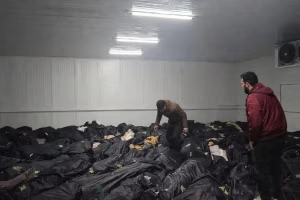
On January 25, Iran International's editorial board announced that more than 36,500 people had been killed during those two days, citing confidential security documents, field reports and testimony from medical workers, witnesses and victims' families.
One generation lived through revolution, war and one economic crisis after another. The next grew up with falling incomes and few prospects, and many left. Others buried relatives killed in the streets.
Forty-seven years is a chapter in a state’s history. For Iranians it is a lifetime of youth spent getting by, futures abandoned and families split by emigration or death. None of it can be given back.
US President Donald Trump speaks to the media before boarding Air Force One en route to Joint Base Andrews, Maryland, at President Donald J. Trump International Airport in West Palm Beach, Florida, US, November 8, 2026. REUTERS/Eric Lee Purchase Licensing Rights
President Donald Trump’s talks with Qatar’s prime minister come amid a renewed diplomatic push to end the Iran war, but securing terms both Washington and Tehran can present as a victory remains a central obstacle, analysts told Iran International.
Trump and Sheikh Mohammed bin Abdulrahman Al Thani met behind closed doors in the Oval Office on Monday, and Axios reported that their discussions focused on Iran. The Qatari prime minister also met Vice President JD Vance earlier in the day.
An Iranian official told Al-Monitor on Friday that the country’s nuclear program was “under discussion” with mediators. Tehran has said negotiations depend on Washington meeting its demands, including sanctions relief and the release of billions of dollars in frozen assets.
Trump needs a nuclear achievement to justify the war, not just the reopening of the Strait of Hormuz, said Aaron David Miller, a former US Middle East negotiator now at the Carnegie Endowment for International Peace.
“It’s the nuclear issue. He needs a win to justify this war,” Miller told Iran International.
“And I don’t know whether the Iranians are prepared to make that concession or what Trump would consider to be a win that they could accept. So I think that’s a huge problem.”
Who moves first?
The new round of diplomacy has not settled the basic dispute: whether economic and military concessions should come before progress on Iran’s nuclear program, or after.
Danny Citrinowicz, a former head of the Iran branch of Israeli military intelligence and now a senior researcher at the Institute for National Security Studies in Tel Aviv, said an interest in ending the war should not be mistaken for an agreement in sight.
“I believe both sides genuinely want to find a way to end this war, but that does not mean they are close to an agreement,” he told Iran International.
Iran wants Washington to meet its conditions on Hormuz, the naval blockade, oil exports and other economic restrictions before nuclear talks begin. Washington wants movement on the nuclear issue much earlier, he said. “The problem is not simply what each side wants, but who moves first.”
A breakthrough was possible, Citrinowicz said, if Washington accepted a different sequence of reciprocal steps. “Without meaningful American flexibility, however, I see little reason to expect Iran to abandon its red lines.”
Miller criticized the interim memorandum of understanding reached in June, which was meant to open the way to nuclear talks but collapsed soon afterward. It committed Washington to a sequence that favored Iran, he said, calling it “one of the worst negotiated documents in the history of US diplomacy.”
Two definitions of victory
Even if negotiators settle the order of steps, both governments would have to defend the concessions at home as achievements.
Trump could claim victory by reopening Hormuz, lowering energy prices, ending the fighting and securing an Iranian commitment not to build nuclear weapons, Citrinowicz said. Tehran would need an outcome it could present as a success too.
“After surviving months of attacks, the Iranian leadership is not going to accept an agreement that looks like surrender,” he said.
Iran could reopen Hormuz, stop attacks on shipping and regional infrastructure, return to nuclear talks and possibly accept tighter international monitoring, he said. In return it would expect real steps on sanctions, oil exports, frozen assets and guarantees against further attacks.
Miller doubted Trump’s wish to end the war would outweigh his fear of looking beaten. “I think he’d want to be done with this, but I don’t know if he’s prepared to spend the next three years being called a loser,” he said.
Eric Mandel, founder of the Middle East Political Information Network, said a deal could let Trump declare victory while leaving the nuclear dispute open.
“The president would like to have a diplomatic solution. The president is looking for victories. He may claim victories where there aren’t,” Mandel told Iran International.
Tehran was drawing out the talks to wait Trump out, Mandel said, and economic relief in exchange for promises of future nuclear concessions could throw the Islamic Republic a lifeline without securing lasting limits.
A meeting is not a breakthrough
Conflicting reports over a possible meeting between Vance and Iran’s security chief show how uncertain direct contact remains.
Turkey’s intelligence chief, Ibrahim Kalin, said Qatar would host Vance and Mohsen Rezaei, secretary of Iran’s Supreme National Security Council, next week, the Turkish newspaper Türkiye reported. The Tasnim news agency, which is affiliated with the Revolutionary Guards, then quoted a senior Iranian security official as denying any meeting was planned and saying Washington must first act on Iran’s seven conditions.
Foreign Minister Abbas Araghchi said on Tuesday there were no plans for Rezaei to meet Vance. The war, he said, would end neither through military action nor through more sanctions. “The only way to end it is diplomacy and acceptance of the Islamic Republic’s conditions.”
Citrinowicz said Rezaei should not be expected to break with the Islamic Republic’s established positions. “He is deeply rooted in the Iranian political and security establishment,” he said. “He is not someone who can simply be persuaded to abandon the regime’s fundamental positions in exchange for an American offer.”
Rezaei is the subject of an Interpol Red Notice over his alleged role in the 1994 bombing of the AMIA Jewish community center in Buenos Aires, which killed 85 people. He and Tehran deny involvement. As commander of the Revolutionary Guards during the Iran-Iraq war, he led the failed Karbala-4 offensive of December 1986, in which Iran suffered heavy losses.
The decisive question, Citrinowicz said, is whether Vance has Trump’s authority to offer something substantially different.
“A failed meeting could be more dangerous than no meeting at all,” he said. Trump might conclude that diplomacy had run its course and order more strikes to force concessions.
Continued economic pressure, indirect talks and a limited interim deal would remain options, he said, but failure to close the gaps could raise the risk of a return to war.
A still from a CENTCOM video posted March 5 shows a vehicle the US military described as an Iranian missile launcher.
Task Force Iron Gate, a new US team targeting weapons shipments and other illicit flows across Iran’s land borders and the Caspian Sea, may not fully close Iran’s northern supply routes but could make the arms and equipment Tehran needs harder to obtain.
Success will depend less on Washington’s ability to track shipments than on persuading governments, banks and suppliers to stop them.
According to CENTCOM’s November 7 announcement, Iron Gate consists of roughly 20 civilian and military personnel based in Tampa, coordinating with other US agencies.
It follows a naval blockade that CENTCOM estimates has prevented more than $25 billion in crude exports, giving Tehran greater incentive to develop alternative supply routes.
The task force adds coordination capacity, but its announcement offers no indication of new authority to board vessels in the Caspian or access neighboring countries’ ports.
A graphic released by CENTCOM on November 7, 2026, outlining Task Force Iron Gate’s focus on Iran’s land borders and the Caspian Sea alongside the existing US naval blockade.
Washington’s leverage lies upstream
A June CSIS assessment argues that Iran needs imported machine tools, electronics and engines to rebuild its military industries. It identifies the Caspian and Pakistan as possible alternatives to disrupted procurement through the United Arab Emirates.
Washington’s strongest leverage may lie with suppliers before those goods reach the region. A distributor with customers in Europe or access to American finance has more to lose than an Iranian shipping company already under sanctions.
Finding that distributor and giving its government evidence of a prohibited sale may achieve more than tracking the vessel carrying the goods.
In September 2024, the State Department designated Russian shipping companies and identified vessels it said transported Iranian military equipment across the Caspian to Russia.
Those measures targeted supplies leaving Iran rather than entering it, but provide an enforcement precedent. They can expose suppliers and discourage businesses from handling their cargo, while offering less leverage over operators whose owners and host governments accept the consequences.
Iron Gate’s better opportunity lies in equipment Iran struggles to replace. A factory awaiting an essential component may remain idle even while food imports grow.
The distinction matters: restricting military procurement does not require closing ordinary commerce, and rising trade volumes would not necessarily mean the task force had failed.
Russia’s role limits US options
Russia poses the hardest problem. Its military relationship with Iran gives Moscow reasons to keep transport connections open, limiting Washington’s prospects of securing cooperation along a major northern route.
In an October analysis for the Yorktown Institute, Nikita Smagin describes expanding Caspian commerce alongside shipping shortages, port limitations and rising freight costs.
The corridor offers Tehran relief but lacks the capacity to replace its southern gateways. That does not mean it cannot carry smaller volumes of militarily important equipment and components.
These constraints could make individual shipments more vulnerable to disruption. They also complicate any assessment of enforcement: congestion, shallow water and seasonal conditions can slow deliveries without American intervention.
Pressure could leave Tehran more reliant on Moscow if other suppliers withdraw while Russian routes stay open.
Iran would then have less room to bargain, while the military partnership Washington hopes to weaken could survive. Economic dependence and military supply would not necessarily move in the direction Washington intends.
Neighbors need different bargains
Kazakhstan illustrates the tension between financial pressure and regional transport ambitions. In May, Deputy Prime Minister Serik Jumangarin said payment risks had stalled contracts with Iran.
A month later, Kazakhstan signed an agreement for a logistics terminal at Iran’s Shahid Rajaee port.
Although the port is on Iran’s southern coast, the project demonstrates Astana’s wider interest in maintaining transport links through Iran. Financial pressure can discourage traders even while their government pursues closer connections.
Washington may therefore have more influence over specific prohibited transactions than over Kazakhstan’s broader commitment to those links.
Azerbaijan suspended cargo crossings on March 5, 2026, after accusing Iran of a drone attack on its territory, then reopened them on March 9.
That episode was a security dispute rather than a sanctions-enforcement test, so it does not establish how Baku would respond to US requests.
The brief closure nevertheless cautions against assuming Azerbaijan would sustain a broad interruption of trade. Requests to inspect specific suspect shipments may have better prospects than demands to shut a major route indefinitely.
Turkmenistan also sees value in keeping Iranian routes open. Its foreign ministry reported talks in September 2025 on increasing transit cargo and developing the China–Kazakhstan–Turkmenistan–Iran railway.
These projects are not evidence of wrongdoing, but they help explain why Ashgabat might resist sweeping restrictions.
Requests to stop weapons shipments backed by clear evidence may find a more receptive audience, although the task force announcement offers no indication that Turkmenistan has agreed to cooperate.
The test is military production
Iranian buyers can change intermediaries more easily than they can replace scarce equipment or technical expertise. Enforcement needs to follow those dependencies rather than simply add names to sanctions lists.
Useful measures of success would include documented procurement failures, interrupted payments, longer waits for critical components and confirmed interceptions of prohibited shipments.
The ultimate test is whether those obstacles constrain the restoration of Iranian military production.
Iron Gate’s best chance lies in restricting difficult-to-replace military inputs while securing cooperation neighboring governments can sustain.
Otherwise, Washington risks making trade more cumbersome—and Iran more dependent on Russia—while leaving its essential military supply relationships intact.