• العربية
  • فارسی
BrandBrand
  • Iran Insight
  • Politics
  • Economy
  • Analysis
  • Special Report
  • Opinion
  • Podcast
  • Live TV
  • Iran Insight
  • Politics
  • Economy
  • Analysis
  • Special Report
  • Opinion
  • Podcast
  • Live TV
  • Theme
  • Language
    • العربية
    • فارسی
  • Iran Insight
  • Politics
  • Economy
  • Analysis
  • Special Report
  • Opinion
  • Podcast
  • Live TV
All rights reserved for Volant Media UK Limited
volant media logo

Iran threatens Armenia as US-run Trump Route clears Yerevan’s parliament

Maryam Sinaiee
Maryam Sinaiee

Iran International

Nov 13, 2026, 09:20 GMT+0
US President Donald Trump holds the hands of Azerbaijan's President Ilham Aliyev and Armenia's Prime Minister Nikol Pashinyan as they shake hands between each other during a trilateral signing event, at the White House, in Washington, DC, August 8, 2025.

Armenia’s parliamentary approval of the Trump Route, a US-run transit corridor running along Iran’s northern border, has set off alarm in Tehran, with officials and state media warning that it would bring a US presence to the frontier.

Armenia’s parliament approved the agreement on October 28. Since then, an adviser to Iran’s supreme leader has threatened Yerevan, and state-run media have urged Tehran to stop the project.

The Trump Route for International Peace and Prosperity (TRIPP) is designed to link Azerbaijan to its exclave of Nakhchivan through Armenia’s southern Syunik province. Syunik borders Iran’s East Azarbaijan province and carries Iran’s only direct land connection to Armenia, and through it to the rest of the Caucasus.

The route was announced at the White House in August 2025, when President Donald Trump hosted Azerbaijan’s President Ilham Aliyev and Armenia’s Prime Minister Nikol Pashinyan to sign a framework for peace between the two countries after decades of conflict.

Azerbaijan had long called the route the Zangezur corridor, and Tehran had opposed it for years, warning that it could cut Iran off from Armenia.

Under the agreement, Washington and Yerevan will set up a joint company, TRIPP Development, with the US side holding 74 percent and Armenia 26 percent. The initial term is 49 years, with an option to extend it by 50 years, during which Armenia’s stake would rise to 49 percent.

Iranian officials and analysts say TRIPP could cut Iran’s transit revenue and weaken its position as a regional transport hub. They also see a US presence near Iran’s northern border as a serious security threat.

The state-run Mehr News Agency, in a November 9 article titled “The Caucasus on the Path to US Influence: Tehran Must Prevent Implementation of the TRIPP Corridor,” said Iran should rethink its approach to the Caucasus in light of what it called the country’s “new position in regional equations” after the war with the United States and Israel.

“A different approach centered on power,” Mehr said, could stop activities that threaten Iran’s national security from spreading in the South Caucasus.

Velayati threatens Armenia

Ali Akbar Velayati, an adviser to Iran’s supreme leader on international affairs and a former foreign minister, attacked Pashinyan over the agreement in an article in the Ettela’at newspaper on November 5.

Velayati said he had told Armenia’s deputy foreign minister and its ambassador in Tehran that Russia’s preoccupation with the war in Ukraine should not lead Armenia into a “miscalculation.” Iran, he said, considered itself responsible for security in the South Caucasus, “with or without Russia.”

Iranian military commanders later traveled to the region and held a large exercise to show Iran’s “power and determination,” Velayati said. He said he had warned Armenia’s ambassador directly: “If Trump and his allies seek to cross this red line of Iran, we will break their legs.”

Armenia’s Security Council secretary, Armen Grigoryan, said in response that the project did not involve the presence of a single armed soldier, and that none of Armenia’s neighbors, Iran included, should see an economic project as a threat.

Iran’s Foreign Ministry spokesman, Esmaeil Baghaei, said on Monday that Tehran had raised its concerns with Armenia immediately after Armenia, Azerbaijan and the United States issued their joint statement on the project.

Armenia had assured Iran that the route would not change international borders or the region’s geopolitical arrangements, and that no US military forces would be stationed there, he said.

‘Yerevan’s gamble with Trump’s card’

Hardline media have kept up their attacks despite Armenia’s assurances.

On November 9, Jam-e Jam, a newspaper published by the state broadcaster, ran an article titled “Yerevan’s Gamble with Trump’s Card.”

“From the perspective of Iran’s national security doctrine, the emergence of an economic and administrative structure under US control in Syunik province, even if initially presented under the guise of transit and trade, is unacceptable,” the paper wrote.

Security threats do not have to begin with military bases, Jam-e Jam said. Strategic infrastructure and networks tied to hostile powers can lay the ground for long-term influence.

Mehdi Seif-Tabrizi, an analyst of Russian affairs, made a similar case in the Farhikhtegan newspaper on November 7.

“Tehran’s concern is fundamentally not limited to the possible deployment of US military forces. The issue is the formation of permanent infrastructure for influence in the vicinity of Iran’s borders, which could serve purposes beyond its initial economic objectives in times of crisis,” he wrote.

Iran’s concerns had grown more serious since its war with the United States, he added.

Most Viewed

Workers in Iran sell organs to pay debts and cover living costs
1

Workers in Iran sell organs to pay debts and cover living costs

2
VOICES FROM IRAN

Missile city unveiling sparks anger over poverty, lack of shelters

3

Trump vows ‘total victory’ as Iran rejects concessions and threatens wider war

4

Iranian commanders threaten to kill Trump, strike US targets worldwide

5
ANALYSIS

US targets Iran's land trade routes, but Tehran may hold firm

Banner
Banner
Banner
Banner
Banner
Banner
Banner

Spotlight

  • Iran's intelligence merger debate signals possible security shake-up
    INSIGHT

    Iran's intelligence merger debate signals possible security shake-up

  • Americans ‘a bit naive’ about influence campaigns by Iran, Russia, China
    ONE-ON-ONE

    Americans ‘a bit naive’ about influence campaigns by Iran, Russia, China

  • Trump's Iran dilemma after America's 'everything' election
    OPINION

    Trump's Iran dilemma after America's 'everything' election

  • The faceless judge who sentenced 11 Iranian protesters to death in 2026
    SPECIAL REPORT

    The faceless judge who sentenced 11 Iranian protesters to death in 2026

  • Iran state TV panelists urge tougher action against US blockade

    Iran state TV panelists urge tougher action against US blockade

  • Iran’s largest ‘private’ bank is run by Supreme Leader’s business empire
    SPECIAL REPORT

    Iran’s largest ‘private’ bank is run by Supreme Leader’s business empire

  • France's cyberattack allegations against Iran should wake up Europe
    OPINION

    France's cyberattack allegations against Iran should wake up Europe

  • US targets Iran's land trade routes, but Tehran may hold firm
    ANALYSIS

    US targets Iran's land trade routes, but Tehran may hold firm

•
•
•

More Stories

Iran's intelligence merger debate signals possible security shake-up

Nov 13, 2026, 03:30 GMT+0
•
Behrouz Turani
100%
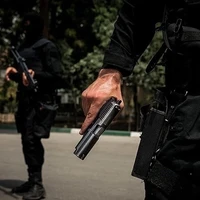
Counterterrorism forces take part in a security drill in Tehran, Iran.

A proposal to merge Iran's Intelligence Ministry with the Revolutionary Guards' powerful intelligence organisation is gaining traction, reviving debate over the rivalry between the two agencies and the future of the country's security apparatus.

The issue has drawn renewed attention in the reformist newspaper Etemad, which is close to President Masoud Pezeshkian's administration.

In an article published Thursday, the newspaper examined proposals reportedly discussed in senior state consultations to consolidate the two agencies into a more unified and accountable intelligence structure.

Iran's Intelligence Ministry remains without a permanent chief nearly eight months after Esmail Khatib was killed in an Israeli strike in March, while parliament considers separate legislation to overhaul the ministry's leadership.

The two agencies have long operated alongside one another, with overlapping responsibilities and competing centres of authority.

A history of rivalry

Iran's intelligence apparatus encompasses several organisations, but the Intelligence Ministry and the Islamic Revolutionary Guard Corps (IRGC) Intelligence Organisation are its two most prominent institutions.

The ministry operates within the government, with its chief nominated by the president and approved by parliament. The IRGC's intelligence arm belongs to a military organisation operating under the supreme leader's command.

Their competing authority has occasionally produced disagreements over investigations and the treatment of detainees.

During the late 2010s, one prominent dispute involved environmental activists arrested by the IRGC Intelligence Organisation on espionage charges. Another concerned more than 50 people reportedly accused of spying for Israel.

In both cases, the Intelligence Ministry publicly challenged allegations advanced by the IRGC Intelligence Organisation.

Some former detainees subsequently told Iranian and Persian-language media outside the country that the ministry had apologised for their detention and offered compensation.

A sensitive debate

Writing in Etemad, journalist Mehdi Beik-Oghli examined longstanding concerns about overlapping mandates, institutional rivalries and legal accountability within Iran's intelligence system.

His analysis also explored the qualifications required for senior intelligence officials and the difficulties of maintaining separate security institutions with overlapping responsibilities.

Etemad is widely regarded as one of the newspapers closest to Pezeshkian's administration. Its proprietor, Elias Hazrati, serves as a senior government media adviser.

The article does not establish whether a merger has been formally proposed by the government or endorsed by senior decision-makers, but its publication brings a sensitive question about Iran's intelligence establishment into a prominent government-aligned newspaper.

Leadership vacuum

Iran's parliament is preparing to consider separate legislation that could fundamentally change the leadership structure of the Intelligence Ministry.

Parliamentary presidium spokesman Abbas Goudarzi said Tuesday that an urgent bill would remove the longstanding requirement for the intelligence minister to possess ijtihad, an advanced qualification in Islamic jurisprudence.

Since the ministry's establishment in 1984, all its permanent ministers have been clerics.

The proposed legislation would allow a non-cleric to take the position while establishing two new organisations within the ministry, responsible for internal security and ideological affairs.

Their directors would be appointed directly by Supreme Leader Mojtaba Khamenei, while the intelligence minister would continue to be nominated by the president and approved by parliament.

Goudarzi said the changes would help resolve the leadership vacancy following Khatib's death. The ministry has been run by an acting minister whose identity has not been publicly disclosed.

The proposed legislation has yet to receive parliamentary approval, and it remains unclear whether the eventual selection of a new minister would favour career intelligence officials or figures associated with the Revolutionary Guards.

While the parliamentary proposal would retain the ministry and alter its leadership arrangements, the merger discussion goes further, raising the possibility of consolidating institutions that have operated as competing centres of security authority for decades.

Neither proposal has been adopted, and no decision to merge the intelligence agencies has been announced.

Another Baluch militant group joins coalition fighting Tehran rulers

Nov 12, 2026, 21:44 GMT+0
100%
File photo shows Jalil Ghanbarzahi, the leader of Ansar al-Furqan, who was killed in clashes with the Revolutionary Guard in 2017.

Baluch armed group Ansar al-Furqan has merged into the People’s Fighters Front, the coalition’s spokesman said, expanding an alliance that has claimed a series of attacks on Iranian security forces in the southeast in recent months.

Spokesman Mahmoud Baluch said the merger followed mediation by figures in Baluchestan and efforts by both organizations’ leaders to strengthen their campaign against the Islamic Republic.

“We the people of Iran, despite all our differences of thought and ideological disagreements, inhabit one land, share a common destiny and have been taken hostage by a criminal tyrant,” he said in a statement on Wednesday.

Baluch urged Iranians to overcome political divisions and unite to end the system of supreme clerical rule.

The front, known by its Persian initials JMM, was formed in December 2025, bringing together Jaish al-Adl, the PADA Baluch Movement, Harakat-e Nasr Baluchistan, the Mohammad Rasulullah group and independently organized Baluch fighters.

  • Who are the Baluch militants taking on Iran rulers, and how far can they go?

    Who are the Baluch militants taking on Iran rulers, and how far can they go?

Its charter combines demands for Baluch rights with nationwide political objectives, advocating diplomatic, cultural and media activity alongside armed action.

The United States designated Jundallah a terrorist organization in 2010 and amended the designation in 2019 to include Jaish al-Adl.

Ansar al-Furqan is not designated as a terrorist organization by the United States or the European Union but is blacklisted by Iran, Pakistan and China.

The Terrorism Research & Analysis Consortium has reported alleged links between the group and al-Qaeda, the al-Nusra Front, Hay’at Tahrir al-Sham and Jaish al-Adl.

Ansar al-Furqan took responsibility for several attacks on Iran’s police and military, including a 2018 Chabahar suicide bombing which killed two policemen. However, the attacks have not remained limited to the restive southeast.

In 2017, Ansar Al-Furqan claimed responsibility for bombing an oil pipeline in Ahvaz, a city located in Iran's southwestern Khuzestan province.

Continued JMM attacks

The People’s Fighters Front claimed responsibility for three attacks in Golshan, Konarak and Saravan on November 2–3, targeting what it described as Revolutionary Guards personnel, Afghan Fatemiyoun fighters and a police special unit commander.

Local rights group Haalvsh reported that at least seven members of the IRGC-affiliated Fatemiyoun brigade were killed in the Konarak attack on a school allegedly being used as a military base.

The IRGC-affiliated Tasnim news agency gave a different account, saying militants attacked army personnel and one assailant was killed. It reported no deaths among the targeted personnel.

On November 7, Iran executed Mohammad Aref Shahbakhsh over an attack on a police post in Khash, the judiciary said. It alleged links to Jaish al-Adl but provided no date for the attack or details of his trial.

US-based rights group HRANA previously documented 63 armed incidents across southeastern Iran between March 31 and October 10, leaving at least 94 dead and 33 wounded. Most incidents remained unattributed or could not reliably be linked to a particular group.

Analysts interviewed by Iran International in October said closer coordination had helped militants intensify attacks, but cautioned that broader national support remained uncertain.

The predominantly Sunni Baluch population has long faced economic deprivation, ethnic and religious discrimination, and repression.

Iran's top clerical governing body calls for nuclear doctrine review

Nov 12, 2026, 16:22 GMT+0
100%
File photo: Members of Iran's Assembly of Experts meet Iran's then Supreme Leader Ali Khamenei, in November 2024

Iran's Assembly of Experts, a body of Islamic jurists tasked with choosing the supreme leader, has become the first governing institution to call for a review of the country's defense doctrine, potentially paving the way for a reversal of the religious ban on nuclear weapons.

In a statement released on Thursday, the assembly called for reviewing Iran's membership in the Nuclear Non-Proliferation Treaty (NPT) and its defense doctrine to establish adequate deterrence, describing the move as an “unavoidable necessity” and a “public and national demand.”

The intervention carries particular religious significance because the assembly comprises senior clerics, some of whom are qualified to exercise independent Islamic legal reasoning. Their support for reconsidering the doctrine could help weaken the religious justification for Iran's longstanding prohibition on nuclear weapons, based on a decree by the late Supreme Leader Ali Khamenei.

The assembly is constitutionally responsible for appointing and overseeing Iran's supreme leader. It has no direct authority over nuclear policy, but its statement gives institutional weight to demands previously voiced largely by hardline lawmakers and commentators.

Iran has long maintained that its nuclear program is peaceful, citing Khamenei's religious ruling against weapons of mass destruction.

Iran's security chief Mohsen Rezaei said last month that changing the nuclear doctrine was under discussion but that neither the government nor the broader establishment had made a new decision.

Earlier this week, Foreign Ministry spokesman Esmaeil Baghaei said Tehran remained committed to the NPT.

Hardliners press for nuclear policy shift

Tehran's interim Friday prayer leader, Mohammad-Javad Haj Ali-Akbari, described revising the nuclear doctrine as a national demand on October 30. Lawmaker Ahmad Naderi has openly advocated acquiring an atomic bomb.

Hardliners have also urged Supreme Leader Mojtaba Khamenei to overturn his father Ali Khamenei's religious decree prohibiting the production of nuclear weapons. Others have proposed enriching uranium to weapons-grade levels while stopping short of manufacturing a bomb.

Reformist figures have challenged claims that developing nuclear weapons enjoys broad public support. Separately, Nour News, a website close to the Supreme National Security Council, warned against allowing crowd slogans to substitute for expert assessment of nuclear policy.

Warning of retaliation

The assembly also warned that another attack on Iran would trigger an “immediate and effective response without geographical limits” from the armed forces.

Its language echoed instructions attributed to Mojtaba Khamenei in an account published by the Revolutionary Guards-affiliated Tasnim news agency on October 31. That account did not announce an order to develop nuclear weapons.

Beyond military policy, the assembly called for establishing a “war economy headquarters” involving different branches of government and operating under the supreme leader's oversight.

It also urged action against what it described as the enemy's “cultural assault,” particularly concerning chastity and hijab.

Iranian commanders threaten to kill Trump, strike US targets worldwide

Nov 12, 2026, 09:30 GMT+0
100%
FILE PHOTO: People visit the Islamic Revolutionary Guard Corps (IRGC) Aerospace Force Museum in Tehran, Iran, November 4, 2026.

Senior Iranian military and Revolutionary Guards officials issued a series of threats against the United States and Israel on Wednesday, including a pledge to kill their leaders and warnings of attacks on American bases in Europe and targets worldwide.

“We are determined to kill Trump and Netanyahu as long as we live,” Keyoumars Heydari, deputy chief of staff of Iran's armed forces, told state television, referring to US President Donald Trump and Israeli Prime Minister Benjamin Netanyahu.

Heydari also claimed that American forces had been driven out of the Persian Gulf and that US warships had retreated hundreds of kilometers from Iranian territory.

His remarks followed threats from senior Revolutionary Guards adviser Mohammadreza Naqdi, who said Iran's armed forces had received authorization from Supreme Leader Mojtaba Khamenei to retaliate without geographical restrictions.

“If the enemy makes another wrong move and seeks to act aggressively again, it will certainly receive deadly blows in different parts of the world,” Naqdi said.

He was referring to Khamenei's October 31 instructions to military commanders to respond immediately to threats, expand their potential targets and disregard geographical limitations.

Iran's top security official, Mohsen Rezaei, meanwhile, threatened to extend retaliatory strikes beyond the Middle East if Washington resumed attacks.

“We may even target some American military bases in European countries,” Rezaei, secretary of Iran's Supreme National Security Council, told Lebanon's Al Mayadeen television.

He said American bases in Europe and on distant islands could become targets if US aircraft used them to attack Iran. The extent of Iran's ability to strike such distant locations remains uncertain.

Revolutionary Guards spokesman Hossein Mohebbi separately told the Guards-affiliated Tasnim news agency that Iran's aerospace forces had developed sufficient military capabilities to confront a global superpower and bring it to a standstill.

Mohebbi credited the late supreme leader Ali Khamenei and military commanders, particularly Hassan Tehrani Moghaddam, regarded as the architect of Iran's ballistic missile program, for developing those capabilities.

The increasingly confrontational rhetoric accompanied continuing disagreements over negotiations with Washington.

Parliament Speaker Mohammad Bagher Ghalibaf told Al Jazeera on Wednesday that Iran was determined to end its prolonged state between war and peace through sustained military deterrence, potentially without negotiations.

He said Washington had yet to formally respond to Tehran's seven conditions for reopening the Strait of Hormuz and resuming talks.

The statements followed months of US-Israeli military operations and a continuing American naval blockade, with Tehran insisting on its conditions for ending the confrontation while Washington maintains economic and military pressure.

Iran threatens US bases in Europe if attacks resume

Nov 11, 2026, 14:30 GMT+0
100%
FILE PHOTO: Servicemen attend the annual multinational crisis response training SABER GUARDIAN 23 HOSPEX with a medical focus, at the U.S. Air Force Base in Ramstein, Germany, June 6, 2023.

Iran would strike US bases in Europe and on distant islands if the United States attacks again, the country’s top security official said, warning countries that host American forces that any base involved in an attack would become a target.

“If the Americans make a mistake and attack us, we will not limit ourselves to nearby bases,” Mohsen Rezaei, secretary of the Supreme National Security Council, told the Beirut-based channel Al Mayadeen, which is aligned with Hezbollah and Tehran.

“We may even target some American military bases in European countries.”

  • Iran’s war threats now reach Europe, from Cyprus to Britain

    Iran’s war threats now reach Europe, from Cyprus to Britain

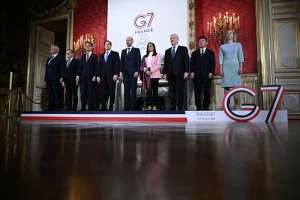
  • G7 warns Iran of continued pressure if diplomacy fails

    G7 warns Iran of continued pressure if diplomacy fails

Iran might also hit “some islands they think our missiles cannot reach,” he said, and he advised every country that hosts US forces not to cooperate with an attack. “Wherever American planes take off from, we will regard it as a threat against us.”

Rezaei also said Vladimir Putin had told him, when they met in the Kremlin, that he had informed the Americans that the Islamic Republic “is not a system that can be toppled.”

A widening target list

The threat marks another step up in what Tehran says it is prepared to hit. In the 12-day war of June 2025, Rezaei said, Iran limited its strikes to Israel. In the war that began on February 28 it fired on US bases across the region. Now its officials name Europe.

Last month, Supreme Leader Mojtaba Khamenei ordered the armed forces to prepare for retaliation without geographic limits, according to a statement attributed to him. The army’s spokesman said a new war could spread “beyond West Asia,” and the hardline daily Kayhan listed US and NATO facilities in Cyprus, Greece, Romania, Albania, Italy and Britain, and the joint US-British base on Diego Garcia in the Indian Ocean.

  • US moves aircraft out of second British base over Iran threat - WSJ

    US moves aircraft out of second British base over Iran threat - WSJ

  • US Treasury chief moves to military base after Iranian threats

    US Treasury chief moves to military base after Iranian threats

Whether Iran can reach them is less clear. The Center for Strategic and International Studies lists Iran’s main ballistic missiles with ranges of about 2,000 kilometers, with some variants reaching perhaps 3,000. Britain’s Royal United Services Institute has said a strike as far as the UK is theoretically possible, with smaller and less accurate warheads flying through defended airspace.

The warning comes days after the US military moved tankers and aircraft out of RAF Mildenhall in eastern England over a threat from Iran, and weeks after it withdrew bombers from RAF Fairford following a suspected Iran-linked plot.

‘There are no negotiations’

Rezaei denied that Tehran was talking to Washington, contradicting reports this week of progress in Qatari mediation.

“We are not negotiating with the Americans at present, and there are no negotiations between us and the United States,” he said.

Reports of a meeting in Qatar, or of plans for him to meet Vice President JD Vance, were “lies,” he said, meant to ease economic pressure and bring down oil prices. Asked directly about a meeting with Vance, he said: “Absolutely not.”

  • Iran state TV debate signals cautious openness to nuclear talks

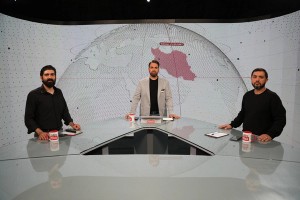
    Iran state TV debate signals cautious openness to nuclear talks

  • Iran signals readiness for talks but demands US lift restrictions

    Iran signals readiness for talks but demands US lift restrictions

Iran has set seven conditions, he said, and the Strait of Hormuz will stay closed until they are met. Washington’s first reply had been “deceptive.” The first condition is an end to the war on all fronts, especially Lebanon.

He said the nuclear issue was not on the table, and that “not even a particle” of Iran’s enriched uranium would leave the country. Tehran had told Moscow the same, he said, adding that Iran was designing nuclear-powered ships and submarines and might build small modular reactors, and needed the material for them.

Rezaei also said both sides had signed an agreement during an earlier round of talks in Islamabad, and that Trump had torn it up within a month. Washington has not confirmed that account.

Rezaei said Iran had recently taken control of US drones in flight through electronic warfare and brought seven down intact, and had captured two underwater craft able to dive to 6,000 meters. He gave no details, and none of the claims could be independently verified.

The unseen leader

Asked about the health of Mojtaba Khamenei, who has not appeared in public since succeeding his father in March, Rezaei did not answer directly.

He said that when they last met, and he prayed behind him, he found him better informed about the country “even than me,” and that he issues instructions to military commanders.

Rezaei said he had carried a message from Mojtaba Khamenei to Putin, mostly on continuing cooperation, and that they had discussed the North-South trade corridor and piping Russian gas, no longer sold to Europe, into Iran for its own use and resale to its neighbors.