Iranian comedian sentenced to five years in prison
Iranian comedian Saeed Shakiba was sentenced to five years in prison after publishing a satirical video imitating the voice of former Supreme Leader Ali Khamenei, the human rights website HRANA said on Friday.
The ruling followed a court hearing last week and was issued by Branch 28 of Tehran’s Revolutionary Court, presided over by Judge Mohammadreza Amouzad. Shakiba was convicted of “assembly and collusion against national security,” according to the report.
The ruling was notified to Shakiba, who is being held in Greater Tehran Penitentiary, on Wednesday.
Iran's judiciary indicted the comedian on charges including supporting Israel and the Pahlavi dynasty, state media reported on October 25, days after authorities opened a case against him.
The judiciary-affiliated Mizan news agency said at the time that Tehran prosecutors had issued the indictment following an investigation into what authorities described as insulting and offensive content published by the comedian on Instagram.
A sculpture depicting a large family riding a motorcycle, installed in Tehran to promote childbirth and encourage larger families.
Iran's population could shrink from 87 million to 31 million over the next 75 years, a senior population official warned Thursday, citing a projection far more pessimistic than United Nations estimates.
Marzieh Vahid Dastjerdi, secretary of the National Population Headquarters, said at an international fertility conference that Iran's fertility rate had fallen to 1.34 children per woman, well below the replacement level of about 2.1, despite years of government efforts to encourage larger families.
Dastjerdi attributed the population forecast to the World Health Organization, but the UN's World Population Prospects 2024 projects Iran's population at around 80 million by 2100 under its medium-variant scenario.
The assumptions behind the substantially lower figure cited by Dastjerdi were not immediately clear.
Fertility below replacement level does not necessarily translate into immediate population decline. The pace of any contraction also depends on a country's age structure, life expectancy and migration.
Dastjerdi warned that continued demographic decline could leave Iran surrounded by neighboring countries with populations in the hundreds of millions.
Iran's fertility rate stood at six to seven children per woman in 1986 but fell to 1.34 in the Iranian calendar year ending March 2026, she said.
A mother holds her newborn baby in a maternity ward in Iran, where birth rates continue to decline despite government campaigns and financial incentives encouraging families to have more children.
Economic pressures undermine birth incentives
The decline has continued despite years of government campaigns, financial incentives and appeals by senior officials and religious leaders encouraging couples to have more children.
Inflation, high housing costs, cultural changes, delayed marriages and difficulties balancing employment with motherhood are among the main obstacles to childbearing, Dastjerdi said.
She attributed more than 75 percent of the decline to rising education levels and social development without corresponding economic progress.
A September Instagram poll conducted by Iran International found that 97 percent of more than 18,000 respondents said conditions in Iran had prompted them to postpone major life decisions, including marriage and having children. The self-selected survey was not representative of the Iranian population.
According to Dastjerdi, Iran has approximately 7.3 million unmarried men aged 20 to 54 and between 6.5 million and seven million unmarried women aged 15 to 49.
The average age of women having their first child has reached 27 years and six months nationwide and 30 years and eight months in Tehran.
Couples now wait an average of four years and six months after marriage before having their first child, contributing to fertility challenges, she said.
Annual marriages have fallen from 900,000 in 2010 to 431,000 in the Iranian year ending March 2026, while the proportion of women remaining permanently unmarried has risen sevenfold, from 1.1 percent in 1996 to 7.7 percent.
A cleric poses with a large family and a newborn baby. The Islamic Republic has promoted childbearing and larger families through government campaigns and financial incentives.
Aging population raises concerns
Beyond the long-term risk of population decline, Iran faces a more immediate challenge from an aging population.
The share of people aged over 60 is projected to rise from 13 percent to 32 percent by 2051, increasing elderly care costs and reducing the number of younger caregivers, Dastjerdi warned.
Successive leaders of the Islamic Republic have made population growth a strategic priority.
Mojtaba Khamenei, Iran's third supreme leader, called for higher birth rates in a May message, linking population growth to the government's long-term strategic objectives and the creation of a new Islamic Iranian civilization.
Khamenei described increasing the population as one of the most important concerns of his predecessor, Ali Khamenei, who was killed earlier this year.
The government has also introduced financial incentives under its Family Protection and Youthful Population Law in an effort to reverse declining birth rates.
Dastjerdi said a new maternal support program, backed by 500 trillion rials (approximately $188 million), provides eligible mothers with monthly purchasing credits of 20 million rials (about $7.50) for 24 months after childbirth.
She also called for full insurance coverage of infertility treatment and expanded screening services, noting that 79 secondary-level and 130 tertiary-level fertility treatment centers operate nationwide.
Despite these measures, official figures continue to show declining fertility and marriages, raising concerns about the country's long-term demographic and economic outlook.
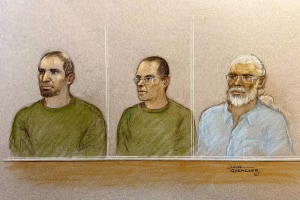
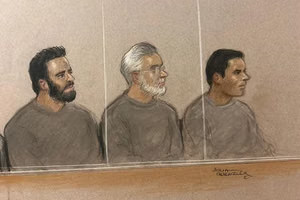
Two Iranian men were found guilty on Thursday of assisting Iranian intelligence operations targeting Iran International journalists in Britain, following a six-week trial at London’s Woolwich Crown Court.
Mostafa Sepahvand, 41, and Farhad Javadi Manesh, 46, were unanimously convicted of engaging in conduct likely to assist a foreign intelligence service under Britain’s National Security Act.
A third defendant, Shapoor Qalehali Khani Noori, 57, was acquitted of all charges and discharged by the court.
Sepahvand was also unanimously convicted of conducting surveillance and reconnaissance with the intention of committing serious violence against a person in Britain.
Javadi Manesh was acquitted of a separate charge alleging that he conducted surveillance intending to facilitate serious violence by others. Noori was also acquitted of that charge.
The judge had told jurors that the court would accept majority verdicts of 10 or 11 out of 12, although they should continue striving for unanimity. The guilty verdicts were unanimous.
Sepahvand and Javadi Manesh are scheduled to be sentenced at London’s Old Bailey on December 17.
Iran International journalists among targets
Prosecutors said the men conducted surveillance on behalf of Iranian intelligence between August 2024 and early 2025, gathering information about individuals in Britain whom Tehran regarded as opponents.
The targets included Iran International journalists Kambiz Hosseini and Mojtaba Pourmohsen, as well as British barrister Jonathan Turner.
During the trial, prosecutor Bill Emlyn Jones told jurors that the defendants visited addresses, photographed buildings and vehicles, and recorded videos to help Iran’s Revolutionary Guards identify potential targets.
The prosecution said Sepahvand was expected to carry out an attack and recruited the other two men to assist in locating and monitoring the individuals.
The court heard evidence of communications with contacts in Iran, including discussions about surveillance, payments and Sepahvand’s efforts to resolve a criminal case against him in Iran.
Defendants disputed knowledge and intent
Sepahvand acknowledged conducting surveillance but said he acted under threats against himself and his family and deliberately tried to frustrate the operation.
Prosecutors challenged that account, arguing that his repeated demands for more accurate information about the targets showed he was actively trying to help locate them.
Javadi Manesh denied knowing that his activities were assisting Iranian intelligence. He did not give evidence during the trial.
Noori also denied knowing that his actions were connected to Iranian intelligence operations.
The convictions come as concern grows in Britain over suspected Iranian intelligence activity targeting dissidents and journalists.
British authorities have repeatedly warned of threats against Iran International staff, while Tehran has previously denied involvement in plots targeting critics overseas.
Women dressed in black hold portraits of slain protesters during a gathering at a cemetery in Iran.
Iranian security agencies have threatened to label families of slain protesters "terrorists" unless they accept the government's account of their relatives' deaths, sources told Iran International ahead of the first anniversary of the January killings.
Security agents have summoned relatives and demanded they describe those killed as "martyrs," a designation that would place their deaths within the Islamic Republic's official narrative of the protests.
Families refusing the designation and instead using the Persian term "Javidnam," meaning "forever remembered," have been warned they could be placed on lists of "terrorists," according to sources close to them.
The term is used by bereaved families to commemorate those killed during protests without accepting the authorities' account of their deaths.
Authorities have also offered certain benefits to families willing to accept the official designation and instructed relatives not to hold anniversary commemorations.
Bereaved family faces repeated security summons
Security agencies have continued summoning and threatening a bereaved family despite serious health problems affecting several of its members, one of them told Iran International.
The family member, whose identity is being withheld for security reasons, said their mother developed heart problems after suffering severe psychological distress while searching for the body of a loved one at Kahrizak.
Their father suffered a stroke in October, while the family member has an autoimmune disease.
Despite these circumstances, the individual has been detained several times in recent months and was summoned to a security agency in November.
During the latest summons, agents demanded that the family describe their slain loved one as a "martyr" and abandon plans for any anniversary ceremony.
Other families have faced similar restrictions.
Iran International previously reported that authorities opened a case against Sanaz Banisaeed, the wife of Mohsen Rashidi-Khaniabadi, who was killed during the January protests, and blocked her Instagram account.
The family of Iman Asadi, another person killed during the protests, has also been summoned repeatedly and warned against posting on social media, according to information received by Iran International.
Pressure continues after protest victim's mother dies
Security pressure on the family of Behboud Hassanzadeh has continued even after the death of his mother, Afrouz Eslampanah, a source close to the family told Iran International.
Authorities have blocked the SIM cards belonging to Hassanzadeh's brother and summoned him several times in recent weeks.
Security agents also warned him against holding memorial gatherings or anniversary ceremonies and demanded that the family recognize Hassanzadeh as a "martyr," according to the source. Eslampanah died on October 30.
Hassanzadeh, 37, a father of two daughters, was shot while helping an injured person during protests on January 8 in Kuhchenar, Fars province. He died two days later.
Pressure to accept official account
Efforts to secure families' acceptance of the government's account of the protest deaths began months before the approaching anniversary.
Authorities had, in some cases, made the return of protesters' bodies conditional on families signing undertakings accepting the official account of how their relatives were killed.
In one case, representatives of the Revolutionary Guards, the governor's office and the education department visited the family of Bahar Shahmehri, a 17-year-old student killed during protests in Neyshabur, northeast of Iran.
The representatives told the family that accepting the official "martyr" designation would be in their interests, a source close to the family told Iran International. Shahmehri's family refused.
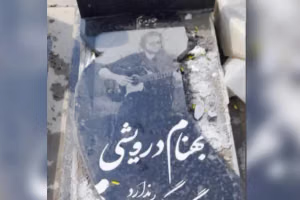
Earlier reports also documented damage to and destruction of gravestones belonging to several people killed during the protests.
Bereaved families regard such actions as attempts to prevent them from preserving the memory of their loved ones.
Despite repeated summons and security warnings, families continue to demand accountability and answers about the deaths of their relatives, according to sources close to them.
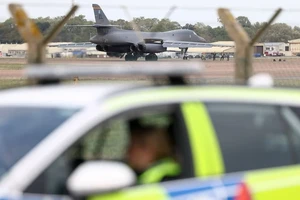
A police officer blocks a road near the RAF Fairford airbase, which hosts United States Air Force (USAF) personnel, in Fairford, Gloucestershire, Britain, September 27, 2026.
A network of seven men allegedly working on behalf of Iranian intelligence services helped coordinate a wave of attacks across Europe, using local criminals and AI-generated propaganda to target Jewish communities and spread fear, ITV News reported on Wednesday.
The British broadcaster identified two previously unnamed brothers with suspected ties to organized crime in the Netherlands as alleged members of the network, which Western security officials believe was involved in attacks across several European countries and a suspected plot against a British military base used by US forces.
ITV named Mustafa Mter Rassoul Alkyaui, who was arrested in Turkey and remains in detention, and his brother, Rassoul Mter Rassoul Alkyaui Mohsen, who remains at large.
The broadcaster said the brothers' contacts in Europe's criminal underworld were believed to have helped the network recruit local operatives to carry out attacks for money, sometimes without knowing whose instructions they were following.
The findings build on a November 10 US Justice Department indictment charging three other alleged members of the network: Mohammad Baqer Saad Dawood al-Saadi, a dual Iranian-Iraqi national; Mohsen Mohajeri, an Iranian national; and Mohammad Ali al-Hassani, an Iraqi national.
Credit: ITV News
US prosecutors linked the three men to nearly 20 attacks and attempted attacks across Europe and the United States, including a September plot targeting RAF Fairford, a British air base housing American forces.
According to ITV, Western security officials believe the network operated from a control room in Baghdad, selecting targets and recruiting criminals to carry out attacks as Iran sought ways to retaliate following the outbreak of war with the United States and Israel in February.
Investigators suspect the network received funding from both the Islamic Revolutionary Guard Corps (IRGC) Quds Force and Iran's Ministry of Intelligence, with neither agency apparently aware of the other's involvement.
An image released by the US Justice Department shows al-Hassani (left) and Mohajeri (right) allegedly meeting in April to plan terrorist attacks.
ITV reported that the group operated as a loose circle of associates rather than a conventional militant organization, using artificial intelligence to produce propaganda videos that made the network appear larger and more sophisticated.
The broadcaster publicly identified five alleged members, including the three men charged in the United States and the two brothers. The other two were not named.
Attacks targeted Jewish communities across Europe
The suspected campaign began in March with an explosion outside a synagogue in Liège, Belgium, followed by an arson attack on four ambulances belonging to the Jewish emergency medical service Hatzola in north London.
A previously obscure organization calling itself the Islamic Movement of Companions of the Right, also known by its Arabic initials HAYI, said it was responsible for the attacks.
ITV reported that al-Saadi was suspected of personally producing and distributing some of the group's AI-generated propaganda, including material relating to the March 23 ambulance attack.
A drone view of four ambulances belonging to Hatzola, a Jewish community organisation, that were set on fire in an incident that the police say is being treated as an antisemitic hate crime, in northwest London, Britain, March 23, 2026.
US prosecutors said the network was involved in approximately 18 attacks in Europe during the spring, seven of them in Britain. The incidents included arson, explosions and a near-fatal stabbing of two Jewish men in London.
The Justice Department alleged that HAYI served as a front for Iran-backed Kataib Hezbollah and other US-designated terrorist organizations, helping conceal those directing the attacks.
US prosecutors detail RAF Fairford plot
The alleged network subsequently turned its attention to RAF Fairford, an air base in Gloucestershire that housed US military aircraft and personnel.
According to the Justice Department, al-Hassani directed preparations from Iran, paying contacts in Britain to conduct surveillance and obtain vehicles and materials for the September operation.
British police recovered three vans linked to the alleged plot on September 27 and arrested their occupants, according to US prosecutors.
Prosecutors also alleged that al-Saadi, who had been in US custody since May, continued coordinating with other members of the network through coded messages passed during calls with relatives in Iraq.
Police officers guard an area as roadblocks remain in place near RAF Fairford airbase, after police declared a major incident at the base and arrested several men on suspicion of offences under the Explosives Act, who have since been released on bail, in Fairford, Gloucestershire, Britain, September 29, 2026.
ITV reported that Western officials believe the decision to target RAF Fairford probably received approval from senior figures within the Revolutionary Guards, unlike other attacks that the network was thought to have selected independently.
"This eight-count indictment shows the determination of Iran to commit terrorist attacks in Europe and the US," FBI Director Kash Patel said, citing the suspected plot against RAF Fairford.
The ITV investigation suggested the network's operations were designed not only to cause physical damage but also to generate widespread fear, particularly within Jewish communities.
Western security officials told the broadcaster that networks operating under the HAYI name could carry out further attacks.
The report came as Iran's security chief Mohsen Rezaei renewed warnings Wednesday about military bases stretching "from West Asia to Europe," according to ITV.
The allegations concerning the network, including the suspected involvement of Iranian intelligence agencies and the newly identified brothers, have not been established in court. The three men indicted in the United States are presumed innocent unless proven guilty.
A woman holds a print of Iran's slain Supreme Leader Ali Khamanei, at a state-sponsored rally to mark the anniversary of the seizure of the US embassy in Tehran in 1979, November, 4, 2026
Iran is adding 23 commemorations to its official calendar, including days marking the US-Israeli war, the killing of former supreme leader Ali Khamenei and the selection of his son Mojtaba as his successor.
The additions to the Iranian year 1406, running from March 2027 to March 2028, were reported Wednesday. Five of the new observances relate to the war and the transfer of power.
The “Day of the Epic Defense of Iran,” designated for February 28, commemorates the killing of Ali Khamenei and senior military commanders during the opening attacks of the war in 2026.
The Day of the Martyrs of the Third Sacred Defense honors those killed in the war, while the Day of the Dena Warship Martyrs commemorates sailors killed when a US submarine sank the Iranian naval vessel off Sri Lanka in March.
The new calendar also includes a day marking Mojtaba Khamenei's selection as supreme leader following his father's death.
Other additions include Iranian Ethnic Clothing Day, a commemoration of the 18th-century Turkmen poet Magtymguly Pyragy, Iranian Naval Power Day, Nomads Day and Polo Day.
Religious and ideological additions include Nahj al-Balagha Day, named after a collection of sermons, letters and sayings attributed to Imam Ali, the first Shiite imam. The calendar will also recognize Quran Day, a day promoting zakat, the Islamic charitable tax, and Interfaith Dialogue Day.
Other observances include Crisis and Natural Disasters Management Day, Muhammad Iqbal Lahori Commemoration Day, Sacred Defense Intelligence and Operations Day, Software Movement and Free Thought Day and Boys' Day.
Four further commemorations listed in the calendar's appendix are Kordestan Day, West Azarbaijan Day, Healthy Nutrition Day and Nahavand Day.
Iran's official calendar already contains numerous Shiite religious observances, including Ashura, Arbaeen and anniversaries marking the births and deaths of Shiite imams.
Ideological commemorations include Islamic Revolution Victory Day, Islamic Republic Day, the anniversary of Ayatollah Ruhollah Khomeini's death and the Day of Struggle Against Global Arrogance, marking the 1979 seizure of the US Embassy in Tehran.
The calendar also recognizes Nowruz, Persian cultural figures and other national traditions, but its extensive religious and revolutionary commemorations reflect the ideological priorities of the Islamic Republic's leadership.