• العربية
  • فارسی
BrandBrand
  • Iran Insight
  • Politics
  • Economy
  • Analysis
  • Special Report
  • Opinion
  • Podcast
  • Live TV
  • Iran Insight
  • Politics
  • Economy
  • Analysis
  • Special Report
  • Opinion
  • Podcast
  • Live TV
  • Theme
  • Language
    • العربية
    • فارسی
  • Iran Insight
  • Politics
  • Economy
  • Analysis
  • Special Report
  • Opinion
  • Podcast
  • Live TV
All rights reserved for Volant Media UK Limited
volant media logo

Mossad chief visits US as Netanyahu presses Trump to resume Iran war - Axios

Nov 13, 2026, 13:51 GMT+0

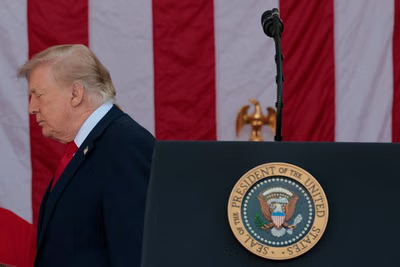
Israel's Mossad chief Roman Gofman is visiting Washington on Friday for talks with senior US officials as Prime Minister Benjamin Netanyahu presses President Donald Trump to resume military operations against Iran, Axios reported, citing three informed sources.

Gofman, a close confidant of Netanyahu, is meeting CIA Director John Ratcliffe and is expected to meet White House envoy Steve Witkoff in Miami, according to the report.

Trump has so far resisted Netanyahu's calls to restart the war, favoring continued naval and economic pressure on Tehran while exploring a possible diplomatic agreement.

"I could end it immediately," Trump said on Thursday, explaining that regional countries had urged him to maintain the current approach.

"Saudi Arabia has asked me to please just let it be the way it is now for a while, because [Iran is] disintegrating," he added.

Most Viewed

Trump vows ‘total victory’ as Iran rejects concessions and threatens wider war
1

Trump vows ‘total victory’ as Iran rejects concessions and threatens wider war

2

Iranian commanders threaten to kill Trump, strike US targets worldwide

3
ANALYSIS

US targets Iran's land trade routes, but Tehran may hold firm

4
INSIGHT

Iran says the US must ‘surrender’ to seven conditions. What are they?

5

Iran's top clerical governing body calls for nuclear doctrine review

Banner
Banner
Banner
Banner
Banner
Banner
Banner

Spotlight

  • Iran's intelligence merger debate signals possible security shake-up
    INSIGHT

    Iran's intelligence merger debate signals possible security shake-up

  • Americans ‘a bit naive’ about influence campaigns by Iran, Russia, China
    ONE-ON-ONE

    Americans ‘a bit naive’ about influence campaigns by Iran, Russia, China

  • Trump's Iran dilemma after America's 'everything' election
    OPINION

    Trump's Iran dilemma after America's 'everything' election

  • The faceless judge who sentenced 11 Iranian protesters to death in 2026
    SPECIAL REPORT

    The faceless judge who sentenced 11 Iranian protesters to death in 2026

  • Iran state TV panelists urge tougher action against US blockade

    Iran state TV panelists urge tougher action against US blockade

  • Iran’s largest ‘private’ bank is run by Supreme Leader’s business empire
    SPECIAL REPORT

    Iran’s largest ‘private’ bank is run by Supreme Leader’s business empire

  • France's cyberattack allegations against Iran should wake up Europe
    OPINION

    France's cyberattack allegations against Iran should wake up Europe

  • US targets Iran's land trade routes, but Tehran may hold firm
    ANALYSIS

    US targets Iran's land trade routes, but Tehran may hold firm

•
•
•

More Stories

Iran has money to kill journalists but not for bread, Nobel laureate Ebadi says

Nov 13, 2026, 13:34 GMT+0
100%
Nobel Peace Prize laureate Shirin Ebadi

Nobel Peace Prize laureate Shirin Ebadi accused the Islamic Republic on Friday of funding threats against journalists abroad while failing to provide for people at home, after two Iranian men were convicted in London of assisting Iranian intelligence operations.

  • Two men convicted in London of helping Iran target Iran International journalists

    Two men convicted in London of helping Iran target Iran International journalists

“The Islamic Republic keeps careful accounts. It has a budget for killing journalists, but not for people’s bread,” Ebadi, a lawyer who has lived in exile since 2009, wrote on her Telegram channel.

She shared an audio recording of Mostafa Sepahvand, one of two men convicted on Thursday at London’s Woolwich Crown Court of helping Iranian intelligence target Iran International journalists.

In it, Sepahvand complains about his travel and car-hire costs, the risk of arrest and the work of tracking down where journalists lived. He says he was sent only £3,500, about $4,600, though he had spent up to £8,000, about $10,600.

British prosecutors said he had been promised £150,000, about $200,000, and help resolving a criminal case against him in Iran, to “finish off” one of his targets.

“Even following journalists through the streets of London has a price,” Ebadi wrote. “The agent has to be paid, his car and travel covered, and if he is supposed to kill someone, the fee has to match the risk.”

  • Iran International spy verdicts don’t end threat to exiled Iranian journalists - CPJ

    Iran International spy verdicts don’t end threat to exiled Iranian journalists - CPJ

‘Not even a packet of biscuits’

In Iran, she wrote, there are families who cannot afford meat or medicine, workers who wait months for their wages and prisoners who cannot buy “even a packet of biscuits.” Yet the state had offered £150,000 to locate and eliminate a journalist working thousands of kilometers away.

“A government that won’t give workers what they are owed sets a fee for killing journalists, and apparently can’t even pay that on time,” she wrote. “In the Islamic Republic, even the lives of its opponents have a price. Only the lives of the Iranian people are worth nothing in its accounts.”

Sepahvand, 41, and Farhad Javadi Manesh, 46, were unanimously convicted of conduct likely to assist a foreign intelligence service under Britain’s National Security Act. Sepahvand was also convicted of surveillance and reconnaissance with intent to commit serious violence. They will be sentenced on December 17.

Prosecutors said the men watched Iran International journalists and others in Britain on behalf of Iranian intelligence. Tehran has denied involvement in plots against its critics abroad.

Iran International spy verdicts don’t end threat to exiled Iranian journalists - CPJ

Nov 13, 2026, 12:00 GMT+0
100%

Exiled Iranian journalists remain at risk despite the conviction of two men in London for targeting Iran International staff on behalf of Iranian intelligence, the New York-based Committee to Protect Journalists warned on Friday.

Mostafa Sepahvand, 41, and Farhad Javadi Manesh, 46, were found guilty on Thursday at London’s Woolwich Crown Court of assisting a foreign intelligence service.

Sepahvand was also convicted of conducting surveillance and reconnaissance with intent to commit serious violence against a person in Britain. Javadi Manesh was acquitted of a separate charge of surveillance intended to help others commit serious violence, and a third defendant, Shapoor Qalehali Khani Noori, 57, was acquitted of all charges. The two men will be sentenced on December 17.

“The Woolwich trial has ended, but today’s verdicts don’t make the lives of our journalists any safer so long as the Islamic Republic of Iran continues its campaign of death threats and violence against them,” Iran International spokesman Adam Baillie said.

“Kambiz Hosseini and Mojtaba Pourmohsen and others remain under threat. We are thankful for the continued vigilance of the British police in protecting not only us but the many other Iranians targeted by Iran,” he said.

“Iran will no doubt continue its use of agents and proxies abroad in its campaign to terrorize its critics.”

CPJ calls for those behind operation to face justice

The six-week trial showed that Iran’s Revolutionary Guards had tasked the defendants with monitoring targets including the Iran International journalists Hosseini and Pourmohsen, a lawyer and a media production professional, CPJ said.

“The shocking evidence presented in this trial once again shows the lengths Iran is prepared to go to in order to silence journalists, wherever they are in the world,” said Fiona O’Brien, CPJ’s regional director for Europe and Central Asia.

“While it’s encouraging to see the perpetrators of crimes against them being held accountable, those who paid and instructed them must also be brought to justice,” she said.

Videos, photographs and messages showed Sepahvand watching his targets’ homes and workplaces while coordinating with contacts in Iran, according to Britain’s Crown Prosecution Service.

  • Two men convicted in London of helping Iran target Iran International journalists

    Two men convicted in London of helping Iran target Iran International journalists

  • Seven-man Iran-linked network helped orchestrate wave of attacks across Europe - ITV

    Seven-man Iran-linked network helped orchestrate wave of attacks across Europe - ITV

  • France probes blood freezer hack after blaming Iran for similar attacks

    France probes blood freezer hack after blaming Iran for similar attacks

The men had been promised large payments for information, prosecutors said. In one message, Sepahvand asked for £150,000, about $200,000, to “finish [the target] off” once he had found them.

“This was a calculated operation to spy on those critical of the Iranian regime,” said Frank Ferguson, head of the CPS Special Crime and Counter Terrorism Division.

Sepahvand had shown he was willing to go beyond surveillance to serious violence, Ferguson said, but the men were stopped before any attack.

Convictions follow series of attacks on Iranian journalists

CPJ said the convictions followed several other cases of threats and attacks against Iran International journalists in Britain.

Earlier this year, two Romanian men were sentenced to 12 and eight years in prison for their part in the 2024 stabbing of Iran International presenter Pouria Zeraati outside his London home.

A Greek national has been charged with surveilling an Iran International journalist, and court proceedings over an arson attack on the broadcaster’s premises are under way.

Exiled Iranian journalists continue to face physical threats, online harassment and intimidation of their families in Iran, CPJ said.

Tehran has denied targeting journalists working for Iran International and BBC Persian.

France probes blood freezer hack after blaming Iran for similar attacks

Nov 13, 2026, 09:49 GMT+0
100%

The US-based Committee to Protect Journalists warned on Friday that exiled Iranian journalists remain at risk after two men were convicted in London of spying for Tehran on staff of Iran International, which said the verdicts had not made its journalists safer.

The service, the Établissement français du sang (EFS), said in a written reply that a judicial investigation was under way and that it could not comment on it or give details.

The attack took place on the night of November 1 to 2. Hackers took over the control systems of cold rooms at three regional centers and changed their temperature and defrost settings, the EFS said earlier.

Some units were reset from about minus 30 degrees Celsius to 110 degrees, the French weekly Le Canard enchaîné reported. That was the setting, not the temperature the blood products reached.

  • France's cyberattack allegations against Iran should wake up Europe

    France's cyberattack allegations against Iran should wake up Europe

  • France warns Iran of retaliation over IRGC hack of supermarket freezers

    France warns Iran of retaliation over IRGC hack of supermarket freezers

Alarms and an on-call technician caught the problem, and the products were moved to other sites or otherwise secured, the EFS said. No samples or blood products were lost. The service has not said when the attack was detected, how long the transfer took, or how the stocks were moved.

The attack came the same night that supermarkets in at least nine European countries, including Belgium and Luxembourg, reported suspected cyberattacks that sent fridge and freezer temperatures soaring.

The Paris prosecutor’s office has not yet linked the attack on the blood service to the supermarket cases and said its investigation is continuing, Agence France-Presse reported.

The supermarket attacks

On October 11 and 12, hackers took control of refrigeration systems at about 700 supermarkets and other businesses across France, letting fridges and freezers warm up. Some stores had to throw out their entire stock of fresh and frozen food, and officials said the attacks caused heavy losses and, at some sites, fires.

A joint report by French intelligence and cybersecurity agencies named Shahid Kaveh, an offensive cyber unit of the Revolutionary Guards, as responsible, and said it worked behind front groups posing as independent hacker collectives. Paris prosecutors have requested international arrest warrants for suspects.

Foreign Minister Jean-Noël Barrot summoned Iran’s ambassador and said France would seek European Union sanctions against those responsible. France was weighing further measures, he said, including some it might never make public.

Iran threatens Armenia as US-run Trump Route clears Yerevan’s parliament

Nov 13, 2026, 09:20 GMT+0
•
Maryam Sinaiee
100%
US President Donald Trump holds the hands of Azerbaijan's President Ilham Aliyev and Armenia's Prime Minister Nikol Pashinyan as they shake hands between each other during a trilateral signing event, at the White House, in Washington, DC, August 8, 2025.

Armenia’s parliamentary approval of the Trump Route, a US-run transit corridor running along Iran’s northern border, has set off alarm in Tehran, with officials and state media warning that it would bring a US presence to the frontier.

Armenia’s parliament approved the agreement on October 28. Since then, an adviser to Iran’s supreme leader has threatened Yerevan, and state-run media have urged Tehran to stop the project.

The Trump Route for International Peace and Prosperity (TRIPP) is designed to link Azerbaijan to its exclave of Nakhchivan through Armenia’s southern Syunik province. Syunik borders Iran’s East Azarbaijan province and carries Iran’s only direct land connection to Armenia, and through it to the rest of the Caucasus.

  • Iran’s northern routes test the limits of US bid to extend blockade overland

    Iran’s northern routes test the limits of US bid to extend blockade overland

The route was announced at the White House in August 2025, when President Donald Trump hosted Azerbaijan’s President Ilham Aliyev and Armenia’s Prime Minister Nikol Pashinyan to sign a framework for peace between the two countries after decades of conflict.

Azerbaijan had long called the route the Zangezur corridor, and Tehran had opposed it for years, warning that it could cut Iran off from Armenia.

  • Iran says Caspian Sea a foreign policy priority on par with Persian Gulf

    Iran says Caspian Sea a foreign policy priority on par with Persian Gulf

  • State TV calls Iran’s northern sea by its English name, citing Israeli agenda

    State TV calls Iran’s northern sea by its English name, citing Israeli agenda

  • Iran moves to ratify Caspian Sea pact with seabed rights still unsettled

    Iran moves to ratify Caspian Sea pact with seabed rights still unsettled

Under the agreement, Washington and Yerevan will set up a joint company, TRIPP Development, with the US side holding 74 percent and Armenia 26 percent. The initial term is 49 years, with an option to extend it by 50 years, during which Armenia’s stake would rise to 49 percent.

Iranian officials and analysts say TRIPP could cut Iran’s transit revenue and weaken its position as a regional transport hub. They also see a US presence near Iran’s northern border as a serious security threat.

The state-run Mehr News Agency, in a November 9 article titled “The Caucasus on the Path to US Influence: Tehran Must Prevent Implementation of the TRIPP Corridor,” said Iran should rethink its approach to the Caucasus in light of what it called the country’s “new position in regional equations” after the war with the United States and Israel.

“A different approach centered on power,” Mehr said, could stop activities that threaten Iran’s national security from spreading in the South Caucasus.

Velayati threatens Armenia

Ali Akbar Velayati, an adviser to Iran’s supreme leader on international affairs and a former foreign minister, attacked Pashinyan over the agreement in an article in the Ettela’at newspaper on November 5.

Velayati said he had told Armenia’s deputy foreign minister and its ambassador in Tehran that Russia’s preoccupation with the war in Ukraine should not lead Armenia into a “miscalculation.” Iran, he said, considered itself responsible for security in the South Caucasus, “with or without Russia.”

  • Iran says it opposes Trump’s Caucasus plan as security threat

    Iran says it opposes Trump’s Caucasus plan as security threat

Iranian military commanders later traveled to the region and held a large exercise to show Iran’s “power and determination,” Velayati said. He said he had warned Armenia’s ambassador directly: “If Trump and his allies seek to cross this red line of Iran, we will break their legs.”

Armenia’s Security Council secretary, Armen Grigoryan, said in response that the project did not involve the presence of a single armed soldier, and that none of Armenia’s neighbors, Iran included, should see an economic project as a threat.

Iran’s Foreign Ministry spokesman, Esmaeil Baghaei, said on Monday that Tehran had raised its concerns with Armenia immediately after Armenia, Azerbaijan and the United States issued their joint statement on the project.

Armenia had assured Iran that the route would not change international borders or the region’s geopolitical arrangements, and that no US military forces would be stationed there, he said.

‘Yerevan’s gamble with Trump’s card’

Hardline media have kept up their attacks despite Armenia’s assurances.

On November 9, Jam-e Jam, a newspaper published by the state broadcaster, ran an article titled “Yerevan’s Gamble with Trump’s Card.”

“From the perspective of Iran’s national security doctrine, the emergence of an economic and administrative structure under US control in Syunik province, even if initially presented under the guise of transit and trade, is unacceptable,” the paper wrote.

Security threats do not have to begin with military bases, Jam-e Jam said. Strategic infrastructure and networks tied to hostile powers can lay the ground for long-term influence.

Mehdi Seif-Tabrizi, an analyst of Russian affairs, made a similar case in the Farhikhtegan newspaper on November 7.

“Tehran’s concern is fundamentally not limited to the possible deployment of US military forces. The issue is the formation of permanent infrastructure for influence in the vicinity of Iran’s borders, which could serve purposes beyond its initial economic objectives in times of crisis,” he wrote.

Iran’s concerns had grown more serious since its war with the United States, he added.

US rejects Iran's radar claim, says it shot down drones over Bahrain

Nov 13, 2026, 08:26 GMT+0
100%

US forces shot down two drones Iran’s Revolutionary Guards launched toward Bahrain on Friday and nothing was damaged, the US military said, rejecting the Guards’ claim that they had destroyed a US early-warning radar on the island.

“The IRGC launched two one-way attack drones toward Bahrain and both were shot down by US forces. There were no injuries or damage,” US Central Command said on X.

Hours earlier, the Guards had said their aerospace force “targeted and destroyed the American aggressors’ early-warning radar on the island of Bahrain,” in a statement carried by the Guards-affiliated Fars news agency. Bahrain hosts the headquarters of the US Navy’s Fifth Fleet.

The Guards said the attack was retaliation for what they called “the enemy’s aerial aggression against a telecommunications tower in Sirik,” a coastal town in Hormozgan province, on the Gulf of Oman east of the Strait of Hormuz. Iranian state media said Sirik had been struck on Thursday but did not say by whom.

The statement called the attack “a serious warning” to stop what the Guards described as aerial provocations and oil smuggling in the Strait of Hormuz.

“If violations and acts of aggression are repeated, the IRGC Aerospace Force is on full alert for an unrestricted response,” it said. The Guards also threatened harsher measures against companies they accused of being “misled by the United States.”

‘Greater lessons lie ahead’

The Guards’ commander, Ahmad Vahidi, warned on Friday that any attack on Iran would be answered with force.

“The smallest aggression will be answered with horrifying and painful blows,” he said at a funeral in Tehran for 110 unidentified soldiers killed in the 1980s war with Iraq, according to Tasnim. “The enemy should learn from the repeated defeats it has suffered; otherwise, greater lessons lie ahead.”

Vahidi also said revenge for the killing of Supreme Leader Ali Khamenei “will be achieved.” He gave no details of when or how.

Mohammadreza Naghdi, a senior Guards adviser and former commander of the Basij militia, said revenge for Khamenei’s killing remained a public demand and that the matter would not be closed without it.

“The public demand for revenge is not new,” he said, adding that crowds at pro-government rallies had chanted for revenge every night for the past 257 nights.

The exchange comes as US President Donald Trump holds off on new strikes after appeals from regional states, while keeping the naval blockade of Iranian ports in place.

Iran’s top security official, Mohsen Rezaei, said this week that Iran would strike US bases as far as Europe if attacked again.