• العربية
  • فارسی
BrandBrand
  • Iran Insight
  • Politics
  • Economy
  • Analysis
  • Special Report
  • Opinion
  • Podcast
  • Live TV
  • Iran Insight
  • Politics
  • Economy
  • Analysis
  • Special Report
  • Opinion
  • Podcast
  • Live TV
  • Theme
  • Language
    • العربية
    • فارسی
  • Iran Insight
  • Politics
  • Economy
  • Analysis
  • Special Report
  • Opinion
  • Podcast
  • Live TV
All rights reserved for Volant Media UK Limited
volant media logo

Tehran gas company cuts supply to Education Ministry

Nov 13, 2026, 11:41 GMT+0

Tehran Gas Company cut gas supplies to the Education Ministry and five other government buildings in the capital Tehran for leaving heating systems on during a public holiday, its chief executive said.

Alireza Avani said special gas-consumption inspectors visited government offices on Thursday despite the holiday.

They found heating systems running in several buildings despite earlier warnings and the absence of staff, he said, adding that the buildings had also failed to follow mandated temperature limits.

Most Viewed

Missile city unveiling sparks anger over poverty, lack of shelters
1
VOICES FROM IRAN

Missile city unveiling sparks anger over poverty, lack of shelters

2

Trump vows ‘total victory’ as Iran rejects concessions and threatens wider war

3

Iranian commanders threaten to kill Trump, strike US targets worldwide

4
ANALYSIS

US targets Iran's land trade routes, but Tehran may hold firm

5

G7 warns Iran of continued pressure if diplomacy fails

Banner
Banner
Banner
Banner
Banner
Banner
Banner

Spotlight

  • Iran's intelligence merger debate signals possible security shake-up
    INSIGHT

    Iran's intelligence merger debate signals possible security shake-up

  • Americans ‘a bit naive’ about influence campaigns by Iran, Russia, China
    ONE-ON-ONE

    Americans ‘a bit naive’ about influence campaigns by Iran, Russia, China

  • Trump's Iran dilemma after America's 'everything' election
    OPINION

    Trump's Iran dilemma after America's 'everything' election

  • The faceless judge who sentenced 11 Iranian protesters to death in 2026
    SPECIAL REPORT

    The faceless judge who sentenced 11 Iranian protesters to death in 2026

  • Iran state TV panelists urge tougher action against US blockade

    Iran state TV panelists urge tougher action against US blockade

  • Iran’s largest ‘private’ bank is run by Supreme Leader’s business empire
    SPECIAL REPORT

    Iran’s largest ‘private’ bank is run by Supreme Leader’s business empire

  • France's cyberattack allegations against Iran should wake up Europe
    OPINION

    France's cyberattack allegations against Iran should wake up Europe

  • US targets Iran's land trade routes, but Tehran may hold firm
    ANALYSIS

    US targets Iran's land trade routes, but Tehran may hold firm

•
•
•

More Stories

France probes blood freezer hack after blaming Iran for similar attacks

Nov 13, 2026, 09:49 GMT+0
100%

The US-based Committee to Protect Journalists warned on Friday that exiled Iranian journalists remain at risk after two men were convicted in London of spying for Tehran on staff of Iran International, which said the verdicts had not made its journalists safer.

The service, the Établissement français du sang (EFS), said in a written reply that a judicial investigation was under way and that it could not comment on it or give details.

The attack took place on the night of November 1 to 2. Hackers took over the control systems of cold rooms at three regional centers and changed their temperature and defrost settings, the EFS said earlier.

Some units were reset from about minus 30 degrees Celsius to 110 degrees, the French weekly Le Canard enchaîné reported. That was the setting, not the temperature the blood products reached.

  • France's cyberattack allegations against Iran should wake up Europe

    France's cyberattack allegations against Iran should wake up Europe

  • France warns Iran of retaliation over IRGC hack of supermarket freezers

    France warns Iran of retaliation over IRGC hack of supermarket freezers

Alarms and an on-call technician caught the problem, and the products were moved to other sites or otherwise secured, the EFS said. No samples or blood products were lost. The service has not said when the attack was detected, how long the transfer took, or how the stocks were moved.

The attack came the same night that supermarkets in at least nine European countries, including Belgium and Luxembourg, reported suspected cyberattacks that sent fridge and freezer temperatures soaring.

The Paris prosecutor’s office has not yet linked the attack on the blood service to the supermarket cases and said its investigation is continuing, Agence France-Presse reported.

The supermarket attacks

On October 11 and 12, hackers took control of refrigeration systems at about 700 supermarkets and other businesses across France, letting fridges and freezers warm up. Some stores had to throw out their entire stock of fresh and frozen food, and officials said the attacks caused heavy losses and, at some sites, fires.

A joint report by French intelligence and cybersecurity agencies named Shahid Kaveh, an offensive cyber unit of the Revolutionary Guards, as responsible, and said it worked behind front groups posing as independent hacker collectives. Paris prosecutors have requested international arrest warrants for suspects.

Foreign Minister Jean-Noël Barrot summoned Iran’s ambassador and said France would seek European Union sanctions against those responsible. France was weighing further measures, he said, including some it might never make public.

Iran threatens Armenia as US-run Trump Route clears Yerevan’s parliament

Nov 13, 2026, 09:20 GMT+0
•
Maryam Sinaiee
100%
US President Donald Trump holds the hands of Azerbaijan's President Ilham Aliyev and Armenia's Prime Minister Nikol Pashinyan as they shake hands between each other during a trilateral signing event, at the White House, in Washington, DC, August 8, 2025.

Armenia’s parliamentary approval of the Trump Route, a US-run transit corridor running along Iran’s northern border, has set off alarm in Tehran, with officials and state media warning that it would bring a US presence to the frontier.

Armenia’s parliament approved the agreement on October 28. Since then, an adviser to Iran’s supreme leader has threatened Yerevan, and state-run media have urged Tehran to stop the project.

The Trump Route for International Peace and Prosperity (TRIPP) is designed to link Azerbaijan to its exclave of Nakhchivan through Armenia’s southern Syunik province. Syunik borders Iran’s East Azarbaijan province and carries Iran’s only direct land connection to Armenia, and through it to the rest of the Caucasus.

  • Iran’s northern routes test the limits of US bid to extend blockade overland

    Iran’s northern routes test the limits of US bid to extend blockade overland

The route was announced at the White House in August 2025, when President Donald Trump hosted Azerbaijan’s President Ilham Aliyev and Armenia’s Prime Minister Nikol Pashinyan to sign a framework for peace between the two countries after decades of conflict.

Azerbaijan had long called the route the Zangezur corridor, and Tehran had opposed it for years, warning that it could cut Iran off from Armenia.

  • Iran says Caspian Sea a foreign policy priority on par with Persian Gulf

    Iran says Caspian Sea a foreign policy priority on par with Persian Gulf

  • State TV calls Iran’s northern sea by its English name, citing Israeli agenda

    State TV calls Iran’s northern sea by its English name, citing Israeli agenda

  • Iran moves to ratify Caspian Sea pact with seabed rights still unsettled

    Iran moves to ratify Caspian Sea pact with seabed rights still unsettled

Under the agreement, Washington and Yerevan will set up a joint company, TRIPP Development, with the US side holding 74 percent and Armenia 26 percent. The initial term is 49 years, with an option to extend it by 50 years, during which Armenia’s stake would rise to 49 percent.

Iranian officials and analysts say TRIPP could cut Iran’s transit revenue and weaken its position as a regional transport hub. They also see a US presence near Iran’s northern border as a serious security threat.

The state-run Mehr News Agency, in a November 9 article titled “The Caucasus on the Path to US Influence: Tehran Must Prevent Implementation of the TRIPP Corridor,” said Iran should rethink its approach to the Caucasus in light of what it called the country’s “new position in regional equations” after the war with the United States and Israel.

“A different approach centered on power,” Mehr said, could stop activities that threaten Iran’s national security from spreading in the South Caucasus.

Velayati threatens Armenia

Ali Akbar Velayati, an adviser to Iran’s supreme leader on international affairs and a former foreign minister, attacked Pashinyan over the agreement in an article in the Ettela’at newspaper on November 5.

Velayati said he had told Armenia’s deputy foreign minister and its ambassador in Tehran that Russia’s preoccupation with the war in Ukraine should not lead Armenia into a “miscalculation.” Iran, he said, considered itself responsible for security in the South Caucasus, “with or without Russia.”

  • Iran says it opposes Trump’s Caucasus plan as security threat

    Iran says it opposes Trump’s Caucasus plan as security threat

Iranian military commanders later traveled to the region and held a large exercise to show Iran’s “power and determination,” Velayati said. He said he had warned Armenia’s ambassador directly: “If Trump and his allies seek to cross this red line of Iran, we will break their legs.”

Armenia’s Security Council secretary, Armen Grigoryan, said in response that the project did not involve the presence of a single armed soldier, and that none of Armenia’s neighbors, Iran included, should see an economic project as a threat.

Iran’s Foreign Ministry spokesman, Esmaeil Baghaei, said on Monday that Tehran had raised its concerns with Armenia immediately after Armenia, Azerbaijan and the United States issued their joint statement on the project.

Armenia had assured Iran that the route would not change international borders or the region’s geopolitical arrangements, and that no US military forces would be stationed there, he said.

‘Yerevan’s gamble with Trump’s card’

Hardline media have kept up their attacks despite Armenia’s assurances.

On November 9, Jam-e Jam, a newspaper published by the state broadcaster, ran an article titled “Yerevan’s Gamble with Trump’s Card.”

“From the perspective of Iran’s national security doctrine, the emergence of an economic and administrative structure under US control in Syunik province, even if initially presented under the guise of transit and trade, is unacceptable,” the paper wrote.

Security threats do not have to begin with military bases, Jam-e Jam said. Strategic infrastructure and networks tied to hostile powers can lay the ground for long-term influence.

Mehdi Seif-Tabrizi, an analyst of Russian affairs, made a similar case in the Farhikhtegan newspaper on November 7.

“Tehran’s concern is fundamentally not limited to the possible deployment of US military forces. The issue is the formation of permanent infrastructure for influence in the vicinity of Iran’s borders, which could serve purposes beyond its initial economic objectives in times of crisis,” he wrote.

Iran’s concerns had grown more serious since its war with the United States, he added.

IAEA raises alarm over Iranian enrichment plant it has never inspected

Nov 13, 2026, 08:24 GMT+0
100%
IAEA Director General Rafael Grossi

The UN nuclear watchdog does not know exactly where Iran’s newest uranium enrichment plant is or whether it holds nuclear material, more than a year after Tehran declared it, according to a report seen by Reuters on Friday.

The International Atomic Energy Agency said Iran had not let inspectors examine the design of the underground Isfahan Fuel Enrichment Plant, or visit it, since declaring it in June 2025. The finding is in a quarterly report circulated to member states on Friday.

A plant declared on the eve of war

Iran notified the IAEA in June 2025 that it would build the plant at the site of the Nuclear Reactors Fuel Company in Isfahan, in central Iran. The notice named the site but not where the plant sits within it.

  • Iran says the US must ‘surrender’ to seven conditions. What are they?

    Iran says the US must ‘surrender’ to seven conditions. What are they?

  • Iran's top clerical governing body calls for nuclear doctrine review

    Iran's top clerical governing body calls for nuclear doctrine review

  • Tehran's war debate turns to wider strikes and nuclear threats

    Tehran's war debate turns to wider strikes and nuclear threats

Tehran made the announcement right after the IAEA’s Board of Governors found Iran in breach of its safeguards obligations for the first time in almost 20 years. Mohammad Eslami, head of the Atomic Energy Organization of Iran, said at the time that the plant had already been built and was being fitted with centrifuges.

“The site has been built and is secure,” he told state television, adding that enrichment would start once the equipment was installed.

Iranian state media called it the country’s third enrichment complex. The IAEA counts it as the fourth, after two plants at Natanz and one at Fordow.

Inspectors were due to make their first visit that month. It was canceled when Israel began striking Iran’s nuclear sites the same day.

‘Serious proliferation concern’

Apart from the Bushehr nuclear power plant, Iran has given the IAEA no information on the state of its nuclear facilities and material and no access to them, the report said. In July 2025 Iran’s parliament passed a law suspending cooperation with the agency.

  • Iran’s nuclear bomb debate gains ground on official platforms

    Iran’s nuclear bomb debate gains ground on official platforms

  • NPT withdrawal returns to Iran debate as diplomacy gains pace

    NPT withdrawal returns to Iran debate as diplomacy gains pace

The IAEA called the gap in its knowledge of Iran’s enriched uranium a matter of “serious proliferation concern” that must be addressed with the “utmost urgency.” It said it could not conclude that no nuclear material had been diverted from peaceful use.

Director General Rafael Grossi said it was critical for inspectors to resume work in Iran “without further delay.”

Where the uranium is

Before the June 2025 strikes, the IAEA estimated that Iran held 440.9 kilograms of uranium enriched to 60 percent purity, a short step from the roughly 90 percent used in weapons. By the agency’s own yardstick, that is enough, if enriched further, for about 10 nuclear weapons. Inspectors have not been able to check how much remains or where it is.

Mohsen Rezaei, secretary of Iran’s Supreme National Security Council, said this week that “not even a particle” of Iran’s enriched uranium would leave the country, and that Tehran had told Russia the same.

Iran's intelligence merger debate signals possible security shake-up

Nov 13, 2026, 03:30 GMT+0
•
Behrouz Turani
100%
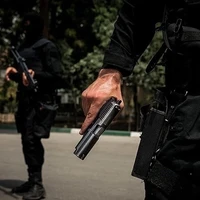
Counterterrorism forces take part in a security drill in Tehran, Iran.

A proposal to merge Iran's Intelligence Ministry with the Revolutionary Guards' powerful intelligence organisation is gaining traction, reviving debate over the rivalry between the two agencies and the future of the country's security apparatus.

The issue has drawn renewed attention in the reformist newspaper Etemad, which is close to President Masoud Pezeshkian's administration.

In an article published Thursday, the newspaper examined proposals reportedly discussed in senior state consultations to consolidate the two agencies into a more unified and accountable intelligence structure.

Iran's Intelligence Ministry remains without a permanent chief nearly eight months after Esmail Khatib was killed in an Israeli strike in March, while parliament considers separate legislation to overhaul the ministry's leadership.

The two agencies have long operated alongside one another, with overlapping responsibilities and competing centres of authority.

A history of rivalry

Iran's intelligence apparatus encompasses several organisations, but the Intelligence Ministry and the Islamic Revolutionary Guard Corps (IRGC) Intelligence Organisation are its two most prominent institutions.

The ministry operates within the government, with its chief nominated by the president and approved by parliament. The IRGC's intelligence arm belongs to a military organisation operating under the supreme leader's command.

Their competing authority has occasionally produced disagreements over investigations and the treatment of detainees.

During the late 2010s, one prominent dispute involved environmental activists arrested by the IRGC Intelligence Organisation on espionage charges. Another concerned more than 50 people reportedly accused of spying for Israel.

In both cases, the Intelligence Ministry publicly challenged allegations advanced by the IRGC Intelligence Organisation.

Some former detainees subsequently told Iranian and Persian-language media outside the country that the ministry had apologised for their detention and offered compensation.

A sensitive debate

Writing in Etemad, journalist Mehdi Beik-Oghli examined longstanding concerns about overlapping mandates, institutional rivalries and legal accountability within Iran's intelligence system.

His analysis also explored the qualifications required for senior intelligence officials and the difficulties of maintaining separate security institutions with overlapping responsibilities.

Etemad is widely regarded as one of the newspapers closest to Pezeshkian's administration. Its proprietor, Elias Hazrati, serves as a senior government media adviser.

The article does not establish whether a merger has been formally proposed by the government or endorsed by senior decision-makers, but its publication brings a sensitive question about Iran's intelligence establishment into a prominent government-aligned newspaper.

Leadership vacuum

Iran's parliament is preparing to consider separate legislation that could fundamentally change the leadership structure of the Intelligence Ministry.

Parliamentary presidium spokesman Abbas Goudarzi said Tuesday that an urgent bill would remove the longstanding requirement for the intelligence minister to possess ijtihad, an advanced qualification in Islamic jurisprudence.

Since the ministry's establishment in 1984, all its permanent ministers have been clerics.

The proposed legislation would allow a non-cleric to take the position while establishing two new organisations within the ministry, responsible for internal security and ideological affairs.

Their directors would be appointed directly by Supreme Leader Mojtaba Khamenei, while the intelligence minister would continue to be nominated by the president and approved by parliament.

Goudarzi said the changes would help resolve the leadership vacancy following Khatib's death. The ministry has been run by an acting minister whose identity has not been publicly disclosed.

The proposed legislation has yet to receive parliamentary approval, and it remains unclear whether the eventual selection of a new minister would favour career intelligence officials or figures associated with the Revolutionary Guards.

While the parliamentary proposal would retain the ministry and alter its leadership arrangements, the merger discussion goes further, raising the possibility of consolidating institutions that have operated as competing centres of security authority for decades.

Neither proposal has been adopted, and no decision to merge the intelligence agencies has been announced.

Americans ‘a bit naive’ about influence campaigns by Iran, Russia, China

Nov 13, 2026, 00:01 GMT+0
•
Kambiz Tavana
100%
Sean Durns, director of the Counter Extremism Research Center at the Capital Research Center, speaks in an interview with Iran International's Kambiz Tavana in Washington DC on Nov. 12, 2026

Americans have repeatedly underestimated foreign efforts to influence their politics and public opinion, leaving the US vulnerable to campaigns by China, Russia and Iran, says Sean Durns, director of the Counter Extremism Research Center at the Capital Research Center.

Speaking at Iran International's Washington studio, Durns argued that influence operations and unconventional warfare are deeply embedded in the strategies of America's adversaries but remain poorly understood by much of the US public and political establishment.

"The American people are great people. They can be a bit naive," he said. Influence operations and hybrid warfare, he added, "have been ingrained into the DNA of the Chinese Communist Party since its founding, but they're very foreign to Americans."

Durns, a former deputy commentary editor at the Washington Examiner, leads a program launched last month by the conservative Capital Research Center to investigate extremist movements and foreign influence in the United States.

"These countries have a common enemy, and that is us," he said. "They do cooperate. They do collaborate, and we've seen that with the recent war, in fact, against Iran, where both China and Russia have given aid to Iran in its war against America."

A Ukrainian intelligence assessment reviewed by Reuters in April found that Russian satellites had carried out dozens of imagery surveys of military and critical sites across the Middle East to help Iran strike US forces and other targets.

In May, the Trump administration sanctioned several China-based firms it said had supplied satellite imagery that enabled Iranian strikes on US forces.

"The Chinese Communist Party views Iran as a foil, a way to tie down the United States,” Durns said, “so that it can continue to amass its power and challenge America for hegemony," he said.

Money and influence

Durns pointed to the network of Neville Roy Singham, an American-born former technology executive living in Shanghai, as an example of what he described as foreign influence reaching Western political movements.

Singham, who is married to Jodie Evans, a co-founder of the antiwar group Code Pink, has funded organisations that have attracted scrutiny over their promotion of Chinese government narratives.

In July, the House Ways and Means Committee subpoenaed three Singham-funded nonprofits—BreakThrough News, The People's Forum and Tricontinental—over approximately $40 million in funding linked to him.

Two of the organisations said the subpoenas violated the First Amendment. No charges have been filed.

Durns suggested that some demonstrations in Europe reflected organised influence campaigns rather than entirely spontaneous public mobilisation.

"It's important to understand, when the American public looks across the Atlantic and sees streets burning in Milan, Italy, or in Paris, France, or elsewhere, in Albania, in Spain, that these are not necessarily organic protests," he said.

Durns also accused such groups of exploiting the Gaza conflict to mobilise public anger.

"Gaza has been a very effective one for them, in which, of course, they use lies," he said. "They count on the public not being aware, not being educated."

He argued that social media platforms have made it easier for foreign influence campaigns to reach American audiences.

"There's no fact-checking on TikTok, and the algorithms are distorted to work on behalf of the Chinese Communist Party," he said.

Lessons from the Cold War

Durns said American complacency about foreign influence was not new, pointing to revelations about Soviet intelligence operations that emerged after the Cold War.

Among the examples he cited was the Mitrokhin Archive, a collection of notes compiled by KGB archivist Vasili Mitrokhin and smuggled to Britain in 1992, which exposed Soviet intelligence operations across the West.

"I have met a number of individuals in the press, or who are policymakers themselves, who have never heard of things like the Mitrokhin Archive," Durns said.

He suggested that a similar failure to understand the motivations of adversaries had shaped Washington's approach to the Islamic Republic since the 1979 revolution.

Successive American administrations, he argued, had repeatedly searched for moderate figures within Iran's leadership, misreading the nature of its political system.

"There are no moderates in the Iranian regime. The moderates have been expelled," he said. "They're in Evin prison, or they're elsewhere."

An enduring challenge

Durns rejected comparisons between the recent US war with Iran and the American experience in Vietnam, arguing that claims of an American defeat were misleading.

"There's been a very popular narrative, which is that America lost the current war against Iran, or that this war against Iran was like Vietnam," he said. "That is profoundly, profoundly false."

He also argued that Iran's economic weakness left Washington with substantial leverage despite Tehran's efforts to prolong the confrontation.

Durns compared the current mood in the United States to the 1970s, when America emerged from Vietnam amid widespread predictions of decline, only to prevail in the Cold War less than two decades later.

"So never count America out," he said. "But at the same time, the hour is getting late, and there are growing threats that have been massing over the course of many years that we need to confront and combat."