• العربية
  • فارسی
BrandBrand
  • Iran Insight
  • Politics
  • Economy
  • Analysis
  • Special Report
  • Opinion
  • Podcast
  • Live TV
  • Iran Insight
  • Politics
  • Economy
  • Analysis
  • Special Report
  • Opinion
  • Podcast
  • Live TV
  • Theme
  • Language
    • العربية
    • فارسی
  • Iran Insight
  • Politics
  • Economy
  • Analysis
  • Special Report
  • Opinion
  • Podcast
  • Live TV
All rights reserved for Volant Media UK Limited
volant media logo

Iran’s nuclear bomb debate gains ground on official platforms

Maryam Sinaiee
Maryam Sinaiee

Iran International

Nov 2, 2026, 00:40 GMT+0
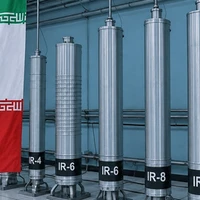
File photo shows different generations of centrifuges displayed in an exhibition in Iran

Calls to revise Iran’s nuclear doctrine and build an atomic bomb are gaining prominence on official platforms after gathering momentum in hardline circles, although the country’s top security official says no policy change has been approved.

Mohsen Rezaei, secretary of Iran’s Supreme National Security Council, said on Saturday, October 31, that neither the government nor the broader establishment had made a new decision on changing the country’s nuclear doctrine. However, he acknowledged discussion of whether Iran should retain its existing policy if war resumes.

Rezaei said attacks on Iran’s nuclear facilities had prompted public demands for reconsidering the policy. He argued that Iran had cooperated fully with International Atomic Energy Agency inspections.

“When people see this, they ask us why we should continue with this situation,” he said.

On September 19, Rezaei had also said that US and Israeli actions gave Iran grounds to withdraw from the Nuclear Non-Proliferation Treaty (NPT).

In recent days, hardliners have increasingly called on Mojtaba Khamenei to overturn his father Ali Khamenei’s religious decree prohibiting the production of nuclear weapons and declare their manufacture permissible.

Ahmad Naderi, a hardline member of parliament, told Khaneh Eqtesad in October that circumstances had changed and Ali Khamenei’s decree on nuclear weapons could be reconsidered.

“From Mojtaba Khamenei’s behavior, my understanding is that his fatwa will be different,” Naderi said.

Tasnim news agency reported on Saturday that Mojtaba Khamenei had instructed senior military commanders during a meeting to respond to any threat immediately and effectively, and “without geographical limitations”.

Before details of the meeting were published, hardliners on social media had expressed hope that he had ordered the development of nuclear weapons. The published account did not announce such an order.

Supporters of developing nuclear weapons have also cited remarks Ali Khamenei made during a meeting with students in November 2024. At the time, students called for a change in Iran’s nuclear doctrine. Responding to their demands, Khamenei said that whatever was necessary to confront the enemy would certainly be done.

An analysis published on Saturday by Khorasan newspaper, which is close to parliament speaker Mohammad-Bagher Ghalibaf, argued that changing the nuclear doctrine would not contradict the late leader’s guidance.

“Contrary to what some people are saying from certain platforms, changing the nuclear doctrine not only does not conflict with the wisdom and leadership of the martyred leader, but is actually a move along the path that he himself had laid out,” it said.

A commentary published by the Revolutionary Guards-affiliated Tasnim on Saturday raised another possibility besides a complete change of nuclear doctrine.

It argued that, with the leader’s approval, Iran could instead deepen its existing doctrine without formally changing it. This would involve enriching uranium to levels suitable for producing a nuclear weapon while stopping short of manufacturing one.

Calls for a nuclear bomb from official platforms

The demand for a change in nuclear policy has increasingly featured in official speeches and Friday prayer sermons.

Mohammad-Javad Haj Ali-Akbari, Tehran’s interim Friday prayer leader, said on Friday that calls to review the country’s nuclear doctrine reflected national awareness rather than a hasty or emotional reaction to American bad faith.

Ahmad Alamolhoda, the influential representative of the supreme leader in Razavi Khorasan province, has gone further, saying that anything necessary to intimidate the enemy, including possessing nuclear weapons, is religiously “obligatory”, according to Khorasan newspaper.

Citing statements by Tehran’s Friday prayer leader, Alamolhoda and the late Ali Khamenei, Khorasan argued that Iran’s security circumstances had changed and that acquiring nuclear weapons had become a demand aimed at strengthening deterrence.

Mohammad-Taghi Naghdali, an MP representing Khomeini Shahr, said on Sunday that the slogan among pro-government demonstrators had changed from “Nuclear energy is our indisputable right” to “Nuclear warhead is our indisputable right.”

Speaking to ChandSanieh news website, Ahmad Bakhshayesh, a member of parliament’s National Security and Foreign Policy Committee, said that if Iran decided to change its nuclear doctrine, it should first build a bomb and then withdraw from the NPT.

“Withdrawing without building a bomb would eliminate the [current] benefits of IAEA oversight,” he said.

Claims of public support

Proponents of revising Iran’s nuclear doctrine have presented the proposal as a popular demand. Haj Ali-Akbari said on Friday that unspecified polls had shown more than 70% of Iranians supported reconsidering the doctrine. The report of his remarks did not provide details of those polls or their methodology.

Mahmoud Nabavian, a hardline member of parliament, said in a post on X on October 29 that he had called on the supreme leader to authorize the production of an atomic bomb during a pro-government gathering in Qom. He said the crowd welcomed his request.

Such gatherings have continued in different parts of the country since the outbreak of the recent war.

IRGC-affiliated media outlets, particularly Fars and Tasnim, have also extensively covered calls for nuclear weapons in recent days, prominently highlighting them as popular demands.

Fars has promoted calls on its My Fars online platform for Iran to build nuclear weapons and increase the range of its missiles to 13,000 kilometers.

Opponents of the proposal, including reformist politician Mostafa Hashemitaba and social media users, have challenged claims of widespread public support and called for a referendum.

In September, Hashemitaba said that if media outlets such as Kayhan believed their position enjoyed popular support, they should endorse holding a referendum.

Warnings against political pressure

The campaign has also prompted warnings against putting political pressure on nuclear decision-making.

Nour News, a website close to Iran’s Supreme National Security Council, published an article on Saturday titled “Reviewing the Nuclear Doctrine: How and Through Which Path?” warning against reducing the complex implications of changing the doctrine to a simple division between supporters and opponents.

Referring to the issue being raised in Friday prayer sermons and at nightly pro-government gatherings, the article argued that decision-makers should be able to examine all available options without political pressure, temporary emotions or expectations that had already been created.

“People’s voices should be heard, but the voices of crowds should not be turned into a substitute for expert assessment and national decision-making,” Nour News wrote.

The issue has also received extensive coverage in reformist and moderate media, which have warned about the consequences of giving prominence to calls for nuclear weapons.

The moderate conservative website Asr-e Iran accused hardliners of using provocative issues to maintain cohesion within their own ranks and control the domestic political atmosphere. It warned that raising the prospect of building an atomic bomb could have serious consequences for Iran’s international standing.

“This will only become an excuse to legitimize the war-mongering scenarios of Iran’s enemies and seriously undermine the country’s peaceful image, which it has spent years trying to establish,” the website said.

Javad Emam, spokesman for the Reformist Front, also responded to the Tehran Friday prayer leader’s remarks in a post, warning that the issue went far beyond political slogans.

“Changing the nuclear doctrine and raising the issue of building an atomic bomb is not a simple decision that can be reduced to slogans. The country’s security, economy, national interests and future are at stake,” he wrote, adding: “Can one speak on behalf of the nation without evidence and impose the costs of such a decision on the people?”

Most Viewed

Iran court sentences 21-year-old protester to death
1

Iran court sentences 21-year-old protester to death

2

Iran says US tone shifts but demands still block talks

3

'No geographic limits': Tehran projects readiness for all-out war

4

Arab states demand response from Iran as fears of wider war dominate Bahrain summit

5

Iran rejects nuclear talks despite ongoing mediation with US

Banner
Banner

Editors' Pick

  • Iran says US tone shifts but demands still block talks

    Iran says US tone shifts but demands still block talks

  • Halloween gathering in Tehran ends in arrests and police crackdown

    Halloween gathering in Tehran ends in arrests and police crackdown

  • Netanyahu or Eisenkot? Tehran sees little difference on war
    INSIGHT

    Netanyahu or Eisenkot? Tehran sees little difference on war

Banner
Banner
Banner
Banner

Spotlight

  • Mohsen Rezaei’s negotiating calculus: someone else always pays the price
    ANALYSIS

    Mohsen Rezaei’s negotiating calculus: someone else always pays the price

  • Iran’s nuclear bomb debate gains ground on official platforms

    Iran’s nuclear bomb debate gains ground on official platforms

  • Residents describe struggle to afford basic needs as Iran inflation hits 88.7%
    VOICES FROM IRAN

    Residents describe struggle to afford basic needs as Iran inflation hits 88.7%

  • Netanyahu or not, the next move on Iran may be Trump's
    PODCAST

    Netanyahu or not, the next move on Iran may be Trump's

  • Tehran refuses to budge as diplomacy races against war

    Tehran refuses to budge as diplomacy races against war

  • New Baha'i memoir recounts life inside Iran's prisons

    New Baha'i memoir recounts life inside Iran's prisons

•
•
•

More Stories

Iran rejects nuclear talks despite ongoing mediation with US

Nov 1, 2026, 14:15 GMT+0
100%

Iranian officials rejected nuclear negotiations, demanded acceptance of their conditions for ending the war and threatened military retaliation, despite continuing diplomatic contacts with Qatari mediators on Sunday.

Iranian officials rejected nuclear negotiations, demanded acceptance of their conditions for ending the war and threatened military retaliation, despite continuing diplomatic contacts with Qatari mediators on Sunday.

“The window for negotiations with our adversaries is now closed because they have nothing new to offer,” Ali Nikzad, deputy speaker of Iran's parliament, said on Sunday.

Nikzad accused what he called adversaries of repeatedly breaking commitments and attacking Iran's nuclear facilities. He said that renewed military action would trigger an “immediate, effective response without geographical limits.”

Foreign Minister Abbas Araghchi, however, said consultations with Qatari mediators were progressing without a final agreement.

  • Iran says US tone shifts but demands still block talks

    Iran says US tone shifts but demands still block talks

“Consultations with the mediators regarding the two-day plan are continuing and moving toward implementation, but we have not yet reached a definitive conclusion,” Araghchi said.

Washington keeps negotiations open

The United States remains open to negotiations but is prepared to pursue other options, Donald Blome, US assistant secretary of state for Near Eastern affairs, said at the Manama Dialogue security forum in Bahrain, according to the Associated Press.

“The hand of negotiation has been extended, and those channels have continued to be open and active,” Blome said.

Blome warned that Washington could take a different course and would not allow Iran to threaten the region and global economy.

Iranian negotiators were in Doha for a third consecutive day of indirect talks aimed at ending the war with the United States and Israel, Reuters reported, citing an official briefed on the discussions.

Araghchi said the delegation had no plans to meet US officials directly.

Iran sets conditions and threatens retaliation

Iran will not negotiate with Washington until seven conditions announced by the secretary of its Supreme National Security Council are implemented, lawmaker Esmail Kowsari said Sunday.

Nikzad also demanded unconditional acceptance of those conditions, including Iran's proposed arrangements for the Strait of Hormuz.

Ebrahim Azizi, chairman of parliament's National Security Committee, threatened a punitive response to hostile actions in the waterway.

  • Vance offers to meet Iran's Rezaei for peace talks as Qatar renews mediation efforts

    Vance offers to meet Iran's Rezaei for peace talks as Qatar renews mediation efforts

Iranian army spokesman Mohammad Akraminia said that another war could spread beyond the Middle East and said the military was shifting toward an offensive doctrine.

Defense Minister Mehrdad Akhlaghi said Iran was strengthening its military readiness and weapons production to respond to threats without geographical restrictions.

Calls grow to leave nuclear treaty

Lawmaker Nasser Pejmanfar urged Iran to withdraw from the Nuclear Non-Proliferation Treaty, arguing that membership had brought no benefits.

  • NPT withdrawal returns to Iran debate as diplomacy gains pace

    NPT withdrawal returns to Iran debate as diplomacy gains pace

Mohsen Araki, a member of the Assembly of Experts and Expediency Discernment Council, separately called for reviewing Iran's membership, according to the Revolutionary Guards-affiliated Tasnim news agency.

The calls to reconsider Iran's nuclear treaty commitments add another obstacle to efforts to resolve the dispute through diplomacy.

Negotiations through Qatari mediators continue in Doha without a final agreement. Washington has kept the door open to talks, but Iranian officials insist that their seven conditions must be accepted before the war can end.

Talks or resistance? Iran's factions differ over path out of crisis

Oct 30, 2026, 20:22 GMT+0
•
Maryam Sinaiee
100%
A participant holds a framed poster of Supreme Leader Mojtaba Khamenei at a rally of student supporters in Tabriz, northwestern Iran, October 30, 2026

Divisions within Iran's political establishment over how to end the country's prolonged state of neither war nor peace are coming into sharper focus as mediators race to secure an agreement with Washington amid preparations for possible renewed US-Israeli strikes.

Qatari mediators held talks in Tehran for at least 12 hours on Friday while maintaining contact with the White House, Axios reported. The diplomatic push comes amid reports that Washington and Israel are preparing for possible military action after next week's US midterm elections.

The competing approaches have emerged in the wake of Supreme Leader Mojtaba Khamenei's call to end the impasse.

According to an official account of a meeting with Supreme National Security Council Secretary Mohsen Rezaei, reportedly held on October 27, Khamenei called for an end to the war and the current uncertainty, while insisting that Iran's conditions for an agreement be met.

Advocates of diplomacy have seized on his remarks to press for renewed negotiations with Washington, while conservatives emphasise military deterrence, economic resilience and maintaining Tehran's demands. The disagreement is less about whether to negotiate than the terms on which Iran should do so.

President Masoud Pezeshkian, who has repeatedly warned about the economic consequences of prolonged uncertainty, pledged a day after the account was published to fulfil Khamenei's instructions.

"You cannot plan in a state of indecision," Pezeshkian said on October 24, recalling that the late supreme leader Ali Khamenei had also called for an end to the impasse.

"But I still believe we should go [to negotiations] and move beyond the neither-war-nor-peace situation," he added.

Advocates of diplomacy seek a way out

Reformist and moderate politicians have argued that prolonged uncertainty is discouraging investment, delaying economic decisions and deepening public anxiety.

Mohammad Ali Abtahi, a former vice-president under Mohammad Khatami, has advocated "dignified negotiations", while former lawmaker Mansour Haghighatpour, a moderate conservative close to Ali Larijani, said Iran faced a choice between renewed war and an agreement.

"National interests dictate that we choose a path through which we can achieve our objectives with the least possible cost and damage," Haghighatpour told Donya-e Eqtesad, urging Washington to return to negotiations in Islamabad.

Javad Youneszadeh, a member of Pezeshkian's media team, went further, arguing that negotiations were compatible with the supreme leader's emphasis on resistance rather than a retreat from it.

In a commentary published on the president's website, he said both Ali Khamenei and his successor had authorised talks with Washington despite what he described as repeated American breaches of commitments.

"The Islamic Republic of Iran still wants to return to the Islamabad memorandum of understanding, even assuming that the enemy has disrupted everything," he wrote.

Former Iranian diplomat Kourosh Ahmadi also urged de-escalation, warning that refusing to show flexibility could lead to renewed fighting, a prolonged naval blockade and further economic pressure.

Conservatives emphasise deterrence and resistance

Conservatives and hardliners, meanwhile, have interpreted Khamenei's remarks as a call to strengthen Iran's position rather than soften its demands, arguing that ending the uncertainty requires military preparedness and economic resilience alongside diplomacy.

Fada-Hossein Maleki, a hardline member of parliament's National Security and Foreign Policy Committee, told the newspaper Iran that resolving the impasse required a new strategic framework involving the government, parliament and armed forces.

He said the framework should strengthen Iran's defence capabilities, address economic problems and prepare the country for both negotiations and military confrontation.

Maleki stressed that Khamenei's call should not be taken as a signal that Tehran was moving towards war or was prepared to accept peace at any price.

Conservative political activist Alireza Khojastehpour similarly told IRNA that stronger military deterrence could help translate Iran's battlefield achievements into diplomatic gains while reducing the economic costs of prolonged uncertainty.

The Mehr news agency also called for preparations to withstand sustained external pressure, citing warnings from Pezeshkian and Rezaei about the economic consequences of a prolonged blockade.

"From these statements, it can be understood that the country's decision-makers are planning economically and militarily to resist external pressure," Mehr wrote, while acknowledging the costs imposed on Iranian households.

The competing interpretations suggest that Khamenei's call to end the impasse has done little to resolve the underlying disagreement over how to achieve it. While advocates of diplomacy see negotiations as a way to ease economic pressure, conservatives emphasise deterrence and resistance, leaving unanswered the question of what Tehran is prepared to concede, if anything, to secure an agreement.

Tehran refuses to budge as diplomacy races against war

Oct 30, 2026, 16:52 GMT+0
•
Behrouz Turani
100%
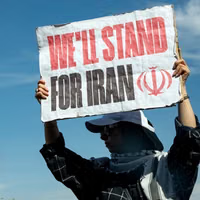
A participant holds a placard reading “We’ll stand for Iran” at a state-organized rally in Arak, central Iran, October 21, 2026

Qatari mediators returned to Tehran on Friday, barely a day after leaving the Iranian capital following the reported rejection of their latest peace proposal, as Washington and Tehran remained divided over which side should make the first concessions.

The delegation's swift return suggested that diplomatic efforts were continuing despite reports by Iranian news agencies that senior officials had rejected key provisions of the Qatari-mediated proposal.

On Friday, as the Qatari delegation, led by a senior adviser to Qatar's prime minister, held talks with Iranian diplomats headed by Foreign Minister Abbas Araghchi, Tehran's Friday prayer leader, Mohsen Haj Ali Akbari, poured cold water on the prospect of a breakthrough with Washington.

He said past experience showed Washington's offers of talks could coincide with more serious threats than its public military warnings suggested.

More notably, he lent weight to calls for a revision of Iran's nuclear doctrine, arguing that they were neither a fringe position nor merely an emotional reaction.

On Thursday, Araghchi said Tehran remained committed to the Islamabad Memorandum of Understanding (MoU) as the basis for further negotiations.

He rejected proposals requiring Iran to reopen the Strait of Hormuz as a unilateral confidence-building measure before the verified lifting of naval restrictions and the release of $24 billion in frozen Iranian assets.

‘War is certain’

The disagreement over which side should act first remains a central obstacle to negotiations, even as regional mediators continue efforts to prevent another round of fighting.

A separate diplomatic initiative by US Vice President JD Vance has also yet to produce a formal Iranian response.

Iranian media have confirmed receipt of a letter from Vance to security chief Mohsen Rezaei, but officials have not commented on its contents, insisting instead that Tehran's conditions for an agreement remain unchanged.

Former parliamentary national security committee chairman Heshmatollah Falahatpisheh offered a far more pessimistic assessment of the renewed mediation efforts.

"The mediators' visits to Tehran are a sign that war is certain, not that diplomacy is being revived," he wrote on X on Friday, arguing that only a regional agreement involving the United States and China could now prevent a fourth war.

Economic costs

In an article published Thursday, the reformist newspaper Shargh also expressed grave concern about the diplomatic deadlock..

It warned that celebrating mine attacks and escalating regional tensions while Iran's economy faced severe shortages of essential inputs could prove a potentially fatal mistake.

The conservative newspaper Khorasan offered a more measured assessment of the diplomatic difficulties, while supporting Araghchi's rejection of proposals requiring Iran to de-escalate before Washington lifted restrictions on shipping.

While some commentators warn that prolonged confrontation is deepening Iran's economic problems and increasing the danger of war, others argue that making concessions under military and economic pressure would weaken Tehran's position in any eventual agreement.

Who moves first?

The discussions appear to be focused on establishing a framework for renewed negotiations rather than resolving every outstanding issue in a comprehensive peace agreement.

Vance's letter, according to US media reports, sought to restart talks with Iran's nuclear program included from the outset. Tehran, meanwhile, insists that steps to ease the naval blockade and release frozen assets must precede substantive nuclear negotiations.

The disagreement is reflected in a proposed seven-day framework. Washington wants nuclear discussions to begin on the first day, while Tehran insists they should begin on the seventh, after other measures have been implemented.

Although the proposed timetable separates the two positions by six days, the dispute is about more than timing. Each side wants the other to demonstrate its commitment before taking what it considers a significant political risk.

The stakes remain high. US officials have warned of possible renewed military operations after the November 3 midterm elections, while Tehran continues to reject proposals it regards as requiring unilateral concessions.

For now, the return of the Qatari mediators shows that diplomatic contacts remain active. Whether those contacts can prevent another round of fighting depends on finding a sequence of steps that both Washington and Tehran are prepared to accept.

Vance offers to meet Iran's Rezaei for peace talks as Qatar renews mediation efforts

Oct 30, 2026, 07:36 GMT+0
100%
US Vice President JD Vance delivers remarks during a midterm campaign rally at JRJ Construction in Weatherford, Texas, US, October 29, 2026.

US Vice President JD Vance has offered to meet Iran's top security official Mohsen Rezaei to discuss ending the war, the Washington Post reported, as Qatari mediators returned to Tehran on Friday to pursue a deal.

Vance sent a letter last week to Rezaei, secretary of Iran's Supreme National Security Council and a former commander of the Islamic Revolutionary Guard Corps (IRGC), outlining the interests of both countries in possible negotiations, the newspaper reported on Thursday, citing a US official familiar with the discussions.

The letter stressed that Washington's main objective was to prevent Iran from obtaining a nuclear weapon, while recognizing Tehran's interests in rebuilding its economy and preserving its national sovereignty.

The vice president also told Iran it needed to appoint representatives authorized to negotiate over its nuclear program, according to the report.

Istanbul or Doha could host a meeting between Vance and Rezaei if the two sides agree to direct talks, the official said.

The Washington Post reported that US officials regarded Rezaei as an important contact because of his influence within Iran's security establishment and his access to Supreme Leader Mojtaba Khamenei.

Qatar returns to Tehran for new talks

Qatari mediators returned to Tehran on Friday to advance efforts toward an agreement between Iran and the United States, Reuters reported, citing an official briefed on the negotiations.

The mediators have been coordinating their efforts with Washington as they seek to narrow differences over the nuclear program and the economic restrictions imposed on Iran.

The two sides remain divided over the order of steps needed to reach an agreement. Washington wants nuclear issues addressed from the outset, while Tehran insists that the US first end its naval blockade and lift restrictions on Iranian oil exports.

Qatar presented Iran with a draft peace plan on Sunday, but a senior Iranian official subsequently described the ideas as unacceptable and said Tehran would not change its position on the nuclear issue.

Iranian Foreign Minister Abbas Araghchi said on Wednesday that Tehran was consulting closely with intermediaries on ideas for implementing its own seven-day proposal to end the war.

The Washington Post reported that Qatari representatives have maintained regular contact with Rezaei and other senior Iranian officials.

According to the newspaper, Iranian leaders regarded Vance's direct letter as a sign of respect, although there was no indication they had changed their nuclear position.

Washington sees Rezaei as central to negotiations

The Trump administration believes Rezaei could help secure support within Iran's leadership for a nuclear agreement, the Washington Post reported, citing the US official.

US intelligence officials believe Rezaei has maintained regular contact with Supreme Leader Mojtaba Khamenei, including discussions in recent days after receiving Vance's letter.

  • Iran’s neighbors push diplomacy, prepare for its failure

    Iran’s neighbors push diplomacy, prepare for its failure

  • Iran's Great Depression? Economists weigh Bessent's dire forecast

    Iran's Great Depression? Economists weigh Bessent's dire forecast

  • Iran rejects Qatari peace ideas as Trump leaves door open to new strikes

    Iran rejects Qatari peace ideas as Trump leaves door open to new strikes

Rezaei, a former commander of the IRGC, has gained influence within Iran's political and security establishment and maintains connections with officials overseeing the economy, according to the report.

The newspaper said US officials viewed him as someone capable of securing agreement among Iranian leaders on sensitive nuclear issues.

Vance previously led US negotiations with Iran, including an April meeting in Islamabad with Iranian Parliament Speaker Mohammad Bagher Ghalibaf.

Those discussions involved possible sanctions relief and economic cooperation in exchange for a nuclear agreement, but they failed to produce a lasting settlement.

The Washington Post reported that US officials believe the opportunity to reach an agreement without further military action could be narrowing.

Trump says contact focused on medical supplies

US President Donald Trump confirmed Wednesday that he had approved Vance's outreach to Iran but said the contact concerned medical supplies rather than instructions to restart peace negotiations.

"They need help with medical supplies and various things. He asked me what I thought. I said, 'if you want to do that, that's OK,'" Trump told reporters.

"Basically, it's getting supplies in to help people that are not well," he added.

The Wall Street Journal first reported the letter to Rezaei, saying the contact was intended to explore whether Washington and Tehran could agree on a framework for negotiations.

Axios separately reported that Vance stressed the need for any renewed negotiations to address Iran's nuclear program.

The discussions come as Trump considers possible renewed strikes against Iran after the November 3 US midterm elections, according to reports by US media outlets.

Vance says Trump will not allow prolonged Iran war

Speaking at a Fox News town hall in Fort Worth, Texas, on Thursday, Vance said Trump would not allow the conflict with Iran to become a prolonged US military engagement.

"We've been involved in Iran in some form for seven months. The United States has been dealing with Iran for 47 years, and I promise you that Donald Trump is not going to let Iran become a forever war," Vance said.

He said opposing lengthy military interventions did not mean ruling out the use of force.

"I think there's a difference between criticizing foreign military misadventures and saying that you can never ever use the American military," he said.

"He's going to accomplish America's objectives, and then we're going to focus on the other things that we're doing," Vance added.

His comments came as US military officials prepared options for possible further strikes against Iran, with Trump yet to announce a decision.

Netanyahu or Eisenkot? Tehran sees little difference on war

Oct 29, 2026, 19:17 GMT+0
•
Maryam Sinaiee
100%
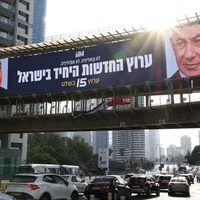
An advert for an Israeli television channel that will broadcast Israel's election coverage features Israeli Prime Minister Benjamin Netanyahu and former Israeli military chief Gadi Eisenkot, leader of the Yashar party, ahead of Israel's national election, on a bridge in Tel Aviv, Israel, October 21, 2026.

Iranian media have highlighted Benjamin Netanyahu's weakened position following Israel's election, but analysts in Tehran say his departure would be unlikely to change Israel's approach to Iran, even if it weakened its ability to pursue the confrontation.

Reports by the Tasnim and Fars news agencies, both affiliated with the Revolutionary Guards (IRGC), as well as state radio and television, have focused on the failure of either of Israel's two main electoral blocs to secure a governing majority, raising the prospect of prolonged political deadlock.

These outlets have also devoted considerable attention to gains by Arab parties and the possibility that their increased representation could help bring about Netanyahu's removal as prime minister.

They have largely avoided discussing whether the election outcome could increase or reduce the risk of further escalation in the war with Iran.

Senior Iranian officials have yet to comment on the result. Before the vote, Foreign Ministry spokesman Esmail Baghaei said Tehran did not care who led Israel, stressing that Iran was at war and would not hesitate to defend itself.

Netanyahu or Eisenkot?

Iranian analysts have generally argued that the election outcome could affect the timing, scope or objectives of potential Israeli military action, but would not fundamentally change Israel's approach to Iran's nuclear and missile programs or its regional influence.

Masoud Asadollahi, a Middle East expert and university professor, told Nour News, an outlet close to Iran's Supreme National Security Council: “From a military and security perspective, one cannot simply conclude that the mutual threats or strategic differences between Iran and Israel will disappear because a prime minister leaves office.”

He said Netanyahu's opponents differed from him mainly in how they would manage the war and make strategic decisions, rather than in their fundamental approach to Iran.

The conservative Khorasan newspaper addressed the question in a Thursday article titled “Which Is Better for Iran: Netanyahu or Eisenkot?”

It argued that Netanyahu's removal should not be equated with the end of the Israeli threat to Iran. Gadi Eisenkot, it said, was neither an outsider to Israel's political establishment nor opposed to confrontation with the Islamic Republic.

“The experience of coalition governments and political disagreements in Israel has shown that diversity within the cabinet can increase the costs of decision-making,” the newspaper wrote.

Khorasan argued that Netanyahu's departure could benefit Iran by weakening the political and diplomatic capacity he had accumulated during the confrontation, even if his successor pursued similar policies.

But it also acknowledged that internal political rivalries could produce more aggressive policies.

“Sometimes removing one player does not end the game, but it can make the game more difficult for the other side,” the newspaper wrote.

Other analysts warned that political uncertainty could itself increase the risk of military escalation.

Morteza Makki, an international affairs analyst, told the Iranian Labor News Agency (ILNA) that delays in forming Israel's next government could work to Netanyahu's advantage by giving him a potential window to attack Iran.

Makki said the uncertainty could also affect the prospects for coordination with the United States in any such operation.

“Overall, the likelihood of war is high, and one cannot judge whether war will or will not occur solely on the basis of which political camp wins the election, because both camps are inclined toward war,” foreign policy analyst Alireza Komeili told the conservative Nameh News website.

Hardliner claims Iran drove Israeli turnout

Ali Akbar Raefipour, an ultra-hardline political figure, claimed in a social media post that concerns about Iran were behind the high turnout in Israel's election.

“The highest voter turnout in Israel's elections in the past 28 years has been recorded so far. And the main reason for it is Iran alone. Yes, Iran,” he wrote on X.

His claim drew responses from Iranian social media users who contrasted Israeli participation with low turnout in Iranian elections.

“We have influence over elections all over the world, and the results of elections everywhere in the world affect our lives, except for the results of our own elections,” one user wrote.