• العربية
  • فارسی
BrandBrand
  • Iran Insight
  • Politics
  • Economy
  • Analysis
  • Special Report
  • Opinion
  • Podcast
  • Live TV
  • Iran Insight
  • Politics
  • Economy
  • Analysis
  • Special Report
  • Opinion
  • Podcast
  • Live TV
  • Theme
  • Language
    • العربية
    • فارسی
  • Iran Insight
  • Politics
  • Economy
  • Analysis
  • Special Report
  • Opinion
  • Podcast
  • Live TV
All rights reserved for Volant Media UK Limited
volant media logo

Arab states remain open to talks with Iran but need reciprocal response, GCC chief says

Oct 31, 2026, 09:54 GMT+0

Arab states remain open to dialogue with Iran, but diplomacy requires a willingness to respond in kind, Gulf Cooperation Council (GCC) Secretary General Jasem Mohamed Al Budaiwi said on Saturday, as he called for the restoration of shipping through the Strait of Hormuz.

"The GCC states have always called for dialogue and negotiation to resolve any issue in the region, and they still do," Al Budaiwi told the 22nd IISS Manama Dialogue in Bahrain.

He said the six-member bloc maintained relations with major international powers and kept channels of communication open with neighboring countries, including Iran.

"In a region of widening divides, this ability to talk to all sides is one of the few assets left," he said.

"But diplomacy needs partners, partners who respond in kind."

Al Budaiwi said disruptions to navigation through the Strait of Hormuz had affected global energy prices, shipping, insurance and supply chains.

"Disrupting international navigation and closing the Strait of Hormuz or Bab el-Mandeb are a flagrant violation" of international law, he said.

He called for navigation through the Strait of Hormuz to be restored to conditions before February 28, when the US-Iran war began.

"The security of these waterways is a shared international responsibility," he said.

"We call on the international community to take a firm stand that puts an end to these attacks and holds those responsible to account."

Most Viewed

Vance offers to meet Iran's Rezaei for peace talks as Qatar renews mediation efforts
1

Vance offers to meet Iran's Rezaei for peace talks as Qatar renews mediation efforts

2

New Baha'i memoir recounts life inside Iran's prisons

3

Cleric arrested in Iran protests sentenced to death twice

4

Somali piracy surges as Iran war diverts US naval attention - CNN

5
INSIGHT

Iranian media debate new war amid Hormuz attacks, military buildup

Spotlight

  • CSIS warns Iran-related activities targeting Canada likely to continue in 2026
    EXCLUSIVE

    CSIS warns Iran-related activities targeting Canada likely to continue in 2026

  • Talks or resistance? Iran's factions differ over path out of crisis
    INSIGHT

    Talks or resistance? Iran's factions differ over path out of crisis

  • Tehran refuses to budge as diplomacy races against war

    Tehran refuses to budge as diplomacy races against war

  • Growing old alone: The parents Iran’s emigrants left behind
    VOICES FROM IRAN

    Growing old alone: The parents Iran’s emigrants left behind

  • Behind Khamenei's call for peace, Tehran's unchanged demands
    OPINION

    Behind Khamenei's call for peace, Tehran's unchanged demands

  • Iran's Great Depression? Economists weigh Bessent's dire forecast
    ANALYSIS

    Iran's Great Depression? Economists weigh Bessent's dire forecast

Banner
Banner
Banner
Banner
Banner
•
•
•

More Stories

Arab states demand response from Iran as fears of wider war dominate Bahrain summit

Oct 31, 2026, 09:45 GMT+0
100%
Jasem Mohamed Al Budaiwi, Secretary General, Gulf Cooperation Council.

Arab states remain open to negotiations with Iran but need a reciprocal response from Tehran, the head of the Gulf Cooperation Council (GCC) said on Saturday, as senior regional officials warned of a more destructive phase of the US-Iran war.

The warnings came at the 22nd IISS Manama Dialogue in Bahrain, where ministers from Egypt, Saudi Arabia, Britain, Syria and Yemen addressed Iranian attacks, Houthi operations and the growing risks to regional security.

"The GCC states have always called for dialogue and negotiation to resolve any issue in the region, and they still do," GCC Secretary General Jasem Mohamed Al Budaiwi said.

He said the six-member bloc maintained open channels with Iran alongside its partnerships with Western powers, China, Russia and other countries.

"In a region of widening divides, this ability to talk to all sides is one of the few assets left," he said.

"But diplomacy needs partners, partners who respond in kind."

Egypt warns next round of war could be more destructive

Egyptian Foreign Minister Badr Abdelatty expressed concern about renewed fighting between Washington and Tehran, warning that another escalation could have wider consequences.

"The second round will be more dangerous, more destructive, and it will lead to nowhere. We have to draw lessons from the past," Abdelatty said, according to Reuters.

He also warned that military action could unleash consequences beyond the control of those who initiated it.

"A war can begin with a unilateral decision, but no one can unilaterally control its consequences or stop it," he told the conference.

Abdelatty called for diplomatic channels, confidence-building measures and regional participation in security arrangements, warning against repeating what he described as mistakes during negotiations over the 2015 Iran nuclear agreement.

"Deterrence without diplomacy may postpone war, but cannot prevent it," he said.

Strait of Hormuz and Bab el-Mandeb emerge as major concerns

Al Budaiwi called for navigation through the Strait of Hormuz to return to conditions before February 28, when the US-Iran war began.

He said Iranian attacks on GCC member states had caused casualties and damaged civilian and critical infrastructure, while disruptions to the strait had affected energy prices, shipping, insurance and global supply chains.

"The GCC states were not a party to the war and did not seek it," he said.

  • Tehran summit divides Iranian hardliners over Yemen and US talks

    Tehran summit divides Iranian hardliners over Yemen and US talks

  • Iran hardliners split over role of mediators in US tensions

    Iran hardliners split over role of mediators in US tensions

Saudi Vice Foreign Minister Waleed Elkhereiji also warned about threats to international trade through the Strait of Hormuz, the Red Sea and Bab el-Mandeb.

"Securing navigation in the Red Sea and the Straits of Bab el Mandeb and Hormuz is a shared responsibility that requires regional and international cooperation based on the respect of international law," he said.

He condemned renewed Houthi attacks on Saudi Arabia and threats to commercial shipping, accusing the group of undermining diplomatic efforts to end the Yemen conflict.

Yemen points to Iranian support for Houthis

Yemeni Foreign Minister Afrah al-Zouba directly linked regional maritime threats to outside support for the Houthis.

"The UN panel of experts on Yemen has shown that all the support being given to the Houthis from Iran, from Iraqi armed groups and Hezbollah has been proven," she said, citing findings she attributed to UN experts.

Al-Zouba called for efforts to stop weapons and financing reaching the group, warning of its connections with other armed organizations.

She also cited information received in 2025 about cooperation between the Houthis and Somalia's al-Shabab militant group involving weapons and training.

"Coastal security starts with security on land and the protection of civilians," she said, arguing that restoring Yemeni state authority was essential to protecting maritime routes.

  • Iran turns on Pakistan as Saudi defense pact takes effect

    Iran turns on Pakistan as Saudi defense pact takes effect

  • Iran's rhetoric against UAE hardens after Netanyahu visit

    Iran's rhetoric against UAE hardens after Netanyahu visit

Britain pledges military support alongside diplomacy

British Middle East Minister Stephen Doughty said the UK had deployed air defense equipment and personnel to Saudi Arabia to help protect against missiles and drones following renewed Houthi attacks.

He said British forces had also flown defensive missions over Qatar, Bahrain, Jordan and the UAE during Iranian attacks and provided air defense support to Bahrain and Kuwait.

"We are clear and united in understanding the threat that is posed by Iran and the very serious threats from Iran and its proxies," Doughty said.

He reiterated Britain's opposition to Iran acquiring nuclear weapons while promising continued diplomatic engagement.

"We must strain every sinew for peace," he said, adding that Britain would support threatened partners "with actions and not just words."

Syria condemns attacks on Arab countries

Syrian Foreign Minister Asaad al-Shaibani also condemned missile and drone attacks on regional states, pledging support for Bahrain, Saudi Arabia, Qatar, Oman and Jordan.

"We are against using Syria to threaten the neighboring countries," he said.

Al-Shaibani said Damascus was working to consolidate state control over weapons and strengthen cooperation with neighboring countries.

The remarks reflected a common theme at the conference: calls for diplomacy with Iran alongside demands for stronger defenses, an end to attacks on Arab countries and restored freedom of navigation.

Al Budaiwi said the GCC's offer of regional cooperation remained open.

"This invitation still stands for those who answer it with action," he said.

US Treasury says Iran's oil revenue, trade hit hard by pressure campaign

Oct 31, 2026, 05:38 GMT+0
100%
US Treasury Secretary Scott Bessent attends a press conference at government quarters Rosenbad after the trade talks between the U.S. and China concluded, in Stockholm, Sweden, July 29, 2025. Magnus Lejhall/TT News Agency/via REUTERS

The US Treasury says a pressure campaign launched against Iran two months ago has sharply reduced its oil revenue and access to international trade and financial channels, deepening the country’s economic isolation.

Treasury said Iran has loaded no oil onto vessels since August 25, while overland trade has faced border bottlenecks and restrictions have expanded across aviation and banking.

The assessment, titled Operation Economic Outcast: Iran’s Isolation by the Numbers, also points to a roughly 25% fall in the rial since the operation began on August 24 and rising inflation as signs of broader economic pressure.

The report said the rial reached 2,687,000 to the US dollar on the unofficial market in October, while year-on-year inflation rose to about 90% in September, citing data from the Statistical Center of Iran.

President Masoud Pezeshkian has also acknowledged the economic impact of sanctions.

“Some say sanctions have no effect at all; to those people, I really don’t know what to say,” he told state television in August.

Oil and trade routes come under pressure

Oil has been a central focus of Operation Economic Outcast, which Treasury launched on August 24 as part of a broader effort to cut Iran off from sources of revenue and foreign currency.

Iran has loaded no oil onto vessels since August 25, Treasury said, adding that the country had reportedly sold its remaining oil stranded at sea.

Separate data on deliveries shows the decline in Iranian oil reaching overseas destinations. Kpler data and Treasury staff calculations show the 30-day moving average of Iranian or suspected Iranian-origin oil unloaded at known locations falling to about 400,000 barrels per day by October 19, from more than 1 million barrels per day around the launch of the operation.

Treasury attributed the disruption to the US naval blockade and targeted economic sanctions.

With maritime routes restricted, the report says Iran has sought to reroute more trade overland, encountering bottlenecks at its borders with Turkey, Pakistan, Afghanistan and Turkmenistan.

Thousands of trucks were reportedly stranded at the Turkish crossing, with delays of up to 20 days, while hundreds were waiting at the Pakistani border, according to the Treasury assessment.

Restrictions extend to aviation

The pressure campaign has also affected Iran's international aviation links, according to the Treasury, which said it had sent teams abroad to coordinate enforcement with foreign governments.

The UAE, Oman, Iraq (with certain religious-travel exemptions for Najaf), Georgia and Azerbaijan have barred all Iranian airlines and canceled all flights to Iran, the report said. Turkey has stopped all Mahan Air flights.

Foreign carriers including Qatar Airways, Emirates, Turkish Airlines and Pegasus have also extended suspensions of routes to Iran.

Treasury said Iran Air, the country's flag carrier, was struggling to cover operating costs with a limited fleet. It added that the restrictions have had wider consequences for industries that rely on air cargo.

An Iranian Chamber of Commerce official told Donya-e-Eqtesad that “the circle of containment is tightening day by day,” warning that supply disruptions could affect production and access to essential goods.

Financial pressure shifts to alternative channels

As trade and transport links have narrowed, Washington has also stepped up efforts to restrict the financial channels Iran uses to move money abroad.

Turkish regulators took control of the US-sanctioned Golden Global Investment Bank and revoked the operating license of US-designated Bank Mellat, while Lebanon revoked the operating license of an Iranian branch of Bank Saderat, according to the report.

The UAE imposed enforcement measures against Bank Melli Iran branches and launched an investigation into Banque Misr UAE following Treasury action. The UK also introduced a presumption of denial for licenses involving designated Iranian banks.

Treasury has separately targeted financial institutions it says facilitate Iran’s access to foreign currency and international banking. The report cited its designation of Iraq's private International Development Bank, which Treasury accused of supporting Iran and armed groups aligned with Tehran.

As conventional channels narrow, Treasury says Iranian networks have increasingly sought alternatives, including digital assets.

The department has targeted cryptocurrency exchanges, wallets and financial facilitators it says are used to circumvent sanctions. The report highlights five Iranian exchanges designated by the US in June and August.

According to the report, Nobitex, Wallex, Bitpin and Ramzinex were designated on June 2, while Aban Tether was designated on August 7. It also cited the designation of the Iranian cryptocurrency exchange BitBank as part of efforts to disrupt sanctions evasion.

Treasury says falling oil revenue, the weaker rial and restrictions on financial channels together show the cumulative impact of Iran’s growing economic isolation. It said the operation would continue and warned entities knowingly enabling sanctions evasion to expect further US action.

CSIS warns Iran-related activities targeting Canada likely to continue in 2026

Oct 31, 2026, 01:53 GMT+0
•
Mahsa Mortazavi
100%
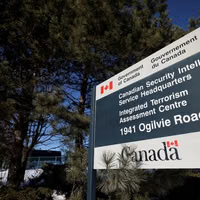
A view shows a Canadian Security Intelligence Service Headquarters and Integrated Terrorism Assessment Centre sign in Ottawa, Ontario, Canada February 26, 2025. REUTERS/Blair Gable/File Photo

The Canadian Security Intelligence Service told Iran International that in more than one case its efforts to counter Iranian intelligence services and their proxies involved detecting, investigating and disrupting potentially lethal threats in Canada.

CSIS said it assesses that “Iranian threat-related activities directed at Canada and its allies are likely to continue in 2026.”

The agency declined to discuss specific investigations or operational details, citing the need to protect its sources, tradecraft and methods.

Iranian intelligence services and their proxies have targeted individuals they perceive as threats to the Iranian government, according to CSIS.

“In more than one case this involved detecting, investigating, and disrupting potentially lethal threats against individuals in Canada,” the agency said.

It added that it works with foreign partners and domestic law enforcement to counter such activity and engages communities across Canada to strengthen their resilience against potential threats.

The Royal Canadian Mounted Police (RCMP) also told Iran International that it was aware of reporting and allegations about possible foreign involvement in the incidents but declined to attribute them to Iran or another state while investigations remain underway.

“As these matters remain under investigation, the RCMP is not in a position to comment on specific intelligence, investigative findings, or potential attribution,” the force said.

The RCMP said it was aware of foreign interference activity in Canada involving several states, including Iran, and takes allegations of foreign interference, transnational repression and foreign state-linked criminal activity seriously.

The RCMP said it works with Canadian and international partners through intelligence sharing, threat assessments, coordinated investigations and enforcement actions.

Gun-for-hire investigations

The responses come amid investigations into suspected gun-for-hire networks operating in the Greater Toronto Area.

Toronto police say young people are being recruited through encrypted messaging apps to carry out attacks for payment, while investigators are still working to determine who is directing and financing the violence.

Police have identified a recurring pattern in some of the attacks involving stolen vehicles, encrypted messaging apps and gunmen recording shootings on their phones.

Police say recruits are required to record the attacks as proof in order to receive payment.

Toronto police said ballistic evidence linked two firearms seized during the investigation to numerous shootings across the Greater Toronto Area, including the attack on the US Consulate.

Iran International previously reported in June that an armed assailant fired 17 rounds at a Toronto athletic facility owned by Iranian-Canadian opposition activist Salar Gholami, hours after the killing of senior Iranian officials in Tehran.

The facility has served as a gathering place for opponents of the Islamic Republic and a hub for anti-regime demonstrations.

Surveillance footage captured an assailant whose physical profile was described in the report as consistent with young individuals allegedly recruited in other shootings.

The attack has not been publicly established as part of the same criminal network involved in other shootings under investigation in Toronto.

Conservatives call for action

Conservative Party leader and opposition leader Pierre Poilievre has warned that foreign-backed networks are exploiting criminal groups to carry out attacks in Canada.

"Iran's terrorist regime is suspected of financing gun-for-hire shootings on Canadian soil. Synagogues, a school, businesses, and the U.S. Consulate targeted. Jewish Canadians and Iranian dissidents are being terrorized," Poilievre said.

He called on the federal government to identify and deport Iranian Revolutionary Guard operatives unlawfully present in Canada.

Canada and more than two dozen other countries said earlier this month that they condemned Iran’s use of violent attacks, including lethal plotting, arson, sabotage, cyberattacks and other hostile activities, and pledged to identify, investigate and disrupt such activity.

Talks or resistance? Iran's factions differ over path out of crisis

Oct 30, 2026, 20:22 GMT+0
•
Maryam Sinaiee
100%
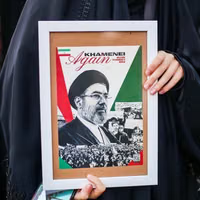
A participant holds a framed poster of Supreme Leader Mojtaba Khamenei at a rally of student supporters in Tabriz, northwestern Iran, October 30, 2026

Divisions within Iran's political establishment over how to end the country's prolonged state of neither war nor peace are coming into sharper focus as mediators race to secure an agreement with Washington amid preparations for possible renewed US-Israeli strikes.

Qatari mediators held talks in Tehran for at least 12 hours on Friday while maintaining contact with the White House, Axios reported. The diplomatic push comes amid reports that Washington and Israel are preparing for possible military action after next week's US midterm elections.

The competing approaches have emerged in the wake of Supreme Leader Mojtaba Khamenei's call to end the impasse.

According to an official account of a meeting with Supreme National Security Council Secretary Mohsen Rezaei, reportedly held on October 27, Khamenei called for an end to the war and the current uncertainty, while insisting that Iran's conditions for an agreement be met.

Advocates of diplomacy have seized on his remarks to press for renewed negotiations with Washington, while conservatives emphasise military deterrence, economic resilience and maintaining Tehran's demands. The disagreement is less about whether to negotiate than the terms on which Iran should do so.

President Masoud Pezeshkian, who has repeatedly warned about the economic consequences of prolonged uncertainty, pledged a day after the account was published to fulfil Khamenei's instructions.

"You cannot plan in a state of indecision," Pezeshkian said on October 24, recalling that the late supreme leader Ali Khamenei had also called for an end to the impasse.

"But I still believe we should go [to negotiations] and move beyond the neither-war-nor-peace situation," he added.

Advocates of diplomacy seek a way out

Reformist and moderate politicians have argued that prolonged uncertainty is discouraging investment, delaying economic decisions and deepening public anxiety.

Mohammad Ali Abtahi, a former vice-president under Mohammad Khatami, has advocated "dignified negotiations", while former lawmaker Mansour Haghighatpour, a moderate conservative close to Ali Larijani, said Iran faced a choice between renewed war and an agreement.

"National interests dictate that we choose a path through which we can achieve our objectives with the least possible cost and damage," Haghighatpour told Donya-e Eqtesad, urging Washington to return to negotiations in Islamabad.

Javad Youneszadeh, a member of Pezeshkian's media team, went further, arguing that negotiations were compatible with the supreme leader's emphasis on resistance rather than a retreat from it.

In a commentary published on the president's website, he said both Ali Khamenei and his successor had authorised talks with Washington despite what he described as repeated American breaches of commitments.

"The Islamic Republic of Iran still wants to return to the Islamabad memorandum of understanding, even assuming that the enemy has disrupted everything," he wrote.

Former Iranian diplomat Kourosh Ahmadi also urged de-escalation, warning that refusing to show flexibility could lead to renewed fighting, a prolonged naval blockade and further economic pressure.

Conservatives emphasise deterrence and resistance

Conservatives and hardliners, meanwhile, have interpreted Khamenei's remarks as a call to strengthen Iran's position rather than soften its demands, arguing that ending the uncertainty requires military preparedness and economic resilience alongside diplomacy.

Fada-Hossein Maleki, a hardline member of parliament's National Security and Foreign Policy Committee, told the newspaper Iran that resolving the impasse required a new strategic framework involving the government, parliament and armed forces.

He said the framework should strengthen Iran's defence capabilities, address economic problems and prepare the country for both negotiations and military confrontation.

Maleki stressed that Khamenei's call should not be taken as a signal that Tehran was moving towards war or was prepared to accept peace at any price.

Conservative political activist Alireza Khojastehpour similarly told IRNA that stronger military deterrence could help translate Iran's battlefield achievements into diplomatic gains while reducing the economic costs of prolonged uncertainty.

The Mehr news agency also called for preparations to withstand sustained external pressure, citing warnings from Pezeshkian and Rezaei about the economic consequences of a prolonged blockade.

"From these statements, it can be understood that the country's decision-makers are planning economically and militarily to resist external pressure," Mehr wrote, while acknowledging the costs imposed on Iranian households.

The competing interpretations suggest that Khamenei's call to end the impasse has done little to resolve the underlying disagreement over how to achieve it. While advocates of diplomacy see negotiations as a way to ease economic pressure, conservatives emphasise deterrence and resistance, leaving unanswered the question of what Tehran is prepared to concede, if anything, to secure an agreement.

Tehran refuses to budge as diplomacy races against war

Oct 30, 2026, 16:52 GMT+0
•
Behrouz Turani
100%
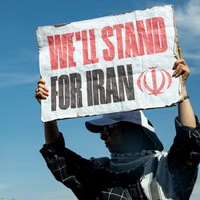
A participant holds a placard reading “We’ll stand for Iran” at a state-organized rally in Arak, central Iran, October 21, 2026

Qatari mediators returned to Tehran on Friday, barely a day after leaving the Iranian capital following the reported rejection of their latest peace proposal, as Washington and Tehran remained divided over which side should make the first concessions.

The delegation's swift return suggested that diplomatic efforts were continuing despite reports by Iranian news agencies that senior officials had rejected key provisions of the Qatari-mediated proposal.

On Friday, as the Qatari delegation, led by a senior adviser to Qatar's prime minister, held talks with Iranian diplomats headed by Foreign Minister Abbas Araghchi, Tehran's Friday prayer leader, Mohsen Haj Ali Akbari, poured cold water on the prospect of a breakthrough with Washington.

He said past experience showed Washington's offers of talks could coincide with more serious threats than its public military warnings suggested.

More notably, he lent weight to calls for a revision of Iran's nuclear doctrine, arguing that they were neither a fringe position nor merely an emotional reaction.

On Thursday, Araghchi said Tehran remained committed to the Islamabad Memorandum of Understanding (MoU) as the basis for further negotiations.

He rejected proposals requiring Iran to reopen the Strait of Hormuz as a unilateral confidence-building measure before the verified lifting of naval restrictions and the release of $24 billion in frozen Iranian assets.

‘War is certain’

The disagreement over which side should act first remains a central obstacle to negotiations, even as regional mediators continue efforts to prevent another round of fighting.

A separate diplomatic initiative by US Vice President JD Vance has also yet to produce a formal Iranian response.

Iranian media have confirmed receipt of a letter from Vance to security chief Mohsen Rezaei, but officials have not commented on its contents, insisting instead that Tehran's conditions for an agreement remain unchanged.

Former parliamentary national security committee chairman Heshmatollah Falahatpisheh offered a far more pessimistic assessment of the renewed mediation efforts.

"The mediators' visits to Tehran are a sign that war is certain, not that diplomacy is being revived," he wrote on X on Friday, arguing that only a regional agreement involving the United States and China could now prevent a fourth war.

Economic costs

In an article published Thursday, the reformist newspaper Shargh also expressed grave concern about the diplomatic deadlock..

It warned that celebrating mine attacks and escalating regional tensions while Iran's economy faced severe shortages of essential inputs could prove a potentially fatal mistake.

The conservative newspaper Khorasan offered a more measured assessment of the diplomatic difficulties, while supporting Araghchi's rejection of proposals requiring Iran to de-escalate before Washington lifted restrictions on shipping.

While some commentators warn that prolonged confrontation is deepening Iran's economic problems and increasing the danger of war, others argue that making concessions under military and economic pressure would weaken Tehran's position in any eventual agreement.

Who moves first?

The discussions appear to be focused on establishing a framework for renewed negotiations rather than resolving every outstanding issue in a comprehensive peace agreement.

Vance's letter, according to US media reports, sought to restart talks with Iran's nuclear program included from the outset. Tehran, meanwhile, insists that steps to ease the naval blockade and release frozen assets must precede substantive nuclear negotiations.

The disagreement is reflected in a proposed seven-day framework. Washington wants nuclear discussions to begin on the first day, while Tehran insists they should begin on the seventh, after other measures have been implemented.

Although the proposed timetable separates the two positions by six days, the dispute is about more than timing. Each side wants the other to demonstrate its commitment before taking what it considers a significant political risk.

The stakes remain high. US officials have warned of possible renewed military operations after the November 3 midterm elections, while Tehran continues to reject proposals it regards as requiring unilateral concessions.

For now, the return of the Qatari mediators shows that diplomatic contacts remain active. Whether those contacts can prevent another round of fighting depends on finding a sequence of steps that both Washington and Tehran are prepared to accept.