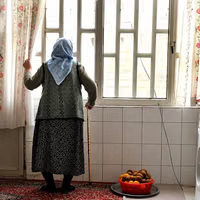
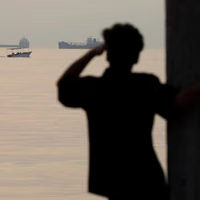
An elderly woman looks out of a window in her home in Iran.
As more Iranians build new lives abroad, many parents back home face a less visible consequence of migration: years without seeing their children, family relationships maintained through phone screens, and growing uncertainty about who will be there for them in old age.
For Maryam, a 68-year-old retiree in Tehran, that distance has become part of everyday life. Her son lives in Canada and her daughter in Germany, and she has not seen either of them in years.
“I know they're building their futures, and I'm happy for them,” she told Iran International. “But sometimes I just wish they were here, even for an ordinary dinner.”
Maryam says regular calls and photographs help her stay connected with her family, particularly her grandchildren. But watching them grow up from thousands of miles away is difficult.
“They know me through the phone,” she says. “I wish I could be more than just a face on a screen in their lives.”
Last winter, Maryam was hospitalized with kidney problems. Her children arranged help through relatives, and a family member accompanied her to medical appointments.
“My daughter was very worried, and I kept telling her everything was fine,” she recalls. “Sometimes, especially when I'm ill, I just wish we weren't so far apart.”
Caring for a spouse without the children nearby
In Karaj, 72-year-old Hamid has spent the past two years caring for his wife after a stroke left her with limited mobility.
Travelers pull their suitcases through an airport terminal in Iran, amid a continuing wave of emigration that has left many families separated across borders.
Their two sons live in Sweden and Australia. Although they call regularly and provide financial support, most daily responsibilities fall on Hamid.
He describes the exhaustion of managing medication, medical appointments and household chores.
“Some people think you're fortunate when your children live abroad,” he says. “But when your wife needs help getting out of bed, what matters is having someone nearby.”
The family has hired a part-time caregiver, but Hamid still handles much of his wife's care.
“Sometimes I want to tell my sons how exhausted I am,” he says. “Then I think about how far away they are and wonder what they could possibly do.”
Hamid does not blame his children for emigrating, but says family life has changed.
“We're still very close, and we talk all the time. But it's different when you can't sit together in the same room.”
Stay in Iran or join the family abroad?
For Nahid, a 64-year-old widow in Tehran, the question is whether she should leave Iran herself.
Her only daughter has lived in London for eight years and has encouraged her mother to move closer.
“My daughter tells me to come and live with her, but I've spent my whole life here,” she says. “My sisters, my friends, all my memories are here. At the same time, every year that passes, I wish I could be closer to her.”
Nahid worries about losing her independence in a country where she does not speak the language fluently or have an established social circle.
But staying in Tehran also means facing old age far from her daughter.
“I don't want to become a burden to my daughter,” she says. “But I don't want to leave behind everything I've built here either.”
The distance that remains
Phone and video calls have helped families separated by migration remain part of one another's lives despite years of living thousands of kilometres apart. They share news, celebrate birthdays and check on each other's health, sometimes communicating more frequently than families living in the same city.
But as parents grow older, that distance takes on a different meaning. A sudden illness, a medical emergency or the growing need for help with everyday tasks can expose the limits of even the closest long-distance relationships.
For children who have emigrated, Iran remains the place where their parents are growing old. For the parents who stayed behind, each passing year brings a difficult reality into sharper focus: the people they may need most are the ones living furthest away.
Women, some without headscarves, view artworks at Tehran Art Fair, held at the Iran Mall commercial complex in October 2026
As growing numbers of Iranian women appear in public without headscarves, authorities are pursuing organizers of cultural and sporting events over alleged violations of mandatory hijab rules.
Tehran’s prosecutor’s office announced this week that it had opened a case against the organizers of Tehran Art Fair, a privately run event held at the Iran Mall commercial complex from September 20 to 23, citing “failure to observe legal and religious requirements.”
The organizers have been summoned to court, while the fair’s ticketing website and social media account have been blocked on the prosecutor’s orders.
The announcement did not specify which activities at the event, which featured visual arts, music, theater and performance art, were considered violations.
Images and videos showed numerous female visitors without headscarves, as well as women performing without hijab.
In one performance, two women sat on the floor as red yarn was wrapped around them in a spiderweb-like pattern. Their bodies were then decorated with flowers before two other women cut the threads with scissors, freeing them.
Another video circulating on social media showed a woman in a long black dress that covered her body but left her head uncovered as she moved to music.
‘Offending public sentiment’
The action against the art fair came amid similar proceedings over Fitex Tehran, a sports equipment exhibition where women performed fitness routines and acrobatics to music without headscarves.
The judiciary announced Tuesday that an unnamed fitness blogger had been arrested on charges of “offending public sentiment” and “propaganda against the system.”
Videos of the performances, in which women wore long-sleeved tops and leggings but no headscarves, circulated widely on social media.
The prosecutor’s office ordered the event’s social media account closed for publishing “criminal content” and said an arrest warrant had been issued for one of the exhibition’s organizers.
The event drew criticism from conservative media. Tasnim, affiliated with the Revolutionary Guards (IRGC), condemned what it called widespread “deviations” at Fitex in an October 25 report and urged sports authorities and other institutions to intervene.
State broadcaster IRIB also described the event as an example of “deviance” and called for judicial action.
Beyond the exhibitions
Other cultural events have faced scrutiny over the past year, including music and theater performances and Tehran Design Week, held at the University of Tehran’s College of Fine Arts.
In some cases, judicial intervention has concerned interactions between women and men rather than hijab violations.
Last month, those involved in the play Tehran, Paris, Tehran/Bridge faced prosecution after a scene showed a female actor briefly resting her head on the chest of a male actor playing her brother.
The prosecutor’s office described the actors’ behavior as “contrary to tradition and propriety.”
Authorities have also taken action against venues hosting events attended by women without hijab.
Earlier this month, the IRGC-linked Fars News Agency reported that a banquet hall in the religious city of Qom had been sealed on the prosecutor’s orders after the wife of prominent soccer player Ali Daei attended a private company conference there without a headscarf.
A judicial case was also opened against the conference organizers, and the prosecutor warned that everyone involved would face action.
Changing streets, unchanged laws
Since the 2022 Woman, Life, Freedom movement, which followed the death in custody of Mahsa Amini, street-level enforcement of compulsory hijab has declined.
Increasing numbers of women now appear in public without headscarves, wearing clothing other than the long coats and chadors traditionally expected by authorities. Women also exercise in public parks without covering their hair.
But mandatory hijab rules remain in force, including in schools, government institutions and universities, while organizers of public events continue to face legal pressure.
Women’s rights activists and opponents of mandatory hijab argue that the growing visibility of women without headscarves does not amount to freedom of choice as long as legal restrictions remain.
The recent prosecutions show how authorities continue to enforce those restrictions through legal action against organizers, performers and venues, even as uncovered hair becomes increasingly commonplace in public.
US President Donald Trump and Vice President JD Vance point to the stage during Day 1 of the Republican National Convention (RNC), at the Fiserv Forum in Milwaukee, Wisconsin, US.
US President Donald Trump confirmed he approved Vice President JD Vance's outreach to Iran, saying it focused on medical supplies, as Washington weighs a possible week-long military campaign against Tehran after next week's midterm elections.
Trump said on Wednesday that Vance had sought his approval to contact Iranian authorities but denied directing him to restart peace negotiations.
"They need help with medical supplies and various things. He asked me what I thought. I said, 'if you want to do that, that's OK,'" Trump told reporters.
"Basically, it's getting supplies in to help people that are not well," he added.
The Wall Street Journal reported that Vance had sent a letter to Mohsen Rezaei, secretary of Iran's Supreme National Security Council, seeking to restart negotiations between Washington and Tehran.
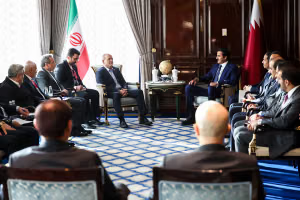
The diplomatic contacts come as regional mediators led by Qatar seek an agreement to prevent further military action, while US and Israeli officials prepare for possible strikes after the November 3 elections.
Vance seeks discussions on Iran's nuclear program
Vance's letter to Rezaei stressed that any negotiations aimed at preventing further US military strikes would require discussions on Iran's nuclear program, Axios reported, citing a US official.
The official said Vance had proposed contacting Rezaei, who has direct access to Iran's Supreme Leader Mojtaba Khamenei, and that Trump had supported the initiative.
"The President was enthusiastic about the letter," the official told Axios.
The Wall Street Journal reported that the outreach focused on exploring a possible framework for renewed negotiations rather than presenting a detailed peace proposal.
According to the newspaper, Vance had previously expressed reservations in private about prolonging the war, which began in February, while publicly supporting the US military campaign.
The vice president previously led US negotiations with Iranian representatives, but those efforts did not produce a lasting agreement.
A central issue remains Washington's demand for nuclear concessions before economic relief, while Tehran wants the US to lift its naval blockade, release frozen Iranian funds and allow oil exports before negotiations move forward.
Regional mediators led by Qatar, with support from Pakistan, Saudi Arabia, Egypt and Turkey, are working to restart negotiations between Washington and Tehran, according to Axios.
Qatari negotiator Ali al-Thawadi visited Tehran earlier this week to discuss possible terms for an agreement with the Trump administration.
One proposal under discussion would allow inspectors from the International Atomic Energy Agency (IAEA) to visit Iranian nuclear facilities damaged during US and Israeli attacks in exchange for limited sanctions relief.
The arrangement could include waivers allowing Iran to export oil and the release of some frozen funds to purchase food and other humanitarian supplies, Axios reported, citing a regional source familiar with the discussions.
The proposals seek to address differences between Washington's demand that Iran give up its enriched uranium stockpile and Tehran's insistence that the US first ease economic restrictions.
"There is some movement. We are waiting for the Iranian response," the regional source told Axios.
The source said the proposed arrangement could allow Iran to retain its enriched uranium initially while Washington secured steps toward renewed nuclear oversight.
Trump confirmed to Axios on Wednesday that negotiations were taking place through mediators but said their outcome remained uncertain.
"We need to finish the job — either through a deal or another way — we will find out if negotiations can succeed," Trump said.
Qatari mediators also presented Iran with ideas for a seven-day process to address concerns on both sides, Reuters reported on Wednesday, citing an official briefed on the negotiations.
According to the official, the draft calls for daily confidence-building measures from each side, with the process potentially beginning early next week.
Several countries would serve as guarantors of the agreement, the official said, adding that Iran was expected to respond by the end of the week.
However, a senior Iranian official told Reuters that Qatar had not presented a formal peace proposal but had instead put forward ideas Tehran considered unacceptable.
The official said Iran would show no flexibility on the nuclear issue.
Another option under discussion involves reviving a September 2025 agreement between Iran and the IAEA in Cairo that provided a framework for inspections of Iranian nuclear facilities.
The agreement was suspended after the UN Security Council reimposed sanctions on Iran the following month.
IAEA Director General Rafael Grossi told the UN Security Council on Tuesday that reviving the Cairo agreement could provide a basis for restoring inspections at facilities damaged during the war.
US and Israel prepare for possible week-long military operation
US and Israeli officials are preparing for possible renewed military action against Iran after the November 3 midterm elections, according to reports by Axios and the Wall Street Journal.
Axios reported, citing US and Israeli officials, that a potential military operation could involve a week of extensive strikes against Iranian leadership, energy infrastructure, nuclear facilities and other targets.
Israeli military chief Eyal Zamir spoke with US Central Command chief Admiral Brad Cooper on Monday to coordinate preparations for possible attacks, the report said.
The Wall Street Journal separately reported that Washington had warned several Persian Gulf countries to prepare for a possible short, intense military campaign following the elections.
The US military has been strengthening regional missile defenses, relocating personnel from vulnerable bases and replenishing munitions, according to the newspaper.
Additional naval and air forces are also being prepared for possible operations.
Trump has not made a final decision on further military action, the reports said.
Saudi officials have urged Washington to allow more time for negotiations before deciding on further strikes, Axios reported, citing a US official.
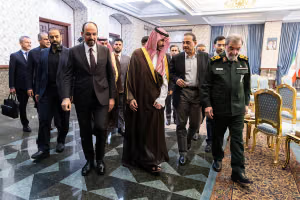
Saudi, Turkish and Pakistani security officials also discussed the situation during recent meetings in Tehran, according to the report.
Players from Persepolis (red) and Esteghlal (blue) compete during the first-ever women's soccer derby between the two clubs at Shahr-e Qods Stadium, west of Tehran, October 28, 2026.
Iran's two biggest soccer rivals met in their first women's derby on Wednesday, a historic occasion overshadowed by restrictions on male spectators and journalists and uncertainty over live television coverage.
Persepolis defeated Esteghlal 2-1 at Shahr-e Qods Stadium west of Tehran, marking the first-ever meeting between the women's teams of two clubs whose rivalry has dominated Iranian men's soccer for decades.
Fatemeh Rezaei and Somayeh Esmaeili scored for Persepolis in the first half before Niloufar Azimi pulled one back for Esteghlal after the break.
Female spectators were eventually allowed to attend following days of uncertainty and intervention by government officials. Men, however, remained barred from women's soccer matches under restrictions that also extended to journalists, photographers and technical personnel.
Persepolis players pose during their historic women's soccer derby against Esteghlal, which they won 2-1, west of Tehran, October 28, 2026.
Prosecutor threatens legal action
Tehran prosecutor Ali Salehi on Tuesday sent separate letters to Sports Minister Ahmad Donyamali and Iranian Football Federation President Mehdi Taj demanding that men be barred from women's soccer matches.
The restrictions covered male spectators, journalists, photographers, camera operators, security personnel and event staff. Salehi warned that prosecutors would take legal action if they were violated.
The warning followed reports of female spectators attending women's league matches without the headscarves required under Iran's mandatory hijab laws, as well as men being present at the games.
Prosecutors described the incidents as violations of Islamic regulations and public decency.
The Iranian Football League Organization had already issued a directive prohibiting men from attending women's soccer matches, including male media workers and club executives.
Farideh Shojaei, the Football Federation's vice president for women's affairs, confirmed ahead of the derby that men would not be permitted to attend.
The restrictions also raised practical questions about organizing the match, particularly the use of video assistant referee (VAR) technology, which relies on technical personnel and match officials.
The league had previously called for a male official to be removed from the VAR team for the derby, adding to uncertainty over how the technology would be operated.
The dispute over attendance came after a series of changes to the arrangements for the historic fixture.
Originally scheduled for Friday, October 23, at Kazemi Stadium, the home ground of Persepolis' women's team, the match was moved to Wednesday, October 28, at Shahr-e Qods Stadium.
The league organization cited anticipated demand from supporters and the need for better facilities, although the change also shifted the match from Iran's weekly day off to a working day.
Ticket sales were suspended twice in the days leading up to the game, while the final decision on whether female spectators could attend was referred to the Tehran Provincial Security Council.
At one point, there were concerns that the encounter could take place behind closed doors despite the anticipated interest from supporters.
Women were eventually permitted to attend following discussions involving Vice President for Women and Family Affairs Zahra Behrouz-Azar and Sports Ministry officials.
Government spokesperson Fatemeh Mohajerani also attended the match, according to Iranian media reports.
Government spokesperson Fatemeh Mohajerani also attended the match, according to Iranian media reports.
Persepolis (red) and Esteghlal (blue) players compete during their first-ever women's soccer derby west of Tehran, October 28, 2026.
Women's soccer struggles for television exposure
The restrictions extended beyond stadium access, raising questions about how widely the first women's derby would be seen.
Iran's state broadcaster, IRIB, had announced no plans to televise the match, while reports ahead of the game indicated restrictions on broadcasts through the two clubs' own platforms.
The uncertainty contrasted with the men's Esteghlal-Persepolis derby, one of Iran's biggest sporting events, which regularly attracts large television audiences.
For the women's teams, limited broadcasting and media access also restrict opportunities to build a following, attract commercial sponsors and gain wider public recognition.
Female soccer players in Iran are required to wear mandatory hijab while competing and have long faced unequal access to sporting facilities and limited media exposure.
The first meeting between the women's teams of Esteghlal and Persepolis offered an opportunity to showcase their talents to a national audience. Instead, much of the attention ahead of the match centered on restrictions over who could attend, photograph or broadcast it.
A different picture elsewhere in the region
The restrictions surrounding Iran's first women's derby contrast with similar fixtures involving major soccer clubs elsewhere in the region, where women's competitions have attracted television coverage, government support and spectators of both sexes.
In December 2021, Turkish rivals Fenerbahce and Galatasaray held their first women's derby as a friendly match at Istanbul's Nef Stadium.
Organized as part of a campaign against violence toward women, the match was attended by male and female supporters, broadcast on national television and watched by Turkey's justice and family ministers.
Then-Justice Minister Abdulhamit Gul said afterward: "Whatever the result, women are the winners."
Saudi Arabia staged its first women's Jeddah derby between Al-Ittihad and Al-Ahli in October 2022, during the opening week of the country's Women's Premier League.
The match took place at King Abdullah Stadium, with spectators attending without gender restrictions.
Saudi women's soccer subsequently secured wider television exposure. Beginning with the 2023-2024 season, Women's Premier League matches were broadcast domestically on SSC sports channels and internationally through streaming platform DAZN outside the Middle East and North Africa.
Alia Al-Rasheed, head of women's soccer at the Saudi Football Federation, described the agreement as an opportunity to attract new audiences and inspire future generations of female players.
While Turkey and Saudi Arabia have expanded opportunities for women's soccer, Iranian female athletes continue to face mandatory hijab requirements, unequal facilities and restrictions on media exposure.
For Iran's women footballers, the first derby between the country's two biggest clubs was a milestone. But the restrictions surrounding it showed how far the women's game remains from enjoying the visibility routinely afforded to its male counterpart.
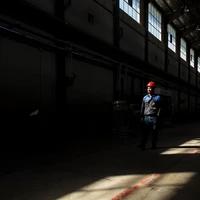
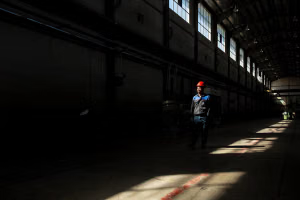
A worker stands inside a production facility at JEMCO, one of Iran’s largest electric motor manufacturers, October 19, 2026
Iran could face an economic contraction comparable in scale to the Great Depression in the United States, economists say, as the loss of oil revenue and wartime disruption threaten to drive an ailing economy into a deeper crisis.
Their assessments follow a prediction by US Treasury Secretary Scott Bessent, who told Iran International that Iran's economy would shrink by more than 25% between March 2026 and March 2027.
Iranian-American economist Ali Dadpay told Iran International that he found Bessent's forecast plausible, particularly as Tehran attempts to finance wartime spending by expanding the money supply.
That risks accelerating inflation and weakening the rial further, he said, creating a cycle of rising prices, falling purchasing power and declining economic activity.
Mohamad Machine-Chian, an Iran International economist, offered a stark comparison.
"The United States lost about 26% of its output in the Great Depression, over four years, from 1929 to 1933. Secretary Bessent is describing a loss of Great Depression size in twelve months," Machine-Chian said.
Iran's economy contracted by 21.6% in 1980, the first year of the Iran-Iraq War, World Bank data shows.
How much worse could it get?
Even the severe sanctions of 2018 and 2019 produced a smaller cumulative contraction of approximately 12%, despite oil exports plunging from about 2.7 million barrels per day to roughly 650,000.
Economic output was already approximately 10% lower in spring 2026 than a year earlier, according to figures from Iran's Statistical Center.
For the economy to contract by more than 25% over the full year, the decline would have to accelerate considerably.
Machine-Chian estimated that even with an 8% contraction over the summer, output would have to fall far more sharply during autumn and winter for the annual decline to approach Bessent's forecast.
The disruption of oil exports is central to that outlook. Energy intelligence firm Kpler reported no new Iranian crude loadings since late August, while revenue from earlier shipments is running out.
But the damage extends beyond the oil industry. Factories depend on imported materials, transportation companies require replacement parts, and businesses need financing to sustain operations.
As supplies and revenue dwindle, manufacturing, construction and other industries face further disruption.
The cost for ordinary Iranians
The economic deterioration is already visible in the price of everyday necessities.
Food prices in September were more than double their level a year earlier, according to Iran's Statistical Center. Eggs cost three and a half times as much, rice nearly twice as much, and official bread prices in Tehran have doubled.
“The minimum wage increased 60% this year while inflation approached 90%,” Machine-Chian said. “In dollar terms, a minimum-wage worker now earns approximately $61 a month, compared with $96 a year earlier.”
He also warned about savings being eroded. With the dollar costing two and a half times as much as a year ago, money held in rials has lost approximately 60% of its value against the US currency.
Further disruption to imports could bring shortages of medicines, industrial materials and vehicle parts, potentially forcing factories to reduce production or close and putting more jobs at risk.
Dadpay described a possible future resembling aspects of the economic crises in Venezuela and Zimbabwe, where severe currency depreciation and inflation pushed people toward dollars, gold, secondhand markets and barter.
As production declines and essential goods become harder to obtain, even those who remain employed could struggle to afford basic necessities.
Sanctions policy analyst Max Meizlish expects pension payments and civilian services to come under pressure as revenues decline, while military and security personnel could continue receiving salaries.
That could allow the Islamic Republic to preserve institutions central to its political survival even as living standards deteriorate.
Political consequences
Economic devastation does not necessarily translate into political collapse, particularly if Tehran can preserve its security institutions and access to financial channels abroad.
Washington has not fully targeted the Chinese financial institutions facilitating Iranian transactions, partly because of concerns about wider economic consequences, Meizlish said.
"It's just not clear that this level of economic constraint on its own will be enough to produce some sort of measurable political change," he said.
Dadpay argued that years of economic mismanagement and decisions prioritizing the survival of the political system had left Iran particularly vulnerable to the current crisis.
"As long as Islamic Republic is in place with this mindset, with this dynamic of decision-making, this is what's going to happen," he said.
For ordinary Iranians, the consequences are already evident in collapsing purchasing power, dwindling savings and rising prices.
Whether Bessent's forecast proves accurate or not, the economic damage could outlast the confrontation that has accelerated it.
A woman takes part in a fitness demonstration as spectators watch and applaud at the Fitex sports exhibition in Tehran, October 2026. (Social media)
Iranian authorities have arrested a female fitness blogger after videos showing women exercising without hijab at a Tehran sports exhibition sparked criticism from hardline media.
The judiciary's Mizan news agency said the woman was arrested on charges including propaganda against the state and offending public sentiment by publishing photographs and videos from the Fitex exhibition.
An arrest warrant was also issued for another person involved in planning the exhibition, Mizan said, without identifying either individual or specifying which images or videos prompted the action.
The fifth edition of Fitex, a fitness and sports equipment exhibition, was held from October 21 to 23 at Goftogoo Park in western Tehran.
Photographs and videos circulated on social media showed female athletes performing fitness routines and acrobatic movements, some without headscarves and others exercising to music.
Under Iran's mandatory hijab laws, women are required to cover their hair in public, including at sporting and cultural events.
The footage prompted criticism from hardline media outlets and supporters of the Islamic Republic, some of whom demanded judicial action against the organizers.
A man performs push-ups as spectators and young boxers watch during a fitness demonstration at the Fitex sports exhibition in Tehran, October 2026. (Social media)
Hardline media demand action
The IRGC-affiliated Tasnim news agency criticized what it called "widespread violations of social norms" at the exhibition on October 25 and urged sports authorities and other institutions to intervene.
The Student News Network, affiliated with the student branch of the Basij militia, quoted one of its reporters as saying anyone viewing the images would experience "secondhand embarrassment."
As criticism intensified, Iran's Sports Ministry issued a statement on October 25 distancing itself from the event, saying neither the ministry nor Tehran's provincial sports authorities had organized the exhibition or granted it a permit.
Tehran prosecutors subsequently opened a criminal case against the organizers and others involved, citing alleged violations of legal and Islamic regulations, and summoned them for questioning.
Mizan said online pages associated with Fitex had been blocked as part of the proceedings and that investigations were continuing.
Restrictions extend to art exhibitions
The action against Fitex comes amid wider pressure on cultural activities and women's public appearance in Iran.
On October 26, Tehran prosecutors initiated legal proceedings against the organizers of Art Fair Tehran, also citing alleged failures to comply with legal and Islamic regulations.
Organizers were summoned to the prosecutor's office, while the exhibition's ticketing website and the organizer's social media account were blocked.
Earlier this month, the US-based Center for Human Rights in Iran said authorities were intensifying their crackdown on artists, writers, musicians and other cultural figures as part of a broader campaign to silence dissent and intimidate communities.
The rights group cited a source in Iran who linked the arrests of cultural activists to authorities' fears of renewed protests, particularly in economically disadvantaged areas amid worsening living conditions.