• العربية
  • فارسی
BrandBrand
  • Iran Insight
  • Politics
  • Economy
  • Analysis
  • Special Report
  • Opinion
  • Podcast
  • Live TV
  • Iran Insight
  • Politics
  • Economy
  • Analysis
  • Special Report
  • Opinion
  • Podcast
  • Live TV
  • Theme
  • Language
    • العربية
    • فارسی
  • Iran Insight
  • Politics
  • Economy
  • Analysis
  • Special Report
  • Opinion
  • Podcast
  • Live TV
All rights reserved for Volant Media UK Limited
volant media logo

Iran hardliners split over role of mediators in US tensions

Oct 20, 2026, 23:39 GMT+1
Iranian President Masoud Pezeshkian meets with chief of Defence Forces of Pakistan, Field Marshal Asim Munir, in Tehran, Iran, August 24, 2026.

Renewed efforts to avert another war with the United States drew conflicting responses in Tehran, with hardliners questioning mediators’ motives while officials defended keeping diplomatic channels open.

The contrasting positions were reflected in Sedaye Iran (Voice of Iran), the internet daily of Iran’s supreme leader. Discussing Pakistani army chief Asim Munir's latest visit to Tehran, it praised Pakistan's relations with Iran and Oman's longstanding role in mediating with Washington.

Yet the publication said that although the mediators' efforts were appreciated, there were “serious and profound doubts” about their effectiveness because “the United States is not seeking an agreement.”

The daily accused Washington of combining negotiations with military threats and argued that intermediaries must persuade President Donald Trump to abandon what it called unrealistic demands.

100%
The front page of Sedaye Iran (Voice of Iran), an online publication of the office of Supreme Leader Mojtaba Khamenei, features an article titled “What's Holding Up Mediation?” about efforts to revive US-Iran negotiations, October 2026.

Hardliners question mediators' motives

Others were far less welcoming. Conservative commentator Ali Gholhaki portrayed visits to Tehran this week by Russian Foreign Minister Sergei Lavrov and Pakistan's General Munir as diplomatic failures. In posts on X Tuesday, he pointed to Tehran's public refusal to send any enriched uranium abroad, which he presented as evidence that Russia's proposed nuclear arrangement had failed.
Gholhaki said Tehran’s reiteration of the same position during Munir’s visit meant both men had “returned empty-handed.”

Ebrahim Rezaei, a member of parliament's National Security and Foreign Policy Committee, went even further, accusing an unnamed mediator of blaming Iran for the recent war, keeping Iranian assets frozen and participating in Washington's economic pressure campaign against Tehran.

Such a mediator was “part of the enemy's hybrid warfare machine,” he wrote on X as Munir visited Tehran. Rezaei did not explicitly identify the country or person he meant.

Suspicion also extended to the timing of the visits. The Revolutionary Guards-affiliated Fars news agency cited an unnamed source linking Munir's hastily arranged trip to a rise in oil prices to around $110 a barrel. It said past mediation announcements had helped lower prices without producing significant negotiating progress for Tehran.

In a separate report, the Iranian news agency IMNA questioned whether mediators were appearing whenever higher oil prices increased pressure on Washington, potentially weakening Tehran's economic leverage by raising hopes of negotiations.

Officials defend continued diplomacy

Iranian officials, however, defended continued diplomacy. Foreign Ministry spokesman Esmail Baghaei called Pakistan an important partner and said diplomatic efforts should continue wherever they could prevent escalation. Abandoning diplomacy, he said, would leave the ministry open to criticism for failing to pursue available options.

Munir met senior Iranian officials Tuesday, including Parliament Speaker Mohammad Bagher Ghalibaf and Supreme National Security Council Secretary Mohsen Rezaei. They repeated Tehran's conditions for new talks, including refusing to transfer enriched nuclear material abroad.

Sedaye Iran ended its editorial by again calling for mediation despite its doubts about the prospects for an agreement. The publication urged intermediaries to convince Washington to change course. Iran had already shown perhaps more flexibility than necessary, it said, before concluding about the negotiations: “It is not easy, but there is no other way.”

Most Viewed

Iran threatens stronger response to new US attack as Lavrov visits Tehran
1

Iran threatens stronger response to new US attack as Lavrov visits Tehran

2

Russia vows continued Iran ties as Trump welcomes limits on support

3
VOICES FROM IRAN

Iranians report mass security warnings over social media activity

4
ANALYSIS

Iran deal remains elusive amid risk of renewed strikes

5
VOICES FROM IRAN

Soaring medical costs and staff shortages strain Iran’s hospitals

Spotlight

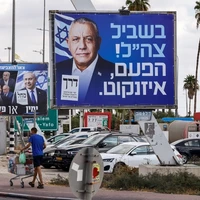
  • Iran in Israeli election: Netanyahu all-in on regime change, rivals want more
    INSIGHT

    Iran in Israeli election: Netanyahu all-in on regime change, rivals want more

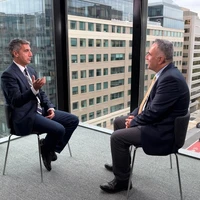
  • Saudi Arabia should join US-led push for change in Iran, analyst says
    ONE-ON-ONE

    Saudi Arabia should join US-led push for change in Iran, analyst says

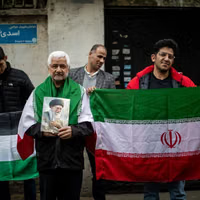
  • Ex-president's remarks expose divide over costs of Iran’s Palestine policy

    Ex-president's remarks expose divide over costs of Iran’s Palestine policy

  • Teenager killed by gunshot to eye after arrest in Iran, source says

    Teenager killed by gunshot to eye after arrest in Iran, source says

  • Soaring medical costs and staff shortages strain Iran’s hospitals
    VOICES FROM IRAN

    Soaring medical costs and staff shortages strain Iran’s hospitals

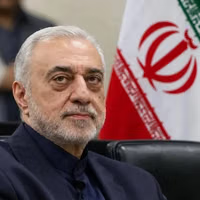
  • Architect of Guards' missiles becomes Iran's defense minister

    Architect of Guards' missiles becomes Iran's defense minister

Banner
Banner
Banner
Banner
Banner
•
•
•

More Stories

Iran’s threats ring out from parliament struggling to meet or connect

Oct 20, 2026, 03:28 GMT+1
•
Maryam Sinaiee
100%
Iranian lawmakers attend a virtual parliamentary session, October 18, 2026. (ISNA)

Iran’s new defense minister threatened the US and Israel during a parliamentary session held online over fears of attack, but even the virtual meeting faltered when poor internet connections prevented 25 lawmakers from voting on his appointment.

Mehrdad Akhlaghi was elected defense minister on Sunday with 237 votes in favor and 15 against. Alireza Salimi, a member of parliament’s presiding board, said 277 lawmakers attended the virtual session but 25 were unable to register their votes because of internet connectivity problems.

Akhlaghi issued his warning during the same session, saying another US or Israeli “miscalculation” would trigger Iran’s response.

Parliament has relied heavily on remote sessions during the war, after lawmakers amended its internal rules in July to allow virtual plenary meetings during emergencies.

Iranian media have also raised questions about attendance and voting participation during virtual sessions. At one virtual session on July 28, held to examine the International Crime Countermeasures Bill, 50 lawmakers were absent. Of the 240 lawmakers present, 37 did not participate in the vote.

No explanation was given for why the 37 lawmakers did not vote.

Hardline lawmaker Meysam Zohourian has also criticized the pace of parliamentary work. He said online sessions were being held no more than twice a week and warned that, at the current pace, approving the so-called “Infiltration Bill,” which lawmakers are examining, could take a year.

Political dispute over remote sessions

Restrictions on in-person sessions have intensified a dispute between parliament Speaker Mohammad-Bagher Ghalibaf and his hardline opponents, including members of the Paydari Front and allies such as the Masaf group.

Some of Ghalibaf’s hardline critics have accused him of supporting restrictions on in-person sessions to reduce his exposure to possible US or Israeli attacks and to shield President Masoud Pezeshkian’s government, including Foreign Minister Abbas Araghchi, from parliamentary pressure.

Hamid Rasaei, a hardline Tehran lawmaker who was sentenced to prison on charges of defaming Ghalibaf and recently began serving his sentence, has been among the most vocal opponents of holding parliamentary sessions online.

Another hardline lawmaker, Mojtaba Zolnouri, recently said 117 lawmakers had signed a letter calling for a return to in-person parliamentary activity. According to Zolnouri, the signatories argued there was no longer any reason to hold meetings remotely.

Media outlets supportive of Ghalibaf and his political allies have strongly rejected the accusations.

On October 11, Iman Shamsaei, head of parliament’s communications center, rejected claims that restrictions on in-person plenary sessions were intended to protect Ghalibaf’s life. Instead, he argued, it was necessary to prevent parliament from losing its quorum.

Shamsaei argued that if the number of representatives fell below the constitutional two-thirds quorum, parliament would be unable to carry out its legislative and oversight functions and new elections could become necessary.

Criticism spreads on social media

The dispute has also played out on social media, particularly among hardline supporters of the Paydari Front and Ghalibaf’s political allies.

On Sunday, hardline journalist Fereshteh Sadeghi criticized the claim that parliament remained operational because some meetings were being held online.

“Parliament is closed. The fact that its committees have held meetings here and there, or that online sessions have been arranged — with many lawmakers unable to connect — does not mean parliament is open,” she wrote on X.

Reformist journalist Davoud Heshmati focused on the internet problems that prevented lawmakers from voting.

“This is no joke. Twenty-five lawmakers did not have a decent internet connection to carry out their parliamentary duties and participate in an important vote to elect the defense minister. This is a clear and real example of the situation we live in,” he wrote.

Other users defended the continuation of remote sessions, arguing that some hardline lawmakers were pushing for a return to in-person meetings because in-person sessions provided them with a platform to obstruct the government.

Questions over parliament’s public legitimacy

The controversy comes amid broader questions about the parliament’s standing with the public.

Turnout in Iran’s 2024 parliamentary elections fell to a record low for the Islamic Republic, with participation particularly weak in Tehran, where only 24% of eligible voters cast ballots.

Despite the dispute over whether parliament is functioning effectively, lawmakers have continued to advance controversial legislation during the war, including the so-called Infiltration Bill.

The dispute underscores a broader contradiction: critics say remote sessions have impaired parliament’s ability to function effectively, even as lawmakers continue advancing legislation that could impose further restrictions on Iranian society.

Iran deal remains elusive amid risk of renewed strikes

Oct 20, 2026, 01:00 GMT+1
•
Negar Mojtahedi
100%
FILE PHOTO: U.S. President Donald Trump points his finger towards Israeli Prime Minister Benjamin Netanyahu as they shake hands during a press conference after meeting at Trump’s Mar-a-Lago club in Palm Beach, Florida, U.S., December 29, 2025. REUTERS/Jonathan Ernst/File Photo

Washington and Tehran may still reach a limited deal, but fundamental disagreements leave open the prospect of renewed escalation, analysts told Iran International, with the period after elections in Israel and the United States emerging as a potential turning point.

Diplomatic efforts are continuing, with Qatar and Pakistan pushing for an agreement and The New Arab reporting Monday, citing sources familiar with mediation efforts, that a breakthrough could be announced this week.

The analysts interviewed by Iran International were more cautious, however, seeing little evidence that either side has made the concessions required for a broader agreement and identifying the coming elections as a factor that could shape the timing of diplomacy or renewed military action.

Danny Citrinowicz, an Iran specialist and former head of the Iran branch in Israeli Defense Intelligence, said continuing diplomatic exchanges did not amount to evidence of an imminent breakthrough because neither side appeared ready to make the compromise required for one.

"In order to have a breakthrough, one side needs to show significant compromise. And I don't see that in the Iranian side," he told Iran International.

Washington wants substantial restrictions on Iran's uranium enrichment capabilities, while Tehran is prioritizing relief from the US blockade and sanctions, alongside the restoration of maritime traffic through the Strait of Hormuz.

Iranian Foreign Minister Abbas Araghchi said Sunday that Tehran's seven-day proposal remained on the table. Under the proposal, Iran would reopen the strait within seven days if Washington accepted Tehran's conditions, paving the way for renewed negotiations.

Alex Vatanka, director of the Iran Program at the Middle East Institute, saw greater scope for a limited arrangement than a comprehensive settlement, arguing that both Trump and Tehran have short-term incentives to reduce tensions without resolving their fundamental differences.

Trump, he argued, faces political pressure ahead of the November 3 midterm elections and could benefit from a diplomatic achievement. Tehran, meanwhile, needs economic relief as the blockade continues to undermine its finances.

"You might have a deal that could create ceasefire conditions for a short period of time, of weeks and months," Vatanka told Iran International.

But he said he had seen little indication that Tehran was willing to accept the kind of comprehensive agreement Trump could present as a major improvement over the 2015 nuclear deal.

Iran's leadership, Vatanka argued, believes it has paid a heavy price for its nuclear program while demonstrating its ability to disrupt the global economy through the Strait of Hormuz. Economic pressures could encourage a narrow agreement, but sweeping concessions risk exposing divisions within the Islamic Republic's leadership.

A deal under the threat of force

The diplomatic activity comes as US President Donald Trump and Israeli Prime Minister Benjamin Netanyahu have intensified warnings of renewed military action.

On Sunday, Trump threatened to "soon finish the job" against Iran unless Tehran changed course, while giving Netanyahu his endorsement ahead of Israel's October 27 election.

Netanyahu, who has explicitly identified the removal of the Islamic Republic as an Israeli objective, has said Israel is prepared to act independently of Washington if necessary.

On Monday, Netanyahu released a video of a telephone conversation with Trump following the US president's endorsement of his reelection campaign.

"Donald, we have a job to finish, you said it, and we'll finish it together. We'll finish it, and no one else will do it," Netanyahu told Trump.

Shayan Samii, a geopolitical and national security analyst, said Trump's combination of negotiations and military threats allowed him to preserve both outcomes: claiming a diplomatic victory if talks succeed or demonstrating resolve through military action if they fail.

"The United States wants to keep the diplomatic avenue still open and valid. Why? Because it helps for domestic political purposes," Samii told Iran International.

"It allows Trump to say, I'm giving diplomacy all the chances in the world, but at the same time I'm keeping the pressure on them."

He also interpreted Trump's endorsement of Netanyahu as an attempt to increase Washington's leverage over the Israeli leader should he remain in power.

Samii suggested Iran or its regional allies could provoke a confrontation ahead of Israel's election, potentially providing a pretext for renewed strikes. He presented this as a possible scenario, not evidence of a planned operation.

Russia could influence the diplomatic track

Russian Foreign Minister Sergei Lavrov's visit to Tehran on Monday added another dimension to the diplomatic maneuvering.

Vatanka said Russia possesses considerably greater leverage over Iran than mediators such as Pakistan, Qatar or Oman, partly because Tehran depends on Moscow for diplomatic support.

That influence could become significant if negotiations require difficult concessions, including a possible arrangement to transfer Iran's highly enriched uranium to Russia.

But Vatanka questioned whether Moscow's interests necessarily aligned with Tehran's.

Russia would mediate "primarily to use it to get what Putin wants from Trump on the Ukraine front," he said.

Vatanka suggested Moscow could seek concessions from Washington over Ukraine in exchange for helping facilitate an agreement with Iran.

Tehran, however, may resist being used as a bargaining chip, particularly if Russian pressure requires abandoning positions the Islamic Republic considers fundamental.

Why the post-election period could prove decisive

If diplomacy fails to produce a breakthrough, Citrinowicz sees renewed escalation as increasingly difficult to avoid — but the elections may affect when it happens.

"With no breakthroughs, escalation is inevitable, because the status quo is unstable," he said.

He cautioned, however, that inevitable did not necessarily mean imminent.

The upcoming elections could influence the timing of any military operation. Israelis vote on October 27, followed by the US midterms on November 3.

Citrinowicz identified the period after the November 3 US midterms but before the newly elected Congress takes office in January as a possible window for military action, particularly if Republicans lose control of one or both chambers.

Vatanka similarly identified the post-election period as a potential turning point, arguing that Washington and Israel could consider additional pressure against Tehran once immediate electoral calculations had passed.

He said options could include continued enforcement of the blockade, limited military strikes and other measures designed to weaken or divide the Iranian establishment.

Yet the prospect of renewed military action raises a deeper question: whether Trump and Netanyahu ultimately seek the same outcome.

Citrinowicz argued that while the two leaders might agree on military targets, their strategic objectives could diverge.

"Netanyahu seeks to topple the regime, and Trump seeks to reach a good agreement with the same regime that Netanyahu seeks to topple," he said.

"Operationally, maybe there will be eye to eye in terms of what to attack, but strategically, I'm not sure if they see eye to eye."

That divergence leaves a central question unresolved: even if Washington and Israel agree on another round of strikes, they may not agree on what those strikes are ultimately meant to achieve.

Ex-president's remarks expose divide over costs of Iran’s Palestine policy

Oct 19, 2026, 20:44 GMT+1
•
Maryam Sinaiee
100%
Photo by ISNA shows Islamic Republic loyalists gathering outside Spain’s embassy in Tehran on March 28, 2026, at a rally to thank Spain’s government and people for what participants described as support for the Islamic Republic and the Palestinian cause.

Former President Mohammad Khatami’s criticism of the costs of Iran’s intervention in Palestinian affairs has fueled debate over Tehran’s policy, with hardliners defending its role and some opponents of the Islamic Republic questioning the motives behind his remarks.

The disagreement goes beyond whether Iran should support Palestinians. It concerns who decides the extent of that support, what costs Iranians should bear and whether a change in rhetoric would translate into a different foreign policy.

In remarks circulated from an October 13 meeting of the Baran Foundation in Tehran, Khatami who is considered the leader of Iran’s Reform Front said the Islamic Republic’s intervention in Palestinian affairs had imposed heavy costs on its people and that he disagreed with the policy.

He challenged Israel’s legitimacy while drawing a distinction between moral support for Palestinians and intervening in their affairs or making decisions on their behalf.

Part of his speech recalled an exchange during a visit to the United States in 2006, when he said he had argued that Palestinians should determine their own future and that Iran should not put itself in their place.

That distinction drew criticism from different directions. Hardliners portrayed support for Palestinians as a religious, legal and security obligation. Some opponents of the Islamic Republic questioned whether Khatami’s remarks reflected a meaningful policy rethink or an effort to preserve the political system through a more conciliatory approach.

Hardliners defend Iran’s role

Javan, a newspaper affiliated with the Revolutionary Guards, rejected Khatami’s argument in an October 15 article titled “Mr. Khatami! Defending Palestine Is Islamic and Moral, as Well as Legal.”

The newspaper argued that Iran’s support rested on religious and legal grounds as well as moral ones, citing Ali Khamenei’s declaration in 2022 that Tehran would defend Palestinians “in any way we can.”

It accused Khatami of reducing the issue to a moral responsibility and denying a legal basis for intervention. Iran, other countries and international organizations were obliged to defend Palestinian self-determination, the newspaper argued.

Javan also framed his remarks against the backdrop of what it called a war imposed by the United States and Israel on Iran and the “Axis of Resistance,” Tehran’s network of regional allies.

“Khatami is aware of all these obvious facts, probably deliberately refrains from mentioning them, and, worse still, distorts reality against Iran’s national interests,” it said.

Some pro-establishment social media users made a security argument, saying Iran could not separate its own interests from the Palestinian issue.

“Let us even disregard our human and religious duty,” an X user named Hossein Harandi wrote, before asking: “But what about our own security? Can we disregard that?”

A shift in emphasis, with a longer history

Khatami’s remarks place greater emphasis on the costs to Iranians, though his argument that Palestinians should decide their own future has precedents in his earlier statements.

During his presidency from 1997 to 2005, he defended the Palestinian intifada as a legitimate struggle against repression and called for a boycott of Israel, the return of Palestinian refugees and an independent Palestinian state with Jerusalem as its capital.

In a 2006 Financial Times interview, he said Iran would accept a Palestinian state alongside Israel if the elected Hamas government freely accepted that outcome. He also said Hamas’s rights as an elected government had to be respected.

His support for Palestinian self-determination has coexisted with praise for armed action against Israel.

Following the Hamas-led October 7, 2023, terrorist attack, Khatami described it as “a great achievement for the Palestinian people after 70 years,” attributing it to decades of humiliation, repression and oppression.

He also accused Western countries of unconditional support for Israel and argued that the territory’s future should be determined by Palestinians, including Muslims, Christians and Jews, whether living there or displaced as refugees.

His latest remarks therefore raise a question about the extent of the change: whether he is challenging Iran’s underlying policy or drawing a sharper line between support for Palestinians and intervention on their behalf.

Opponents question reformists’ motives

Khatami’s criticism comes from within the Islamic Republic’s political establishment. Opposition to Tehran’s regional spending has long featured in anti-government protests as part of a broader challenge to the system itself.

“Neither Gaza nor Lebanon, my life for Iran,” a slogan that gained prominence during the 2009 Green Movement and returned during successive waves of unrest, expresses demands to prioritize Iranians over Tehran’s regional allies amid economic hardship.

For some opponents of the Islamic Republic, the question is whether reformists’ criticism reflects a policy rethink or an effort to preserve the system. They interpreted Khatami’s comments alongside former Foreign Minister Mohammad Javad Zarif’s recommendation that Iran abandon calls for revenge over the killing of Revolutionary Guards commander Ghasem Soleimani.

They suggested that reformists were trying to present themselves to US President Donald Trump as more acceptable negotiating partners, though the remarks themselves provide no evidence of a plan to replace Iran’s leadership.

Their broader criticism concerned whether reformists could change the relationship between the Islamic Republic’s foreign policy and the interests of its citizens.

One government opponent characterized Khatami’s position as an acknowledgment that Iran had paid a devastating price for its Palestine policy, without a willingness by those associated with the system to relinquish power.

Another described reformism as a means of preserving the Islamic Republic while giving it a more acceptable image abroad.

“The issue is not simply who governs,” the user wrote. “The issue is who, in the name of ‘rationality and negotiations,’ pays for the system’s survival at the expense of the people and by surrendering national interests.”

Other users welcomed Khatami’s distinction between supporting Palestinians and intervening in their affairs. One described his approach to the Palestinian issue as “very constructive and worthy of respect,” regardless of his other positions.

The debate also highlights the limits of reformist influence: President Masoud Pezeshkian’s administration, backed by reformists, has shown no willingness to change Iran’s Palestine policy.

Even if it were willing to do so, authority over Iran’s strategic direction rests with the supreme leader rather than the elected government.

Iran risks losing ground as East-West trade routes expand

Oct 17, 2026, 22:00 GMT+1
•
Dalga Khatinoglu
100%
File photo by NEQSOL Holding shows the installation of the Trans-Caspian Fiber-Optic Cable across the seabed of the Caspian Sea as part of the Digital Silk Way initiative.

Investment in trade routes linking Asia and Europe through Central Asia and the Caucasus is putting pressure on Iran’s ambitions to become a major transit hub, with neighboring countries developing transport and digital networks that bypass Iranian territory.

Among them is the Middle Corridor, a network of rail, road and sea links connecting China to Europe through Central Asia and the Caucasus while bypassing Iran.

The corridor is intended not only to connect Chinese and European markets. Countries along the route are also expanding trade among themselves, and the broader connectivity push extends beyond cargo to energy, information technology and data.

On October 15, the presidents of Azerbaijan and Kazakhstan inaugurated a 380-kilometer fiber-optic link across the Caspian seabed with a capacity of more than 400 terabits per second. Part of the Digital Silk Way initiative, the cable complements the Middle Corridor.

Beyond carrying data along the East-West axis, its backers say it will help attract investment in AI data centers, cloud services and high-tech industries.

In its latest report, the World Bank projects that, if the planned investments materialize, freight volumes across the Caspian could rise from 8.8 million tons in 2023 to 32.1 million tons in 2040.

The report also finds that developing the corridor could, in the long term, increase the combined GDP of host countries by about 3.3 percent, equivalent to approximately $58 billion at current levels of economic activity, and raise employment by 2.9 percent.

These gains depend on policy and operational reforms alongside construction. The World Bank identifies at least $25 billion in infrastructure investment needs through 2040, plus an estimated $30 billion for connecting infrastructure, logistics facilities and equipment.

One of the most contentious proposed links is the route through southern Armenia that would connect mainland Azerbaijan to its Nakhchivan exclave, known in Azerbaijan as the Zangezur corridor.

Under agreements reached since August 2025, the US-backed project is being developed as the Trump Route for International Peace and Prosperity, or TRIPP, with Armenia retaining sovereignty and jurisdiction over its territory.

Azerbaijan projects that the route could carry 15 million tons of freight annually. The section through Armenia is roughly 42 to 43 kilometers long.

After several years of fierce opposition to the proposed Zangezur corridor, Iran appears to be taking a more pragmatic approach to Armenia’s inclusion in East-West transport networks, although concerns over American involvement remain.

Iran’s ambassador in Yerevan expressed concern in September about an American presence near the border and proposed a mechanism to address Tehran’s concerns. On October 16, Armenian Foreign Minister Ararat Mirzoyan said Iran had asked about the possible deployment of US military forces on Armenian territory and that Yerevan had assured Tehran this would not happen. He said he believed the Iranian side was satisfied with Armenia’s answers.

The World Bank estimates that developing the Middle Corridor could increase Armenia’s GDP by 3.4 percent, equivalent to $873 million, and raise employment by 3.9 percent in the long term. Armenia, however, is not yet a transit country on the route; the report assumes a direct rail link through the country becomes operational in the early 2030s.

Iran’s transit ambitions face growing competition

Azerbaijan and Iran have also pursued an alternative connection between mainland Azerbaijan and Nakhchivan through Iranian territory, known as the Aras corridor.

That route could preserve a role for Iran in regional transit, but participation in one connecting segment would fall short of Tehran’s broader ambition to become a central hub for trade between Asia and Europe. Western sanctions also complicate efforts to attract European businesses to routes through Iran.

A comparison with Turkey, a key link between the Middle Corridor and European markets, is telling. The World Bank estimates that corridor development could increase Turkey’s GDP by more than $47 billion and employment by about 4.4 percent in the long term.

Iran also faces competition from other regional transport plans. Iraq, with participation from Qatar, the UAE and Turkey, is advancing the Development Road, intended to link the Grand Faw port to the Turkish border at an estimated cost of about $17 billion. Iraqi officials have projected annual revenues of roughly $4 billion, although the project’s returns depend on financing, completion and demand.

The proposed India-Middle East-Europe Economic Corridor and Syria’s Four Seas initiative, linking the Mediterranean, Persian Gulf, Black Sea and Caspian region, likewise reflect efforts to develop alternative networks. These projects remain at different stages of development, and their commercial success is not assured.

More than two decades after Iran, India and Russia agreed to establish the International North-South Transport Corridor, Tehran’s ambition to become a transit hub linking India with Russia and European markets remains only partly realized. Shipments have moved through Iran, but the existence of traffic alone does not demonstrate that the route has fulfilled its wider commercial promise.

Iran’s weak logistics performance adds to the challenge. In the World Bank’s 2023 Logistics Performance Index, it ranked 123rd with a score of 2.3 out of five. Geography gives Iran potential advantages, but converting them into sustained transit business requires reliable infrastructure, efficient border procedures and commercially viable international connections.

Tehran’s diplomatic paralysis leaves Iran caught between deal and escalation

Oct 17, 2026, 18:44 GMT+1
•
Behrouz Turani
100%
Participants take part in a state-organized Janfada mobilization event in Rasht, northern Iran, on October 15, 2026.

A growing number of former Iranian officials and political figures are calling for an agreement with the United States, while hardliners and military commanders continue to push for confrontation, exposing a deeper struggle over the direction of Tehran’s foreign policy.

Among the latest voices calling for a change of course are former President Hassan Rouhani, former Tehran mayor Gholamhossein Karbaschi and Hossein Marashi, secretary-general of the centrist Executives of Construction party.

Along with several other political figures, they have argued that Iran needs to reduce tensions with the United States and break its prolonged diplomatic impasse if it is to ease economic pressure and resume development.

Their interventions have come against a sharply different message from hardliners and military officials, who continue to frame resistance to Washington and Israel as essential to Iran’s security and warn against concessions under pressure.

The competing messages reflect a broader uncertainty at the heart of Iranian foreign policy: whether Tehran should use diplomacy to secure an exit from its confrontation with the United States or continue to raise the costs for its adversaries in the hope of extracting better terms.

The question has become more urgent after months of direct conflict with the United States, repeated warnings from Washington and Israel and several major waves of domestic unrest since 2018.

Those pressures have left the leadership increasingly sensitive to questions of public legitimacy while also making major diplomatic concessions politically dangerous. Any compromise with Washington risks being portrayed by rival factions as capitulation, giving decision-makers an incentive to postpone choices rather than assume responsibility for them.

Diplomacy without a clear destination

Hamid Aboutalebi, a former diplomat close to Rouhani, described that dilemma in an interview with Khabar Online this week, arguing that Iranian diplomacy has become caught between the urgency of immediate conflicts and the absence of a clearly defined long-term strategy.

The result, in his assessment, is a state of drift in which public expectations increasingly collide with geopolitical realities.

Aboutalebi’s criticism goes beyond whether Iran should or should not negotiate with Washington. He argues that Tehran has failed to clearly define the purpose, scope and desired outcome of diplomacy itself.

Without that clarity, he said, Iran cannot transform developments on the battlefield into political gains and is left “reacting to events rather than shaping them,” particularly in its confrontation with Israel and the United States.

That uncertainty is also visible in the government’s public messaging.

Many Iranians look to diplomacy primarily as a possible route toward economic relief and greater stability. Iranian officials, however, continue to alternate between warnings of further resistance and indications that negotiations remain possible.

The result is an expanding gap between what diplomacy is expected to deliver and what the government is prepared to commit to.

Aboutalebi argues that Iran must move beyond managing one crisis after another and instead define what it wants its foreign policy to achieve over the longer term.

That would require, in his view, deeper regional integration, a structured approach to the nuclear dispute and the development of economic partnerships capable of reducing Iran’s isolation.

The cost of suspended diplomacy

The argument is not new.

Tejarat-e Farda, one of Iran’s leading economic weeklies, has previously described the country’s approach as one of “suspended diplomacy” — a condition in which Tehran neither moves decisively toward confrontation nor commits itself to meaningful negotiations.

The magazine portrayed the consequences in unusually bleak terms, arguing that Iranians had come to recognize what it called the “tragic depth” of the country’s foreign-policy failures, producing not confidence or enthusiasm but “lethargy and despair.”

Writing in 2022, the publication argued that Iranian foreign policy had entered a prolonged state of strategic hesitation driven by domestic political caution, regional pressures and fear of diplomatic steps that might prove difficult to reverse.

The nuclear issue offered perhaps the clearest example.

Political analyst Fatemeh Mosayebi argued at the time that Tehran repeatedly signaled its willingness to engage in dialogue while avoiding concrete commitments, contributing to a cycle of hesitation in which neither Iran nor Western governments wanted to make the first major move.

Four years later, the circumstances are radically different, but the diagnosis retains much of its relevance.

Iran has moved from indirect regional confrontation to war with the United States, while the costs of economic pressure and military escalation have risen substantially. Yet the fundamental question identified in the earlier debate remains unresolved: what outcome is Iranian diplomacy actually intended to achieve?

Domestic rivalry further complicates the answer. Major foreign-policy decisions in Iran carry consequences not only for relations with Washington but also for the balance of power among competing political camps.

A failed compromise can be weaponized by hardliners, while escalation that imposes additional economic or military costs can become ammunition for their opponents.

That dynamic encourages delay. Tejarat-e Farda called it a “suspension of decision,” arguing that postponing difficult choices can ultimately “cost more than confrontation” by prolonging economic pressure without producing corresponding strategic gains.

The increasingly public calls for negotiations suggest that the price of that indecision is becoming harder to ignore.

Figures such as Aboutalebi and Marashi are not simply arguing for another round of talks. Their criticism raises a more fundamental question about whether Iran can continue simultaneously threatening escalation, signaling openness to diplomacy and postponing decisions about the compromises any agreement would ultimately require.

For now, Tehran continues to preserve both possibilities.

But the longer Iran remains caught between confrontation and compromise, the harder it becomes to present uncertainty itself as a strategy.