Iran hangs Iraqi man on Saudi spying charge he denied

Iran has executed a 28-year-old Iraqi man convicted of spying for Saudi Arabia, a charge he denied, according to the Oslo-based group Iran Human Rights.
Iran has executed a 28-year-old Iraqi man convicted of spying for Saudi Arabia, a charge he denied, according to the Oslo-based group Iran Human Rights.
Iran has executed a 28-year-old Iraqi man convicted of spying for Saudi Arabia, a charge he denied, according to the Oslo-based group Iran Human Rights.
Ayoub Mohammad Nabil, from Haditha in western Iraq, was hanged on Sunday morning at Lakan Prison in Rasht, the capital of Gilan province on the Caspian coast, the group said. Iranian officials and domestic media had not reported his sentence or his execution by the time it was announced.
Nabil had entered Iran legally on his passport and was working as a caretaker at a private villa when Intelligence Ministry agents arrested him in the nearby town of Fouman on August 26, 2025. He had no prior security record, Iran Human Rights said.
A source told the group he was held for about five months at the Intelligence Ministry’s detention center in Rasht, where he was subjected to severe psychological torture. He denied any link to Saudi Arabia or groups tied to it, and said he had been accused because he was a practicing Sunni Muslim, wore a beard and taught the Quran to local children in his guardhouse.
Despite no evidence of any political activity, the source said, Branch One of Rasht’s Revolutionary Court sentenced him to death for “moharebeh,” or waging war against God, through spying for Saudi-backed proxy groups.
The Kurdish rights group Hengaw, citing its own sources, said Nabil was moved to solitary confinement for execution on October 8, as fighting between Saudi Arabia and Yemen’s Houthis intensified.
He is at least the 17th person executed in Iran on espionage charges this year, and the third Iraqi, according to Iran Human Rights. Thirteen were accused of spying for Israel or the United States; the other two Iraqis were accused of spying for an unnamed Arab country, and an Afghan man for an unnamed state. Fifteen of the 17 were executed after the war began in February.
More than 70 political prisoners have been executed in Iran since the January protests, and at least 20 more face execution on political charges, Iran International has found.
UN Secretary-General Antonio Guterres said in a report on Thursday that capital cases in Iran, especially security cases, involve systematic violations of fair-trial rights, including forced confessions, closed trials lasting minutes and restricted access to independent lawyers. He called for an immediate halt to executions.
The rights group HRANA said last week that at least 2,003 people were executed in Iran in the year to October 8, up 29 percent on the previous year.
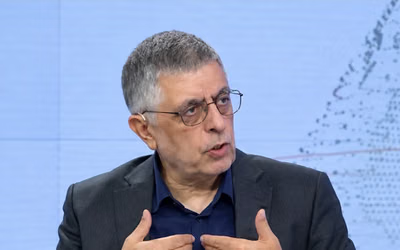






Decades of American sanctions strengthened Iran’s Revolutionary Guards by hollowing out the middle class, former US diplomat Joey Hood told Iran International, and once the fighting ends, Tehran will face a reckoning with its own people.
Hood, who retired earlier this year after 27 years in the Foreign Service, served as acting assistant secretary of state for Near Eastern affairs, deputy chief of mission in Iraq and Kuwait, and US ambassador to Tunisia. He spoke in a studio interview.
He called the seizure of the US embassy in Tehran in 1979 and the 444-day hostage crisis that followed “the very definition of evil,” adding that the protection of envoys is an ancient principle recognized in Islamic tradition as well.
What followed, he said, was a pattern. In 1983, a suicide bombing at the US Marine barracks in Beirut killed 241 American service members who had been deployed as peacekeepers; US courts have found Iran responsible for the attack, carried out by militants who went on to form Hezbollah. In 1996, the Khobar Towers housing complex in Saudi Arabia was bombed; US investigators blamed Saudi Hezbollah (Hezbollah Al-Hejaz), acting with Iranian support. In 2011, US prosecutors charged an Iranian-American man with plotting, on behalf of the Revolutionary Guards’ Quds Force, to assassinate the Saudi ambassador in Washington. Argentina’s courts have held Iran responsible for the 1994 bombing of a Jewish center in Buenos Aires, and plots have been traced to Iran in Europe and Asia.
None of it, Hood said, has won the Islamic Republic a single endorsement.
“You haven’t seen any other country come out and say, ‘What the Iranian regime is doing is great,’” he said. “There’s no sovereign government anywhere in the world that has made such a declaration.”
‘Handing the economy over’
Successive US administrations from Carter to Obama tried various forms of engagement, Hood said, but repeatedly underestimated Tehran’s refusal to accept normal relations. Even when presidents saw the risks, they often stopped short of decisive action. Jimmy Carter understood the danger before admitting the exiled Shah to the United States for cancer treatment in October 1979, weeks before the embassy was seized. After the Beirut bombing, Ronald Reagan withdrew the Marines and limited the American response largely to sanctions, a choice Hood said emboldened Tehran.
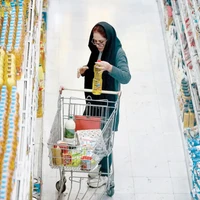
Analysts warned as early as the Obama years, Hood said, that sanctions were “squeezing out the normal middle-class businessmen and women and handing the economy over to a shadowy black-market economy” run by the Revolutionary Guards. That has come true, he said: the Guards grew stronger and the middle class weaker, and that middle class has periodically taken to the streets.
The Islamic Republic drew its own lesson from the fall of the Shah, whose government collapsed after months of protest, Hood said. It keeps using lethal force until protests stop, as it did in 2009, 2019 and January 2026.
Congress favors sanctions because they appear to cost no American lives, Hood said, “but Iranian lives certainly are at stake, especially for the middle class and the poor.”
Money is also fungible. Relief that came with the 2015 nuclear deal, he said, went to regional militias rather than public welfare, with particularly deadly results in Syria. Hood declined to use the name Hezbollah, which means “Party of God” in Arabic, calling the group “Iran’s militia in Lebanon.” “God does not have a political party here on Earth, and certainly not a militia,” he said.
Coalitions, not bilateral deals
A more effective approach, Hood said, would press on the nuclear program and the militia network at the same time, with allies rather than through bilateral arrangements.
Under Obama, near-unanimous support in Congress for sanctions helped bring even Russia and China along on the nuclear file. Without that kind of coalition, he said, constraints stay limited. The bilateral agreements the current administration has made with Saudi Arabia, Syria and others help partners defend themselves, but isolating Tehran needs broader coordination.
He tied the Houthis’ recent escalation against Saudi Arabia to Tehran’s difficulty moving fuel and running its shadow fleet under US pressure, and said the Yemeni group would pose no comparable threat without Iranian support. With less leverage in the Strait of Hormuz, he said, Tehran and its allies have turned to other targets, among them Saudi Arabia and potentially the Bab el-Mandeb strait or the Suez Canal.
October, ahead of the US midterm elections, is a period of heightened risk, he said, given the Islamic Republic’s record of trying to influence American votes.
‘Answered for in Iran’
The decisive change since the 12-day war in June 2025, Hood said, is that “anything that Iran or its militias do around the world will be answered for in Iran.” Earlier presidents avoided direct confrontation and preferred to fight Tehran’s proxies.
“That’s the big difference now,” he said. “Iranians themselves are having to pay for Iran’s foreign policy for the first time.”
When active military operations end, Hood said, he expects a reckoning between the Islamic Republic and its own people. Without a lasting coalition to constrain it, he said, the confrontation that began in 1979 will go on in new phases, with more attacks on American interests and partners.
A man accused of plotting an attack on Iran International journalists told a London court on Thursday that a man he identified as a Revolutionary Guards officer living in Britain threatened to kill him and his mother unless he obeyed.
Giving evidence at Woolwich Crown Court, Mostafa Sepahvand said the man, whom he named as “Ebi” and described as living in Wolverhampton, contacted him by video call in 2024.
Sepahvand said the caller showed him an Iranian flag and threatened to kill him if he did not listen. He told the court he had switched off his own camera during the call.
“He said we’re gonna kill your mother,” Sepahvand testified.
Sepahvand, 41, is on trial alongside Farhad Javadi Manesh, 46, and Shapoor Qalehali Khani Noori, 57. All three deny charges under Britain’s National Security Act.
Prosecutors allege the men gathered information for Iranian intelligence to prepare for serious violence against at least one target, with Sepahvand expected to carry out an attack. The alleged targets included Iran International journalists Mojtaba Pourmohsen and Kambiz Hosseini.
Sepahvand’s testimony expanded on his account that he acted out of fear, which prosecutors have rejected.
He said the contact came after a video showing him discussing dental treatment was posted on a clinic’s Instagram page in 2024. He described Ebi as active on TikTok.
Sepahvand said he initially did not respond to the threats but reacted when the caller mentioned his mother.Asked what happened afterward, Sepahvand said his car window was broken and people entered his home in Westminster and moved items inside.
He acknowledged that he had not seen who broke the window or entered the property, but said he believed the incidents were linked to his exchange with Ebi, whom he said had his address. He also told the court that his mother’s home was raided.
Earlier in his testimony, Sepahvand described years of police pursuit and alleged abuse of his relatives in Iran.
He said he fled to Tehran around 2014 and adopted his brother Masoud’s name because of charges brought against him by a judge. Police subsequently visited his family home in Khorramabad every week looking for him, he said.
Describing an incident in 2018, Sepahvand said police pushed his mother to the floor and his brother became involved in an altercation with officers before being taken to a police station.
Other family members then confronted police at the station, he said, and further arrests followed.
Sepahvand testified that his brother was released after 10 days but developed mental health problems and became intensely fearful. He also alleged that a relative named Ardavan was tortured and that Ardavan and another relative, Hassan, were later hanged on charges he described as opposing the Guards and being an “enemy of God.”
Prosecutors have previously argued that Sepahvand undertook the surveillance for payment and help resolving a criminal conviction in Iran. Earlier sessions examined messages in which he discussed a promised £150,000 payment and assurances that his Iranian case would be resolved.
According to the prosecution’s account of their defenses, Javadi Manesh and Noori accept visiting locations and taking photographs and videos but say they did not know they were assisting Iranian intelligence.
A Social Security hospital in Tehran has locked its main building and moved treatment into a cramped clinic in its courtyard, a member of the insurer’s healthcare oversight committee said, two months after officials listed it among the capital’s unsafe hospitals.
The main building of Shariat Razavi Hospital, run by the Social Security Organization, the state insurer that covers most of Iran’s workers and retirees, is deteriorating behind locked doors with its costly equipment still inside, Hossein Nategh told the labor-affiliated news agency ILNA on Thursday.
The move has turned a fully equipped hospital into what he called an outpatient clinic with the bare minimum of space, cutting the number of patients it can admit and the specialist care it can offer.
“The clinic set up in the yard has neither enough space for patients’ comfort nor the capacity to provide the services expected of a hospital,” he said.
The hospital’s equipment and funds belong to the workers and insured people who pay for them, Nategh said, and patients should not be left waiting in a cramped courtyard while the main building stands unused.
“If the building has a safety problem, why isn’t it being repaired? And if there is no plan to close it, why aren’t these resources being used?” he said. “This situation amounts to squandering the healthcare assets of the working community.”
He called for the main building to be reopened with its full equipment, or for an official explanation of why it was closed and what has happened to the equipment.
Neither ILNA’s report nor any statement from the Social Security Organization has explained why the building was closed or said what will happen to its equipment.
A list of unsafe hospitals
On August 18, Ali Nasiri, head of Tehran’s crisis management organization, named Shariat Razavi among 17 unsafe hospitals in the capital that were being made safe.
Warnings about the safety of Tehran’s buildings, hospitals among them, are not new. In 2024, the head of the city’s fire department said only 52 of the capital’s 189 hospitals had safety certification and that 125 were high-risk. In late 2025, a deputy fire chief, Kamran Abdoli, said 80,000 unsafe buildings had been identified in Tehran, about 27,000 of them high-risk.
Some of the warnings have ended in deaths. In June 2024, a fire at Qaem Hospital in Rasht, in northern Iran, killed at least nine patients with officials saying afterward that the hospital had never installed a fire suppression system despite earlier warnings. In early 2024, a fire broke out at Gandhi Hospital in Tehran, which fire officials said had received five safety notices beforehand and had faulty fire alarm and suppression systems.
Around the same time, Saeed Karimi, then the health ministry’s deputy for treatment, said about 100 hospitals were operating without a license because they had not fixed problems with safety or hygiene standards or with insurance contracts, and that closing them all at once would damage health services.
Iran cannot bring the United States to its knees despite inflicting damage on American forces, a former Tehran mayor said in a state television interview, arguing that Iran's military capabilities cannot match Washington's and calling for an end to the war through negotiations.
“We can bring in experts every day to say we are making America suffer, but the reality is that we cannot do that,” Gholamhossein Karbaschi, a former Tehran mayor and former secretary-general of the Executives of Construction Party, told state broadcaster IRIB.
Karbaschi criticized what he described as exaggerated portrayals of Iran's ability to inflict damage on the United States, saying the losses suffered by Iran and its population far exceeded the damage inflicted on Washington.
“The damage we have inflicted on the US is not comparable to the losses our own country and people have suffered. Fundamentally, our capabilities and capacities are not comparable to those of America,” Karbaschi said.
His remarks also addressed the Islamabad agreement, attacks on vessels and the need to release political prisoners to strengthen public support during the conflict.
Islamabad agreement and attacks on vessels
The attacks on three vessels could have been avoided had the Islamabad agreement been properly implemented, Karbaschi said, questioning who was responsible for targeting the ships.
Karbaschi argued that a distinction should be made between the actual reasons for violating an agreement and events used as a pretext to abandon it.
The agreement had been highly favorable to Iran and had surprised international observers because Washington had accepted its terms, Karbaschi said.
Israel opposed the agreement, and the attacks on the three ships ultimately became a pretext for breaching the understanding, he added.
Karbaschi also rejected the suggestion that ending the war through negotiations would require Iran to accept every American demand, arguing that both sides' objectives needed to be examined.
Political prisoners and public support
Iran must secure the backing of its population if it wants to resist pressure from US President Donald Trump, Karbaschi said.
“If this country wants us to stand up to Trump so that he does not dare bully us, we must have the people behind us,” Karbaschi said.
The former mayor questioned the continued imprisonment of prominent reformist politician Mostafa Tajzadeh, arguing that expressing an incorrect political opinion should not justify prolonged imprisonment.
Karbaschi called for the release of Tajzadeh and political prisoner Mostafa Mehraeen as part of efforts to bring the war to an end.
Mostafa Tajzadeh, a prominent reformist politician and former deputy interior minister under President Mohammad Khatami, has been imprisoned over his criticism of the Islamic Republic's leadership and calls for political reform.
Mahraein, a sociologist, was sentenced to a total of eight years in prison, five of which are enforceable. Mahraein was arrested on June 15, 2025, after publishing a letter criticizing former Supreme Leader Ali Khamenei.
Iran and its allies hit water plants, airports, refineries and a nuclear power station across the Persian Gulf with a precision that rules out the official story of falling debris, a Reuters investigation has found, showing the civilian damage was the aim, not a side effect.
Reuters counted at least 135 drone and missile strikes on at least 84 infrastructure sites in Saudi Arabia, the UAE, Iraq, Qatar, Kuwait, Oman and Bahrain since the war began on February 28. Again and again, the munitions struck the one piece of equipment a facility could least afford to lose, some of it hidden under rooftops or only a few meters across.
Iran’s parliament speaker, Mohammad-Bagher Ghalibaf, has said as much. “It’s simple: the oil and gas production chain here is sprawling, accessible, and exposed,” he wrote on X in early September.
“American oil and gas companies across these waters and facilities share that exposure.” Three days later, three pumping stations on Saudi Arabia’s East-West Pipeline were hit.
Reuters based its findings on 36 interviews, imagery and satellite data.
‘Falling debris’
In at least 34 statements, the region’s governments blamed damage on debris from successful interceptions. Fourteen experts who reviewed Reuters’ imagery, 11 from the affected industries, said that was highly improbable, citing signs of explosive detonation and the importance of what was hit.
Five of the states make it illegal to photograph or share certain images of strike damage.
‘Running out of water in days’
Kuwait, a desert country, draws 90 percent of its drinking water from desalination plants, most of them attached to coastal power stations because removing salt from seawater takes enormous amounts of heat and electricity.
Iran hit at least four of Kuwait’s eight combined power and desalination plants between March 2 and July 20, Reuters found, some more than once. In one four-day period in July, it struck what the government called “several” desalination plants, one of them at least twice.
“If you were to attack enough of their capacity, we’re talking about running out of water in days or weeks,” said Michael Christopher Low, director of the Middle East Center at the University of Utah. Donald Trump had threatened Iran’s water supply in March, Low said, but it was Iran that turned the threat into reality for its neighbors.
Kuwait’s government asked citizens to save water and electricity in “the spirit of shared responsibility.”
The strikes also hit Kuwait’s main refineries. In April it exported no crude at all, the first time since 1991, according to TankerTrackers.
A nuclear power plant
On May 17, a drone hit an electrical substation at the UAE’s Barakah nuclear plant, about 130 meters from a reactor, forcing one of its four reactors onto emergency diesel generators, according to the International Atomic Energy Agency.
“This means whoever was or is behind this knew exactly what they were doing,” IAEA chief Rafael Grossi said.
Three officials told Reuters Iran had the plant’s floor plan. The UAE said the drone came from “armed factions in Iraq.” There was no radioactive release.
Fujairah
The UAE’s main oil port outside the Strait of Hormuz, Fujairah was the region’s lifeline once Iran blockaded the strait. It was struck at least 19 times, and for the first three months of the war was either under attack or under repair.
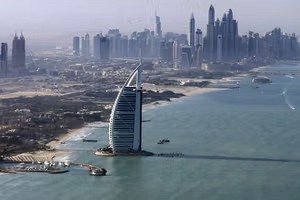
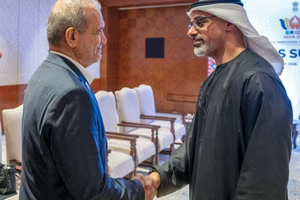
The first strike, on March 3, left tanks burning that were still visible from space two days later. On March 9, a strike destroyed the first of the port’s two matrix manifolds, a junction of 62 pipelines that carries crude and refined products from the terminals to the ships. Emirati officials blamed debris.
“This is a wound to the brain and heart,” said Ramanan Krishnamoorti, a petroleum engineering professor at the University of Houston, who said it stretched credibility that debris had simply fallen onto the manifold.
Strikes on March 14, 16 and 17, beginning hours after a US attack on Iran’s Kharg Island oil terminal, damaged the second manifold, Reuters found, a hit not previously reported. Loadings fell to 440,000 barrels a day in the week of March 16, less than half the 2025 average, according to Kpler.
“We were watching it come in and watching the helicopters blast the drones out of the sky,” said a foreign businessman who watched one wave from a nearby road. “They were sending swarms of drones and one or two got through.” American-made Patriot batteries sat about 3 kilometers away.
The port recovered to a weekly record of 3.2 million barrels a day by the end of March. Iran struck again on April 6 and May 4, the second time hitting the pipes feeding the first manifold. Refined exports essentially stopped: a single ship left between May 4 and June 1, and they did not recover until September. In at least six statements, Emirati authorities blamed debris; none admitted major damage.
The UAE’s reprieve
Strikes on UAE infrastructure stopped after May 17.
In June, four sources told Reuters, the UAE agreed to unlock at least $10 billion in frozen Iranian funds, $3 billion of which was released, and two said Iran agreed in return to stop attacking. The UAE denied any agreement. A senior Iranian official confirmed the transfer but said it reflected “the correction of the UAE’s behavior.”
In September, as Iran attacked ADNOC tankers at sea, Fujairah set a monthly export record of 2.62 million barrels a day.
The other routes
At Qatar’s Ras Laffan, which handles nearly a fifth of the world’s liquefied natural gas, two strikes destroyed the cold boxes that chill gas into liquid. QatarEnergy says repairs will take three to five years.
On September 10, the attack on the East-West Pipeline halted crude flowing across the desert to the Red Sea port of Yanbu, a route for up to 4 percent of global supply. Riyadh blamed Iran-backed militias in Iraq.
Iran-linked strikes have damaged five of Saudi Arabia’s nine biggest refineries and output fell from more than 10 million barrels a day to below 7 million, a loss of over $50 billion.
Airports in at least four countries, Amazon data centers and the UAE’s Al Taweelah aluminum smelter were also hit. The smelter will not return to normal before 2027.
“Every single target was civilian,” said Sultan Al Jaber, head of the Abu Dhabi National Oil Company. “They are targeting our infrastructure. But what they’re really targeting is our way of life.”
The Houthis and the Red Sea
After the April ceasefire collapsed, Revolutionary Guards commanders flew to Yemen on July 13 with missile and drone equipment for the Houthis, according to Reuters.
From July 16 to 18, US forces hit bridges and a tunnel on the roads to Bandar Abbas, strikes Iran International mapped in its investigation of Iran’s road and rail network.
The Houthis answered by hitting Saudi Arabia, knocking the Jazan refinery’s output to zero. The group has since declared a naval embargo on Saudi Red Sea ports, hit tankers and the airport in Najran, and taken the port of Mokha. On Saturday, a strike blamed on the Houthis killed 12 people at King Khalid International Airport in Riyadh.
Saudi Arabia’s crown prince asked Trump for military help in September and was rebuffed. Riyadh had already signed a mutual defense pact in Mecca with Turkey and Pakistan in August.
In 1983, a CIA assessment warned that “even a few attacks against well-chosen targets could do considerable damage” to the region’s oil facilities. Fujairah, which began full operations the same year, has since been struck at least 19 times.


