Iran releases cleric who called for replacing Islamic Republic on bail

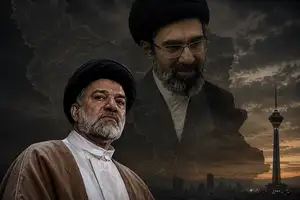
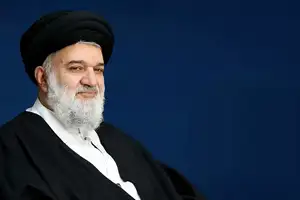
Iranian authorities have released hardline cleric Mohammad-Bagher Kharrazi on bail after about a month in detention, the judiciary said on Tuesday.

Iranian authorities have released hardline cleric Mohammad-Bagher Kharrazi on bail after about a month in detention, the judiciary said on Tuesday.
Judiciary spokesperson Ali Kazemi said Kharrazi was freed after bail was set and accepted, but that the case remained under preliminary investigation and no indictment had yet been issued.
Kharrazi, 65, heads an organization called Hezbollah of Iran and is related by marriage to the Khamenei family. His sister is married to Masoud Khamenei, a brother of Supreme Leader Mojtaba Khamenei.
He was detained after saying the Islamic Republic had become obsolete and calling for it to be replaced with what he described as an “Islamic government.”
Kharrazi had also outlined plans to recruit a 250,000-strong network that could surround government ministries and help bring about the change.
The judiciary previously said his remarks could lead to several charges, including a security-related offense. His case is being handled by the Special Clerical Court.






Hadi Abbasian, a 38-year-old resident of northeastern Iran, has been sentenced to death by a Revolutionary Court in Bojnurd after being arrested over his support for the nationwide protests in January, according to information obtained by Iran International.
Informed sources said Abbasian had previously posted videos on social media in support of demonstrators. The death sentence was communicated to him on Sunday at Shirvan prison.
The precise charge leading to the death sentence and the evidence presented against him have not been made public.
Arrested months after protests
Abbasian was arrested in May in Shirvan's Farhang Shahr district. During the nationwide protests earlier this year, he had published videos urging people to take part in demonstrations.
The source said Abbasian was tortured on the first day of his detention and taken to hospital after his condition deteriorated. He was later transferred to Shirvan prison.
His family has not been allowed to visit him since his arrest, the source said, adding that judicial and security authorities had prevented the family from appointing a lawyer of their choice.
Executions accelerate
The sentence comes as Iranian authorities have carried out a growing number of executions of people detained over the nationwide protests that erupted in January.
On Monday, Alireza Sepahi and Alireza Raisi were executed at Isfahan Central Prison in connection with protests in the central city, according to rights groups and Iran's judiciary.
They were among 12 defendants sentenced to death in what has become known as the Alikhani Square case. Seven people in that case have now been executed.
Sepahi married his fiancée from prison one day before his execution, according to Nobel Peace Prize laureate and lawyer Shirin Ebadi.
“Yesterday he became a groom, and today they executed him,” Ebadi wrote.
Five executions in less than a week
The two executions on Monday followed that of Siavash Jamshidi Kheirabadi, who was put to death on Saturday after being arrested during January protests in Shahrekord.
Iran's judiciary said Jamshidi had been sentenced to death for moharebeh, or “enmity against God,” over accusations that he fired at security forces. No information about his prosecution had been made public before the announcement of his execution.
Two other protesters, Ali Hemmati and Majid Nikandish, were executed on September 30 after being detained over demonstrations in Mashhad.
The judiciary accused them of involvement in the deaths of four security personnel and described them as “field operatives” in what it called an attempted coup. No court documents or independent evidence supporting those allegations were made public.

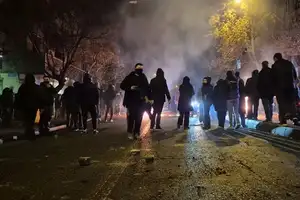
Taken together, at least five people detained in connection with the January protests have been executed since September 30.
Fair-trial concerns
Rights groups and UN experts have repeatedly raised concerns about the use of death sentences against protesters in Iran, citing reports of torture, forced confessions and denial of access to lawyers.
Mai Sato, the UN special rapporteur on human rights in Iran, raised concerns about the treatment of defendants and fair-trial standards in the Alikhani Square case, including reports that detainees and their relatives had been tortured.
A joint statement by 46 countries at the UN Human Rights Council last week also expressed concern over the execution of more than 30 protesters following the January crackdown and called on Iran to halt executions.
Iran Human Rights said in September that at least 100 people detained during the protests were at risk of execution.
Abbasian's case now adds another protester to death row, with his family still barred from visiting him and the basis for the sentence yet to be made public.
Iranian President Masoud Pezeshkian said Monday that talks with the United States were meaningless, even as President Donald Trump remained open to direct negotiations, while a third tanker in two days was struck near the Strait of Hormuz.
The contrasting messages came as months of intermittent diplomacy remained stalled and tensions intensified around the strategic waterway, where Iran and the United States have imposed competing restrictions on shipping. Tehran has tied progress to conditions surrounding Hormuz, while Washington has pressed for broader concessions, including on Iran’s nuclear program.
“Our problem with the United States is that every time we come to the negotiating table, war is immediately imposed on us,” Pezeshkian told Armenian Foreign Minister Ararat Mirzoyan during a meeting in Tehran.
Pezeshkian said negotiations made no sense with an adversary that “every day engages in assassination, sanctions, pressure and threats” and breaks its commitments.
“We have been attacked three times so far following talks, and this shows that they are not seeking dialogue; rather, their goal is to overthrow the Islamic Republic,” he said.
Trump, however, said Monday that he remained open to direct talks with Tehran, keeping a diplomatic path available after saying over the weekend that Iran could resolve the confrontation “the easy way or the hard way.”
The two sides have continued exchanging messages indirectly despite the impasse. Tehran presented Washington through intermediaries with a seven-day proposal aimed at restoring security in the Strait of Hormuz, and Iranian officials said Sunday they were reviewing the US response. Foreign Minister Abbas Araghchi said Tehran remained serious about diplomacy but was also prepared to defend itself.
The diplomatic standoff coincided with another escalation at sea Monday, when a tanker was struck by an unidentified projectile in the Strait of Hormuz, sparking a fire in its engine room. UK Maritime Trade Operations said the crew was battling the blaze and no casualties or environmental impact had been reported.
The strike marked the third tanker hit in two days. UKMTO said Monday it had received delayed reports that two tankers — one carrying liquefied petroleum gas and another crude oil — were struck by unidentified projectiles Sunday.
UKMTO did not attribute those attacks to Iran. But in a separate incident Monday, it said an inbound tanker 11 nautical miles north of Khasab, Oman, turned back after Iran’s Islamic Revolutionary Guard Corps hailed the vessel and threatened to target it if it continued.
The IRGC-affiliated Fars news agency separately reported Monday that Iran had targeted 13 tankers it described as “violators” in the Strait of Hormuz over the previous seven days.
The incidents came as the United States intensified enforcement of its naval blockade against Iran. US Central Command said Monday its forces had redirected 130 commercial vessels since resuming the blockade on July 14, disabled three ships that refused to comply and destroyed 13 commercial vessels it said were violating the blockade or were part of the IRGC’s multibillion-dollar shadow network. Pasted markdown
“The US military remains intensely focused on this mission,” CENTCOM commander Adm. Brad Cooper said. “We will swiftly act against any vessels trying to run the blockade.”
Washington has also stepped up economic pressure. Treasury Secretary Scott Bessent said Monday that the rial had fallen to record lows and Iran loaded no crude onto tankers last month, citing the figures as evidence that the US pressure campaign was working.
The military pressure has also continued alongside the diplomatic impasse. Senior members of Trump’s national security team met at Camp David on Friday to discuss the Iran war, with Trump considering renewed major combat operations as negotiations remain stalled, Axios reported.
Iranian officials warned Monday that renewed military action could widen the conflict. Mohsen Rezaei, secretary of Iran’s Supreme National Security Council, said another attack or “miscalculation” against Iran could open additional fronts.
“Every miscalculation by the enemy against Iran has brought it a heavy defeat,” Rezaei said. “The next mistake will bring new fronts and bigger surprises.”
Saudi Arabia, Turkey and Pakistan activated collective deterrence measures Monday and agreed to rapidly deploy forces and military capabilities to the kingdom, as Saudi-backed Yemeni troops advanced against the Iran-backed Houthis.
The decision followed an emergency meeting of the Mecca defense pact’s committee, which reaffirmed the three countries’ solidarity in confronting attacks against Saudi Arabia and Islamic holy sites, Saudi Arabia’s defense minister said.
The committee agreed to activate “collective deterrence measures” in response to the attacks and those responsible for them, he said.
Pakistan’s foreign ministry said in a joint statement that the three countries had also agreed on the rapid deployment of military forces and capabilities in Saudi Arabia. The statements did not detail the forces involved or specify what role they would play.
The move came as Saudi-backed Yemeni government forces reported major gains along the Red Sea coast, saying Monday they had retaken Mokha and advanced around the strategic Bab al-Mandeb Strait, one day after launching a major offensive to recover territory seized by the Houthis last month.
The armed forces of Yemen’s internationally recognized government said they had recaptured the port of Mokha, Reuters reported. Military spokesman Majed al-Nuzaili also reported the capture of Dhubab airport and the cutting of the road linking Dhubab to Mokha.
Saudi-led coalition spokesperson Maj. Gen. Turki al-Malki said 100 fighter jets were participating in Operation Yemen Dawn, providing round-the-clock support for ground forces and air cover over Bab al-Mandeb. He said the campaign had destroyed 324 “high-value” Houthi targets.
The Houthis earlier denied reports of government advances around the strait.
Yemen’s Information Minister Moammar al-Eryani told Reuters government forces had secured effective control of Bab al-Mandeb, although another government source said fighting continued at a nearby military base.
The offensive follows Houthi advances along Yemen’s western coast and around Taiz. Presidential Leadership Council Chairman Rashad al-Alimi announced the campaign Sunday, setting out ambitions to recover Houthi-held territory and restore state institutions.
Saudi campaign expands toward Sanaa
The government’s stated objectives extend beyond recovering recently lost coastal territory to retaking Sanaa, which has been under Houthi control since 2014.
“Our armed forces have begun implementing a strategic offensive operation on Sanaa,” al-Nuzaili said Monday. Houthi-run Al Masirah television reported attacks on the capital, although the announcement did not establish that government ground forces had reached the city.
The government’s reported coastal gains came alongside further Houthi advances inland. The Associated Press reported that the group captured Turbah on Sunday, a town on the main road between Taiz and Aden that had served as an important position for government forces defending Taiz.
The Houthis have also continued missile and drone attacks against Saudi Arabia, the attacks that prompted Riyadh, Ankara and Islamabad to put their new collective-defense framework into operation.
On Monday, the group’s HOCC agency warned airlines that Saudi airspace was unsafe for civilian flights and would become a “theater of operations” for its forces, according to a statement carried by the Houthi-run Saba news agency.
US backs Saudi right to respond
The activation of the Mecca pact adds another layer to Saudi Arabia’s military response as Washington provides support without directly joining the war in Yemen.
US Secretary of State Marco Rubio backed Saudi Arabia’s right to respond to Houthi attacks in remarks to reporters Monday.
“Obviously the Saudis have come under Houthi attack … and they have a right to defend themselves,” Rubio said. He also said Washington intended to honor what he described as its binding security agreement with Riyadh.
Rubio said neither Saudi Arabia nor Yemen’s internationally recognized government supported continued Houthi control of territory taken from government forces.
About 200 US advisers are working in Saudi planning and operations centers, including on targeting, while Washington is also providing intelligence sharing, planning assistance and aerial refueling, Al Jazeera reported Monday, citing a US official.
The official said, however, that US forces were not participating in the Yemen war and had no specific military objectives there.
At the center of the campaign is Bab al-Mandeb, the narrow waterway connecting the Red Sea with the Gulf of Aden. Fighting there threatens commercial shipping at a time when the Iran war has also disrupted passage through the Strait of Hormuz.
Iranian officials had previously presented Houthi control of the waterway as a strategic gain against Washington. In remarks reported September 27, Maj. Gen. Yahya Rahim Safavi, a senior adviser to Iran’s supreme leader, described Houthi control of Bab al-Mandeb as another step toward a broader US defeat in the region.
Even if government forces consolidate their coastal gains, the Houthis could still threaten shipping with drones and missiles launched from positions farther inland or elsewhere along Yemen’s coast.
Israeli Prime Minister Benjamin Netanyahu predicted the eventual fall of Iran’s leadership while the Islamic Republic’s top armed forces commander warned a new conflict would engulf the region, sharpening exchanges over the prospect of renewed fighting on Monday.
The warnings came during a day that also saw Iran execute two protesters detained during the January uprising, the Revolutionary Guards threaten a tanker in the Strait of Hormuz, and Yemeni government forces launch a major offensive against the Iran-backed Houthis.
Netanyahu says Iran is fighting for survival
Iran’s leadership is weaker than at any point since its establishment and is fighting for survival, Netanyahu said at a ceremony marking the third anniversary of the October 7 attack.
“The tyranny is weaker than it has ever been since its establishment. It is fighting for its life, and its end is to disappear — or rather, to pass from the world,” Netanyahu said.
Netanyahu portrayed the October 7 attack as the opening stage of an Iranian-led effort to destroy Israel. He described what he called a three-pronged Iranian strategy involving armed groups surrounding Israel, thousands of missiles aimed at the country and nuclear weapons intended to destroy it.
“That was Iran’s three-pronged plan. But through our combined efforts, we crushed it, stage by stage,” Netanyahu said.
Israel struck Iran’s ballistic missile stockpiles and severely damaged its nuclear program, including scientists, facilities and infrastructure, Netanyahu added.
Iran’s Armed Forces General Staff chief Ali Abdollahi issued his own warning later Monday, saying any renewed conflict would spread beyond Iran and Israel.
“If a new war begins, its fire will engulf everyone,” Abdollahi said.
Iran would respond immediately and without limits if the United States launched another strike, regardless of whether Washington acted before or after congressional elections or at Israel’s urging, Abdollahi added.
IRGC threatens tanker in Strait of Hormuz
The military warnings coincided with a confrontation in the Strait of Hormuz, where a tanker turned back after the Revolutionary Guards hailed the vessel and threatened to target it if it continued its inbound transit, the United Kingdom Maritime Trade Operations said.
The encounter took place 11 nautical miles north of Khasab, Oman. The tanker’s master complied with the instruction and reversed course, UKMTO said.
The episode came as energy shipments through Hormuz showed signs of recovery. At least three liquefied natural gas shipments had exited the strait since late last week, extending a rebound in traffic, Bloomberg reported, citing ship-tracking data. Outbound LNG flows nevertheless remained more than 75% below prewar levels.
Iranian lawmaker Hassan Ghashghavi separately warned neighboring countries that their infrastructure could be targeted if Iranian infrastructure came under attack.
“We have told our neighbors that our security is your security, and our insecurity is your insecurity,” Ghashghavi, spokesman for parliament’s national security and foreign policy committee, said.
Yemen offensive puts Houthis under pressure
Yemen’s government forces opened another regional front on Monday, launching an operation against the Iran-backed Houthis and announcing advances around the Bab el-Mandeb Strait.
Government forces took control of the strait and Dhubab airport and cut the road between Dhubab and Mokha, military spokesperson Colonel Majed al-Nuzaili said. Hundreds of Houthi fighters were surrounded in Dhubab, he added.
The Saudi-led coalition said it struck 324 targets during the operation and provided air protection over Bab el-Mandeb and air cover for Yemeni government forces.
Yemen’s presidential council earlier announced the launch of “Operation Dawn of Yemen,” which it said was intended to retake Sanaa and restore state institutions.
The developments placed the Strait of Hormuz and Bab el-Mandeb, two strategic waterways at opposite ends of the Arabian Peninsula, at the center of Monday’s regional developments.
Executions and economic strain at home
Inside Iran, the judiciary confirmed the executions of Alireza Sepahi and Alireza Raisi, two protesters detained during the January 2026 protests.
The two men were defendants in the Alikhani Square case in Isfahan, in which five others had previously been executed. Iran’s Supreme Court upheld death sentences for 12 defendants in the case in July.
UN Special Rapporteur on human rights in Iran Mai Sato condemned Sepahi’s execution and raised concerns about his treatment and judicial process. Sepahi’s lawyer was still seeking a review when the execution was carried out, Sato said.
Prince Reza Pahlavi’s communications office later vowed to pursue accountability for those involved in the executions through fair trials.
Economic difficulties also remained prominent. Workers across several sectors told Iran International that employers were delaying or splitting wage payments and cutting benefits, with some employees taking second jobs to meet everyday expenses.
The combination of military warnings abroad and political, economic and security developments at home kept the possibility of renewed conflict and its consequences at the center of Iran’s news on Monday.
Iran’s oil minister Mohsen Paknejad resigned Sunday, leaving acting minister Hamid Bovard with crude exports choked by a US blockade and scrutiny of intermediaries used to sell sanctioned oil, raising questions over what he can change.
President Masoud Pezeshkian accepted Paknejad’s resignation on October 4 and appointed Bovard, chief executive of the National Iranian Oil Company (NIOC), to lead the ministry temporarily.
The presidential office said Paknejad had sought to resign some time earlier for personal reasons and that Pezeshkian initially wanted him to remain, eventually accepting the resignation at Paknejad’s insistence.
That leaves little verified basis for attributing his departure to the blockade or any particular dispute inside the oil industry. The more answerable question is what Bovard inherits — and which of the pressures facing Iran’s most important source of revenue are actually within the Oil Ministry’s control.
A blockade no minister can lift
The immediate problem is physical: Iran is struggling to get new oil to its customers.
Iran International reported, citing Kpler and TankerTrackers, that no Iranian crude cargo has crossed the US blockade line toward China since mid-July and that no new crude has been loaded at Iranian terminals since mid-August.
Iran initially kept deliveries going from crude already stored aboard tankers. By mid-August, around 67 million barrels had accumulated on vessels in Iran’s southern waters. But access to empty tankers became increasingly limited, bringing new loadings to a halt.
Iran’s crude production has consequently fallen to about 1.8 million barrels per day, roughly the amount required for domestic consumption and around half its pre-war output, according to Kpler.
The decline follows an already sharp fall in exports. Crude and condensate loadings were estimated at around 220,000 to 255,000 barrels per day in August, down from about 740,000 in July and roughly two million in March.
Paknejad, shortly before his resignation was announced, said revenue from oil already sold was continuing to reach Iran.
That is not necessarily at odds with the collapse in new loadings. Payments can continue for cargoes sold and delivered earlier even after the physical flow of fresh crude slows. The larger problem for the government is how long those revenues can be sustained without new oil entering the export system.
Here, Bovard’s room for maneuver is limited. A new minister cannot by himself remove a US naval blockade, provide empty tankers or reopen a route to China. Any meaningful recovery in export volumes would depend largely on a change in the conditions surrounding the blockade.
An oil-sales system Bovard can influence
The ministry has more direct control over another problem: how sanctioned oil is sold and how the proceeds are returned.
Iran has long relied on intermediaries, commonly known as trustees, to sell crude and move the proceeds because sanctions restrict its access to conventional banking channels. The system has become increasingly controversial as cases involving unpaid revenues and heavily indebted intermediaries have emerged.
Iran International reported on September 8, based on two confidential documents from the Oil Ministry and Supreme National Security Council, that large oil cargoes had been handed on credit and at steep discounts to four trustees who already carried substantial debts from earlier transactions.
One confidential letter said the four had been granted an unusually high discount of $8.50 per barrel despite outstanding debts and failures to return proceeds from previous oil sales.
The investigation also identified Mohammad Javad Bavand, appointed by Paknejad as special assistant for supervision of oil trading, as a central figure in managing a new network of intermediaries. Subsequent documents obtained by Iran International showed an 86-million-barrel oil consignment being assigned to four indebted trustees.
The cases form part of a broader dispute over oil revenues that have failed to return to the state. Iran International previously reported that the head of the State Inspection Organization had acknowledged at least $1.6 billion misappropriated by intermediaries, while 59 criminal cases had been opened.
The Oil Ministry has defended the trustee system as a necessity created by sanctions and rejected allegations that it failed to supervise the firms involved. But the controversy poses a problem that is more directly within a minister’s reach than the blockade: who receives oil to sell, on what terms, what guarantees are required and what happens when proceeds are not returned.
Bovard’s appointment is relevant here because he comes directly from NIOC, putting an official familiar with the operational side of the industry at the head of the ministry.
He also inherits a ministry that has faced disputes over appointments and authority. Iranian media have reported friction surrounding Mohammad Shariatmadari’s continued leadership of Persian Gulf Petrochemical Industries Company, including disagreement over attempts to replace him.
There is no established evidence that either the Shariatmadari dispute or the trustee controversy prompted Paknejad’s resignation, particularly given the presidential office’s account that he left for personal reasons. Their significance is instead in what they show about the management system Bovard is taking over.
What can actually change?
The two main challenges confronting Bovard therefore require very different responses.
The blockade is largely beyond the ministry’s control. Even an experienced NIOC executive cannot restore export routes or tanker access through an administrative reshuffle.
The internal oil-sales system is different. Bovard could have greater influence over how intermediaries are chosen, whether indebted trustees continue receiving cargoes, what payment guarantees they must provide, how overdue proceeds are pursued and how closely oil transactions are supervised.
No such changes were announced with his appointment.
That makes the significance of the reshuffle relatively straightforward to assess. If Iranian terminals resume loading crude and exports to China restart, the decisive factor will probably be a change in the blockade or the wider conflict.
If the ministry changes the way trustees are selected, tightens guarantees, recovers overdue revenues or alters the officials managing sanctioned oil sales, those would be changes Bovard can more directly influence.
Paknejad’s resignation therefore does not by itself explain what is happening to Iran’s oil exports or signal a new policy. Bovard inherits an external constraint he has little power to remove and an internal sales system over which he may have considerably more room to act.
Whether the change at the top matters will depend on which of those problems, if either, begins to change.