• العربية
  • فارسی
Brand
  • Iran Insight
  • Politics
  • Economy
  • Analysis
  • Special Report
  • Opinion
  • Podcast
  • Live TV
  • Iran Insight
  • Politics
  • Economy
  • Analysis
  • Special Report
  • Opinion
  • Podcast
  • Live TV
  • Theme
  • Language
    • العربية
    • فارسی
  • Iran Insight
  • Politics
  • Economy
  • Analysis
  • Special Report
  • Opinion
  • Podcast
  • Live TV
All rights reserved for Volant Media UK Limited
volant media logo
ANALYSIS

Security meeting, military buildup: US weighs next move on Iran?

Ardavan Roozbeh
Ardavan Roozbeh

Iran International

Oct 3, 2026, 22:04 GMT+1
A screen-grab of a CENTCOM video shows USS George Washington conducting flight operations in the Middle East

An unannounced meeting of President Donald Trump’s senior national security team at Camp David, as another aircraft carrier and thousands more US troops move toward the Middle East, has raised the prospect of another major operation against Iran.

None of this establishes that Trump has decided to resume attacks. But together, the developments would give him substantially greater military capacity at a time when diplomatic efforts to end the war have made little progress.

Vice President JD Vance chaired Friday’s meeting at Camp David, according to Axios, with Secretary of State Marco Rubio, Defense Secretary Pete Hegseth, special envoy Steve Witkoff, CIA Director John Ratcliffe and Joint Chiefs Chairman Gen. Dan Caine among those attending.

Three US officials told Axios that Iran and the conflict involving the Houthis in Yemen were discussed during the several-hour meeting. The White House has not disclosed what, if anything, was decided.

Trump convened senior foreign-policy officials at Camp David in June 2025, just days before Israel began its war with Iran, with several of the same officials attending. The parallel does not mean events will follow the same course, but it gives Friday’s meeting added significance.

More ships, aircraft and troops

The USS Theodore Roosevelt carrier strike group and USS Makin Island amphibious readiness group are heading to the Middle East, carrying more than 7,000 sailors and 2,000 Marines, according to US officials.

The USS George H.W. Bush and USS George Washington are already in the region, along with the USS Boxer amphibious readiness group. If the deployments overlap, the United States could have three carrier strike groups and two amphibious groups in the region by the end of October.

Some of the deployments may involve replacing forces that have spent months in the region rather than preparations for an offensive. But they would leave commanders with substantially more options if Trump orders operations to intensify.

Trump keeps military option open

The deployments come as negotiations between Washington and Tehran have stalled, with Qatar attempting to bridge differences between the two sides.

Trump told TIME this week that renewed US military action after the November midterm elections was “possible” if an acceptable agreement was not reached.

“I believe right after the election we’ll win, but maybe before the election,” Trump said Thursday, while describing Iran as “ready to fold up.”

Asked Friday what he intended to do next on Iran, Trump declined to elaborate, saying reporters would have “a big story” if he gave them the answer and adding: “You’ll see.”

Preparing for retaliation

Washington is also strengthening defenses against the kind of Iranian response that could follow renewed US attacks.

Additional Patriot air-defense systems have been deployed to protect critical energy infrastructure in Saudi Arabia and Qatar, while the growing naval presence provides further defensive as well as offensive capacity.

Iran retains missiles and drones and has demonstrated its ability to threaten shipping and regional infrastructure. The Strait of Hormuz remains a major vulnerability, as recent incidents involving commercial vessels have underlined.

A US maritime blockade has severely constrained Iranian oil exports, while the Treasury Department this week widened its Operation Economic Outcast sanctions campaign into Iran’s automotive and rail industries.

Military and economic pressure are therefore increasing even as Washington continues to pursue a diplomatic route.

The question is whether that force is intended to strengthen Washington’s hand at the negotiating table or to give Trump a military option if he concludes the negotiations have failed.

Most Viewed

Officials trade blame as Iran’s economy sinks deeper
1

Officials trade blame as Iran’s economy sinks deeper

2
INSIGHT

Iranian press sees diplomacy alive but narrowing after US response

3
ANALYSIS

Iran's rhetoric against UAE hardens after Netanyahu visit

4
INSIGHT

As the rial sinks, Iranians seek shelter in almost anything else

5
INSIGHT

Leaked Kremlin plan undercuts Moscow's claims on ruble-rial trade with Iran

Banner

Spotlight

  • Islamic Republic's 'slow meltdown' leaves it fewer ways out, analysts say
    PODCAST

    Islamic Republic's 'slow meltdown' leaves it fewer ways out, analysts say

  • Officials trade blame as Iran’s economy sinks deeper

    Officials trade blame as Iran’s economy sinks deeper

  • As the rial sinks, Iranians seek shelter in almost anything else
    INSIGHT

    As the rial sinks, Iranians seek shelter in almost anything else

  • Shot in leg, forced into hiding: Iran protester recounts January crackdown

    Shot in leg, forced into hiding: Iran protester recounts January crackdown

  • Al-Qaeda is Iran's quiet backup if the war turns, expert says

    Al-Qaeda is Iran's quiet backup if the war turns, expert says

  • Can the Caspian give Iran a way around Hormuz?
    ANALYSIS

    Can the Caspian give Iran a way around Hormuz?

  • A Mossad spy in Iran: From banking infiltration to nuclear and missile sabotage
    SPECIAL REPORT

    A Mossad spy in Iran: From banking infiltration to nuclear and missile sabotage

Banner
Banner
Banner
Banner
•
•
•

More Stories

Khamenei adviser warns UAE as tensions with Tehran escalate

Oct 3, 2026, 17:00 GMT+1
100%
FILE PHOTO: A general view of the luxury Burj al-Arab Hotel at Jumeirah area in Dubai, UAE December 9, 2015. Picture taken December 9, 2015.

A senior adviser to Iran’s supreme leader issued a pointed warning to the United Arab Emirates on Saturday, saying “imported security has an expiration date” as tensions between Tehran and Abu Dhabi continue to rise.

“A neighbor remains, and a guest leaves,” Ali Akbar Velayati, a former foreign minister and longtime foreign-policy adviser to the supreme leader, wrote on X.

He was referring to Israeli Prime Minister Benjamin Netanyahu’s visit to Abu Dhabi last Sunday, where he met UAE President Sheikh Mohamed bin Zayed Al Nahyan.

Supreme National Security Council Secretary Mohsen Rezaei said Wednesday that hosting US military bases had not brought the UAE security and warned that hosting Netanyahu would likewise not have “positive consequences.”

The warnings come after months of sharply deteriorating relations during the US-Israeli war on Iran.

Tehran repeatedly struck the UAE, while reports of growing Emirati-Israeli security cooperation, including Israel’s deployment of an Iron Dome battery and personnel to the UAE, fueled anger in Iran.

Tensions were further heightened by an attempted attack aboard a Flydubai flight from Dubai to Tel Aviv, with US President Donald Trump saying investigators were examining a possible Iranian connection, although no evidence of Tehran’s involvement has been made public.

Abu Dhabi has maintained that it is not a party to the war and did not allow its territory, waters or airspace to be used for attacks on Iran.

‘Imported security expires’

Velayati also attacked the UAE over its renewed claim to Abu Musa and Greater and Lesser Tunb, three strategically located Persian Gulf islands controlled by Iran and claimed by Abu Dhabi.

“A country whose political life does not reach half a century makes claims from the UN podium about islands that have been recorded under Iran’s name in historical documents and maps from past centuries,” he wrote.

“Geography does not change with statements.”

The UAE renewed its call at the UN General Assembly last weekend for the dispute to be settled through direct negotiations or the International Court of Justice. Iran rejects the UAE’s sovereignty claim.

Velayati accused the UAE of hypocrisy for invoking “Arab rights” and “Islamic solidarity” a week after hosting Netanyahu, before ending with the warning: “The experience of the region has shown that imported security has an expiration date.”

Smartwatches on Iran's security chiefs spark row within the inner circle

Oct 3, 2026, 09:58 GMT+1
100%
IRGC General Gholamreza Jalali has been heading Iran’s National Organization for Passive Defense since 2005.

Senior Iranian military and security officials have been photographed wearing smartwatches, drawing fresh criticism of their basic security discipline after years of reports that Israel has used electronic devices around Iranian commanders to track and kill them.

The images drew widespread reactions after they were posted on X on Friday by Ali Gholhaki, a conservative commentator with ties to Iran's security establishment. Some Iranian outlets describe him as close to parliament speaker Mohammad-Bagher Ghalibaf.

The pictures show smartwatches on the wrists of three men: Gholamreza Jalali, who heads the Passive Defense Organization, the body that protects Iran's critical infrastructure; Reza Farahi, a Defense Ministry official; and Ali Shamkhani, the former secretary of the Supreme National Security Council.

Shamkhani was killed in US-Israeli airstrikes on February 28, on the first day of the current war. He had survived an Israeli strike in June 2025.

Asked about his watch by a Fars News reporter, Jalali asked whether people had smart televisions at home and said his device was effectively the same thing.

Gholhaki rejected the comparison. The man in charge of protecting the country's critical infrastructure, he argued, faces a different order of risk from an ordinary citizen, and such devices are hard to justify for senior security officials when Israel has repeatedly exploited electronic lapses to track Iranian personnel.

Smartwatches can transmit location and activity data through GPS, Bluetooth, Wi-Fi or a paired phone, and some carry microphones and other sensors.

The US military has long restricted location-tracking devices, smartwatches included, in operational areas because they can expose movements and routines; in 2018, a fitness app's public heat map revealed the outlines of American bases from soldiers' running routes.

'Careless use'

The row touches a much larger argument inside the Islamic Republic about repeated intelligence failures.

During the 12-day war in June 2025, Iran's Cyber Security Command banned officials and their security teams from using any device connected to public communication or telecommunications networks, Fars reported, as concern grew that mobile tracking was being used for targeted assassinations.

The directive named smartphones, laptops and smartwatches, and warned that switching a device off might not prevent it from being located.

It came too late. The New York Times later reported, citing Iranian and Israeli officials, that Israel tracked and targeted senior Iranian leaders and nuclear scientists in that war by hacking the phones of their bodyguards and drivers.

On June 16, 2025, the Supreme National Security Council met in a bunker deep beneath a mountain in western Tehran; none of the officials carried phones, but the Israelis found the meeting through the phones of the bodyguards who had driven them there. The bodyguards had long been exempt from the strict phone bans imposed on the commanders themselves, even after earlier assassinations.

Gholhaki tied the smartwatches directly to those failures, arguing that complacency had helped Israel and the United States kill senior military, security and political figures in successive wars. He called for fundamental changes in security practice and renewed his demand for a broad postwar inquiry into how the failures happened.

Gholhaki himself was among a group of Telegram channel operators arrested by the Revolutionary Guards' counterintelligence arm in 2022, accused of disturbing public opinion and publishing classified documents.

A blogger on death row

The judiciary has shown no such tolerance for ordinary Iranians accused of far smaller breaches.

Marziyeh "Sevda" Ebrahimi Shamsabadi, a 33-year-old blogger from Bandar Abbas who has been held since March, was sentenced to death in August by a Revolutionary Court on charges including insulting the supreme leader, intelligence activity on behalf of hostile governments, and taking and sending photographs to Persian-language media abroad.

One allegation concerned a photograph she was said to have taken, from a distance, of a site hit by a missile. She was held in solitary confinement for 20 days and faced severe pressure during interrogation.

Two Iranians charged over foiled plot targeting Manchester Jews

Oct 2, 2026, 21:26 GMT+1
100%
Police officers walk outside the Woolwich Crown Court in London, Britain, September 26, 2025.

Two Iranian men have been charged over a terrorist plot targeting Manchester’s Jewish community that was disrupted before it could be carried out, British police said Friday.

Rahman Salehi, 35, and Salam Ahmadyan, 36, were arrested on September 20, on the eve of Yom Kippur, in Manchester’s Northern Quarter and charged with preparing or assisting an act of terrorism.

Police allege the two men were in contact with a third party overseas who may have been in Iran, though authorities have not publicly established that the Iranian state directed the alleged plot.

Vicki Evans, the senior national coordinator for Counter Terrorism Policing, said: “This week also brought into sharp focus some of the wider threats being projected into the UK from Iran.”

The case follows a separate suspected plot near RAF Fairford, a British airbase used by US bombers in operations against Iran.

Five British men were arrested near the base on September 27 on suspicion of terrorism and explosives offences, while a dual UK-Iranian national was detained days later.

In March, police arrested four men suspected of spying for Iran and conducting surveillance of Jewish targets in London, while MI5 previously said it had disrupted 20 Iran-linked plots in Britain over a 12-month period.

In July, Britain formally designated Iran’s Islamic Revolutionary Guard Corps as a threat to national security, making public support for the organization or assistance to it punishable by up to 14 years in prison.

The IRGC is one of the Islamic Republic’s most powerful military and political institutions. Its overseas Quds Force oversees Tehran’s relationships with allied armed groups and has been accused by British authorities of directing operations against dissidents, journalists and Jewish or Israeli-linked targets in Europe.

British authorities said Quds Force members were behind the Islamic Movement of Companions of the Right which claimed responsibility for seven attacks this year against Persian-language media and locations linked to Jewish and Israeli communities in Britain.

Those incidents included an antisemitic arson attack that damaged four ambulances belonging to the Jewish emergency service Hatzola in Golders Green, north London, on March 23.

Five killed in roadside attack as violence spreads in southeast Iran

Oct 2, 2026, 13:37 GMT+1
100%

At least five people were reported killed on Friday in an attack near Zahedan in southeastern Iran, as the Revolutionary Guards confirmed a roadside bombing in the area that killed one of its fighters.

Haalvsh, which covers developments in Sistan-Baluchestan, said five members of the IRGC-Quds’s Fatemiyoun militia were killed in the Rudmahi area near Zahedan after an explosive device detonated beside their vehicle and gunmen opened fire.

Iran's Revolutionary Guards gave a different account, confirming a roadside bombing in the province but saying one fighter was killed. The IRGC Ground Force said what it described as "terrorists" had planted a bomb along a road in Sistan-Baluchestan and carried out an indiscriminate attack.

The Guards did not identify the person killed, mention Fatemiyoun or give a precise location for the incident.

Conflicting accounts of Zahedan attack

Haalvsh said the attack took place at about 6:30 a.m. as the men were patrolling the Kaleh-Pedeh route in the Rudmahi area in a Land Cruiser equipped with a DShK heavy machine gun.

Citing eyewitnesses, the outlet said an explosive device was detonated as the vehicle passed and that gunmen opened fire after the blast destroyed the vehicle.

The identities of those reported killed have not been released.

Haalvsh said local sources continued to put the death toll at five and identified all of those killed as Fatemiyoun members, but said it had not been able to independently verify the precise number of deaths.

Fatemiyoun is a militia linked to the IRGC's Quds Force and made up largely of Afghan Shiites. It was formed with Iranian support and fought alongside forces loyal to Bashar al-Assad during Syria's civil war. The United States sanctioned the group in 2019.

Haalvsh said Friday's incident was the second deadly attack on forces it identified as Fatemiyoun in Rudmahi in less than a month. It reported in September that four members deployed in the area by the IRGC were killed when gunmen attacked them during a patrol.

The outlet has also reported the deployment of hundreds of Fatemiyoun members to several parts of Sistan-Baluchestan, including areas around Zahedan, Mirjaveh, Rask, Saravan, Zabol, Chabahar, Konarak and Iranshahr.

Hours of fighting in Rask

The violence on Friday was not limited to Zahedan.

Haalvsh said Iranian military and security forces moved in Rask county at about 5:30 a.m., triggering fighting with armed men that lasted more than six hours.

Heavy gunfire and explosions were heard during the confrontation, according to the outlet, which said reinforcements and additional military equipment were sent to the area.

Armored vehicles, pickup trucks and civilian cars with private license plates were seen at the scene, while a vehicle carrying a heavy weapon was also deployed, Haalvsh reported.

  • Heavy fighting spreads in southeastern Iran, with security force casualties reported

    Heavy fighting spreads in southeastern Iran, with security force casualties reported

Local sources cited by the outlet said reconnaissance quadcopters and explosive drones were used during the operation.

Haalvsh said the identity and affiliation of the gunmen remained unknown and that no reliable information had emerged about casualties or damage.

IRGC-linked Fars news agency, citing an unnamed source, said security forces had begun an operation against armed groups in Rask on Friday morning and that "a number" of gunmen had been killed. Fars said the operation was continuing.

Intelligence facility targeted

An intelligence ministry facility in Nokabad, the administrative center of Taftan county, was also attacked by gunmen early Friday, according to the Baloch Human Rights Documentation Network.

The group said the attackers fired at the building. Local sources also reported an explosion and said a grenade may have been used.

  • IRGC says six gunmen killed in clash in Iran's restive southeast

    IRGC says six gunmen killed in clash in Iran's restive southeast

No casualties or damage were immediately reported, and no individual or group had taken responsibility for the attack.

Fighting follows deadly clash a day earlier

Friday's incidents came a day after another hours-long confrontation near Zahedan.

On Thursday, the IRGC said six gunmen were killed during fighting with security forces in the Manzelab area. The Guards' Quds regional headquarters said its forces had identified and "destroyed" what it described as an armed "terrorist-Takfiri" cell that had been preparing an attack.

Haalvsh said that clash began at about 6 a.m. and continued for several hours, with heavy gunfire and rocket-propelled grenade fire heard in the area.

The IRGC said explosive devices were recovered but did not identify the armed group or name those killed.

A police officer, Alireza Sanchouli, was also killed in a separate armed attack on a checkpoint at the entrance to Rask, according to Iranian reports.

At least one person was killed earlier in the week during another confrontation with security forces in Iranshahr.

Last month, a roughly nine-hour battle in the Bakhshan area of Saravan killed three IRGC members and four gunmen. Reports at the time linked the armed side to the People's Fighters Front, an alliance formed in late 2025 that includes several Baluch armed groups, among them Jaish al-Adl.

Iranian authorities regularly describe armed groups operating in Sistan-Baluchestan as terrorist organizations. The southeastern province has seen repeated armed attacks, insurgent activity and clashes between security forces and gunmen in recent weeks.

Al-Qaeda is Iran's quiet backup if the war turns, expert says

Oct 2, 2026, 10:15 GMT+1
•
Kambiz Tavana
100%
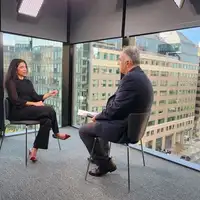
Sara Harmouch, chief executive of H9 Defense and an adjunct professor at George Washington University, during an interview with Iran International in Washington, DC

Iran has spent two decades keeping al-Qaeda close as a partner it can deny, and could turn to it if the war with the United States escalates, a counterterrorism expert told Iran International. With Hezbollah and Hamas weakened, she said, it is the card Tehran has left.

Sara Harmouch, chief executive of H9 Defense and an adjunct professor at George Washington University, said the relationship is no longer a historical footnote.

"Who is better to rise as a secret proxy for Iran than al-Qaeda?" she said. "Al-Qaeda keeps a low profile and continues to maintain plausible deniability."

Intelligence circulating in the Middle East and among the Arab states of the Persian Gulf, which US and Western officials have not confirmed, suggests that Saif al-Adel, al-Qaeda's de facto leader, who has long been based in Iran, is preparing attacks if the war widens, Harmouch said. That would suit both sides, she said: Iran could deny involvement, and al-Qaeda could return to the world stage against Western interests.

"It's all possible, and it's not far-fetched," she said. Iran, she added, had helped with the operations, funding and logistics of the September 11 attacks. "So why wouldn't they now, especially if they're in such a difficult situation with the war?"

The 9/11 Commission found that Iran allowed several of the hijackers to transit its territory but found no evidence that Tehran knew of the plot. A US federal court later found Iran liable in a civil case brought by victims' families, a judgment Iran did not contest.

'Pragmatism always trumps ideology'

Washington, Harmouch argued, still treats the rivalry between Sunni and Shia Islam as a wall. In 2024 she wrote that al-Qaeda was becoming "Iran's ace in the hole," with Adel at the center. Western outlets turned the piece down, she said, because editors would not accept cooperation across the sectarian line.

"Someone who has not been to the region at all felt compelled to tell me, oh, but there's a Sunni-Shia divide," she said.

She made the argument instead on the podcast of Michael Morell, a former acting director of the CIA. Two years later, she said, the same pattern is being reported as news: al-Qaeda in Yemen has stopped fighting the Houthis, and the cooperation has spread to al-Shabaab in Somalia.

"Pragmatism always trumps ideology," she said.

As evidence of that shift, Harmouch pointed to a drone unit the Houthis helped al-Qaeda set up, a joint meeting of al-Qaeda in Yemen, al-Shabaab and the Houthis, and a claim that the Houthis paid al-Qaeda $65,000 in recent months for an attack carried out on their behalf.

Al-Qaeda has publicly rejected UN findings that it cooperates with the Houthis and has stepped up anti-Houthi propaganda, which she read as cover rather than a break.

The leader who avoids the camera

Adel, she said, is why the silence in Yemen was predictable. Al-Qaeda has never publicly named him leader because he is in Iran, and unlike Osama bin Laden he avoids the camera. A 52-minute al-Qaeda video released around this year's September 11 anniversary used old footage of Hamza bin Laden and quoted Adel's book without showing him. In that book, she said, the word "deception" appears 99 times.

In her account, the relationship took shape after 2001, when al-Qaeda figures fled Afghanistan for Iran. Tehran detained some and sent others home. It kept Adel, under what former CIA director George Tenet later called a loose house arrest. Adel stayed close to Qassem Soleimani, the Revolutionary Guards' Quds Force commander, and, Harmouch said, told him: "We are partners. We're not enemies. We are partners in changing the world."

She traced episodes that, she said, show the house arrest was never a cage: the 2003 Riyadh bombings, which US officials said were directed in part from Iran; a 2013 plot to derail a train between Toronto and New York, which Canadian police said had direction from al-Qaeda elements in Iran; and, after Abu Musab al-Zarqawi began killing Shia in Iraq, a turn from hospitality to coercion, including the holding of members of bin Laden's family.

In a 2007 letter, bin Laden called Iran "our main artery for funds, personnel, and communications" and warned against attacking it. In 2008, she said, Ayman al-Zawahiri praised the Revolutionary Guards for strengthening al-Qaeda in Yemen.

In Syria, she said, the relationship worked like a proxy arrangement. Iran released Muhsin al-Fadhli, who went on to move money and fighters into the Syrian war. In 2015 it freed Abu Khayr al-Masri and other senior figures in a prisoner exchange; Harmouch said the Quds Force used them to split the forces of Abu Muhammad al-Jolani, now Syria's president, Ahmad al-Sharaa.

Abu Muhammad al-Masri, al-Qaeda's second in command, remained in Iran until Israeli agents killed him in Tehran in 2020. The US Treasury has since sanctioned Iranian-based networks for supporting al-Qaeda.

After Zawahiri was killed in 2022, Adel's rise closed the circle, she said. Since the Hamas attack of October 7, 2023, he has told affiliates to stop hitting Iran's proxies. What unites them, in his words as she rendered them, is greater than what unites their enemies: one God, one qibla, the direction of prayer, and one political goal. His statements and Tehran's have lined up on the Red Sea, on protests at American universities, and on Afghanistan.

'There is no winning'

A deal, or a harder US campaign, would not end the problem, Harmouch said. Iran fights by attrition and will absorb losses the United States will not, and when it cannot control what happens outside its borders, it turns on its own population.

The cells inside the United States that are often cited as a threat have not produced a directed attack, she said. They may not exist, or Tehran may be holding them as leverage that disappears once used.

The likelier diversion, in her view, is an al-Qaeda attack Iran can disown, buying time to rebuild. A nuclear announcement is possible, she said, but less necessary since Iran's closure of the Strait of Hormuz showed what it could do to American gasoline prices.

"I don't think there is winning a war against Iran," she said. "As long as it's still in the fight, it is winning."