• العربية
  • فارسی
Brand
  • Iran Insight
  • Politics
  • Economy
  • Analysis
  • Special Report
  • Opinion
  • Podcast
  • Live TV
  • Iran Insight
  • Politics
  • Economy
  • Analysis
  • Special Report
  • Opinion
  • Podcast
  • Live TV
  • Theme
  • Language
    • العربية
    • فارسی
  • Iran Insight
  • Politics
  • Economy
  • Analysis
  • Special Report
  • Opinion
  • Podcast
  • Live TV
All rights reserved for Volant Media UK Limited
volant media logo

Iran links under scrutiny in separate Flydubai, UK airbase investigations

Oct 1, 2026, 22:51 GMT+1
Travelers board a FlyDubai aircraft at Ben Gurion International Airport after a separate FlyDubai flight from the United Arab Emirates to Israel was diverted to Saudi Arabia following an emergency signal, in Lod, near Tel Aviv, Israel, September 30, 2026. REUTERS

Iran on Thursday was linked by US and Israeli officials to the Flydubai incident, the second such case after British police opened a probe into possible Tehran involvement in a suspected RAF Fairford plot and arrested a dual UK-Iranian national.

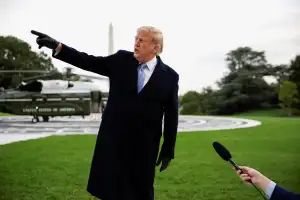
US President Donald Trump raised the prospect of an Iranian connection, saying investigators were examining whether Tehran had a role in the incident and that, based on what he was hearing, he believed there could be one.

“We're working on it right now,” Trump said. “I would say the answer based on what I'm hearing, is yes. But we're working on it right now.”

Asked whether the co-pilot could have been placed on the flight by Iran’s Revolutionary Guards or radicalized separately, Trump said: “It could have been. Yeah.”

Trump also warned Iran of retaliation if investigators established its involvement.

“Oh they’ll be hit, very hard, don’t worry,” he told reporters Thursday. “You just ask them. They know what happened. They’ll be hit very hard.”

Israeli agencies investigate

Israel’s Mossad and Shin Bet intelligence and security agencies are also investigating the incident and whether the Omani co-pilot acted alone or was directed by others, according to i24News. Israeli officials said no Iranian involvement had been identified so far, and an initial assessment was that the co-pilot likely acted alone.

Prime Minister Benjamin Netanyahu said Thursday that the co-pilot had undergone Islamist radicalization but that it was too early to determine whether he had connections to Iran.

“I think it's too early to say whether he had any connections with Iran or with anyone else,” Netanyahu said, adding that he expected more clarity within days.

The flight from Dubai to Tel Aviv was diverted to Saudi Arabia after the co-pilot allegedly stabbed the captain and tried to bring down the aircraft. Passengers subdued him, and a reserve crew aboard the plane landed it safely in Saudi Arabia.

The United Arab Emirates has launched its own investigation into the circumstances and motives behind the incident, including whether it involved terrorist intent, prior planning or outside direction.

Iran role in UK airbase plot

The Flydubai developments came days after a separate investigation in Britain raised questions about possible Iranian involvement in a suspected plot involving RAF Fairford, an airbase used by US bombers in operations against Iran.

British counter-terrorism police on Thursday arrested a dual UK-Iranian national in London on suspicion of preparing terrorist acts as part of the investigation. Police said they were examining “all possible angles — including possible foreign state involvement.”

The arrest followed the detention Sunday of five British men in their 20s near RAF Fairford. They were arrested on suspicion of terrorism and explosives offenses but were later released on bail.

Police said petrol was found in the vans used by the men but no improvised explosive devices were discovered.

British Prime Minister Andy Burnham said Wednesday there were “strong indications that Iran played a part in what happened over the weekend at RAF Fairford,” while stressing that the case remained an ongoing police investigation.

Iran denies involvement

Foreign Minister Abbas Araghchi rejected Burnham’s assertion, pointing to the release of the initial five suspects on bail.

“I can confirm Iran's belief that releasing supposed terrorists working for foreign states really says it all,” Araghchi wrote on X. “You're barking up the wrong tree.”

Iran summoned Britain’s ambassador in Tehran on Thursday to protest the accusations, with the Foreign Ministry describing them as baseless.

The Flydubai and RAF Fairford investigations are separate, and authorities have not established Iranian responsibility in either case.

Most Viewed

US ‘feedback’ leaves Iran debating the price of diplomacy
1
INSIGHT

US ‘feedback’ leaves Iran debating the price of diplomacy

2
INSIGHT

Iranian hardliners turn on Ghalibaf and judiciary after lawmaker’s sentencing

3
INSIGHT

Tehran weighs what comes next if US diplomacy fails

4

Iran takes US response to cabinet, Hormuz clashes continue

5

‘I never asked about regime change’: Student speaks out after El-Sayed exchange

Banner

Spotlight

  • Iran oil exports vanish as regional flows surpass prewar levels

    Iran oil exports vanish as regional flows surpass prewar levels

  • Iran turns to younger children in postwar ideological push
    ANALYSIS

    Iran turns to younger children in postwar ideological push

  • US ‘feedback’ leaves Iran debating the price of diplomacy
    INSIGHT

    US ‘feedback’ leaves Iran debating the price of diplomacy

  • ‘I never asked about regime change’: Student speaks out after El-Sayed exchange

    ‘I never asked about regime change’: Student speaks out after El-Sayed exchange

  • Iranian hardliners turn on Ghalibaf and judiciary after lawmaker’s sentencing
    INSIGHT

    Iranian hardliners turn on Ghalibaf and judiciary after lawmaker’s sentencing

Banner
Banner
Banner
Banner
•
•
•

More Stories

Iran oil exports vanish as regional flows surpass prewar levels

Oct 1, 2026, 18:55 GMT+1
•
Dalga Khatinoglu
100%
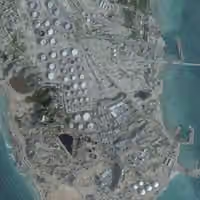
FILE PHOTO: A satellite image shows an oil terminal at Kharg Island, Iran, February 25, 2026.

New tanker-tracking data shows that Iran’s new oil exports have effectively ground to a halt, while crude exports from Arab countries in the region surpassed pre-war levels in the final week of September.

Data from commodities intelligence firm Kpler shows that regional crude exports reached their highest level since the war began in late February.

Average crude exports stood at around 16.5 million barrels per day in September, but the seven-day average rose to around 19.5 million barrels per day in the final week of the month, surpassing the pre-war level of approximately 17 million barrels per day.

By contrast, Iran has not loaded any new oil at its terminals since mid-August, while no Iranian oil cargo has crossed the US blockade line since mid-July. Data from tanker-tracking firm TankerTrackers also points to a halt in new Iranian crude shipments.

Homayoun Falakshahi, a senior analyst at Kpler, told Iran International that the halt in loadings has forced Iran to cut oil production to roughly the level required for domestic consumption, around 1.8 million barrels per day—roughly half its pre-war output.

Iran’s oil exports

Kpler data, seen by Iran International, shows that since mid-July, no Iranian oil cargo has crossed the blockade line and travelled through Asian waters toward China.

Iran continued loading oil for several weeks and, by mid-August, had stored around 67 million barrels aboard tankers anchored in its southern waters. But as access to empty tankers became increasingly limited, new loadings also came to a halt.

TankerTrackers data indicates that Iran’s oil terminals were effectively inactive in terms of crude loadings throughout September.

As of last week, around 15 million barrels of Iranian oil remained on the water in Asian waters. Falakshahi said most of those cargoes had already been sold, meaning Iran effectively has no new oil available for delivery to Chinese buyers.

China is the only major buyer of Iranian crude and purchased an average of around 1.5 million barrels per day from the Islamic Republic over the past year.

Iran also exported around 500,000 barrels per day of oil products and liquefied petroleum gas (LPG) last year to buyers including the UAE, China and other Asian countries. Those flows have also stopped since the start of the naval blockade.

Arab oil exports recover

By contrast, Arab countries in the region have restored much of their oil exports and established alternative routes for transporting crude.

Kpler says their crude exports averaged at least 16.5 million barrels per day in September, roughly matching their pre-war average. In the final week of the month, however, exports rose substantially further.

Before the war, nearly 17 million barrels per day of crude and 6.3 million barrels per day of oil products from Iran and Arab countries in the region, including Oman, were shipped to global markets through the Strait of Hormuz, the Gulf of Oman and the Red Sea—a combined 23.3 million barrels per day.

In the final week of September, crude exports from these countries reached nearly 19.5 million barrels per day, above the pre-war level. Oil-product exports, however, stood at around 3 million barrels per day, less than half their pre-war level.

Overall, crude and oil-product exports from the region reached more than 22.4 million barrels per day in the final week of September, just 900,000 barrels per day below the pre-war level.

The comparison is particularly striking because Iran accounted for around 2 million barrels per day of crude and oil-product exports before the war. Excluding Iran, exports from Arab countries in the region have therefore risen above their pre-war level, largely offsetting the disappearance of Iranian supplies from the market.

OPEC data shows that the UAE, which left the group in May, increased oil production to more than 3.8 million barrels per day in August—around 700,000 barrels per day above its pre-war level.

No new data has yet been released on UAE oil production in September. The country has production capacity of close to 5 million barrels per day.

Trump says renewed bombing of Iran after midterms 'possible'

Oct 1, 2026, 13:05 GMT+1
100%

US President Donald Trump said renewed large-scale bombing of Iran after the November midterm elections was "possible," while rejecting Tehran's latest ceasefire proposal as insufficient, according to an interview with TIME published on Thursday.

Asked directly whether Washington could ramp up bombing after the midterms, Trump replied: "Possible."

He declined to discuss potential targets but said the United States had spent the past six months replenishing its weapons stocks. "We're stocking up at levels we've never done before," he said.

Iran proposal 'not good enough'

Trump said he rejected an Iranian ceasefire proposal presented over the weekend because its terms fell short of what Washington now wanted.

"They made an offer to open up the Strait," he said, referring to the Strait of Hormuz. "It's just, it's just, it's not good enough. Nearly."

Trump said conditions he might have accepted a year earlier were no longer sufficient after months of war. He also said Iran wanted an agreement but that Washington was seeking broader terms.

"They want to make a deal, but I want to make the real deal," he said.

  • Trump may be buying time on Iran until after the midterms

    Trump may be buying time on Iran until after the midterms

Trump says he chose to prolong campaign

Asked why the war had continued into a seventh month after he initially suggested a much shorter campaign, Trump said the decision was deliberate.

"Only because I wanted to go further," he said. "I could have stopped then, but I wanted to go further."

Trump said the initial US strikes had already achieved their objective against Iran's nuclear facilities, but he decided to continue because he did not want Tehran rebuilding its capabilities "in some different form."

He said Iran had been severely weakened, saying: “Their economy is gone. Their inflation is at 300% or something like that. Their navy is gone. Their air force is gone. Everything’s gone.”

  • Saudi Arabia, UAE urge Trump to maintain pressure on Iran - WSJ

    Saudi Arabia, UAE urge Trump to maintain pressure on Iran - WSJ

Damage to Iran’s military

Trump said US operations had destroyed Iran's nuclear, naval, air and radar capabilities.

"I've destroyed their nuclear capability. I've destroyed their navy, 159 ships are at the bottom of the sea. I've destroyed their air force. All their planes are gone. I've destroyed their radar," he said.

He also said traffic through the Strait of Hormuz had reached a record level the previous night, arguing that Iran had lost its ability to control the waterway.

"They said we're going to close. I said, 'Well, you close it, you're going to have big trouble.' We took it over," Trump said. "You have to see the coastline. Everything is obliterated."

  • Why Trump said no to Iran’s Hormuz proposal

    Why Trump said no to Iran’s Hormuz proposal

Says 'annihilating Iran' remains possible

TIME also asked Trump about his recent threat to "annihilate Iran."

"Yeah, I would do that. It's possible," Trump said.

Asked how such a threat fit with his description of himself as a president of peace, Trump replied: "Because by annihilating Iran, we've created peace in the world. With Iran, I don't think you could ever have peace."

He said Iranian authorities had killed between 72,000 and 75,000 protesters in protests earlier this year.

"It's unbelievable. It's a bloodbath," Trump said.

Nuclear issue remains central

Trump repeatedly said preventing Iran from obtaining a nuclear weapon remained his central objective.

"Iran cannot have a nuclear power because they are crazy and you can't let crazy people have nuclear weapons," he said while discussing US support for Israel.

Later, while talking about the US economy and the cost of the war, Trump said he had "no choice" but to confront Tehran.

"I have to put out the fire in the Islamic Republic," he said. "Let nut jobs have nuclear weapons, you'll see some real problems. I had no choice. I'd do it again today."

Trump also said he believed the eventual outcome in Iran would resemble the result of the US operation in Venezuela.

"We're doing very well in Iran too," he said. "It's a much bigger area, much bigger country, much further away. And - but the result is going to be the same."

Iranian weapons, Chinese supplies fuel Houthi advance in Yemen - WSJ

Oct 1, 2026, 10:24 GMT+1
100%
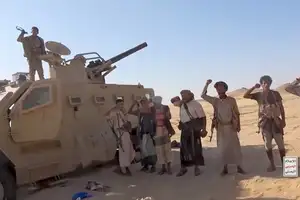
Iran-aligned Houthi fighters occupy a firing position in a screengrab from a video said to show Houthi fighters attacking Saudi-backed forces in the location given by the source as al Jawf governorate, Yemen, in this screengrab taken from a video released by Houthi Military Media on September 15, 2026.

Iranian weapons and growing supplies of Chinese dual-use components have helped Yemen's Houthis expand their territory and strengthen their ability to threaten shipping through the Red Sea, the Wall Street Journal reported.

The Iran-backed group has seized Red Sea islands and expanded along Yemen's mainland coast in recent weeks, including taking the port city of Mokha, according to the report. It has also asserted control over the Bab al-Mandeb Strait, a key route for global trade and energy shipments.

The Houthis, estimated to have about 350,000 fighters, had prepared for the offensive for months, moving weapons and thousands of troops toward Mokha in August and using their control of telecommunications networks to monitor opponents, the Journal said.

  • US officials met Iran-aligned Houthis in Oman - Reuters

    US officials met Iran-aligned Houthis in Oman - Reuters

  • Iran-backed Houthis attack Saudi cities and energy facilities, wounding at least 73

    Iran-backed Houthis attack Saudi cities and energy facilities, wounding at least 73

Iranian technology at the core

The Houthis lack a conventional navy but use Iranian-designed missiles, explosive drones, sea mines, armed fast boats and drone boats to project power along Yemen's coast.

Their arsenal includes ballistic and cruise missiles, anti-ship weapons and drones drawing heavily on Iranian technology and components, according to the report.

Around 2015, Iran's Quds Force began sending components for Iranian-designed missiles and drones and dispatched trainers to help the Houthis build weapons themselves, the Journal said.

The assistance helped turn the group into a force capable of attacking Saudi oil infrastructure, disrupting Red Sea shipping and threatening US forces.

100%
Houthi fighters stand in front of what they say is a downed Saudi jet, at a location given as Yemen, in this still image from a handout video released on September 16, 2026.

China becomes another supply source

"The Houthis now have a new source for the supplies they need to launch their attacks: China," the Journal reported.

Chinese companies are supplying dual-use goods that can serve civilian and military purposes, including components important to Houthi drone programs, according to UN reports and arms experts cited by the newspaper.

The shift comes as traditional Iranian smuggling routes have faced greater disruption. For years, Iran's Revolutionary Guards used small fishing boats to move arms, drone components and missile parts to the Houthis, but many shipments have been intercepted by US forces and Yemeni groups opposed to the Houthis.

  • Iran’s weakened axis still bites as Houthis escalate against Saudi Arabia

    Iran’s weakened axis still bites as Houthis escalate against Saudi Arabia

  • Iran-backed Houthis advance near key Red Sea shipping route as Yemeni forces retreat

    Iran-backed Houthis advance near key Red Sea shipping route as Yemeni forces retreat

Red Sea threat grows

The Houthis have also used Djibouti as a transit point for weapons and traded small arms with al-Shabaab in Somalia, according to UN reports cited by the Journal.

Since announcing a blockade on Saudi shipping on July 20, the group has struck seven vessels in the Red Sea and one in the Gulf of Aden, the report said. Four of the ships were Saudi-flagged.

The Houthis have also targeted Saudi energy infrastructure with missiles and drones, although Riyadh has reported no damage from those attacks.

Iran turns to younger children in postwar ideological push

Oct 1, 2026, 07:53 GMT+1
•
Negar Mojtahedi
100%
A teacher hugs elementary schoolgirls carrying Iranian flags on the first day of the new academic year, in Iran's southern port city of Bushehr, September 23, 2026

The Basij has long maintained a presence in Iran's high schools and universities. Its growing visibility among much younger children is drawing attention to a new front in the Islamic Republic's effort to shape a generation that has repeatedly challenged its authority.

As millions of students returned to classrooms this month, Iran's paramilitary Basij appeared prominently in elementary schools as authorities rolled out an education campaign infused with military and ideological messaging.

Iran's Education Ministry announced over the summer that material related to the recent war and the country's military and nuclear capabilities would be incorporated into educational content.

The push comes at a precarious moment for the Islamic Republic, following war, economic turmoil and nationwide unrest—and four years after schoolgirls became some of the youngest and most visible participants in the Woman, Life, Freedom uprising.

“Iran is obviously right now at sort of a crossroads,” historian Arash Azizi told Iran International, as the Islamic Republic struggles to command the loyalty of generations born decades after the 1979 revolution.

“We're talking about much younger people, people under 13,” Azizi said, adding that the Basij had some involvement in primary schools during the early years after the revolution, but considerably less in recent decades.

The memory of Woman, Life, Freedom

Historian Shahram Kholdi said the increased attention to schools cannot be separated from what happened inside them four years ago.

“We should remember that during the Woman, Life, Freedom movement we saw a huge wave of solidarity with this movement, especially in girls' schools in Iran,” he said.

The nationwide protests in January served as another warning. “It was again a wake-up call, harkening back to Woman, Life, Freedom, that they have to control schools,” Kholdi said.

After the death of Mahsa Jina Amini in morality police custody in September 2022, protests spread into schools.

Videos showed schoolgirls removing their headscarves, chanting against the Islamic Republic and removing or defacing images of its leaders. Some were barely teenagers.

The protests turned schools into one of the most visible arenas of youth opposition to the Islamic Republic.

Kholdi argues that the significance of a Basij presence extends beyond ideological instruction. Schools can provide authorities with greater visibility into students and, through them, their families at a time of considerable social and economic discontent.

The Basij's role in policing students also has a history. Kholdi recalled his own high-school years, when Basij members searched students' backpacks each morning for what he described as “contraband cultural material.”

What stands out now, he said, is how far down the age ladder the attention appears to be moving.

The Islamic Republic's concern about losing younger Iranians predates the latest unrest and war. In a January 2025 interview with Iran International, Iran specialist Holly Dagres said the establishment was already looking beyond an increasingly alienated Generation Z.

“They've been actually looking at the next generation, which is Gen Alpha,” she said.

‘North Korea scenario’

Azizi sees the push into younger age groups as part of a broader argument within the establishment over how to respond to a society that has moved away from some of the ideological positions that have defined the Islamic Republic.

“The regime has been trying to sort of bolster its base amongst the youth because it's lost them and it knows they're the future,” Azizi said.

One tendency, he said, favors a return to a more rigid and intensely ideological state—what he described as a “North Korea scenario”—drawing on mass mobilization of its remaining supporters to reinforce mandatory hijab and Islamist social rules.

In that vision, the Basij becomes an instrument not only for building support but for imposing what Azizi called “societal submission.”

But he said such an approach carries its own risk.

“If the regime wants to go toward bringing back Iran to the 1980s and then North Korea,” Azizi said, such policies could “lead to more social protests and social resistance.”

That tension is now reaching further into Iran's classrooms.

During Woman, Life, Freedom, schoolgirls who had spent their entire lives under the Islamic Republic turned some of those classrooms into places of protest. Four years later, the children entering elementary school belong to an even younger generation.

Iran official warns Starlink could end state control of internet

Oct 1, 2026, 02:38 GMT+1
100%
The silhouette of Elon Musk and Starlink logo are seen in this illustration taken June 11, 2026. REUTERS

The spread of Starlink could deliver the “final nail in the coffin” of Iran’s ability to control cyberspace, Deputy Communications Minister Mohammad Hafez Hakami said Wednesday, even as authorities seek to suppress the technology through arrests, seizures and criminal penalties.

Hakami said Starlink had fundamentally changed that equation. “Our control over cyberspace is no longer based on our domestic network. It is based on Starlink,” Hakami said.

He said officials had warned for more than two years that wider use of the satellite internet service could eventually render existing methods of controlling communications ineffective, but had failed to produce an adequate policy response.

“I sometimes joke that we might as well turn the Ministry of Communications and the Supreme Council of Cyberspace into amusement parks, because they will no longer serve any purpose,” Hakami said.

Iran has repeatedly restricted internet access during periods of unrest. Hakami said the government’s response has grown progressively more restrictive, from blocking a single platform in 2017 to shutting down internet access during the 2019 protests, blocking two major platforms after the 2022 protests and ultimately disconnecting the entire network during the bloody crackdown on nationwide protests in January 2026.

Starlink poses a challenge to that approach because its terminals connect to satellites rather than relying on Iran’s domestic telecommunications network.

Hakami said even measures such as mandatory mobile phone registration could become ineffective with Direct-to-Cell technology, which allows ordinary mobile phones to connect directly to satellites.

“I don’t want to create ‘Starlink-phobia,’ but nothing will remain of our ability to control cyberspace,” he said.

Arrests and seizures
Iranian authorities have intensified their crackdown on Starlink as its use has expanded. Iran’s Economic Security Police said in August that authorities had seized 997 Starlink devices and related equipment and arrested 163 people during the four months through July. Police also impounded 15 vehicles carrying the equipment.

The crackdown has extended to individual users and sellers. Two men from Bukan were sentenced to two years in prison each for buying and selling Starlink equipment.

Iran also criminalized unlicensed satellite internet equipment under legislation adopted in 2025. The law prohibits the use, possession, purchase, sale and import of devices such as Starlink and provides for prison terms and confiscation. It permits the death penalty for specified activities involving the equipment when carried out for espionage or to confront the state and the perpetrator is deemed an enemy force.

Amnesty International said Iran’s Intelligence Ministry announced in March that “hundreds” of Starlink devices had been seized. The rights group said authorities had portrayed the use of alternative satellite connections as potential espionage or collaboration with hostile states and threatened users with prosecution.

Death after Starlink-related arrest
The crackdown has also been linked to a reported death in custody.

Hesam Alaeddin, a 40-year-old man detained in Tehran over his alleged use of Starlink equipment to bypass an internet blackout, died after he was severely beaten by government agents, a source familiar with the case told Iran International in May.

Alaeddin had gone to a hospital to check on his brother, Hamid, who had been shot during protests, when some of his electronic devices were seized, according to the source.

A week later, he went to retrieve the devices and was arrested. Agents took him to his home for questioning and a search, where they severely beat him with various objects and he died, the source said. Authorities concealed his death and continued to treat him as a living detainee before eventually telling his family to collect his body.

Amnesty International later documented Alaeddin’s death but said the precise timing and circumstances remained unclear. The rights group said his arrest was connected to an investigation involving his brother and alleged possession of a Starlink device.

Despite the enforcement campaign, Hakami said Starlink had already reached a significant level of use in Iran and questioned whether existing policies could keep pace with the technology.

“Tell me: What policy have we adopted to protect the country against Starlink?” he said.